Dig deeper than the Canal — find the people who built it
A richly sourced, story-driven journey from West African kingdoms to Barbadian villages to the mud and dynamite of the Canal Zone — tracing the real builders, their names, their families, and the diaspora world they created.
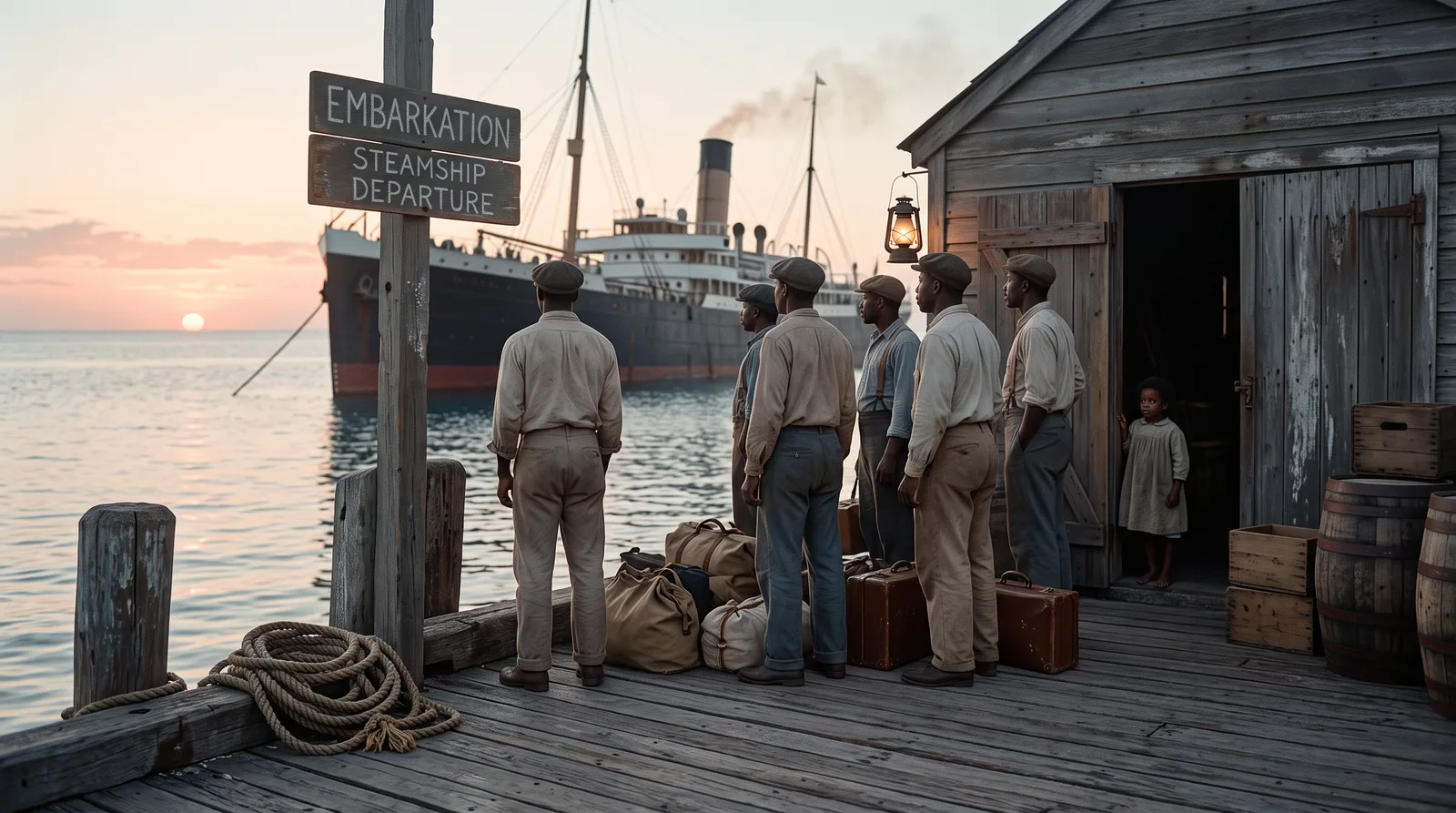
"History taught through people's names and lives is the only kind that really sticks — and these builders have waited long enough to be known."
— Dora
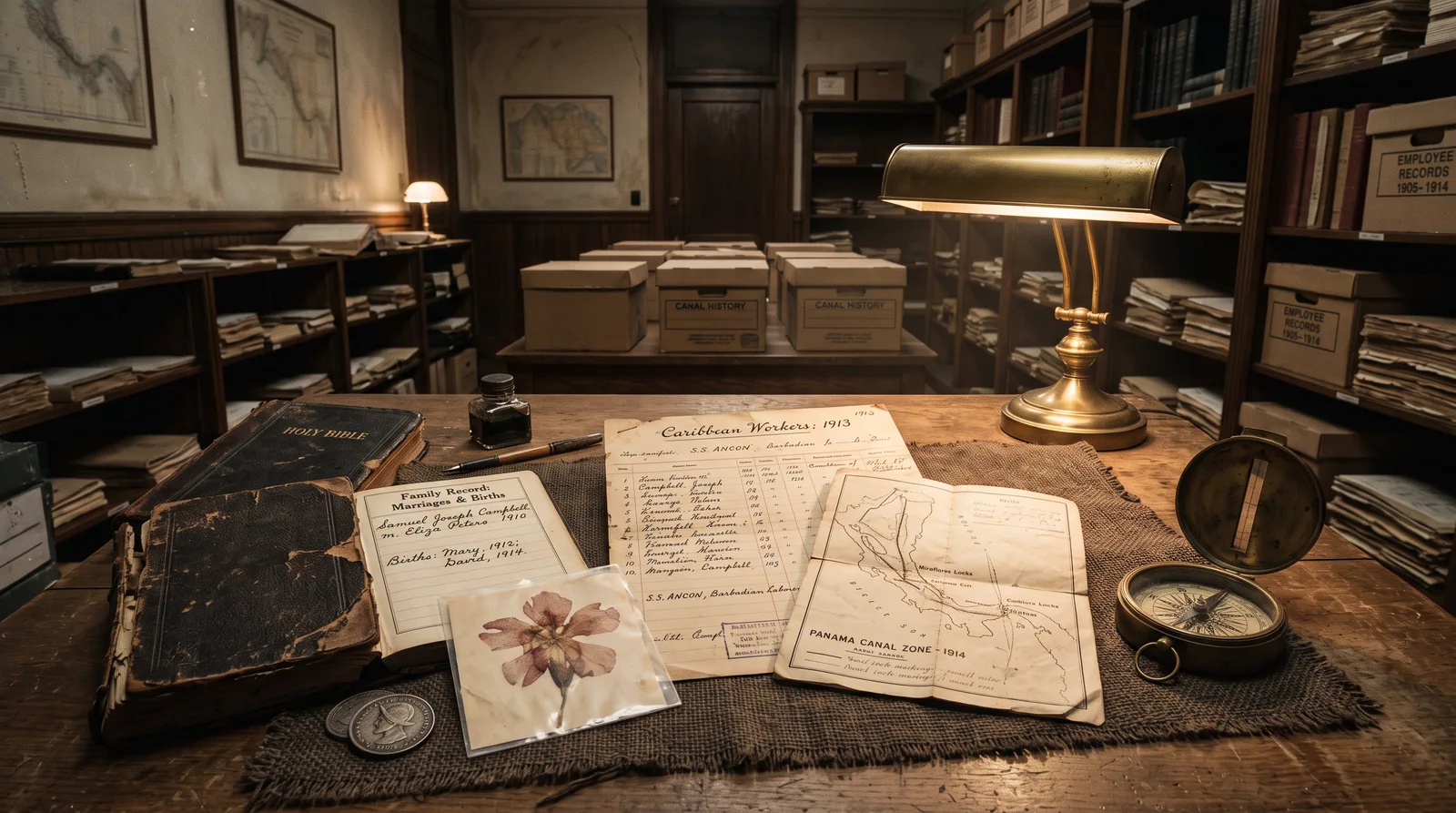
What you'll learn
What you'll be able to do
- Trace the African ancestral origins of Barbadian canal workers — naming specific ethnic groups, regions, and the cultural traditions that survived the Middle Passage and took root in Barbados.
- Describe life in early 20th-century Barbados in concrete detail: the legacy of slavery and emancipation, family structures, education, food, music, Bajan dialect, and the economic pressures that made Panama a destination worth risking everything for.
- Explain the Barbadian workers' sea voyage to Panama — the ships they sailed on, the recruitment process, the hopes they carried, and the hardships they faced on arrival at the Canal Zone.
- Analyze the working conditions, labor hierarchy, and daily lives of Barbadian diggers, drillers, and support workers on the canal, distinguishing documented fact from historical interpretation using primary sources and photographs.
- Evaluate the canal's engineering, global significance, and lasting geopolitical legacy while keeping the human cost — especially the Black Caribbean workforce — at the center of that story.
- Conduct basic genealogy research using historical records, ship manifests, census data, and family oral histories to connect personal or community identity to the broader Barbadian-Panamanian diaspora.
How it works
A school that adapts to you
This isn't a set of static videos. Every lesson is generated live and tuned to where you actually are.
We learn your level
A quick placement check tailors your starting point so you're never bored or lost.
Lessons adapt as you go
Each lesson is written for your pace and your goal, adjusting as your skills grow.
Your AI coach keeps you moving
Checkpoints, feedback, and gentle nudges turn progress into a real result.
The curriculum
What's inside your school
6 modules · 28 lessons

Roots Across the Ocean: African Ancestral Origins
Traces the specific African ethnic groups, regions, and cultural traditions that survived the Middle Passage and took root in Barbados.
- 1.1Who Were the Ancestors? Mapping African OriginsIncluded
- 1.2Kingdoms and Cultures Before CaptureIncluded
- 1.3The Middle Passage: Routes, Ships, and SurvivalIncluded
- 1.4What Survived: African Cultural Threads in BarbadosIncluded
- 1.5Reading the Evidence: Primary Sources and Historical InterpretationIncluded
Bajan Life: Island, Identity, and the Pressure to Leave
Paints a concrete picture of daily life in early 20th-century Barbados — from family and faith to food, dialect, and economic hardship.
- 2.1Slavery, Emancipation, and Its Long ShadowIncluded
- 2.2Family, Faith, and Community in Bajan LifeIncluded
- 2.3Speaking Bajan: Language, Story, and ExpressionIncluded
- 2.4Food, Music, and Everyday CultureIncluded
- 2.5Why Leave? Economic Conditions and the Call of PanamaIncluded
The Voyage: Ships, Hopes, and the Canal Zone Arrival
Brings the sea journey to life — the recruitment process, the ships sailed, the hopes carried, and the shock of arrival.
- 3.1Signed Up and Shipped Out: Recruitment and DepartureIncluded
- 3.2Life Aboard Ship: The Crossing to ColónIncluded
- 3.3First Sight of Panama: Arrival, Processing, and ShockIncluded
- 3.4Real Voyagers: Stories from the Ship ManifestsIncluded
Digging the Ditch: Work, Danger, and Daily Life on the Canal
Analyzes the labor hierarchy, working conditions, and documented daily experiences of Barbadian workers in the Canal Zone.
- 4.1The Gold Roll and the Silver Roll: Race and Labor HierarchyIncluded
- 4.2The Work Itself: Digging, Drilling, and DynamiteIncluded
- 4.3Living in the Zone: Barracks, Food, and CommunityIncluded
- 4.4Sickness, Death, and Resilience: The Human CostIncluded
- 4.5Voices from the Zone: Primary Sources and PhotographsIncluded
The Canal Itself: Engineering, Significance, and Legacy
Explains how the Panama Canal was built, why it mattered globally, and how its legacy is understood — with the human cost kept central.
- 5.1From French Failure to American Project: The Canal's OriginsIncluded
- 5.2How the Canal Works: Engineering and GeographyIncluded
- 5.3Opening Day and Global Impact: 1914 and BeyondIncluded
- 5.4Who Gets Credit? Centering the Black Caribbean WorkforceIncluded
New Roots in Panama: Community, Culture, and Descendants Today
Explores how Barbadian workers built lasting communities in Panama and how their descendants carry that heritage forward today.
- 6.1Settling In: Building Barbadian-Panamanian CommunitiesIncluded
- 6.2Bajan Traditions in Panamanian Soil: Cultural InfluenceIncluded
- 6.3Descendants Speak: Family Histories and Living IdentityIncluded
- 6.4Finding Your Story: Genealogy Research Skills and ToolsIncluded
- 6.5Honoring the Builders: Memory, Memorials, and What Comes NextIncluded
Who it's for
Is this you?

Caribbean heritage descendants
They carry a Barbadian or Panamanian surname and want to understand — and document — the history their family lived through.
History educators
They're looking for a rigorous, human-centered model of diaspora history they can bring into their middle school, high school, or college classroom.
Genealogy researchers
They've hit a wall in family records and want the historical context — and the archival skills — to trace ancestors through ship manifests, census data, and oral histories.
Curious students
They've never heard this story and want a compelling, accessible entry point into Atlantic world history, diaspora studies, or Afro-Caribbean culture.
Canal & engineering history fans
They know the locks, the tonnage, and the dates — and they're ready to finally learn about the human workforce that made all of it possible.
Community memory keepers
Elders, church historians, and cultural preservationists who hold oral traditions and want a scholarly framework to contextualize and pass them on.
Questions
Frequently asked
Your teacher
A note from your teacher
Dora
If you've ever looked at a photograph of the Panama Canal and felt like something — or someone — was missing from the frame, you already know why this course exists.
I built The Canal Builders because the standard telling of this story has a hole in it the size of an ocean. The engineering gets celebrated. The geopolitics get analyzed. And the tens of thousands of Black Caribbean workers who made the whole thing physically possible — most of them Barbadian, many of them the grandchildren and great-grandchildren of enslaved people — get a footnote, if they're mentioned at all. That has always bothered me. History that erases the people who did the work isn't really history. It's myth-making with a budget.
What I wanted to create was something different: a course that starts where these workers' stories actually start — in West Africa, before the ships, before the auctions, before any of it — and follows a continuous human thread all the way through to the descendants living in Panama today. That means we spend real time in Barbados: understanding Bajan dialect and food and music and faith, understanding what emancipation actually did and didn't change, understanding the economic pressures that made a recruitment contract for dangerous work in a foreign jungle look like a reasonable bet. We don't just explain the migration. We make you feel why it happened.
When we get to the Canal Zone, we don't skip over the hard parts. The Gold Roll and Silver Roll — the racial payroll system that codified exactly what the American project thought Black workers were worth — is examined in full. The digging, the dynamite, the disease, the death tolls. We work with primary sources and photographs, and I'll show you how to read them: what they confirm, what they leave uncertain, and how honest historians navigate that line. You'll come away from this course not just knowing more history, but knowing how to think about history — especially the kind that gets buried.
And then — because this story doesn't end with the Canal's opening in 1914 — we follow the builders' descendants into the communities they created in Panama, into the cultural traditions they transplanted and transformed, and into the archives and family records where their names are still waiting to be found. Whether you're tracing your own family tree or simply trying to understand a chapter of the Atlantic world that shaped the hemisphere we live in, there is something here for you.
I believe history taught through people's names and lives and choices is the only kind that really sticks. I've tried to build a course worthy of the people it's about. Come learn with me — they deserve to be known.
— Dora
Start your journey today
Get instant access — learn at your own pace with an AI coach in your corner.
$39/mo
Recurring billing · cancel anytime
Secure checkout · Instant access
- 6 modules, 28 lessons
- AI-adaptive lessons tuned to your level
- Quizzes & checkpoints to lock in progress
- Your own AI learning coach
- Learn on any device, at your pace
- Full access for as long as you're subscribed