Find the peace that no app could give you
A deep, unhurried journey through the world's most transformative wisdom — from Marcus Aurelius to Thich Nhat Hanh — distilled into a clear, practical path you can walk inside a busy modern life.
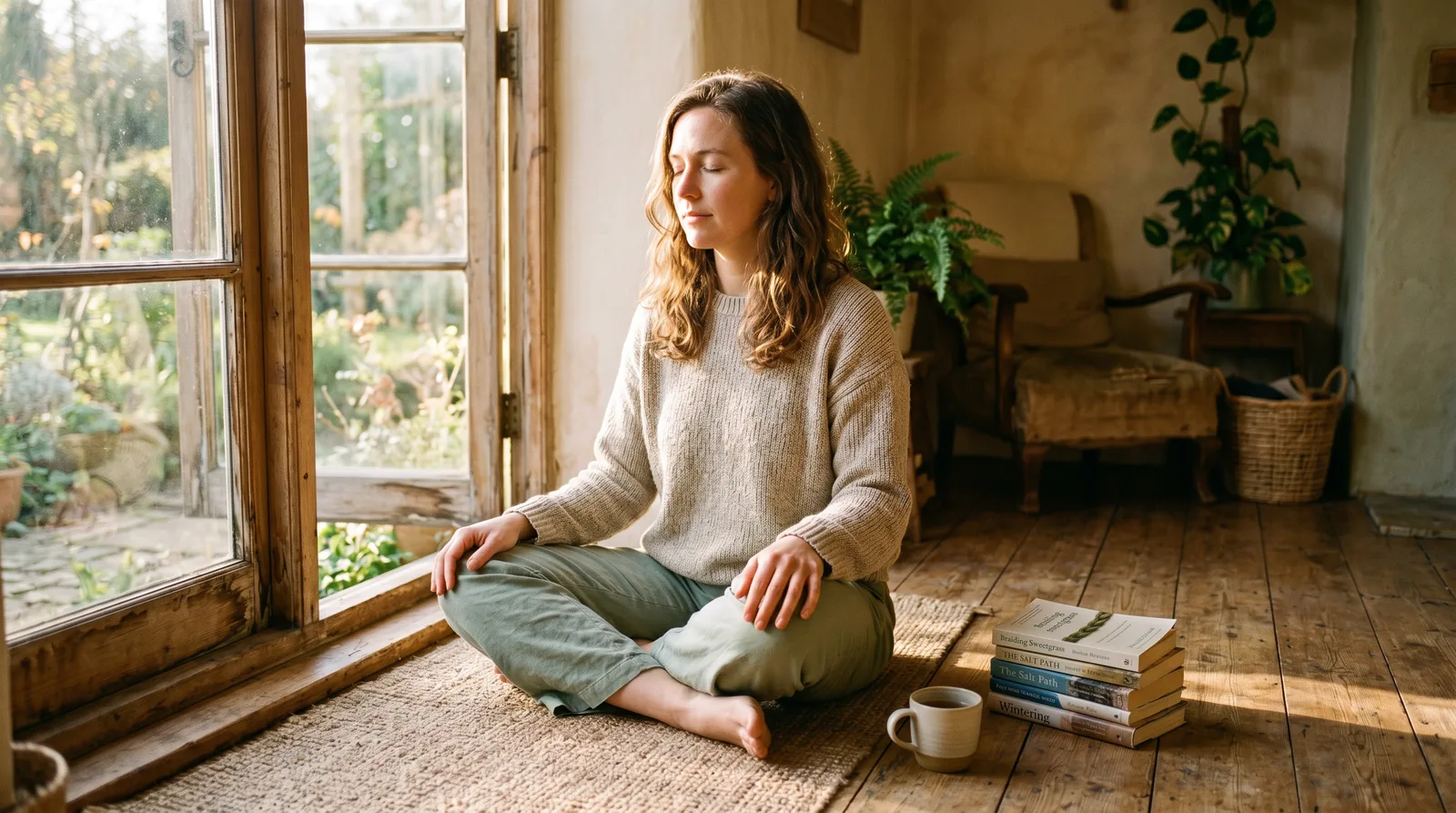
"Peace isn't something you achieve once and keep — it's something you learn to return to, and that returning is the whole practice."— Pedro Miguel Rocha

What you'll learn
What you'll be able to do
- Identify the personal patterns of thought and reaction that block your peace, using frameworks from Stoic and Buddhist philosophy.
- Apply daily stillness practices drawn from Thich Nhat Hanh, Eckhart Tolle, and the Stoics to interrupt anxiety in real time.
- Reframe suffering and adversity through Viktor Frankl's logotherapy and other resilience-based philosophies.
- Cultivate self-compassion and release self-judgment using insights from Brené Brown, Kristin Neff, and Taoism.
- Build a personalised, sustainable inner-peace ritual that integrates seamlessly into a busy modern schedule.
- Communicate from a place of calm and clarity, improving your relationships and emotional boundaries under pressure.
How it works
A school that adapts to you
This isn't a set of static videos. Every lesson is generated live and tuned to where you actually are.
We learn your level
A quick placement check tailors your starting point so you're never bored or lost.
Lessons adapt as you go
Each lesson is written for your pace and your goal, adjusting as your skills grow.
Your AI coach keeps you moving
Checkpoints, feedback, and gentle nudges turn progress into a real result.
The curriculum
What's inside your school
6 modules · 18 lessons

Mapping Your Inner Landscape
Before any transformation can begin, students must honestly see the terrain of their own minds. Drawing on Stoic philosophy (Marcus Aurelius, Epictetus), Buddhist psychology, and modern neuroscience, this foundational module helps learners identify the habitual thought patterns, emotional triggers, and inherited belief systems that silently sabotage their peace. Completing this module is a prerequisite for all that follows — you cannot change what you have not first clearly seen.
- 1.1The Architecture of a Restless MindIncluded
- 1.2Your Personal Triggers and Reactive PatternsIncluded
- 1.3The Stories We Inherit — Cultural and Conditioned NoiseIncluded
The Practice of Stillness — Wisdom Made Daily
With the inner landscape mapped, students now meet the core contemplative technologies developed by history's greatest teachers of peace. This module translates the wisdom of Thich Nhat Hanh, Eckhart Tolle, and the Stoics into concrete, repeatable daily practices. The sequencing moves from moment-to-moment present awareness, to the deeper dimension of presence, to structured daily ritual — building a layered stillness toolkit that prepares learners for the harder work of reframing suffering in Module 3.
- 2.1Present-Moment Anchoring — Thich Nhat Hanh's Art of MindfulnessIncluded
- 2.2The Power of Now — Eckhart Tolle's Presence PracticesIncluded
- 2.3Stoic Morning and Evening RitualsIncluded
Reframing Suffering — Finding Meaning in Adversity
Peace is not the absence of difficulty — it is a stable relationship with difficulty. This module, positioned after students have built baseline stillness skills, teaches learners to fundamentally reframe pain, loss, and adversity through Viktor Frankl's logotherapy, the Stoic embrace of fate (amor fati), and the Buddhist teaching on impermanence. The sequencing is deliberate: learners must have some stillness before they can sit with suffering long enough to reframe it.
- 3.1Viktor Frankl and the Choice of MeaningIncluded
- 3.2Amor Fati — Loving What IsIncluded
- 3.3The Buddhist Teaching on Dukkha — Making Peace With ImpermanenceIncluded
Self-Compassion — Releasing the War Within
Many students can find peace in meditation but remain at war with themselves the moment they return to ordinary life. This module addresses the inner critic directly, using Kristin Neff's three-component model of self-compassion, Brené Brown's research on shame and vulnerability, and Taoism's philosophy of non-resistance. It is sequenced after the reframing module so that students can apply their new adversity-reframing tools specifically to self-directed suffering. This module is also a prerequisite for the relational and communication work of Module 5.
- 4.1The Science and Practice of Self-Compassion — Kristin NeffIncluded
- 4.2Vulnerability, Shame, and Wholehearted Living — Brené BrownIncluded
- 4.3Taoist Acceptance — The Peace of Non-ResistanceIncluded
Peaceful Relationships and Compassionate Communication
Inner peace does not exist in a vacuum — it is tested and expressed most sharply in our relationships. This module, intentionally placed after students have built stillness, reframing, and self-compassion skills, applies those internal capacities outward. Drawing on Marshall Rosenberg's Non-Violent Communication, Thich Nhat Hanh's teaching on deep listening, and contemporary work on emotional boundaries, learners discover that peaceful relationships are not about conflict avoidance but about communicating with clarity, courage, and genuine care.
- 5.1Non-Violent Communication — Speaking From StillnessIncluded
- 5.2Deep Listening — Thich Nhat Hanh's Compassionate EarIncluded
- 5.3Emotional Boundaries as an Act of Self-RespectIncluded
Building Your Personalised Inner Peace Ritual
All the wisdom and practice of the course converges here. This final module guides students through the design, testing, and internalisation of a personal inner-peace architecture that is honest about the realities of a busy modern life. Rather than prescribing a universal routine, it helps each learner curate their own sustainable integration — then addresses with candour the inevitable disruptions, regressions, and plateaus that come. The module closes not with an ending but with an orientation: peace is not a destination arrived at but a practice carried forward.
- 6.1Designing Your Personal Practice ArchitectureIncluded
- 6.2Sustaining Peace Under Pressure — When Life Disrupts the PlanIncluded
- 6.3Integration and the Peace You Now Carry ForwardIncluded
Who it's for
Is this you?

The Burnt-Out Professional
They've optimised everything in their career but feel hollow inside, and are ready to turn the same seriousness toward their inner life.

The Chronic Over-Thinker
Their mind rarely goes quiet — they know the theory of calm but have never had a clear, structured path to actually living it.

The Self-Help Sceptic
They've read the books and downloaded the apps, and they're done with surface-level fixes — they want real wisdom with real depth.

The Quietly Anxious Parent
They hold everything together for everyone else and are finally asking what it would feel like to hold themselves together too.

The Philosophy Curious
They've always been drawn to Stoicism, Buddhism, or Taoism and want a course that makes those ideas genuinely liveable, not just intellectually interesting.

The Life-Transition Navigator
A major change — a loss, a career shift, a relationship ending — has left them unmoored, and they're searching for a steadier ground to stand on.
Questions
Frequently asked
Your teacher
A note from your teacher
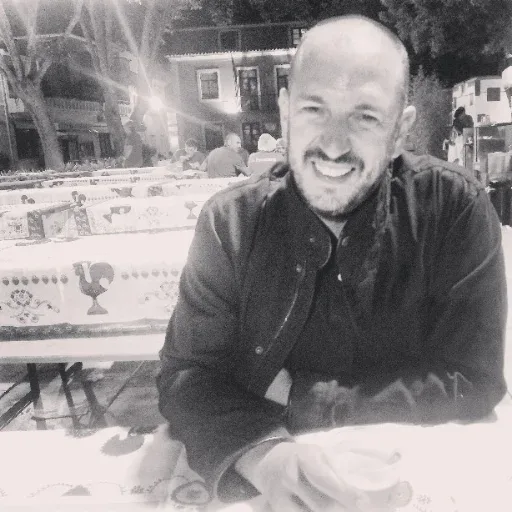
Pedro Miguel Rocha
If you're here, I suspect you're a little tired. Not just physically tired — though that too, probably — but tired in a deeper way. Tired of feeling like calm is something you have to earn, something that slips away the moment the day gets complicated. Tired of reaching for another app, another technique, another promise of peace in five minutes or less, only to find yourself back at square one by Tuesday.
I understand that feeling. It's what eventually sent me not toward the newest thing, but toward the oldest. Toward Marcus Aurelius writing by lamplight about the only things truly within our control. Toward Thich Nhat Hanh washing dishes as if it were the most sacred act in the world. Toward Viktor Frankl, who found meaning in conditions none of us will ever face, and left us a map for finding it in the conditions we do. What I discovered, slowly and sometimes reluctantly, was that these teachers weren't offering comfort. They were offering something harder and far more valuable: clarity.
The Peace Within grew out of my own long study of these wisdom traditions — and more importantly, out of the patient work of learning to actually apply them when life was messy and loud and uncooperative. I've worked to distil what is genuinely useful, strip away the dogma, and build a path that a real person with a real schedule can actually walk. We begin where all honest inner work must begin: with you, your particular mind, your specific patterns of reaction, the stories you've inherited without quite realising it. From there, we move through stillness practices, through reframing adversity, through the quiet revolution of self-compassion, all the way to the relationships in your life and the daily ritual that will carry all of this forward.
I won't promise you that you'll never feel anxious again, because that would be its own kind of untruth. What I will promise is this: by the end of our time together, you will know your own inner landscape with a clarity you haven't had before. You will have practices that work — not perfectly, but reliably. And you will have something more valuable than any technique: a different relationship with the moments when peace feels far away. That, I have found, is where the real transformation lives.
Come as you are. Bring the whole complicated, overextended, quietly hoping version of yourself. There's room for all of it here.
— Pedro Miguel Rocha
Start learning today
Join get instant access — learn at your own pace with an AI coach in your corner.
$39/mo
Recurring billing · cancel anytime
Secure checkout · Instant access
- 6 modules, 18 lessons
- AI-adaptive lessons tuned to your level
- Quizzes & checkpoints to lock in progress
- Your own AI learning coach
- Learn on any device, at your pace
- Full access for as long as you're subscribed