The business school for Peruvian food entrepreneurs in the United States.
Step-by-step training for Peruvian food entrepreneurs — from business plan to first sale, in English and Spanish.
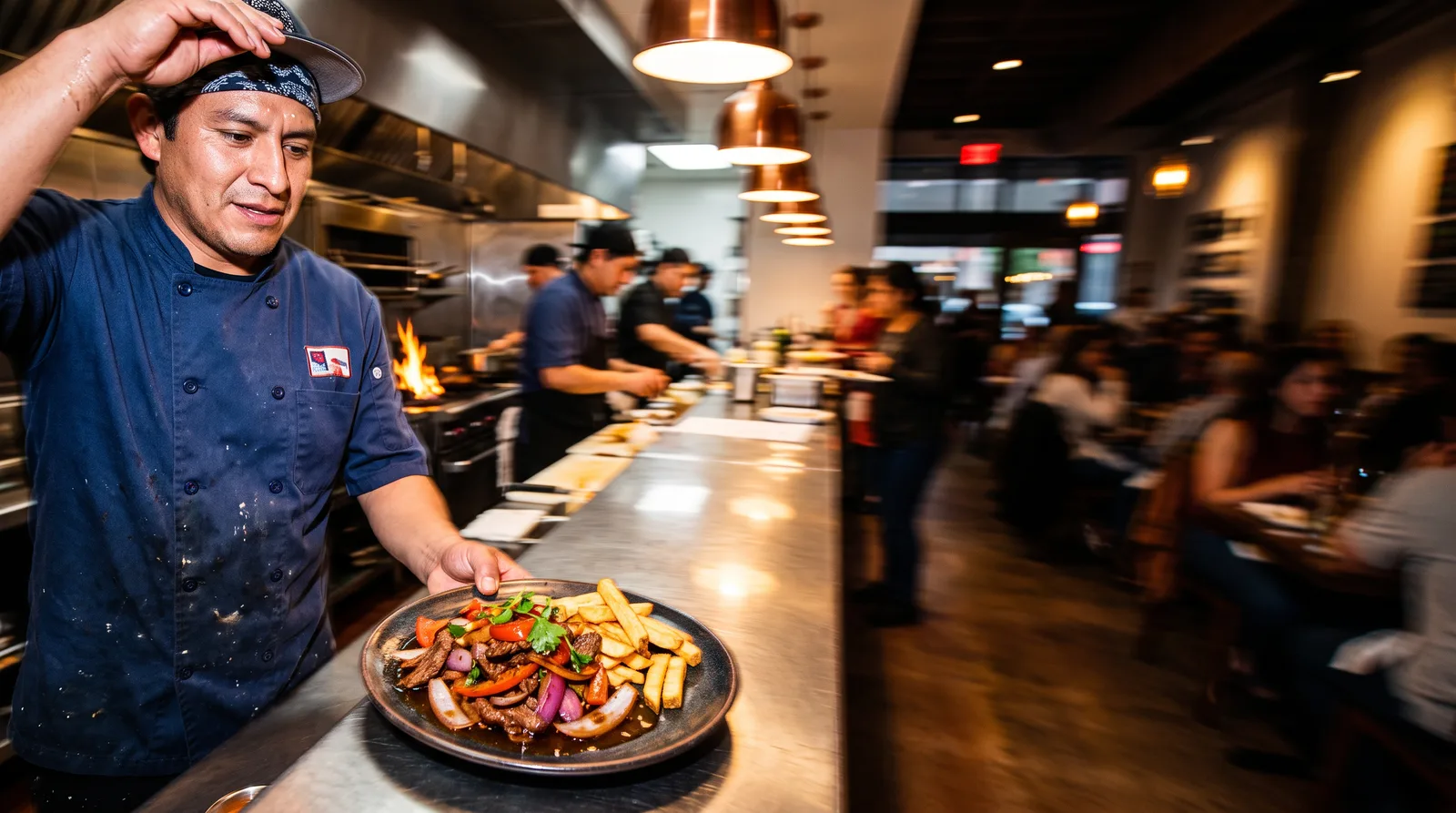
"The food is yours — I'm just here to make sure the business around it is as strong as what's on the plate."
— Peruvian Food Network
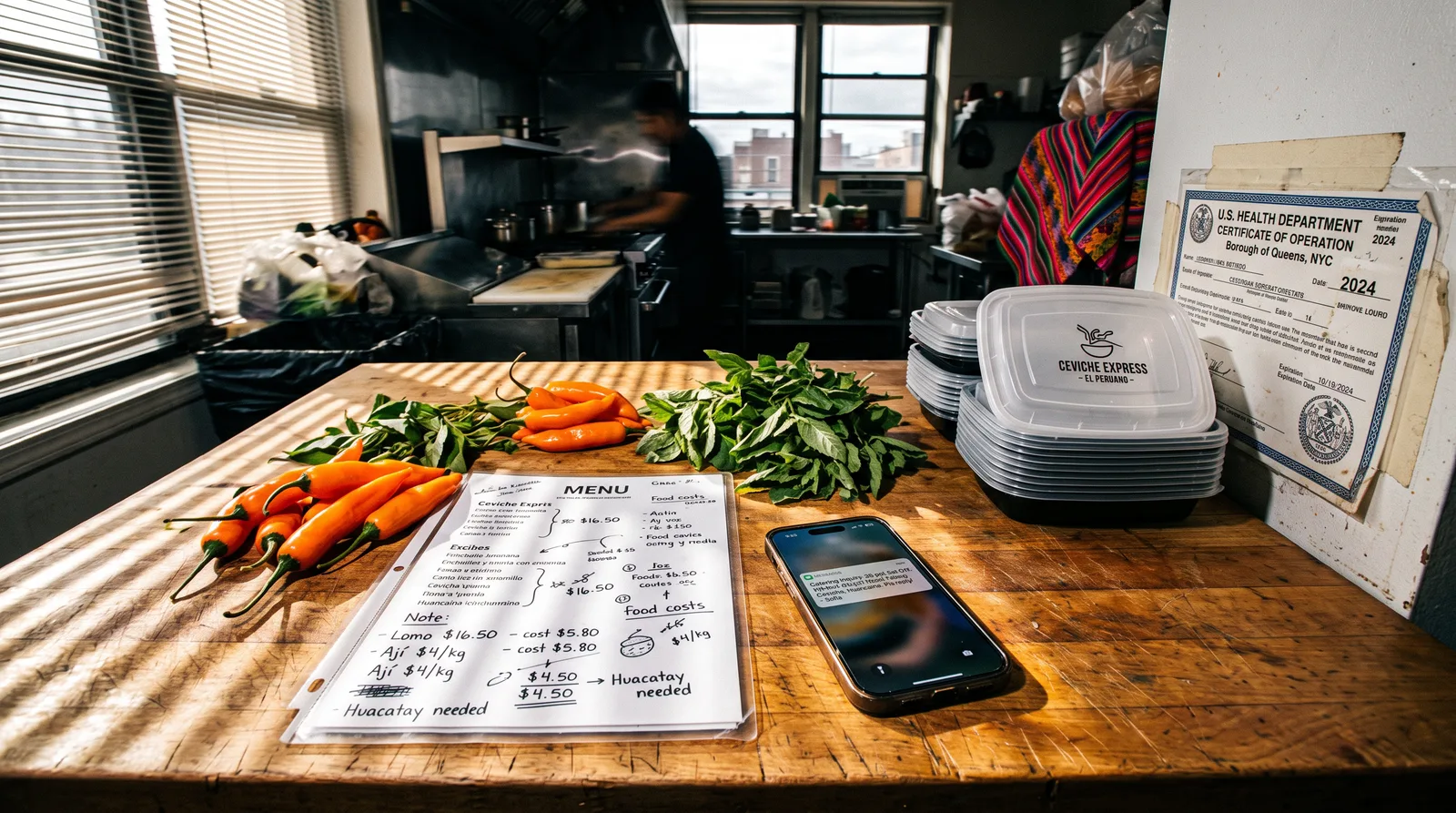
What you'll learn
What you'll be able to do
- Write a profitable Peruvian restaurant or ghost kitchen business plan tailored to your U.S. city and target market
- Navigate U.S. food business licensing, health codes, and permits without costly mistakes
- Design a menu that balances authentic Peruvian flavors with American customer expectations and strong food-cost margins
- Build a marketing and social media strategy that attracts local customers and turns first-time diners into regulars
- Price your catering packages, ghost kitchen orders, or restaurant dishes to hit consistent profit targets
- Manage hiring, kitchen operations, and vendor sourcing so your business runs smoothly without depending entirely on you
How it works
A school that adapts to you
This isn't a set of static videos. Every lesson is generated live and tuned to where you actually are.
We learn your level
A quick placement check tailors your starting point so you're never bored or lost.
Lessons adapt as you go
Each lesson is written for your pace and your goal, adjusting as your skills grow.
Your AI coach keeps you moving
Checkpoints, feedback, and gentle nudges turn progress into a real result.
The curriculum
What's inside your school
17 modules · 108 lessons

The Peruvian Food Business Opportunity in the U.S.
Sets the stage by helping students validate their concept, understand the U.S. market landscape, and commit to a clear business model.
- 1.1Why Peruvian Food Wins in the U.S. Right NowIncluded
- 1.2Restaurant, Catering, or Ghost Kitchen — Choose Your ModelIncluded
- 1.3Know Your Customer: Researching Your Local U.S. MarketIncluded
- 1.4Your Concept and Brand IdentityIncluded
- 1.5Starting Without a Network: The Immigrant Entrepreneur's AdvantageIncluded
Your Business Plan and Financial Foundation
Walks students through building a complete, investor-ready business plan with realistic U.S. financials.
- 2.1Anatomy of a Food Business PlanIncluded
- 2.2Startup Costs and Funding Your BusinessIncluded
- 2.3Projecting Revenue, Break-Even, and ProfitIncluded
- 2.4Legal Structure: LLC, S-Corp, and What's Right for YouIncluded
- 2.5Writing Your Own Business Plan: A Guided WorkshopIncluded
Licenses, Permits, and Health Code Compliance
Demystifies the U.S. regulatory landscape so students can open legally, pass inspections, and avoid costly shutdowns.
- 3.1The Licenses Every U.S. Food Business NeedsIncluded
- 3.2Health Department Rules and Food Safety StandardsIncluded
- 3.3Permits for Your Space: Zoning, Fire, and Build-OutIncluded
- 3.4Catering and Ghost Kitchen Compliance SpecificsIncluded
- 3.5Staying Compliant: Renewals, Inspections, and Common ViolationsIncluded
Menu Design, Food Costing, and Pricing Strategy
Teaches students to craft a menu that honors Peruvian authenticity, satisfies American palates, and hits strong profit margins.
- 4.1Building a Balanced Peruvian Menu for U.S. DinersIncluded
- 4.2Food Costing Every Dish from ScratchIncluded
- 4.3Menu Pricing: Hitting Your Target Food-Cost PercentageIncluded
- 4.4Sourcing Peruvian Ingredients in the U.S.Included
- 4.5Pricing Catering Packages and Ghost Kitchen Orders ProfitablyIncluded
Marketing, Social Media, and Building a Loyal Customer Base
Equips students with a practical marketing playbook to attract local U.S. customers and turn first-time diners into regulars.
- 5.1Your Marketing Foundation: Google, Yelp, and Local SEOIncluded
- 5.2Social Media Strategy for Peruvian Food BusinessesIncluded
- 5.3Content Creation on a Budget: Photos, Reels, and StoriesIncluded
- 5.4Community Marketing: Events, Partnerships, and Word of MouthIncluded
- 5.5Turning First-Time Diners into Regulars: Loyalty and EmailIncluded
Operations, Hiring, and Growing Your Business
Builds the systems, team, and vendor relationships that let the business run smoothly and scale beyond the owner.
- 6.1Kitchen Operations and Standard Recipe SystemsIncluded
- 6.2Hiring Your First Team: Roles, Pay, and U.S. Labor Law BasicsIncluded
- 6.3Training Staff to Represent Your Brand and FoodIncluded
- 6.4Vendor Relationships, Inventory, and Waste ControlIncluded
- 6.5Scaling Up: Adding Locations, Revenue Streams, and Your ExitIncluded
Four Cash Businesses: Delivery, Truck, Sauces, and Drinks
Four proven add-on revenue streams for Peruvian food entrepreneurs — each one runnable from a commissary or shared kitchen without a full restaurant build-out. Students pick one door and build it in 90 days.
- 7.1The Four Doors: Delivery, Truck, Sauces, and Drinks — Pick OneIncluded
- 7.2Ghost Kitchen and Delivery: Building a Profitable Virtual BrandIncluded
- 7.3Food Truck and Cart: The Peruvian Street UnitIncluded
- 7.4Sauce and Condiment Business: Aji, Huancaina, and BeyondIncluded
- 7.5Bottled Drinks: Chicha Morada, Cacao Drinks, and the Co-Pack LadderIncluded
- 7.6The Co-Pack Ladder: From Home Kitchen to Retail ShelfIncluded
- 7.7Capstone: Your 90-Day Launch Plan for One Cash BusinessIncluded
Andes to Amazon Pantry: Coffee, Cacao, Power Foods, and Drinks
How to build a clean Peruvian ingredient brand \u2014 selling maca, cacao, purple corn, sacha inchi, Peru coffee, and bottled drinks as FOOD, with legal label language, a geography-first brand story, and a 90-day SKU plan.
- 8.1The Pantry Map: Andes, Amazon, Coast, and Inca PantryIncluded
- 8.2Hero SKUs: What Actually Sells in the U.S. (Tier 1 and Tier 2)Included
- 8.3Two Lanes: Food vs. Supplement — What the FDA Cares AboutIncluded
- 8.4Peru Coffee: Selling a Named-Region Specialty BagIncluded
- 8.5Peru Cacao: From Ingredient Business to a BarIncluded
- 8.6Drinks and Snacks: Chicha, Cacao Drinks, Cancha, and the Bundle PlayIncluded
- 8.7Capstone: 8 SKUs, Shelf Signs, Owner Pitch, and Forbidden-Claim ListIncluded
Sanguchería and Pollería: Two Quick-Serve Peruvian Shops
How to open a Lima-style sandwich counter and a pollo a la brasa takeout window \u2014 without a full restaurant build-out. Speed, aji, bread, and the right chicken cook method. Students learn to beat a chain on flavor and ticket time.
- 9.1The Sanguchería Model: Wawa Speed, Peruvian FlavorIncluded
- 9.2The Sandwich Line: 5 Core Sanguches and 2 Rotating SpecialsIncluded
- 9.3Bread, Bakery Case, and the Drinks That Steal a Wawa TicketIncluded
- 9.4Ticket Time, Labor, and the Money Logic of a CounterIncluded
- 9.5Pollo a la Brasa vs. Pollo al Cilindro: Choose Your Cook MethodIncluded
- 9.6The Pollería Menu, Layout, and Sunday Family Combo PlanIncluded
- 9.7Capstone: One Counter, One Bird, Two BusinessesIncluded
Import Logistics: Freight, FDA Prior Notice, and Your First Shipment
- 10.1Import Logistics: Freight, FDA Prior Notice, and Your First ShipmentIncluded
Peruvian Catering: From First Event to Full Business
A complete catering track — finding corporate and private clients, building your catering kit, running the day of the event, and pricing large and small orders so every job is worth it.
- 11.1The Catering Business Model: What You're Really SellingIncluded
- 11.2Finding Corporate and Private Clients: Where the Money IsIncluded
- 11.3Building Your Catering Kit: Equipment, Transport, and StaffingIncluded
- 11.4Your Catering Menu: What Travels Well and What Doesn'tIncluded
- 11.5Pricing Catering Jobs: Per-Head Math and Package TiersIncluded
- 11.6The Event-Day Run-of-Show: Logistics, Setup, and TeardownIncluded
- 11.7Catering Contracts, Deposits, and Getting Paid on TimeIncluded
- 11.8Capstone: Price and Pitch a 75-Person Peruvian Catering EventIncluded
Panadería Peruana: Open a Peruvian Bakery in the U.S.
- 12.1The U.S. Market for Peruvian Baked GoodsIncluded
- 12.2Your Bakery Model: Storefront, Pop-Up, or WholesaleIncluded
- 12.3Core Peruvian Recipes for a Commercial KitchenIncluded
- 12.4Commercial Kitchen Setup and EquipmentIncluded
- 12.5Licensing, Cottage Food Laws, and Health PermitsIncluded
- 12.6Pricing Baked Goods for ProfitIncluded
- 12.7Selling Channels: Farmers Markets, Instagram, and Local WholesaleIncluded
- 12.8Growing the Panadería into a Full BusinessIncluded
E-Commerce and Direct-to-Consumer: Selling Peruvian Products Online
- 13.1The Online Opportunity for Peruvian ProductsIncluded
- 13.2Choosing Your Platform: Shopify, Etsy, Amazon, or Your Own SiteIncluded
- 13.3Setting Up Your Shopify or Etsy Store Step by StepIncluded
- 13.4Product Photography and Listings That ConvertIncluded
- 13.5Shipping, Packaging, and Food Compliance for Online OrdersIncluded
- 13.6Driving Traffic: SEO, Social, and Email for a Peruvian Food BrandIncluded
- 13.7Amazon FBA for Peruvian Pantry and Specialty FoodsIncluded
- 13.8Scaling: Wholesale Accounts, Subscriptions, and Corporate GiftingIncluded
Real Estate and Site Selection: Finding the Right Location for Your Peruvian Business
- 14.1How Location Makes or Breaks a Food Business in the U.S.Included
- 14.2Researching Neighborhoods: Demographics, Foot Traffic, and the Peruvian CommunityIncluded
- 14.3Understanding Commercial Lease Types: NNN, Gross, and Modified GrossIncluded
- 14.4Reading a Commercial Lease: The Clauses That Can Cost You ThousandsIncluded
- 14.5Negotiating Your Lease: What Landlords Will Move On and What They Won'tIncluded
- 14.6Zoning, Health Department Pre-Approval, and Permits Before You SignIncluded
- 14.7Build-Out Basics: Estimating Costs and Managing a ContractorIncluded
- 14.8Ghost Kitchens and Shared Commissary Spaces: The Low-Risk StartIncluded
Staffing and HR: Hiring, Training, and Managing Your Peruvian Business Team
- 15.1Who to Hire First: Roles That Matter Most in a Peruvian Food BusinessIncluded
- 15.2Where to Find Workers: Recruiting in the Peruvian and Latino CommunityIncluded
- 15.3The Interview and Hiring Process: What to Ask and What to Watch ForIncluded
- 15.4Work Authorization and I-9 Compliance for Small Food BusinessesIncluded
- 15.5Setting Pay: Minimum Wage, Tip Pools, and Overtime RulesIncluded
- 15.6Training Your Team: Teaching Peruvian Food Standards and Service CultureIncluded
- 15.7Managing Schedules, Turnover, and the Day-to-Day of a Small CrewIncluded
- 15.8HR Basics: Handbooks, Discipline, and Letting Someone Go the Right WayIncluded
Marketing and Customer Acquisition: Growing Your Peruvian Business
- 16.1Your Ideal Customer: Defining Who You're Really Selling ToIncluded
- 16.2Google Business Profile: Getting Found Locally for FreeIncluded
- 16.3Social Media That Actually Works for Food and Retail BusinessesIncluded
- 16.4Photography and Video on a Tight BudgetIncluded
- 16.5Opening Promotions and Grand Launch StrategyIncluded
- 16.6Email and Text Marketing: Building a List That BuysIncluded
- 16.7Loyalty Programs and Repeat BusinessIncluded
- 16.8Online Reviews: Getting Them, Responding to Them, and Using ThemIncluded
Financial Management and Cash Flow: Keeping Your Peruvian Business Profitable
- 17.1Reading Your Numbers: P&L, Balance Sheet, and Cash Flow BasicsIncluded
- 17.2Setting Up Your Chart of Accounts for a Food or Retail BusinessIncluded
- 17.3Food Cost and Gross Margin: Controlling Your Biggest Variable ExpenseIncluded
- 17.4Labor Cost Ratios and Scheduling to BudgetIncluded
- 17.5Cash Flow Forecasting: Surviving Slow Seasons and Big BillsIncluded
- 17.6Separating Business and Personal Finances: Owner's Draw and Entity StructureIncluded
- 17.7Working with a Bookkeeper or Accountant: What to Delegate, What to OwnIncluded
- 17.8Tax Obligations for Your Peruvian Business: Sales Tax, Payroll Tax, and Quarterly EstimatesIncluded
Who it's for
Is this you?

The Restaurant Builder
You want to open or grow a Peruvian restaurant, cevichería, pollo a la brasa, chifa, bakery, or bar — and you need a real business plan, not just a dream.
The Mobile & Ghost Kitchen Operator
You run or want to launch a food truck, cart, ghost kitchen, or online prepared-food operation and need the numbers and compliance to make it work.
The Home-Based Seller
You're a home cook ready to turn your sauces, snacks, candy, or packaged goods into a real product someone can buy — legally and profitably.
The Catering & Events Host
You cater private events or host Peruvian nights, pop-up dinners, and ticketed experiences and want to price, market, and scale them properly.
The Importer & Distributor
You want to bring Peruvian products to the U.S., become the American contact for a Peruvian producer, or build a distribution network in this niche.
The Supplier & Seller
You sell equipment, décor, furniture, carts, labels, or supplies to Peruvian food businesses — and want to reach more of them, faster.
Questions
Frequently asked
Your teacher
A note from your teacher
Peruvian Food Network
I know where you're standing right now. You have something real — real food, real skill, real hunger to build something of your own. And you're staring at a wall of questions: Do I need an LLC? What permits do I actually need? How do I price my catering so I don't lose money? How do I get people in the door when I'm not a marketing person? How do I compete when I'm starting with limited capital and no famous name?
Those questions are exactly why I built Peruvian Kitchen Pro.
What I've learned — through the hard lessons of the food business — is that the cooking is rarely what kills a food business. It's the gap between the kitchen and the business: the pricing that's too low, the permits that weren't pulled in time, the menu that's beautiful but bleeds money, the team that has no system to follow. That gap is fixable. It's learnable. And it doesn't require an MBA or a wealthy investor — it requires the right playbook built for your specific situation.
This school is that playbook. We go from business model selection and market research, through writing a real financial plan with startup costs and break-even math, all the way through licensing, health code compliance, menu costing, marketing, and hiring your first team. Every piece is grounded in the U.S. market and in the realities of running a Peruvian food business specifically — sourcing ingredients that aren't always easy to find, speaking to American customers who may be discovering lomo saltado or ají de gallina for the first time, and building a brand that honors the culture while making serious business sense.
I am not here to inspire you with a speech. I'm here to sit across the table from you and work through the real stuff — the spreadsheet, the health inspection checklist, the Instagram content plan, the conversation with a vendor. That's what this school is. It's the mentor I wish I'd had.
So if you're ready to stop wondering and start building — let's get to work. Your seat is here.
— Peruvian Food Network
Start your journey today
Get instant access — learn at your own pace with an AI coach in your corner.
$79/mo
Recurring billing · cancel anytime
Secure checkout · Instant access
- 17 modules, 108 lessons
- AI-adaptive lessons tuned to your level
- Quizzes & checkpoints to lock in progress
- Your own AI learning coach
- Learn on any device, at your pace
- Full access for as long as you're subscribed