Understand drugs. Don't just memorize them.
The Pharmacology Pro teaches you the mechanisms, logic, and clinical reasoning behind every major drug class — so you can answer any question, flag any interaction, and counsel any patient, even when the drug is one you've never seen before.

"Memorization is a crutch — when you understand the mechanism, you can reason your way to the right answer even when you've never seen the drug before."— Tracy Burke
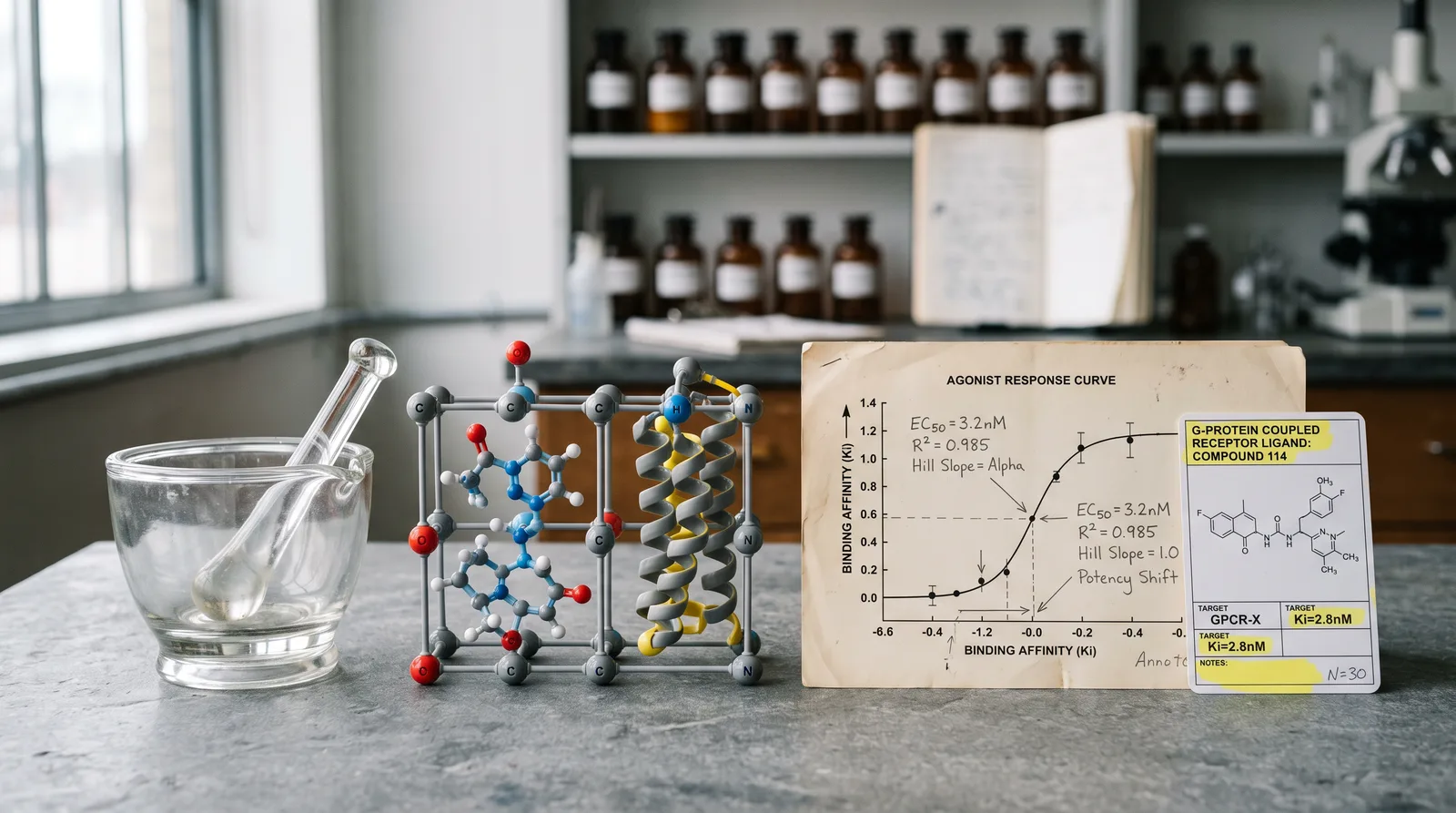
What you'll learn
What you'll be able to do
- Explain drug receptor pharmacodynamics — agonism, antagonism, partial agonism, and inverse agonism — and predict clinical outcomes from each
- Read and interpret a drug's pharmacokinetic profile (ADME) to anticipate onset, duration, dosing intervals, and accumulation risks
- Classify major drug families by mechanism, identify their prototype agents, and recall high-yield side-effect and contraindication profiles
- Apply drug-drug interaction principles to flag dangerous combinations before they reach a patient
- Confidently tackle pharmacology questions on licensing and board exams (NCLEX, USMLE, NAPLEX) using a systems-based, mechanism-first strategy
- Counsel patients or peers on how a prescribed medication works, what to expect, and what warning signs to watch for
How it works
A school that adapts to you
This isn't a set of static videos. Every lesson is generated live and tuned to where you actually are.
We learn your level
A quick placement check tailors your starting point so you're never bored or lost.
Lessons adapt as you go
Each lesson is written for your pace and your goal, adjusting as your skills grow.
Your AI coach keeps you moving
Checkpoints, feedback, and gentle nudges turn progress into a real result.
The curriculum
What's inside your school
6 modules · 27 lessons

Foundations of Pharmacology
Establishes the essential vocabulary, conceptual framework, and drug-receptor theory that underpins every drug class studied later.
- 1.1How Drugs Work: An Introduction to PharmacologyIncluded
- 1.2Drug Targets: Receptors, Enzymes, Ion Channels, and TransportersIncluded
- 1.3Agonism, Antagonism, Partial Agonism, and Inverse AgonismIncluded
- 1.4Dose-Response Relationships: Efficacy, Potency, and Therapeutic IndexIncluded
- 1.5Selectivity, Specificity, and the Origins of Side EffectsIncluded
Pharmacokinetics: What the Body Does to a Drug
Builds a complete, quantitative understanding of ADME so students can predict onset, duration, dosing intervals, and accumulation risk for any drug.
- 2.1Absorption: Routes of Administration and BioavailabilityIncluded
- 2.2Distribution: Volume of Distribution, Protein Binding, and Tissue PenetrationIncluded
- 2.3Metabolism: Phase I and Phase II Reactions and the CYP450 SystemIncluded
- 2.4Elimination: Renal Clearance, Half-Life, and Steady StateIncluded
- 2.5Special Populations: Renal Impairment, Hepatic Impairment, Pediatrics, and PregnancyIncluded
Drug Interactions and Adverse Effects
Equips students with a systematic framework to identify, predict, and prevent dangerous drug-drug and drug-patient interactions before they reach a patient.
- 3.1Pharmacokinetic Interactions: Inducers, Inhibitors, and Substrate CompetitionIncluded
- 3.2Pharmacodynamic Interactions: Synergy, Antagonism, and Additive EffectsIncluded
- 3.3High-Risk Combinations: Flagging Dangerous Drug PairsIncluded
- 3.4Adverse Drug Reactions: Classification, Recognition, and ReportingIncluded
Major Drug Classes: Mechanisms and Clinical Prototypes
Surveys the highest-yield drug families across body systems using a mechanism-first approach, anchoring each class to its prototype agent and key clinical profile.
- 4.1Autonomic Pharmacology: Cholinergics, Anticholinergics, and AdrenergicsIncluded
- 4.2Cardiovascular Drugs: Antihypertensives, Antiarrhythmics, and Heart Failure AgentsIncluded
- 4.3CNS Pharmacology: Anxiolytics, Antidepressants, Antipsychotics, and AnalgesicsIncluded
- 4.4Anti-Infectives: Antibiotics, Antivirals, and AntifungalsIncluded
- 4.5Endocrine, Respiratory, and GI Drug ClassesIncluded
Clinical Application and Patient Counseling
Translates pharmacological knowledge into practical clinical decision-making, medication safety, and clear patient-facing communication.
- 5.1Reading a Drug Profile: Package Inserts, Black Box Warnings, and LabelingIncluded
- 5.2Medication Safety: Rights of Administration and Error PreventionIncluded
- 5.3Patient Counseling: Explaining Mechanisms, Expectations, and Warning SignsIncluded
- 5.4Polypharmacy and Deprescribing: Managing Complex RegimensIncluded
Board Exam Mastery: NCLEX, USMLE, and NAPLEX Strategies
Consolidates all course content into targeted exam preparation using mechanism-first reasoning, high-yield review, and timed practice.
- 6.1How Pharmacology Is Tested: Question Styles and Exam BlueprintsIncluded
- 6.2Mechanism-First Reasoning: Answering Questions You've Never SeenIncluded
- 6.3High-Yield Drug List: Must-Know Prototypes, Side Effects, and ContraindicationsIncluded
- 6.4Timed Practice and Exam SimulationIncluded
Who it's for
Is this you?

Nursing students
Building the mechanistic foundation that makes pharmacology click — and makes NCLEX prep feel like reasoning, not roulette.

Medical students
Moving beyond Step 1 memorization to the deep receptor-level understanding that board questions — and attendings — actually demand.

Pharmacy students
Mastering the drug interaction logic, CYP450 system, and clinical counseling skills that define a pharmacist's expertise and anchor NAPLEX success.

Pre-health undergraduates
Getting ahead of professional school by building a real pharmacology framework before the pace of clinical training makes it harder to learn from scratch.

Early-career clinicians
Closing the gap between what school covered and what patients actually need — especially around interactions, special populations, and polypharmacy.

PA and NP students
Learning to prescribe with confidence by understanding exactly why a drug works, what it risks, and how to explain it clearly to every patient.
Questions
Frequently asked
Your teacher
A note from your teacher

Tracy Burke
If you've ever stared at a pharmacology drug list and felt the information sliding right off — memorized a side-effect profile the night before an exam only to forget it three days later — I want you to know that is not a memory problem. It's a structure problem. And it's exactly what this school is designed to fix.
Here's the truth about how pharmacology is usually taught: you're handed categories, then drugs, then side effects, then contraindications — as if the goal is to fill a spreadsheet. And it works, temporarily, for low-stakes recall questions. But the moment a patient is on seven medications and something goes wrong, or a board question asks you about a drug you've never seen, that spreadsheet is useless. What you need is a framework — the kind of mechanistic reasoning that lets you look at any drug, in any class, and predict what it will do.
That's the foundation of everything we do here. We start where pharmacology actually starts: at the receptor. How does an agonist differ from a partial agonist, and why does that distinction change a clinical outcome? What does the CYP450 system actually do, and why does it make certain drug combinations genuinely dangerous? Why does a drug with a long half-life accumulate in ways that can harm your patient three weeks into therapy? Once you can answer those questions from first principles, the drug lists become organized knowledge instead of random facts — and they stick.
I've built this curriculum the way I wish I had learned pharmacology: bottom-up, mechanism-first, always tied to a real patient scenario. Every major drug class — autonomic, cardiovascular, CNS, anti-infectives, endocrine, respiratory, GI — is taught through its prototype agents, with the clinical logic made explicit. We don't skip the hard parts. The CYP450 system, pharmacokinetic special populations, polypharmacy management, deprescribing — these are the things that matter most in practice and get glossed over most often in school.
I also know that for many of you, a board exam is sitting on the horizon — NCLEX, USMLE, NAPLEX — and pharmacology is one of the heaviest-tested domains on all of them. The final section of this school is dedicated to exam strategy: understanding how pharmacology questions are actually constructed, building a mechanism-first approach to questions you've never encountered, and working through a high-yield prototype list that covers what you genuinely need to know. Not everything. The right things.
Whether you're a nursing student in your first clinical semester, a medical student in pre-clinical years, a pharmacy student weeks from NAPLEX, or a clinician who feels their pharmacology foundation has more gaps than they'd like to admit — you belong here. This school meets you where you are and gives you something you can use immediately, in a classroom, on an exam, or at a bedside. Come in. Let's build something that lasts.
— Tracy Burke
Start your journey today
Join get instant access — learn at your own pace with an AI coach in your corner.
$59/mo
Recurring billing · cancel anytime
Enrolling a child? Sign up as a parent — you'll add your student right here after.
Secure checkout · Instant access
- 6 modules, 27 lessons
- AI-adaptive lessons tuned to your level
- Quizzes & checkpoints to lock in progress
- Your own AI learning coach
- Learn on any device, at your pace
- Full access for as long as you're subscribed