Rewire your mind for a life that feels worth living
The Positive Mind is a research-backed, wisdom-rich journey through the greatest thinkers in psychology and philosophy — giving you the tools to silence your inner critic, build unshakeable resilience, and design a daily mindset practice that actually lasts.

Real optimism isn't built on avoiding hard thoughts — it's built on learning, finally, how to move through them.— Pedro Miguel Rocha

What you'll learn
What you'll be able to do
- Understand and apply the core principles of positive thinking as defined by the world's leading psychologists and philosophers.
- Identify and interrupt negative thought loops using evidence-based cognitive reframing techniques.
- Build a daily mindset practice rooted in gratitude, intentionality, and self-compassion.
- Apply insights from thinkers like Viktor Frankl, Martin Seligman, and Norman Vincent Peale to real-life challenges.
- Cultivate emotional resilience so you can recover faster from setbacks, criticism, and uncertainty.
- Design a personalized long-term mental wellness plan that sustains optimism and motivation over time.
How it works
A school that adapts to you
This isn't a set of static videos. Every lesson is generated live and tuned to where you actually are.
We learn your level
A quick placement check tailors your starting point so you're never bored or lost.
Lessons adapt as you go
Each lesson is written for your pace and your goal, adjusting as your skills grow.
Your AI coach keeps you moving
Checkpoints, feedback, and gentle nudges turn progress into a real result.
The curriculum
What's inside your school
6 modules · 18 lessons

The Foundations of Positive Thinking
Establishes the intellectual and scientific bedrock of positive thinking. Students explore what the term truly means beyond pop culture, meet the field's greatest thinkers, and discover how ancient philosophy and cutting-edge neuroscience converge into a coherent worldview. This module is deliberately placed first to build a shared vocabulary and demolish misconceptions before any practice begins.
- 1.1What Positive Thinking Really MeansIncluded
- 1.2The Psychology of Optimism — Seligman and Positive PsychologyIncluded
- 1.3Ancient Wisdom Meets Modern Science — Stoics, Eastern Thought, and NeuroplasticityIncluded
Understanding and Interrupting Negative Thought Patterns
Equips students with the clinical and practical tools to detect, name, and disrupt the cognitive distortions and rumination loops that undermine optimism. Grounded in Aaron Beck's Cognitive Therapy, Albert Ellis's REBT, and Jon Kabat-Zinn's mindfulness research. Placed second because you cannot build positive habits on a foundation riddled with unchallenged negative patterns — awareness must precede practice.
- 2.1Mapping Your Inner Critic — Cognitive Distortions ExposedIncluded
- 2.2The ABCs of Reframing — Ellis, Beck, and Cognitive RestructuringIncluded
- 2.3Breaking the Rumination Cycle — Mindfulness and Pattern InterruptionIncluded
The Power of Meaning, Resilience, and Purpose
Moves beyond symptom management into the deeper architecture of a meaningful life. Drawing on Viktor Frankl's Logotherapy, Angela Duckworth's grit research, Carol Dweck's growth mindset, and Brené Brown's work on vulnerability and resilience, students learn that optimism is most durable when anchored in purpose and a long-term view of personal development. Placed third because meaning and purpose provide the 'why' that powers all daily practices in the modules that follow.
- 3.1Finding Meaning in Any Circumstance — Viktor Frankl and LogotherapyIncluded
- 3.2Emotional Resilience — Bouncing Forward, Not Just BackIncluded
- 3.3Grit, Growth Mindset, and the Long Game — Duckworth and DweckIncluded
Building a Daily Mindset Practice
Translates all theoretical knowledge into consistent, embodied daily habits. Drawing on Robert Emmons's gratitude science, Kristin Neff's self-compassion research, Hal Elrod's morning ritual framework, and neuroscience of habit formation (Charles Duhigg), this module gives students the practical architecture to make positive thinking a lived reality rather than an intellectual concept. Placed fourth, after understanding both the foundations and the obstacles, so students build practices that are informed and resilient.
- 4.1The Science and Practice of GratitudeIncluded
- 4.2Self-Compassion as a Mindset Superpower — Kristin NeffIncluded
- 4.3Intentionality: Setting the Tone — Morning, Evening, and In-Between RitualsIncluded
Emotional Intelligence, Relationships, and Social Optimism
Expands the positive mindset outward from the individual into relationships and social environments. Grounded in Daniel Goleman's Emotional Intelligence framework, John Gottman's relationship research, and social contagion science (Christakis & Fowler), students learn that optimism is both socially contagious and socially dependent — the people and inputs surrounding us either amplify or erode the mindset we are building. Placed fifth so students apply their internal toolkit in an interpersonal context before designing their long-term plan.
- 5.1Emotional Intelligence as the Engine of Optimism — GolemanIncluded
- 5.2Curating Your Environment — The People and Inputs That Shape Your MindIncluded
- 5.3Communicating Positivity — Language, Storytelling, and InfluenceIncluded
Your Personalized Mental Wellness Plan — Sustaining Optimism for Life
The capstone module. Integrates every tool, insight, and practice from the course into a coherent, personalised, long-term mental wellness plan. Students review their transformation, measure genuine growth, anticipate future obstacles with relapse-prevention strategies, and commit to a sustainable philosophy of positive living. Includes a celebration of progress and a forward-looking commitment ritual.
- 6.1Reviewing Your Transformation — Measuring Growth and Locking In WinsIncluded
- 6.2Designing Your Long-Term Mental Wellness PlanIncluded
- 6.3Living the Philosophy — Becoming a Beacon of Positive ThinkingIncluded
Who it's for
Is this you?

The Chronic Overthinker
You want to break the rumination cycle for good and finally feel at home in your own mind.

The Burnt-Out Professional
Stress has become your baseline, and you're ready to build genuine resilience — not just push through.

The Curious Self-Developer
You've read Frankl, heard of Seligman, and want a course that goes deep enough to match your curiosity.

The Recovering Pessimist
You've always leaned negative and want a research-backed path to genuine, sustainable optimism.

The Life Transitioner
You're navigating a major change — a loss, a career shift, a new chapter — and need a purposeful mindset to anchor you.

The Mindful Parent or Caregiver
You want to model emotional resilience and positive thinking for the people you care for most.
Questions
Frequently asked
Your teacher
A note from your teacher
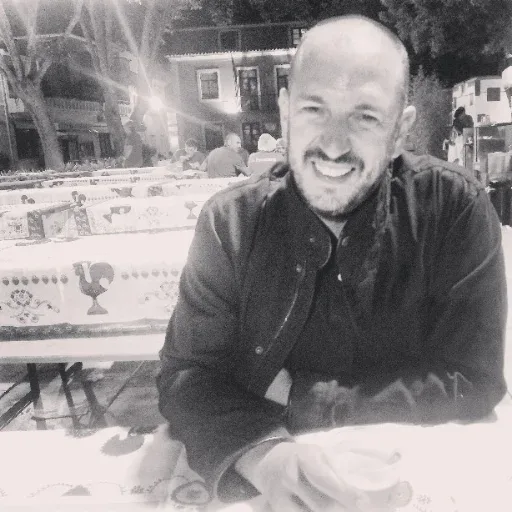
Pedro Miguel Rocha
If you're reading this, I suspect you already understand the gap — the one between knowing you should think more positively and actually being able to do it when life gets hard, when the inner critic gets loud, or when you've failed at something that mattered to you.
I've spent years sitting with that gap — reading deeply, studying the research, and exploring what the world's greatest thinkers have actually said about the human mind's capacity to change. What I found is that the advice most of us grew up with — "just think positive," "look on the bright side" — isn't just insufficient. It can actually make things worse by asking us to paper over pain we haven't understood yet.
Real, lasting optimism doesn't start with a mantra. It starts with honest self-knowledge. It starts with mapping your cognitive distortions, understanding why your mind ruminate, and learning the evidence-based tools that psychologists like Aaron Beck, Martin Seligman, and Kristin Neff spent their careers developing. It starts with sitting with Viktor Frankl's question — what meaning can I find here, even in this? — and realizing that resilience isn't about avoiding suffering. It's about how you carry it.
That's what I built The Positive Mind to be: a course that takes you seriously. One that treats you as an intelligent adult who deserves real frameworks, not just feel-good affirmations. We go deep into the research. We engage with ancient Stoic wisdom and modern neuroscience in the same breath. And then we bring it all the way back to your life — to your mornings, your relationships, your setbacks, and your long-term sense of purpose.
By the final module, you won't just have learned about positive thinking. You'll have built something: a daily mindset practice that fits your life, a set of cognitive tools you can reach for in difficult moments, and a personalized mental wellness plan that keeps evolving with you.
If you're ready to stop waiting to feel better and start building the mental architecture that makes feeling better possible — I'd be honoured to be your guide through that work.
— Pedro Miguel Rocha
Start your journey today
Join get instant access — learn at your own pace with an AI coach in your corner.
$39/mo
Recurring billing · cancel anytime
Secure checkout · Instant access
- 6 modules, 18 lessons
- AI-adaptive lessons tuned to your level
- Quizzes & checkpoints to lock in progress
- Your own AI learning coach
- Learn on any device, at your pace
- Full access for as long as you're subscribed