Read Proverbs like a scholar, live it like a sage
Move beyond fortune-cookie readings and surface-level life tips — this is a rigorous, text-first journey through the literary art, theological depth, and moral formation at the heart of biblical wisdom.
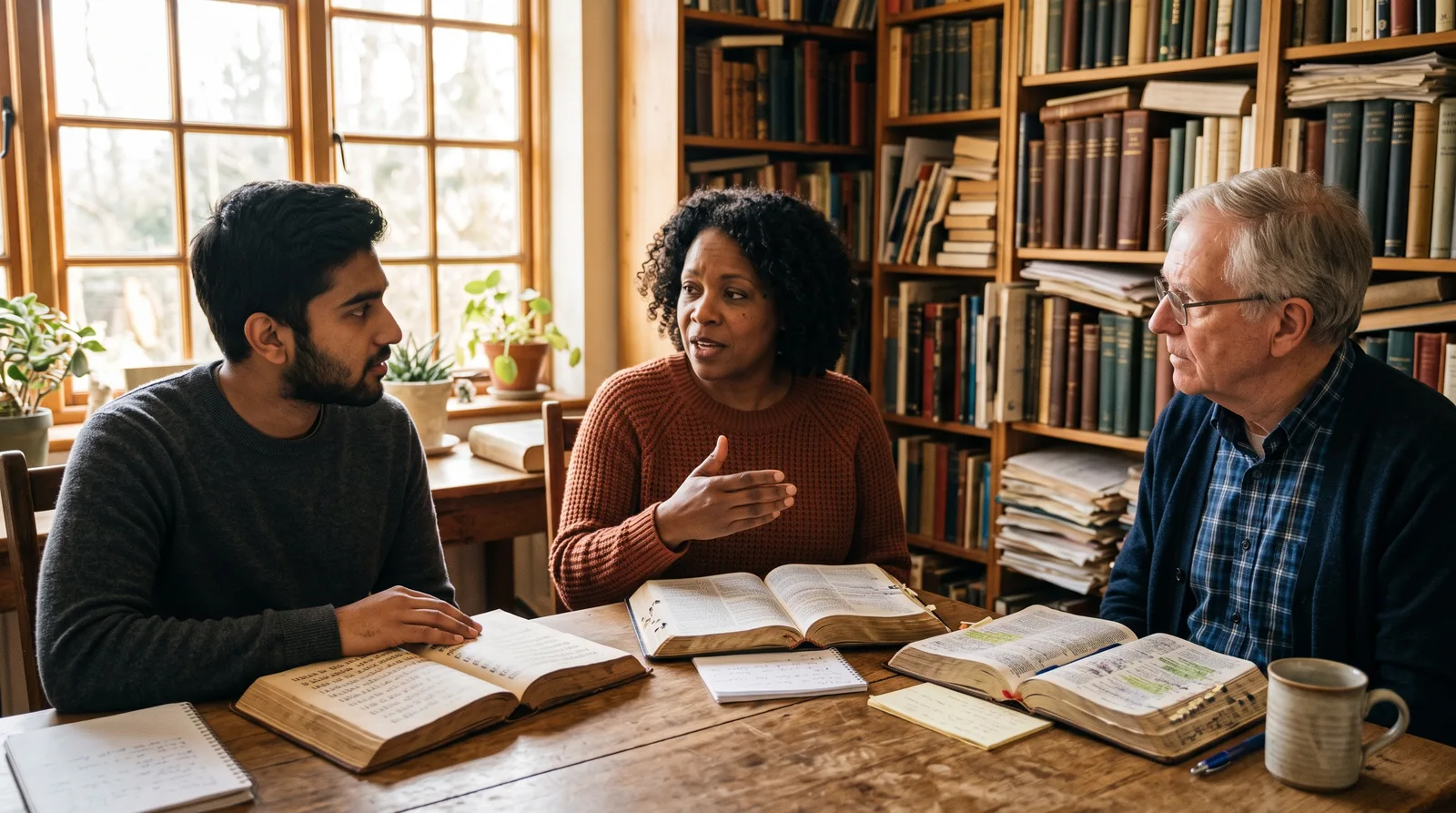
"Proverbs is not trying to give you answers — it is trying to form the kind of person who knows how to find them."
— Carla Paton

What you'll learn
What you'll be able to do
- Interpret individual proverbs within their literary, historical, and ancient Near Eastern contexts rather than as universal promises or simple formulas.
- Identify and analyze key poetic forms in Proverbs — including parallelism, numerical sayings, imagery, and instructional speeches — and explain how form shapes meaning.
- Articulate the theological foundation of biblical wisdom, including the fear of the Lord, moral order, creation theology, and human responsibility under God's sovereignty.
- Trace the major ethical themes of Proverbs — speech, wealth, work, friendship, sexuality, justice, and self-control — and apply them to real-life moral formation.
- Situate Proverbs within the broader biblical wisdom conversation, recognizing its literary and theological relationships with Job, Ecclesiastes, select Psalms, and the New Testament.
- Evaluate and responsibly handle difficult, culturally distant, or apparently contradictory passages, avoiding misuse while developing a mature framework for lifelong wise living.
How it works
A school that adapts to you
This isn't a set of static videos. Every lesson is generated live and tuned to where you actually are.
We learn your level
A quick placement check tailors your starting point so you're never bored or lost.
Lessons adapt as you go
Each lesson is written for your pace and your goal, adjusting as your skills grow.
Your AI coach keeps you moving
Checkpoints, feedback, and gentle nudges turn progress into a real result.
The curriculum
What's inside your school
6 modules · 28 lessons

What Is Biblical Wisdom?
Establishes what wisdom means in the biblical world, why the book of Proverbs exists, and how to approach it as a serious reader.
- 1.1Wisdom as a Way of Life, Not a List of RulesIncluded
- 1.2The Fear of the Lord: Wisdom's Non-Negotiable FoundationIncluded
- 1.3Who Wrote Proverbs, and Why? Origins and PurposeIncluded
- 1.4Wisdom in the Ancient Near East: Egypt, Mesopotamia, and IsraelIncluded
- 1.5How to Read a Proverb: Observations, Not GuaranteesIncluded
The Literary Art of Proverbs
Trains learners to identify and interpret the key poetic and rhetorical forms of Proverbs, showing how literary form directly shapes theological meaning.
- 2.1Parallelism: How Hebrew Poetry Thinks in PairsIncluded
- 2.2Imagery, Metaphor, and Comparison in the SayingsIncluded
- 2.3Numerical Sayings and Other Special FormsIncluded
- 2.4The Father's Instructional Speeches (Proverbs 1–9)Included
- 2.5Woman Wisdom and Woman Folly: Portrait and InvitationIncluded
The Theological World of Proverbs
Builds a coherent theological framework for Proverbs, connecting wisdom to creation, moral order, divine sovereignty, and human responsibility.
- 3.1Creation, Order, and the Moral Fabric of the WorldIncluded
- 3.2Human Responsibility and the Limits of WisdomIncluded
- 3.3Wisdom, Character, and the Formation of the SelfIncluded
- 3.4Retribution, Reward, and Why Proverbs Isn't a Prosperity GospelIncluded
The Major Ethical Themes of Proverbs
Examines the concrete moral terrain of Proverbs — speech, wealth, work, relationships, sexuality, justice, and self-control — as interconnected dimensions of wise living.
- 4.1The Power of Words: Speech, Silence, and the TongueIncluded
- 4.2Wealth, Poverty, and the Ethics of MoneyIncluded
- 4.3Work, Diligence, and the SluggardIncluded
- 4.4Friendship, Family, and the Social Shape of WisdomIncluded
- 4.5Sexuality, Anger, Pride, and Self-ControlIncluded
Hard Texts and Responsible Interpretation
Equips learners to handle difficult, culturally distant, apparently contradictory, or historically misused passages with honesty and hermeneutical maturity.
- 5.1When Proverbs Seem to Contradict Each OtherIncluded
- 5.2Culturally Distant Sayings: Hearing Across the GapIncluded
- 5.3Proverbs That Have Been MisusedIncluded
- 5.4Justice, Leadership, and the Vulnerable in ProverbsIncluded
Proverbs in the Broader Biblical Conversation
Situates Proverbs within the wider scriptural dialogue on wisdom, suffering, and human limits, tracing its connections to Job, Ecclesiastes, the Psalms, and the New Testament.
- 6.1When Wisdom Breaks Down: Proverbs and JobIncluded
- 6.2Wisdom Under the Sun: Proverbs and EcclesiastesIncluded
- 6.3Wisdom in the Psalms and the ProphetsIncluded
- 6.4Christ as Wisdom: Proverbs and the New TestamentIncluded
- 6.5Wisdom as Lifelong Formation: Where Do We Go from Here?Included
Who it's for
Is this you?

Small-group leaders
You lead others through Scripture and need more than surface readings — this school gives you the literary and theological grounding to guide real discussion on Proverbs with confidence and honesty.

Theology enthusiasts
You love rigorous ideas and want to engage the wisdom tradition — creation theology, moral order, the fear of the Lord — as a serious intellectual and spiritual pursuit, not a casual overview.

Lay Bible students
You study Scripture independently and hunger for the kind of depth and interpretive tools that seminary-trained readers have — without needing a seminary degree to access them.

Pastors & preachers
You preach from Proverbs and want to handle its hard texts, apparent contradictions, and misused passages with integrity and real exegetical care.

Recovering prosperity-gospel readers
You've seen Proverbs twisted into a formula for blessing and want to reclaim an honest, theologically grounded reading that can bear the weight of real life.

Christian ethics students
You're thinking seriously about how biblical wisdom speaks to speech, money, work, justice, and relationships — and want a framework rooted in the text, not just general principles.
Questions
Frequently asked
Your teacher
A note from your teacher

Carla Paton
If you have ever read a verse from Proverbs and felt the nagging sense that it was too neat — too easy — for the life you are actually living, I want you to know that instinct is not a failure of faith. It is the beginning of wisdom.
Proverbs is a book that has been simultaneously over-applied and under-read. People reach for it in search of simple answers and either find a verse that seems to confirm what they already believed, or quietly walk away when life does not cooperate with the formula. Neither response honors the text. And neither gets you any closer to the kind of person Proverbs is actually trying to form you into.
That is what this school is about. Not rules. Not life hacks with a theological veneer. But the deep, patient work of learning to read a proverb as it was designed to be read — as a literary artifact shaped by Hebrew poetic genius, rooted in a theology of creation and moral order, written to form character over the course of a life, not to deliver results by Tuesday. When you learn to read Proverbs that way, the book opens up in ways that are genuinely surprising. The apparent contradictions become invitations. The difficult sayings become windows. The familiar verses you thought you already knew start to say something far richer than you realized.
I have designed this curriculum for people who are done with the shallow end — adults who want to bring their full intelligence to the biblical text and trust that it can bear the weight. We will work through the literary art of Hebrew parallelism and poetic form. We will sit with the theology of the fear of the Lord and what it actually demands of us. We will follow the great ethical themes of Proverbs — speech, wealth, friendship, work, sexuality, justice — not as a checklist but as a coherent portrait of human flourishing under God. And we will do all of that honestly, including in the places where the text is hard, culturally distant, or has been badly misused.
I also want to be clear about where this journey ends: not with a tidy set of takeaways, but with a framework. A way of reading that you will carry with you. A way of thinking that will keep working in you long after this curriculum is finished. Proverbs itself calls wisdom a path — a way of moving through a complex world with discernment, humility, and skill. That is what I hope to help you develop. Come ready to read carefully, think honestly, and be formed slowly. That is exactly the pace wisdom requires.
— Carla Paton
Start your journey today
Get instant access — learn at your own pace with an AI coach in your corner.
$39/mo
Recurring billing · cancel anytime
Secure checkout · Instant access
- 6 modules, 28 lessons
- AI-adaptive lessons tuned to your level
- Quizzes & checkpoints to lock in progress
- Your own AI learning coach
- Learn on any device, at your pace
- Full access for as long as you're subscribed