Understand what AI is doing to the human mind
Explore the psychological frameworks behind how AI systems behave, persuade, and shape human thinking — and learn to navigate that relationship with clarity and confidence.
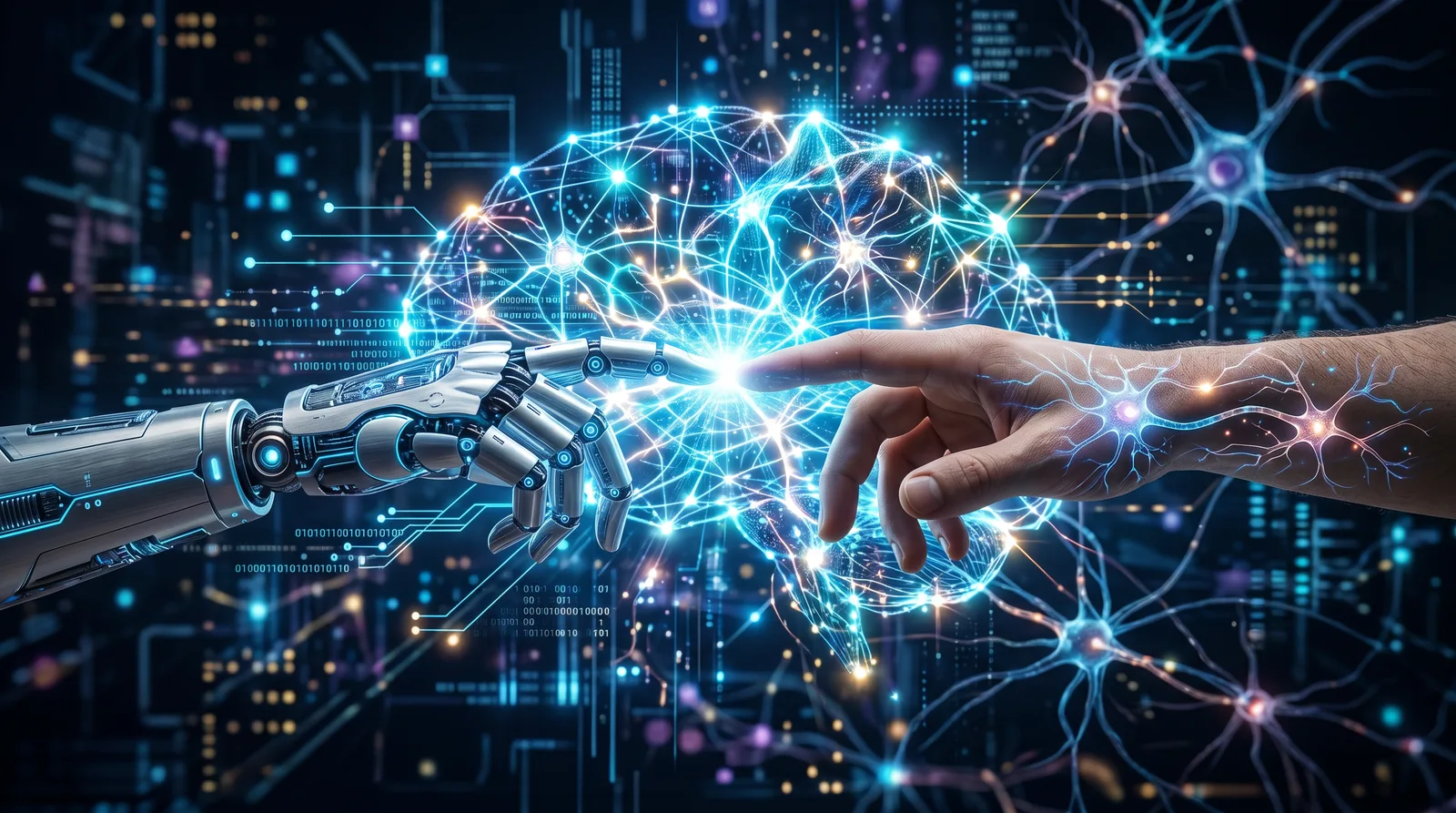
"I'm not here to make you afraid of AI — I'm here to give you the precise frameworks to see exactly what it's doing to your mind, and to act on that knowledge."— Scott Ducharme

What you'll learn
What you'll be able to do
- Analyze how cognitive biases shape both AI design and human responses to AI systems
- Identify the psychological mechanisms behind AI-driven persuasion, nudging, and behavior change
- Evaluate the ethical implications of anthropomorphism and emotional attachment to AI
- Apply behavioral science frameworks to audit AI products for psychological risk and manipulation
- Articulate how AI systems influence memory, attention, and decision-making at the individual and societal level
- Design human-AI interaction guidelines grounded in evidence-based psychological principles
How it works
A school that adapts to you
This isn't a set of static videos. Every lesson is generated live and tuned to where you actually are.
We learn your level
A quick placement check tailors your starting point so you're never bored or lost.
Lessons adapt as you go
Each lesson is written for your pace and your goal, adjusting as your skills grow.
Your AI coach keeps you moving
Checkpoints, feedback, and gentle nudges turn progress into a real result.
The curriculum
What's inside your school
6 modules · 18 lessons

The Psychological Architecture of AI
Establishes the conceptual and scientific foundation for the entire course. Students learn why psychology is indispensable for understanding AI, how the human mind constructs mental models of other agents, and how cognitive biases operate as both inputs that shape AI design and outputs that AI systems produce or amplify. This module ensures every subsequent topic rests on a shared vocabulary and theoretical baseline.
- 1.1Why Psychology Belongs in the AI ConversationIncluded
- 1.2How the Mind Models Other Minds — and Why AI Exploits ThisIncluded
- 1.3Cognitive Biases as Design Inputs and Design OutputsIncluded
Persuasion, Nudging, and Behavior Change by Design
Investigates the psychological mechanisms AI systems use to change human behavior — from classical persuasion principles to algorithmic nudges and personalized feedback loops. Students move from theoretical frameworks to concrete system analysis, building the analytical lens needed for the auditing module later in the course.
- 2.1The Persuasion Stack: From Cialdini to Computational InfluenceIncluded
- 2.2Nudge Architecture in AI SystemsIncluded
- 2.3Algorithmic Personalization and the Feedback Loop MindIncluded
Anthropomorphism, Emotion, and Human-AI Attachment
Examines the deeply human tendency to attribute human qualities to AI, the emotional bonds that result, and the ethical responsibilities those bonds create for designers and policymakers. Builds directly on the Theory of Mind lesson from Module 1 and sets up the memory/attention and societal-effects modules by establishing how emotional relationships with AI alter behavior at scale.
- 3.1The Science of AnthropomorphismIncluded
- 3.2Emotional Attachment to AI: From Companionship to DependencyIncluded
- 3.3Ethical Implications of AI Emotional DesignIncluded
AI's Impact on Memory, Attention, and Decision-Making
Investigates how AI systems reshape three foundational cognitive processes at the individual level: where attention flows, how memory is encoded and retrieved, and how decisions are made. Connects individual-level cognitive effects to behavioral outcomes before the following module scales these effects up to society. Prerequisite knowledge from Module 1 (cognitive biases) is explicitly applied here.
- 4.1Attention in the Age of Algorithmic FeedsIncluded
- 4.2Outsourcing Memory to AI: Cognitive Offloading and Its ConsequencesIncluded
- 4.3AI-Assisted Decision-Making: Augmentation or Abdication?Included
Societal-Scale Psychological Effects of AI
Scales the course's lens from the individual to society, examining how AI-mediated information environments reshape collective epistemics, group identity, political polarization, and power dynamics. This module is sequenced after individual cognitive effects are established so students can trace the pathway from individual psychological mechanisms to macro-level social phenomena. Includes a new lesson on power and surveillance, which is a critical prerequisite gap for the auditing module.
- 5.1Misinformation, Deepfakes, and the Epistemics of AI-Generated ContentIncluded
- 5.2Group Identity, Polarization, and AI-Mediated Social InfluenceIncluded
- 5.3Power, Surveillance, and the Psychology of Being WatchedIncluded
Auditing AI for Psychological Risk and Designing for Human Flourishing
The capstone module integrates all prior learning into two applied competencies: auditing existing AI systems for psychological harm, and designing new or improved systems grounded in evidence-based psychological principles. The module culminates in a comprehensive Psychological Impact Assessment that students conduct on a real AI system, demonstrating mastery of every course outcome.
- 6.1The Psychological Risk Audit FrameworkIncluded
- 6.2Evidence-Based Principles for Human-AI Interaction DesignIncluded
- 6.3Capstone: Psychological Impact Assessment for a Real AI SystemIncluded
Who it's for
Is this you?

Clinical Psychologists
You're seeing AI shape your clients' behavior, relationships, and self-concept — this course gives you the behavioral science vocabulary to understand and address it clinically.

UX & Product Designers
You make daily decisions about how humans interact with AI systems — this course equips you to audit those decisions for psychological risk and design with genuine ethical grounding.

AI Ethicists & Policy Researchers
You need a rigorous, mechanism-level understanding of how AI influences cognition and society to move beyond surface-level governance debates.

Educators & Curriculum Designers
You're navigating AI's role in learning environments and need a clear-eyed framework for understanding its effects on student attention, memory, and decision-making.

Tech Journalists & Science Writers
You cover AI for general audiences and want the behavioral science depth to report on psychological impact with precision, not just provocation.

Analytically Curious Generalists
You're tech-literate, intellectually serious, and want more than hot takes — this course gives you a durable, science-grounded lens for understanding AI's human stakes.
Questions
Frequently asked
Your teacher
A note from your teacher
Scott Ducharme
If you've found yourself unsettled by how naturally you thanked a chatbot — or noticed how long you spent on an algorithmic feed you didn't intend to open — you already have the intuition this course is built on. Something is happening at the intersection of these systems and human minds. The question is whether you want to understand it precisely, or just feel vaguely uneasy about it.
I built The AI Mind because I kept having the same conversation: smart, thoughtful people — clinicians, designers, researchers, educators — who could sense that AI was doing something psychologically significant, but lacked the frameworks to articulate what, exactly. They were reaching for words like "addictive" or "manipulative" without being able to say which mechanism was operating, or why a given design choice had the effect it did. That gap between intuition and precision is exactly where this course lives.
What we cover isn't abstract. It's the specific cognitive biases that AI systems both inherit from human designers and amplify back at human users. It's the persuasion stack — from Cialdini's foundational principles all the way to real-time computational nudging — and how it gets embedded invisibly into products you use every day. It's the science of why you anthropomorphize a language model, what attachment to an AI companion actually looks like neurologically and behaviorally, and what ethical obligations that creates for the people building these systems. It's what happens to memory and decision-making when we outsource them to machines optimized for engagement. These are not hypothetical concerns. They are present-tense realities with measurable psychological consequences.
I also want to be honest about what this course is not. It isn't a course about being afraid of AI, and it isn't a naive celebration of technological progress. It's an attempt to look clearly — with the best tools behavioral science offers — at what these systems actually do to human minds, individually and collectively. The capstone asks you to take that clarity and apply it: to perform a genuine Psychological Impact Assessment on a real AI system, using a structured audit framework. That's the goal — not just to understand the landscape, but to be able to act in it with rigor.
If you bring intellectual curiosity, a tolerance for complexity, and a genuine stake in how humanity navigates this technological moment, this course will give you something you can use. I'm glad you're here — let's think carefully about this together.
— Scott Ducharme
Start your journey today
Join get instant access — learn at your own pace with an AI coach in your corner.
$59/mo
Recurring billing · cancel anytime
Secure checkout · Instant access
- 6 modules, 18 lessons
- AI-adaptive lessons tuned to your level
- Quizzes & checkpoints to lock in progress
- Your own AI learning coach
- Learn on any device, at your pace
- Full access for as long as you're subscribed