Stop designing spaces.Start designing prestige.
Master the psychological principles behind truly elevated interiors — from the authority of authentic materials to the silence of negative space — and learn to position any environment, and your own practice, at the level luxury commands.
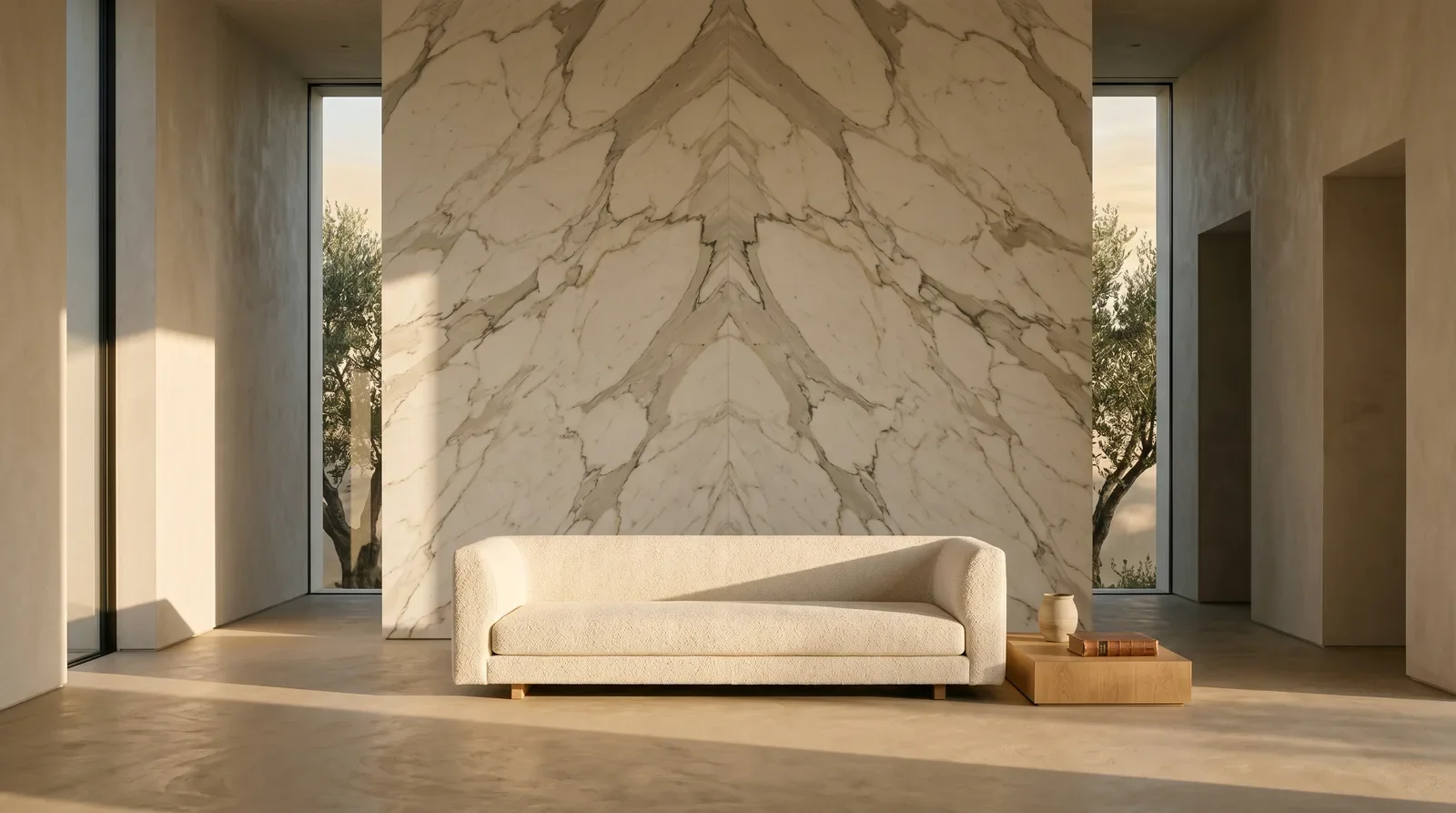
Luxury is not what a space costs — it is what it makes a person feel the moment before thought catches up with perception.
— Vanguard Luxury Institute
What you'll learn
What you'll be able to do
- Identify and apply the core psychological principles that make a space feel genuinely luxurious rather than merely expensive
- Compose rooms using negative space and restraint to create visual calm, tension, and presence
- Design and layer a lighting architecture — ambient, task, and accent — that sculpts mood and elevates material quality
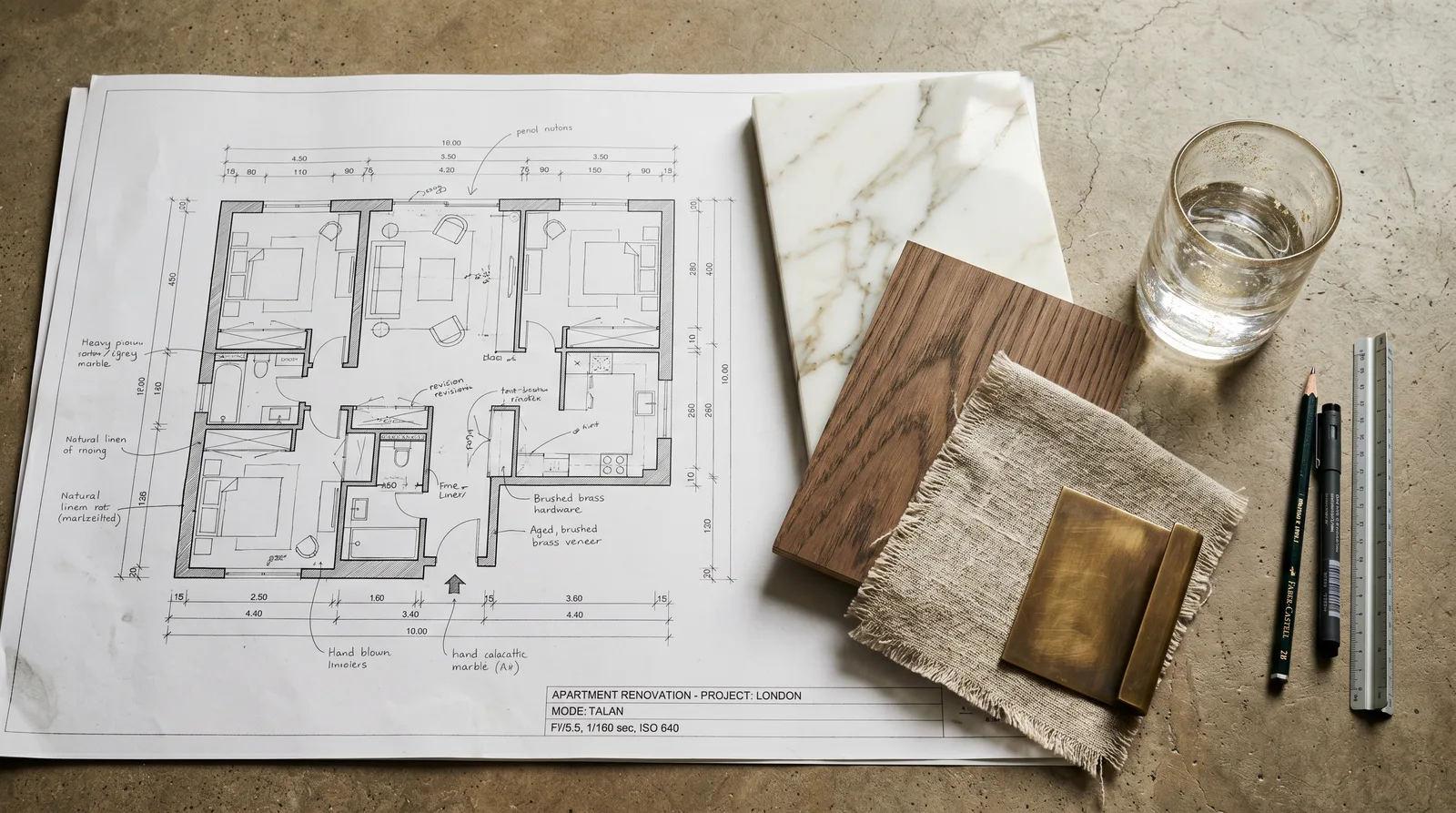
- Specify and combine authentic, tactile materials (stone, aged timber, linen, plaster) with the confidence of a seasoned luxury practitioner
- Stage any interior environment — residential, hospitality, or retail — to photograph and present at a premium price point
- Audit an existing space and produce a precise creative brief that repositions it within the luxury market
How it works
A school that adapts to you
This isn't a set of static videos. Every lesson is generated live and tuned to where you actually are.
We learn your level
A quick placement check tailors your starting point so you're never bored or lost.
Lessons adapt as you go
Each lesson is written for your pace and your goal, adjusting as your skills grow.
Your AI coach keeps you moving
Checkpoints, feedback, and gentle nudges turn progress into a real result.
The curriculum
What's inside your school
6 modules · 29 lessons

The Luxury Mindset: Psychology, Perception & Principle
Establishes the psychological and philosophical foundations that separate genuinely luxurious spaces from merely expensive ones.
- 1.1What Luxury Actually Feels Like — And WhyIncluded
- 1.2Expensive vs. Elevated: Recognising the DifferenceIncluded
- 1.3Timelessness as a Design StrategyIncluded
- 1.4The Client Psychology of Premium SpacesIncluded
Silence & Presence: Mastering Negative Space and Restraint
Teaches how to use emptiness, proportion, and deliberate restraint as active design tools that create visual calm, tension, and authority.
- 2.1Negative Space as the Primary MaterialIncluded
- 2.2The Grammar of Restraint: What to RemoveIncluded
- 2.3Proportion, Scale & the Architecture of CalmIncluded
- 2.4Composing a Room: Visual Weight, Flow & Rest PointsIncluded
- 2.5Minimalism Without Coldness: Warmth Through RestraintIncluded
Lighting Architecture: Sculpting Mood and Material
Covers the design and layering of ambient, task, and accent lighting systems that elevate materiality and define spatial atmosphere.
- 3.1Light as Architecture: The Three-Layer FrameworkIncluded
- 3.2Natural Light: Reading, Preserving & Amplifying ItIncluded
- 3.3Colour Temperature, CRI & the Language of Luxury LightIncluded
- 3.4Lighting Fixtures as Sculptural ObjectsIncluded
- 3.5Scripting a Lighting Scheme: Scenes, Controls & Mood SequencingIncluded
Material Authenticity: Specifying with Confidence and Authority
Develops the knowledge and tactile fluency to specify, combine, and justify authentic luxury materials — stone, aged timber, linen, plaster, and beyond.
- 4.1Why Authentic Materials Signal Luxury: The Psychology of TouchIncluded
- 4.2Stone: Character, Selection & ApplicationIncluded
- 4.3Timber, Plaster & Textile: The Warmth PaletteIncluded
- 4.4Building a Material Palette: Tension, Harmony & ContrastIncluded
- 4.5Sourcing, Sampling & Presenting Materials to ClientsIncluded
Staging for Premium Value: Photography, Presentation & Market Positioning
Teaches how to stage residential, hospitality, and retail environments to photograph, present, and sell at a premium price point.
- 5.1The Psychology of First Impression: Entry, Threshold & RevealIncluded
- 5.2Staging Principles: Scent, Sound, Texture & the Unseen DetailsIncluded
- 5.3Styling for the Camera: Composition, Depth & RestraintIncluded
- 5.4Staging Across Sectors: Residential, Hospitality & RetailIncluded
- 5.5Pricing the Intangible: How Staging Justifies Premium FeesIncluded
The Luxury Audit & Creative Brief: Repositioning Any Space
Equips students to evaluate an existing space critically and produce a precise, market-ready creative brief that repositions it within the luxury tier.
- 6.1Conducting a Luxury Audit: The Diagnostic FrameworkIncluded
- 6.2Identifying the Gap: Where Perception Fails to Match AmbitionIncluded
- 6.3Writing the Creative Brief: Language, Vision & PrecisionIncluded
- 6.4The Repositioning Strategy: Phasing Changes for Maximum ImpactIncluded
- 6.5Presenting the Brief & Winning Client ConfidenceIncluded
Who it's for
Is this you?

Established interior designers
Ready to move beyond trend-driven briefs and build a practice anchored in enduring, premium-tier work that commands the fees to match.

Architects entering interiors
Bringing strong spatial thinking to interior projects and seeking the material, lighting, and sensory language that distinguishes truly luxury environments.

Ambitious design newcomers
Determined to enter the premium tier from the outset, rather than spending years working upward from a mid-market starting point.

Property developers
Wanting to understand and direct luxury positioning with genuine authority — so they can brief, evaluate, and lead design decisions with confidence.

Hospitality & retail designers
Designing commercial environments where first impression and staging must do immediate, measurable work at a premium price point.

Design-trained stagers & stylists
Looking to elevate their staging and photographic presentation work into a discipline that can justify — and command — luxury-market fees.
Questions
Frequently asked
Your teacher
A note from your teacher

Vanguard Luxury Institute
If you have ever stood inside a space that stopped you — not because it was flashy or overtly expensive, but because it felt completely right — you already understand, intuitively, what this school is about. That quality has a name: it is the perception of luxury. And while it feels ineffable, it is not accidental. It is designed. I built this school because I believe that perception can be taught, and that the principles behind it are more precise, more learnable, and more durable than most design education is willing to admit.
The conversation in design tends to orbit around aesthetics — what looks good right now, what is on the mood boards, what the market is responding to. These are not unimportant questions. But they are the wrong starting point for enduring, elevated work. The right starting point is psychology: understanding how a human being moves through, reads, and feels a space before they have consciously registered a single object in it. That is where this curriculum begins, and it shapes everything that follows.
I want to be direct about what you will find here. This is not a school about luxury as a price bracket or a brand association. It is a school about luxury as a discipline — one that requires genuine restraint, an understanding of material authenticity, a command of light as architecture, and the ability to stage and present your work so that its value is immediately felt. Each of those skills has a grammar, and this school teaches that grammar carefully and without shortcuts.
The practical dimension matters as much as the conceptual one. You will leave with a real framework for auditing spaces, writing creative briefs, and positioning both your projects and your practice within the premium market. The luxury audit section alone has the potential to change how you approach a client conversation entirely.
I have designed this school for people who take their work seriously — whether you are a practitioner ready to move your portfolio decisively upmarket, a developer who wants to direct luxury positioning with genuine authority, or someone newer to the field who has decided, rightly, that there is no reason to start anywhere other than the top. The thinking here is rigorous because it needs to be. The standards are high because the work demands it. I am glad you are here.
— Vanguard Luxury Institute
Start your journey today
Get instant access — learn at your own pace with an AI coach in your corner.
$37/mo
Recurring billing · cancel anytime
Secure checkout · Instant access
- 6 modules, 29 lessons
- AI-adaptive lessons tuned to your level
- Quizzes & checkpoints to lock in progress
- Your own AI learning coach
- Learn on any device, at your pace
- Full access for as long as you're subscribed