Turn data into lives saved
Master the full public health toolkit — from epidemiological study design and biostatistics to health policy, community intervention, and emergency response — so you can move from understanding health problems to actually solving them.
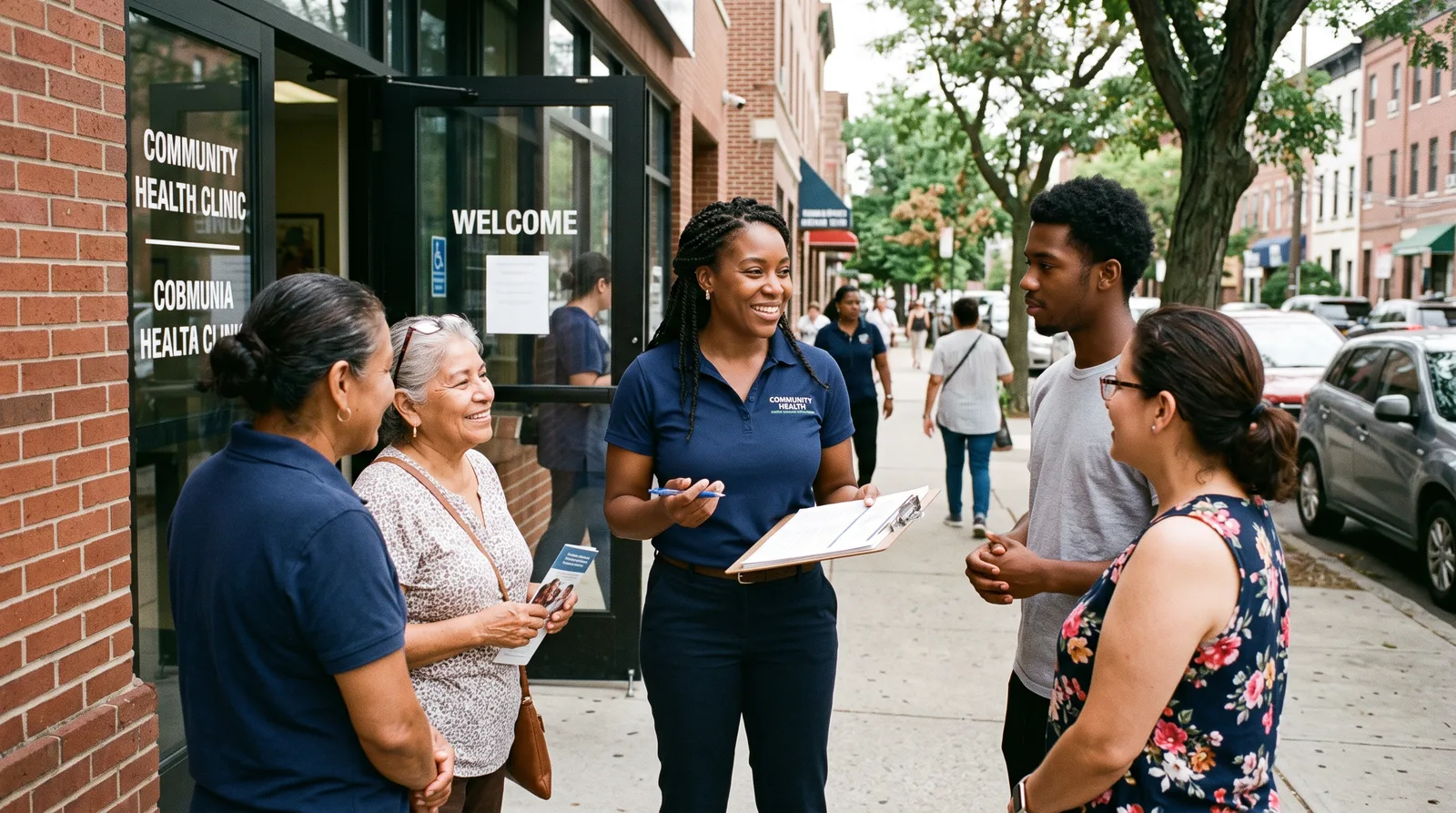
"Every method I teach here has a population behind it — and that is exactly the weight I want you to feel when you use it."
— Tracy Burke
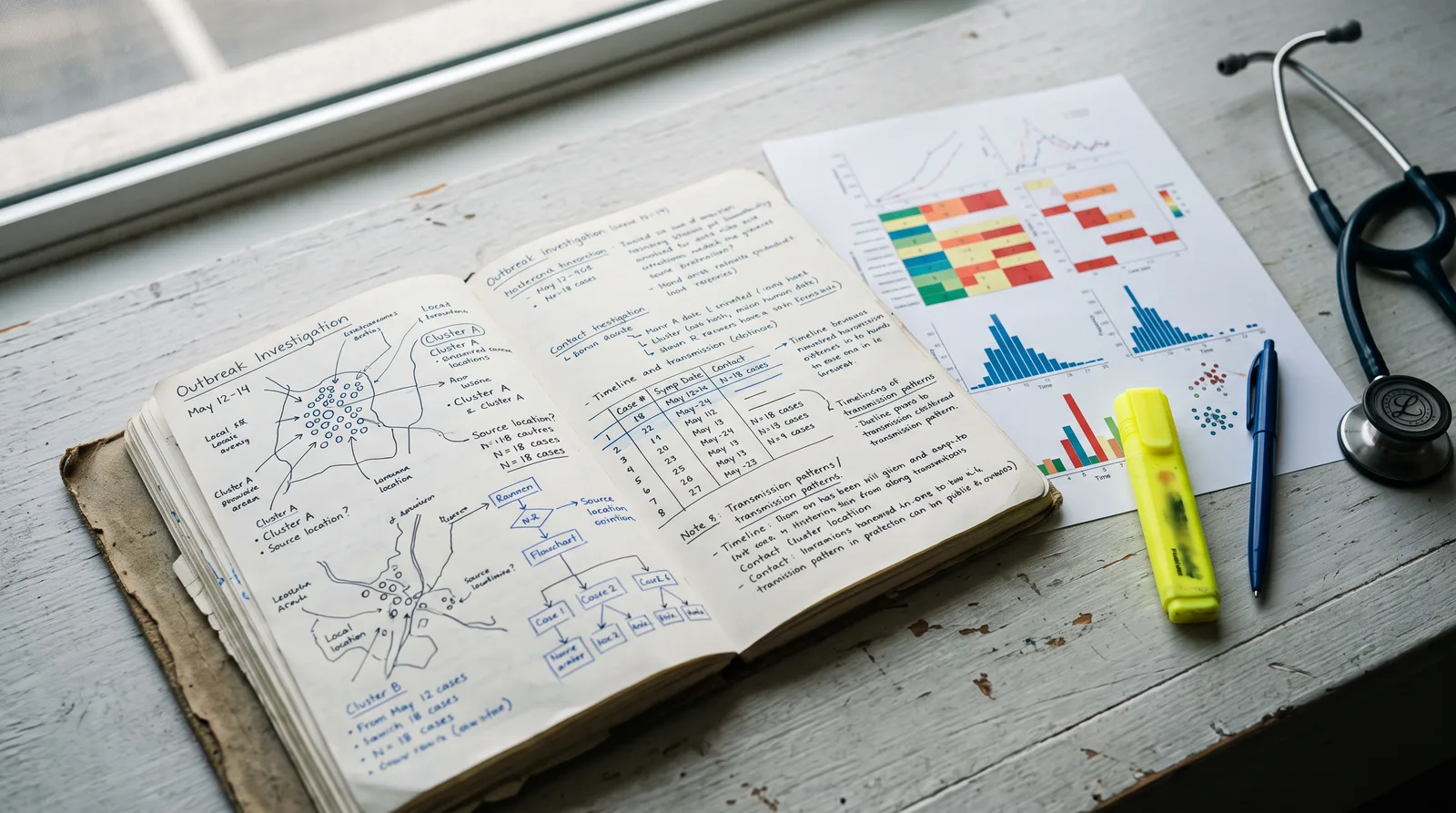
What you'll learn
What you'll be able to do
- Design and interpret epidemiological studies to identify disease patterns and risk factors in a population
- Apply core biostatistics methods to analyze public health data and communicate findings clearly
- Evaluate and develop evidence-based health policies at the local, national, and global level
- Build and manage community health intervention programs from needs assessment to outcome evaluation
- Navigate disease surveillance systems and respond effectively to public health emergencies and outbreaks
- Communicate public health risks and recommendations to diverse audiences, from policymakers to the general public
How it works
A school that adapts to you
This isn't a set of static videos. Every lesson is generated live and tuned to where you actually are.
We learn your level
A quick placement check tailors your starting point so you're never bored or lost.
Lessons adapt as you go
Each lesson is written for your pace and your goal, adjusting as your skills grow.
Your AI coach keeps you moving
Checkpoints, feedback, and gentle nudges turn progress into a real result.
The curriculum
What's inside your school
6 modules · 30 lessons

Foundations of Public Health
Establishes the core concepts, history, and frameworks that underpin every discipline in public health practice.
- 1.1What Is Public Health? Scope, History, and Core MissionsIncluded
- 1.2Determinants of Health: Biological, Social, and Environmental FactorsIncluded
- 1.3Public Health Ethics and Health EquityIncluded
- 1.4The US Public Health System: Agencies, Roles, and JurisdictionsIncluded
- 1.5Global Health Landscape and International FrameworksIncluded
Epidemiology: Identifying Disease Patterns and Risk
Builds rigorous skills to design, conduct, and interpret epidemiological studies that explain who gets sick and why.
- 2.1Epidemiological Thinking: Measures of Disease FrequencyIncluded
- 2.2Study Designs: From Cohort and Case-Control to Randomized TrialsIncluded
- 2.3Measures of Association and CausationIncluded
- 2.4Bias, Confounding, and Internal ValidityIncluded
- 2.5Screening, Surveillance Data, and Interpreting Epidemiological ReportsIncluded
Biostatistics for Public Health
Equips learners with the quantitative methods needed to analyze health data and communicate findings with precision.
- 3.1Summarizing and Visualizing Public Health DataIncluded
- 3.2Probability, Inference, and Hypothesis TestingIncluded
- 3.3Comparing Groups: t-Tests, Chi-Square, and ANOVAIncluded
- 3.4Regression Analysis in Public HealthIncluded
- 3.5Communicating Statistical Findings to Non-Technical AudiencesIncluded
Health Policy: From Evidence to Action
Develops the analytical and strategic skills to evaluate existing policies and craft evidence-based public health legislation.
- 4.1How Health Policy Is Made: The US Legislative and Regulatory ProcessIncluded
- 4.2Policy Analysis Frameworks and Evidence StandardsIncluded
- 4.3Health Economics: Cost-Effectiveness and Budget ImpactIncluded
- 4.4Comparative Health Systems and Global PolicyIncluded
- 4.5Advocacy, Stakeholder Engagement, and Policy CommunicationIncluded
Community Health Programs: Design, Implementation, and Evaluation
Guides learners through every stage of building a community health intervention, from needs assessment to outcome measurement.
- 5.1Community Needs Assessment: Methods and ToolsIncluded
- 5.2Designing Evidence-Based Health InterventionsIncluded
- 5.3Implementation Science: Moving Programs from Plan to PracticeIncluded
- 5.4Program Evaluation: Process, Outcome, and Impact MeasuresIncluded
- 5.5Health Communication and Social MarketingIncluded
Disease Surveillance and Emergency Preparedness
Prepares learners to operate within public health surveillance systems and lead effective responses to outbreaks and emergencies.
- 6.1Disease Surveillance Systems: Structure, Data Sources, and ReportingIncluded
- 6.2Outbreak Investigation: Steps, Tools, and Case StudiesIncluded
- 6.3Public Health Emergency Preparedness FrameworksIncluded
- 6.4Risk Communication During CrisesIncluded
- 6.5After-Action Review and Building Resilient Health SystemsIncluded
Who it's for
Is this you?

Public health newcomers
She is entering the field from a non-traditional background and needs a rigorous, structured foundation before pursuing an MPH or her first public health role.

Clinical professionals pivoting to population health
He works in healthcare and understands individual patient care, but wants the epidemiological and systems-level thinking to operate at community and policy scale.

Health policy analysts
She evaluates legislation and programs but wants stronger command of epidemiological evidence standards and cost-effectiveness frameworks to make her analysis unassailable.

Community health advocates
He works directly with underserved communities and wants the program design, needs assessment, and evaluation skills to make his interventions evidence-based and fundable.

Emergency preparedness coordinators
She manages emergency response planning and wants a deeper grounding in surveillance systems, outbreak investigation, and crisis risk communication to lead with authority during a public health event.

Global health practitioners
He works across international health programs and needs the comparative health systems knowledge, policy frameworks, and applied epidemiology skills to operate effectively across diverse contexts.
Questions
Frequently asked
Your teacher
A note from your teacher

Tracy Burke
If you are reading this, you probably already care deeply about why some communities bear a disproportionate burden of disease, why good evidence so rarely becomes good policy fast enough, or what it actually takes to coordinate a response when an outbreak threatens a population. You are not here for a surface-level survey. You want to understand how public health actually works — the methods, the systems, the policy levers, and the human dynamics that determine whether knowledge becomes action or just stays in a journal.
I built Public Health Pro because I kept seeing the same gap: smart, motivated people entering the field — or working in adjacent roles in healthcare, policy, and community organizations — who had passion and urgency but were missing the analytical fluency to make their work authoritative and durable. They could feel that something was wrong in the data, but they could not yet articulate why a study design was flawed. They knew a policy needed to change, but they did not know how to frame a cost-effectiveness argument or map a stakeholder landscape. That gap costs lives, because it costs credibility and it costs time.
This school closes that gap systematically. We start with the foundations that orient everything — the history, ethics, equity frameworks, and system architecture that explain why public health is organized the way it is. Then we go deep into the two analytical pillars of the field: epidemiology and biostatistics. Not as abstract academic requirements, but as practical tools you will use to read a surveillance report critically, design a study that will survive peer review, and present a regression finding to a room of non-statisticians without losing them. These are skills that distinguish professionals who advise decisions from those who are simply present at the table.
The second half of the curriculum is about translating that rigor into the world. Health policy: how evidence actually moves through the US legislative and regulatory process, how to conduct a cost-effectiveness analysis, how to engage stakeholders and communicate policy positions persuasively. Community programs: how to assess a community's needs, design an evidence-based intervention, implement it with fidelity, and evaluate it in a way that holds up to scrutiny. And finally, disease surveillance and emergency preparedness — the part of this work that demands you be both analytically sharp and deeply human, because outbreak response is where the science and the stakes converge most visibly.
I will not promise you that this school is easy. Public health is not easy. But I will promise you that every concept here is taught the way a seasoned practitioner thinks about it — precisely, with real-world grounding, and with a steady eye on what it means for the populations we serve. If you are ready to develop the skills that turn data into lives saved, I am ready to teach them. Let's get to work.
— Tracy Burke
Start your journey today
Get instant access — learn at your own pace with an AI coach in your corner.
$59/mo
Recurring billing · cancel anytime
Enrolling a child? Sign up as a parent — you'll add your student right here after.
Secure checkout · Instant access
- 6 modules, 30 lessons
- AI-adaptive lessons tuned to your level
- Quizzes & checkpoints to lock in progress
- Your own AI learning coach
- Learn on any device, at your pace
- Full access for as long as you're subscribed