Break free from the thoughts that keep looping
Quiet the Loop gives you a structured, science-backed path — from mapping your triggers and defusing intrusive thoughts in real time, to building daily rituals that keep the spiral from ever taking hold again.

Your thoughts don't need to be silenced — they need to lose their grip on you, and that is absolutely a skill you can learn.— Audra N. Gillis, LCSW-C, LICSW, CBT, CHT

What you'll learn
What you'll be able to do
- Identify the specific triggers and patterns that fuel your personal obsessive thought loops
- Apply evidence-based cognitive defusion techniques to detach from intrusive thoughts in real time
- Use structured mindfulness practices to observe thoughts without being consumed by them
- Build a personalized 'circuit-breaker' toolkit of daily rituals that interrupt rumination before it escalates
- Reframe the relationship between self-worth and unwanted thoughts, reducing shame and resistance
- Sustain long-term mental regulation through habit systems that prevent relapse into chronic overthinking
How it works
A school that adapts to you
This isn't a set of static videos. Every lesson is generated live and tuned to where you actually are.
We learn your level
A quick placement check tailors your starting point so you're never bored or lost.
Lessons adapt as you go
Each lesson is written for your pace and your goal, adjusting as your skills grow.
Your AI coach keeps you moving
Checkpoints, feedback, and gentle nudges turn progress into a real result.
The curriculum
What's inside your school
6 modules · 25 lessons
Understanding the Loop
Build a clear, science-backed picture of what obsessive thought cycles are, why the brain produces them, and how to identify your personal patterns.
- 1.1How Obsessive Thought Loops WorkIncluded
- 1.2Mapping Your Personal TriggersIncluded
- 1.3The Cycle of Avoidance and AmplificationIncluded
- 1.4Recognizing Your Loop's SignatureIncluded
Detaching from the Thought
Apply evidence-based cognitive defusion techniques to create distance between you and your intrusive thoughts in real time.
- 2.1What Cognitive Defusion Really MeansIncluded
- 2.2Labeling and Naming TechniquesIncluded
- 2.3The Leaves on the Stream ExerciseIncluded
- 2.4Defusion in High-Intensity MomentsIncluded
Mindful Observation Without Consumption
Develop a structured mindfulness practice that trains you to witness intrusive thoughts as passing mental events, not facts or commands.
- 3.1The Observer Self: Watching Without ReactingIncluded
- 3.2Breath-Anchored Mindfulness for RuminationIncluded
- 3.3Body Scanning to Interrupt Mental SpiralsIncluded
- 3.4Building a Daily Mindfulness Micro-PracticeIncluded
Rewriting Your Relationship with Unwanted Thoughts
Shift the emotional meaning you attach to intrusive thoughts — dissolving shame, self-judgment, and the belief that thoughts define you.
- 4.1Thoughts Are Not Facts, and Not YouIncluded
- 4.2The Role of Shame in Keeping Loops AliveIncluded
- 4.3Self-Compassion as a Regulation ToolIncluded
- 4.4Reframing: Writing a New NarrativeIncluded
Building Your Circuit-Breaker Toolkit
Assemble a personalized set of daily rituals and in-the-moment interventions that interrupt rumination before it escalates.
- 5.1What Makes a Circuit-Breaker EffectiveIncluded
- 5.2Behavioral Pattern InterruptsIncluded
- 5.3Designing Your Morning and Evening Regulation RitualsIncluded
- 5.4Curating Your Personal ToolkitIncluded
Sustaining Long-Term Mental Regulation
Establish the habit systems, relapse-prevention strategies, and identity shifts needed to maintain freedom from chronic overthinking permanently.
- 6.1Why Regulation Habits Fade — and How to Stop ItIncluded
- 6.2Habit Stacking for Consistent PracticeIncluded
- 6.3Tracking Progress and Recognizing Relapse PatternsIncluded
- 6.4Becoming Someone Who Regulates: An Identity ShiftIncluded
- 6.5When to Seek Additional SupportIncluded
Who it's for
Is this you?

The Chronic Worrier
You've always been 'an overthinker' — this school gives you the first real framework for understanding and interrupting the worry cycle before it takes your whole day.

The Relationship Ruminator
You replay conversations, dissect texts, and can't switch off after conflict — the cognitive defusion and reframing tools here are built for exactly this kind of loop.

The OCD-Tendency Sufferer
You recognize intrusive, sticky thoughts that feel impossible to dismiss — this school's evidence-based approach addresses the avoidance-amplification cycle at its root.

The Burnt-Out Professional
Work stress has turned into a constant mental loop that follows you home — the daily regulation rituals and habit-stacking system here are designed to fit into a full, demanding life.

The Mindfulness Skeptic
Apps and breathing exercises haven't stuck before — this school gives mindfulness a clear structure and purpose within a full cognitive toolkit, so it finally makes sense.

The Self-Aware Seeker
You've read the books and know the theory — now you want a step-by-step practice that translates that knowledge into lasting, daily mental regulation.
Questions
Frequently asked
Your teacher
A note from your teacher

Audra N. Gillis, LCSW-C, LICSW, CBT, CHT
If you're here, I'd be willing to bet you're tired.
Not just sleep-tired — though that's probably part of it too. I mean the bone-deep exhaustion that comes from fighting your own mind every single day. From knowing, logically, that the thought isn't true or useful or worth another minute of your energy — and then watching helplessly as it loops again anyway. That particular kind of tired is something I understand deeply, and it's exactly why I built this school.
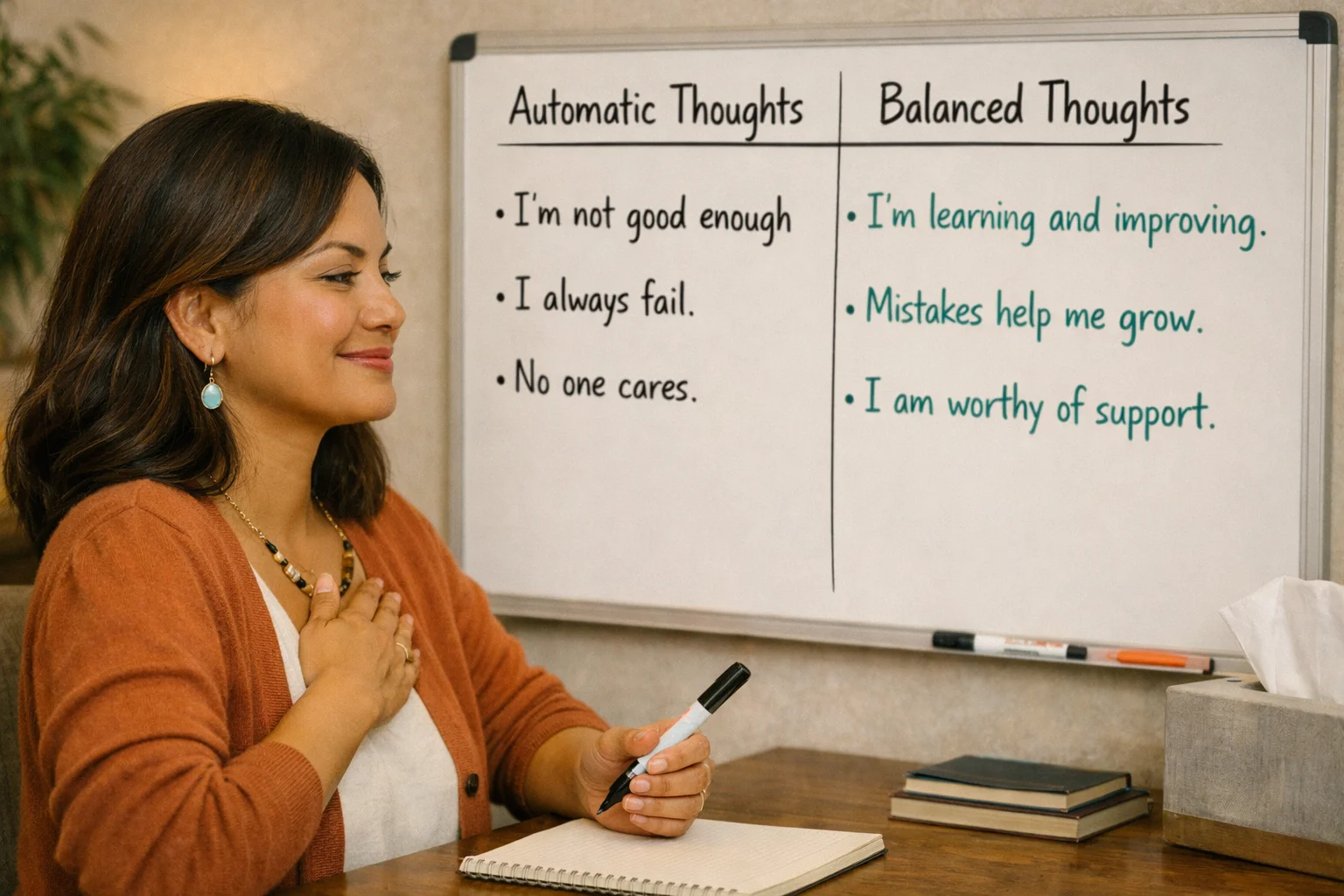
Here's what I want you to hear first: the fact that you can't think your way out of these loops is not a weakness. It's actually built into the architecture of how anxiety and obsessive thinking work. The more you fight a thought, the more oxygen you give it. The more you avoid the trigger, the bigger the trigger grows. No amount of willpower, positive thinking, or telling yourself to "just let it go" changes that underlying mechanism. What does change it — genuinely, durably — is skill. Specifically, the skills of cognitive defusion, mindful observation, and structured habit-based regulation. That's what this school teaches.
What you'll find here isn't a collection of feel-good platitudes or a meditation retreat in disguise. It's a structured, step-by-step curriculum grounded in approaches that have real clinical evidence behind them — ACT, mindfulness-based cognitive therapy, behavioral pattern interruption. We start at the beginning: understanding exactly how your personal thought loops are constructed, what triggers them, and what keeps them spinning. From there, we build. Each section gives you a new layer of skill — and by the end, you'll have assembled a personalized toolkit that actually fits your life.
I also want to say something about shame, because it's in the room with most of us who struggle this way. Unwanted thoughts — intrusive ones, repetitive ones, ones that embarrass or frighten you — do not say anything true about who you are. One of the most important things we do together in this school is gently dismantle the belief that your thoughts define you. They don't. And once you really internalize that, everything else gets easier.
You don't have to keep white-knuckling your way through your own mind. There's a steadier way to live, and it's learnable. I'm glad you're here — let's build it together.
— Audra N. Gillis, LCSW-C, LICSW, CBT, CHT
Start your journey today
Join get instant access — learn at your own pace with an AI coach in your corner.
$39/mo
Recurring billing · cancel anytime
Secure checkout · Instant access
- 6 modules, 25 lessons
- AI-adaptive lessons tuned to your level
- Quizzes & checkpoints to lock in progress
- Your own AI learning coach
- Learn on any device, at your pace
- Full access for as long as you're subscribed