
Teach your child the proper sequence to learn to read — starting today-Raise a Reading Star
A Reading program created by a certified school teacher with over 15 years of classroom teaching experience.Raise a Reader gives the parent a simple, proven daily routine — built around phonics, phonemic awareness, and no-prep activities — so you can guide your child from their very first sounds to confident, independent reading. This program is approved by a state certified classroom English Teacher. The parent cheat code helps you teach your child properly step by step with no degree needed!

Reading isn't a gift some kids are born with — it's a skill, and when parents know the sequence, they can teach it.
— JH- NJ State Certified Teacher

What you'll learn
What you'll be able to do
- Teach letter sounds and phonemic awareness using simple, no-prep activities drawn from your home environment.
- Guide a child through blending sounds into real words using proven phonics sequences that match how the brain learns to read.
- Identify exactly where a low or struggling reader has stalled and choose the right intervention activity to get them unstuck.
- Run effective 10–15 minute daily reading lessons that hold a young child's attention without battles or frustration.
- Adapt core reading lessons for beginner English learners by layering vocabulary support and visual context into every session.
- Build a home reading routine — including book selection, read-alouds, and word games — that compounds progress week over week.
How it works
A school that adapts to you
This isn't a set of static videos. Every lesson is generated live and tuned to where you actually are.
We learn your level
A quick placement check tailors your starting point so you're never bored or lost.
Lessons adapt as you go
Each lesson is written for your pace and your goal, adjusting as your skills grow.
Your AI coach keeps you moving
Checkpoints, feedback, and gentle nudges turn progress into a real result.
The curriculum
What's inside your school
7 modules · 33 lessons
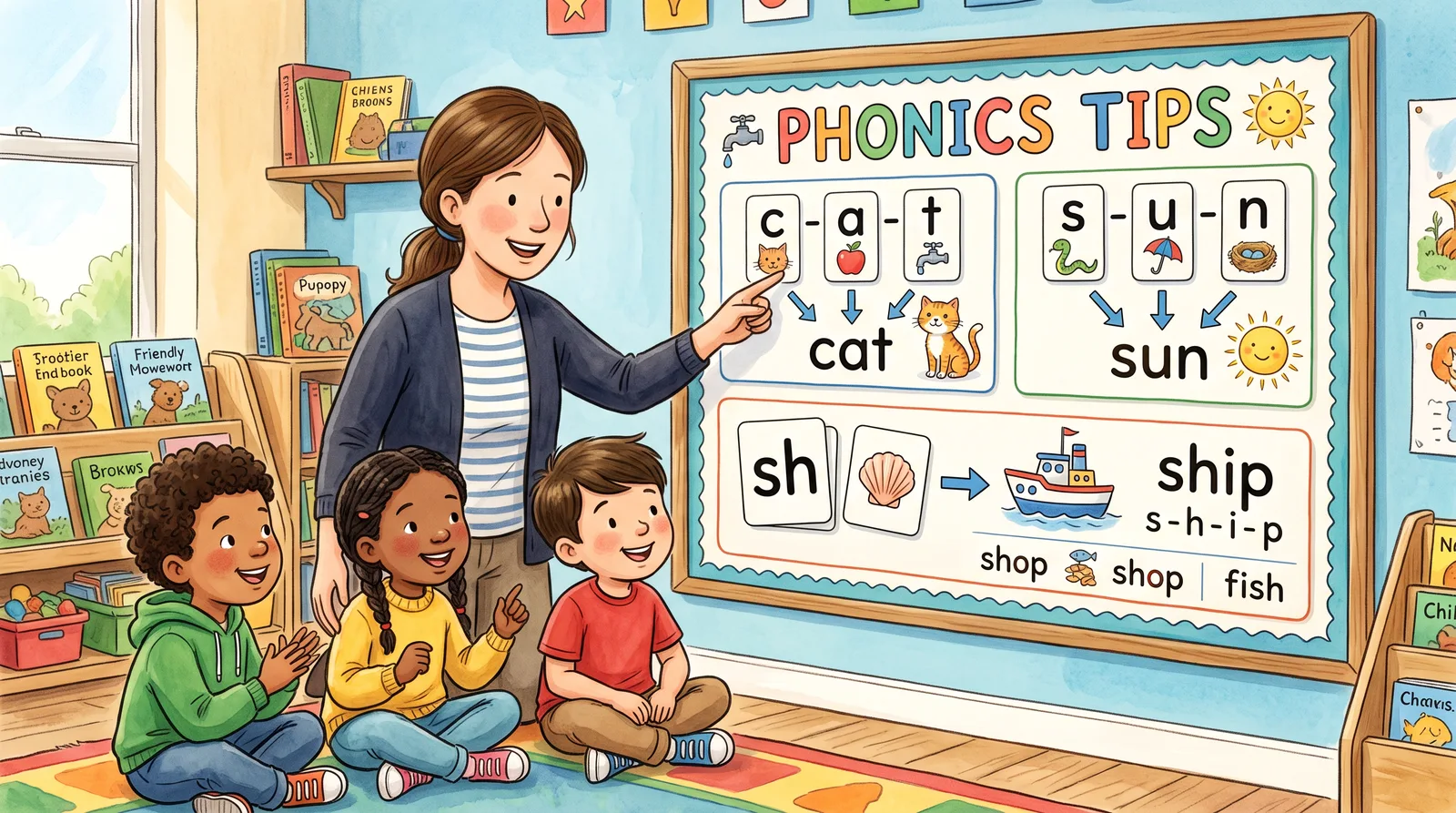
How Children Learn to Read: What Every Parent Needs to Know
Builds the essential foundation by explaining the science of reading so parents can teach with confidence and purpose.
- 1.1The Reading Road MapIncluded
- 1.2Phonics vs. Sight Words vs. Guessing: What Actually WorksIncluded
- 1.3Know Your Child's Starting PointIncluded
- 1.4Setting Up Your 10–15 Minute Daily LessonIncluded
Phonemic Awareness: Training the Ear Before the Eye
Teaches parents to build the all-important sound awareness skills children need before letters and words make sense.
- 2.1What Is Phonemic Awareness and Why It Comes FirstIncluded
- 2.2Rhyming, Clapping, and Syllable GamesIncluded
- 2.3Isolating and Identifying SoundsIncluded
- 2.4Blending and Segmenting Spoken WordsIncluded
- 2.5Phonemic Awareness for Beginner English LearnersIncluded
Teaching Letter Sounds and the Phonics Sequence
Walks parents through the proven order for introducing letter-sound relationships so every new sound builds on the last.
- 3.1Introducing Letters and Their Sounds (Not Their Names)Included
- 3.2The High-Priority Phonics SequenceIncluded
- 3.3No-Prep Sound Activities from Around the HouseIncluded
- 3.4Digraphs, Blends, and When to Introduce ThemIncluded
- 3.5Sight Words Done Right: Anchor, Don't MemorizeIncluded
Blending Sounds into Real Words: From Sounds to Reading
Gives parents step-by-step techniques to guide children through decoding their first words, sentences, and simple books.
- 4.1The Blend-It Routine: Sounding Out Words Step by StepIncluded
- 4.2Building and Reading CVC WordsIncluded
- 4.3Moving to Longer Words and Simple SentencesIncluded
- 4.4Choosing the Right Books for Practice ReadingIncluded
- 4.5Running a Mini Read-Aloud That Builds Vocabulary and ComprehensionIncluded
Identifying Gaps and Unsticking the Struggling Reader
Equips parents to diagnose exactly where a low or stalled reader is stuck and apply the right targeted fix.
- 5.1Reading the Signs: What Struggling Behaviors Tell YouIncluded
- 5.2The At-Home Phonics Gap AuditIncluded
- 5.3Targeted Fix-It Activities for the Most Common Sticking PointsIncluded
- 5.4Building Fluency: From Choppy to SmoothIncluded
- 5.5When to Seek Extra Help and How to Talk to Your Child's TeacherIncluded
Teaching the Beginner English Learner to Read
Shows parents how to layer vocabulary, visual context, and home-language supports into every reading lesson for English learners.
- 6.1Understanding the Difference Between Language and Reading GapsIncluded
- 6.2Building Vocabulary Before, During, and After Every LessonIncluded
- 6.3Using Your Home Language as a Reading SuperpowerIncluded
- 6.4Visual Context and Gestures: Making Print MeaningfulIncluded
Building a Home Reading Routine That Compounds Progress
Helps parents design a sustainable weekly reading life — habits, games, and book choices — that accelerates growth over time.
- 7.1Designing Your Weekly Reading RhythmIncluded
- 7.2Word Games the Whole Family Can PlayIncluded
- 7.3Building Your Home Book Collection on Any BudgetIncluded
- 7.4Tracking Progress and Celebrating WinsIncluded
- 7.5Keeping Lessons Joyful: Handling Resistance, Fatigue, and Bad DaysIncluded
Who it's for
Is this you?

The worried parent of a preschooler
Her 4-year-old starts kindergarten next year and she wants to give them the strongest possible foundation in letter sounds and phonemic awareness before day one.

The dad of a struggling first-grader
His son is falling behind in class and he needs a practical way to identify the gap and run targeted at-home sessions that actually move the needle.

The bilingual family caregiver
She speaks a language other than English at home and wants to support her child's English reading journey without erasing the home language she loves.

The grandparent who steps in
She watches her grandchild several days a week and wants clear, simple activities she can do with them that genuinely support what the school is teaching.

The homeschooling parent
She's teaching her child at home and needs a structured, research-backed phonics sequence she can follow with confidence, not a pile of disconnected worksheets.

The busy parent with limited time
He's got a full schedule and needs a realistic daily routine — 10–15 minutes max — that makes consistent reading progress possible without overwhelming anyone.
Questions
Frequently asked
Your state certified teacher-
A note from your teacher

Raise a Reader Certified Teacher/s
If you've ever sat beside your child during reading time, watched them struggle to sound out a word, and thought — I wish I knew how to actually help them — I want you to know: that feeling is exactly why I built this school.
You don't need a teaching degree. You don't need fancy flashcard sets or an expensive reading program. What you need is a clear map of how reading actually develops in a child's brain, and a simple daily routine you can start using today. That's what Raise a Reader gives you.
Here's what I've learned from working with families in this exact situation: most parents who feel lost don't lack effort or love — they lack a sequence. They try sight word memorization, or they quiz letters, or they pick up a workbook without knowing where their child actually is. The result? Frustration on both sides, and a child who starts to believe reading "just isn't for them." This school fixes that at the root. We start with phonemic awareness — training your child's ear to hear the sounds inside spoken words — because that's what the research is clear on: the ear has to come before the eye. From there, we move through letter sounds, the phonics sequence, blending, gap-finding, fluency building, and finally a home reading routine that keeps compounding progress week after week.
I've also made sure that families raising beginner English learners aren't left to figure it out on their own. Your home language is a superpower in this process, and I'll show you exactly how to use it, alongside vocabulary strategies and visual supports that make English print click for your child.
You'll run 10–15 minute lessons. You'll use things you already have at home. And you'll know — not guess — what to do next at every single step. If your child is between 3 and 8 and reading hasn't clicked yet, this is your next move. I'm so glad you're here, and I can't wait to hear about the moment your child reads their first real word.
— Raise a Reader Certified Teacher/s
Start your journey today
Get instant access — learn at your own pace with an AI coach in your corner.
$39/mo
Recurring billing · cancel anytime
Secure checkout · Instant access
- 7 modules, 33 lessons
- AI-adaptive lessons tuned to your level
- Quizzes & checkpoints to lock in progress
- Your own AI learning coach
- Learn on any device, at your pace
- Full access for as long as you're subscribed