Heal the orphan wound at the root of every diagnosis
A theologically grounded, clinically honest school for practitioners who are done choosing between the DSM and the soul — and are ready to hold both, faithfully.
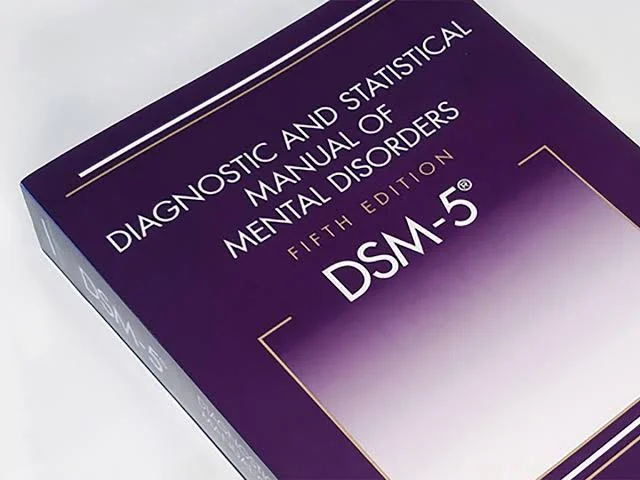
"I don't want to teach you to choose between the DSM and the soul — I want to show you how to hold both with such steadiness that the people in your care finally feel seen whole."
— Robert J. Day

What you'll learn
What you'll be able to do
- Reframe DSM diagnoses through an incarnational theological lens, seeing categories as invitations to presence rather than reductions of personhood
- Articulate a 'Recovering Orphan' theology of healing — understanding human distress as ruptured belonging and recovery as homecoming
- Apply diagnostic humility in clinical or pastoral practice, holding categories lightly while honoring the full soul of each person
- Translate common diagnoses (depression, anxiety, addiction) into relational and spiritual parables without dismissing their empirical reality
- Develop a transdisciplinary care posture that integrates clinical rigor with theological wisdom, becoming a 'midwife of belonging'
- Design a theologically alternative framework for assessment that asks not 'What disorder is present?' but 'What belonging has been lost, and how can it be restored?'
How it works
A school that adapts to you
This isn't a set of static videos. Every lesson is generated live and tuned to where you actually are.
We learn your level
A quick placement check tailors your starting point so you're never bored or lost.
Lessons adapt as you go
Each lesson is written for your pace and your goal, adjusting as your skills grow.
Your AI coach keeps you moving
Checkpoints, feedback, and gentle nudges turn progress into a real result.
The curriculum
What's inside your school
6 modules · 26 lessons

Diagnosis as Naming in a Fallen Language
Examines the DSM as a limited but earnest human attempt to name suffering, situating it within a theology of broken language and exile.
- 1.1The DSM as a Grammar of SufferingIncluded
- 1.2Babel and the Wound of Clinical LanguageIncluded
- 1.3The Mind's Cry for Help: Diagnosis as Fragmented LiturgyIncluded
- 1.4The Recovering Orphan Framework: An IntroductionIncluded
Incarnational Countermovement: Presence Over Pathology
Shows how the Incarnation radically reorients the clinician's or pastor's posture — from diagnosing at a distance to entering fully into accompaniment.
- 2.1Christ as the Model DiagnosticianIncluded
- 2.2From Doorway to Communion: Reframing the ManualIncluded
- 2.3Accompaniment as Clinical and Pastoral PracticeIncluded
- 2.4What If Diagnosis Is an Invitation?Included
Personhood Beneath the Pattern
Distinguishes between the abstraction of a diagnosis and the irreducible incarnate personhood of every individual, reinterpreting common disorders as relational and spiritual parables.
- 3.1Every Diagnosis Is an Abstraction; Every Person Is an IncarnationIncluded
- 3.2Depression as the Stillness of DisconnectionIncluded
- 3.3Anxiety as Vigilance Born of InstabilityIncluded
- 3.4Addiction as the Body's Cry for CommunionIncluded
- 3.5What Belonging Has Been Lost? A New Diagnostic QuestionIncluded
Diagnostic Humility as Theological Virtue
Develops diagnostic humility — holding clinical categories lightly, honoring the whole person, and using the DSM as a servant of love rather than a definer of identity.
- 4.1Reliable but Redeemed: Holding the DSM HumblyIncluded
- 4.2Categories Are Not Identities: The Ethics of LabelingIncluded
- 4.3Reading Between the Diagnostic LinesIncluded
- 4.4Diagnostic Humility in Supervision and Team PracticeIncluded
Toward a Theological Alternative Framework
Constructs a practical, theologically grounded alternative to purely pathology-based assessment — one that traces symptoms to relational, spiritual, systemic, and ecological ruptures.
- 5.1The Gospel as a Manual of BelongingIncluded
- 5.2Four Domains of Disconnection: Spiritual, Relational, Systemic, EcologicalIncluded
- 5.3Healing as Homecoming, Not Symptom ControlIncluded
- 5.4Transfiguring Clinical Wisdom into the Work of CommunionIncluded
- 5.5Becoming a Midwife of Belonging: A New Professional IdentityIncluded
The Baptism of the DSM: Transdisciplinary Practice in Action
Integrates everything into a lived, transdisciplinary care posture — equipping learners to carry incarnational theology into real clinical, pastoral, and community contexts.
- 6.1What It Means to Baptize a Clinical ToolIncluded
- 6.2Designing a Belonging-Based AssessmentIncluded
- 6.3Case Studies in Incarnational CareIncluded
- 6.4Sustaining the Posture: Self-Care for Midwives of BelongingIncluded
Who it's for
Is this you?

The licensed therapist at the threshold
Clinically trained and privately restless, this therapist uses the DSM faithfully but longs for a framework that honors the full person behind every code.

The hospital chaplain navigating clinical spaces
She moves between bedside theology and clinical team meetings, and needs language that is credible in both rooms without shrinking in either.
The pastor who became the neighborhood counselor
His congregation comes to him with trauma, addiction, and grief — and he needs a framework that is theologically honest and practically serious.

The social worker seeking a deeper anthropology
She has spent years in systems that reduce clients to case files, and is hungry for a practice posture that restores dignity to every encounter.

The seminary-trained clinician
He holds both an MDiv and a clinical license and has never found a school that speaks his full language — until now.
The seasoned supervisor ready to go deeper
Decades into her career, she is less interested in new techniques than in helping the next generation of clinicians develop a whole-person, theologically anchored care posture.
Questions
Frequently asked
Your teacher
A note from your teacher
Robert J. Day
I want to begin where you probably already live — in the gap.
You sit with a person whose pain is real, whose history is written in their nervous system, and whose chart lists two or three diagnostic codes. You know those codes are useful. You also know they are not the whole truth. Something in you has always known that. And yet the frameworks you were trained in — clinical or theological — don't always give you the language to say what you actually see when you look at a suffering human being.
That gap is not a flaw in your training. It is a wound in the field itself. Clinical psychology has given us extraordinary tools for naming suffering, and I mean that sincerely — I have great respect for the work of diagnosis done well. But when a category becomes an identity, when a label forecloses wonder rather than opening inquiry, when a clinician or pastor stops asking who is this person? and starts answering with a code — something essential has been lost. The DSM, for all its precision, is a grammar of suffering written in a fallen language. It names the wound. It does not, on its own, point toward home.
This school was born out of years of sitting at that intersection — reading the clinical literature with one hand and the theological tradition with the other, and slowly finding that they were, in their deepest registers, asking the same question: what does it mean for a human being to belong? The Recovering Orphan framework is my attempt to hold that question with integrity — to take the DSM seriously without letting it speak the last word, to take theology seriously without letting it float above the empirical, and to offer practitioners a posture that is as rigorous as it is reverent.
What you will find here is not a technique to add to your toolkit. It is a reorientation — a way of entering the diagnostic encounter that asks a different first question. Not What disorder is present? but What belonging has been lost? That shift changes everything: how you listen, how you assess, how you intervene, and how you hold your own humanity in the room with another person's pain.
The curriculum will take you through the full arc of this reframe — from a theological reading of the DSM itself, through specific diagnoses reinterpreted as parables of disconnection, through a new framework for assessment, and finally into the practices that sustain this kind of care over a lifetime. You will develop diagnostic humility as a theological virtue. You will learn what it means to accompany a person rather than simply treat them. And you will find, I hope, a professional identity that finally holds together the parts of you that have felt in tension for too long.
Come as you are — clinician, pastor, chaplain, social worker, or curious pilgrim at the edge of both worlds. The door is open. You belong here.
— Robert J. Day
Start your journey today
Get instant access — learn at your own pace with an AI coach in your corner.
$9.99/mo
Recurring billing · cancel anytime
Secure checkout · Instant access
- 6 modules, 26 lessons
- AI-adaptive lessons tuned to your level
- Quizzes & checkpoints to lock in progress
- Your own AI learning coach
- Learn on any device, at your pace
- Full access for as long as you're subscribed