Turn sport's power into a force for kindness
A thought-provoking school that reimagines stadiums, sport culture, and fan behaviour as engines of community, empathy, and shared humanity — drawing on the ideas behind the Amazon KDP book of the same name.
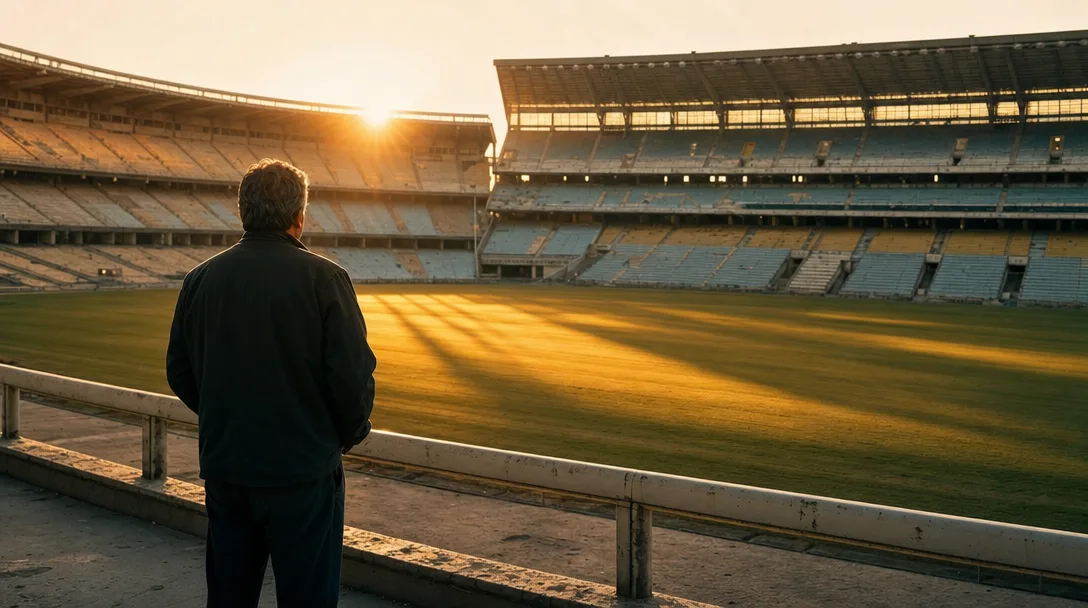
"The stadium is the largest empathy machine we've ever built — we just forgot to switch it on."— David Clilverd
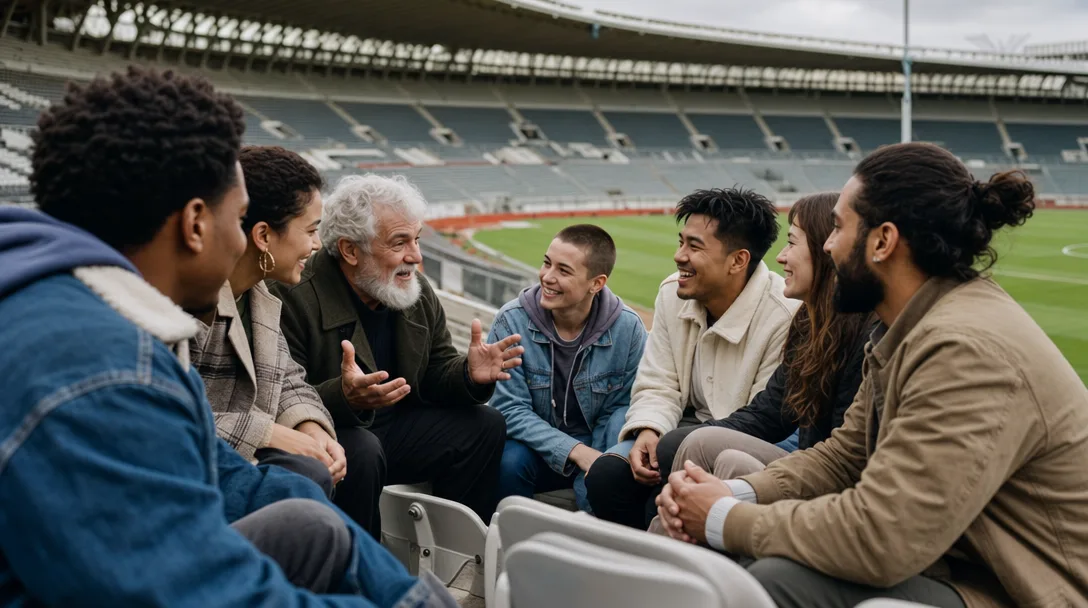
What you'll learn
What you'll be able to do
- Articulate a compelling, evidence-rooted critique of modern sport as spectacle and its social costs
- Trace the historical arc from ancient gladiatorial culture to today's commercialised mega-events — and spot the through-lines
- Apply frameworks for understanding crowd psychology, tribal identity, and how belonging can be channelled constructively
- Identify concrete design levers — in stadiums, clubs, schools, and communities — that shift sport culture toward inclusion and kindness
- Develop your own personal manifesto or project proposal for making sport more humane in your specific context
- Communicate these ideas persuasively to others — whether you're a coach, teacher, writer, parent, or community leader
How it works
A school that adapts to you
This isn't a set of static videos. Every lesson is generated live and tuned to where you actually are.
We learn your level
A quick placement check tailors your starting point so you're never bored or lost.
Lessons adapt as you go
Each lesson is written for your pace and your goal, adjusting as your skills grow.
Your AI coach keeps you moving
Checkpoints, feedback, and gentle nudges turn progress into a real result.
The curriculum
What's inside your school
6 modules · 18 lessons

The Gladiator Mirror: Sport as Spectacle Through the Ages
Grounds learners in the historical and philosophical arc from ancient Rome to the modern stadium, revealing how surprisingly little has changed — and why that matters. By the end, learners can articulate a credible, evidence-rooted critique of sport-as-spectacle and identify the cultural DNA it carries forward.
- 1.1Bread, Circuses, and Season TicketsIncluded
- 1.2The Making of the Modern Sports Industrial ComplexIncluded
- 1.3What Sport Promises and What It Actually DeliversIncluded
The Tribe in the Stands: Crowd Psychology, Identity, and Belonging
Moves from history into human psychology — exploring why tribal identity in sport is so powerful, how it tips from belonging into hostility, and crucially, how the same psychological forces can be redirected toward empathy and solidarity. Learners gain frameworks they can apply in real contexts.
- 2.1Why We Wear the Shirt: Identity, In-Groups, and the Psychology of FandomIncluded
- 2.2From Belonging to Hostility: When the Tribe TurnsIncluded
- 2.3Channelling the Crowd: How Belonging Becomes a Force for GoodIncluded
Redesigning the Arena: Stadiums and Spaces as Instruments of Culture
Shifts from psychology to physical design — exploring how stadium architecture, spatial layout, and sensory environment actively shape behaviour, values, and social norms. Learners develop the ability to read spaces critically and propose concrete design interventions.
- 3.1Architecture as Argument: How Stadiums Teach ValuesIncluded
- 3.2The Matchday Experience: Ritual, Atmosphere, and the Moments That MatterIncluded
- 3.3The Stadium as Community Hub: Beyond the 90 MinutesIncluded
Icons, Influence, and the Athlete as Human
Examines the athlete at the centre of the spectacle — exploring how commercial culture turns humans into brands, how some athletes have resisted or subverted this, and how coaches, educators, and communities can nurture a model of sports leadership grounded in shared humanity rather than heroic individualism.
- 4.1The Making and Unmaking of the HeroIncluded
- 4.2When Athletes Speak Out: Activism, Courage, and the Cost of ConscienceIncluded
- 4.3Coaching Humanity: What Sporting Excellence Looks Like When Kindness is the MethodIncluded
Designing Change: From Critique to Concrete Action
Transitions learners from analysis and inspiration into practical design — equipping them with specific tools for intervening in sport culture within their own roles and contexts, whether they are coaches, teachers, community organisers, journalists, or parents.
- 5.1Levers of Change: Where and How Sport Culture Actually ShiftsIncluded
- 5.2Sport and Schools: Planting Kinder Culture at the RootIncluded
- 5.3Journalism, Storytelling, and the Media's Role in Culture ChangeIncluded
Your Manifesto: Becoming a Voice for Humane Sport
Brings all threads together into a personal synthesis — each learner develops a concrete, communicable manifesto or project proposal that reflects their specific role, context, and ambition. They also develop the persuasion skills to bring others with them. This module is the course's capstone.
- 6.1Finding Your Angle: Translating Conviction into a Specific CommitmentIncluded
- 6.2Writing Your Manifesto: Making the Case with Head and HeartIncluded
- 6.3Communicating Change: Persuasion, Dialogue, and Bringing Others AlongIncluded
Who it's for
Is this you?

The Thoughtful Coach
A grassroots or school sports coach who wants their team culture to model respect, inclusion, and shared humanity — not just winning.

The Sports Journalist
A writer or commentator who wants a richer critical vocabulary for covering sport's social impact beyond results and rankings.

The Community Organiser
Someone running neighbourhood or youth programmes who sees sport as an underused tool for building bridges between divided communities.

The Sports-Loving Parent
A parent who wants to help their child love sport without absorbing the tribalism, aggression, and toxic fandom that so often comes with it.

The Social Educator
A teacher, lecturer, or youth worker who wants to use sport as a lens for teaching empathy, history, and social justice.

The Curious Fan
A lifelong supporter who senses something is off with modern sport culture and is hungry for the language and ideas to articulate — and act on — that feeling.
Questions
Frequently asked
Your teacher
A note from your teacher

David Clilverd
I want to start with a question I couldn't stop thinking about while writing my book.
Why do we accept it?
Every weekend, millions of people — good, generous, community-minded people — pour into stadiums and living rooms and sports bars, and for ninety minutes they become someone slightly different. Tribalism flares. Strangers become enemies. A referee's decision becomes a moral catastrophe. And then it's over, and everyone goes home, and we call it entertainment.
I'm not here to tell you sport is bad. I love sport. I've spent years thinking about why I love it, and why that love matters. But I kept arriving at the same uncomfortable realisation: we are squandering something extraordinary. The passion, the belonging, the collective breath of a stadium — that is one of the most powerful social forces on the planet. And we've handed it almost entirely to commercial interests that have no incentive to ask whether it's making us kinder.
That's what this school is about. It's the living extension of my book — a space to think carefully, together, about what sport is, what it does to us, and what it could be if we designed it with humanity at the centre rather than at the margins.
I'm not offering you easy answers. I'm offering you better questions, sharper frameworks, and — I hope — a renewed sense of possibility. Because I genuinely believe that if we can reimagine the stadium, we can reimagine the crowd. And if we can reimagine the crowd, we've done something quietly important for the world.
Come and think with me. The game is worth rethinking.
— David Clilverd
Start your journey today
Join get instant access — learn at your own pace with an AI coach in your corner.
- 6 modules, 18 lessons
- AI-adaptive lessons tuned to your level
- Quizzes & checkpoints to lock in progress
- Your own AI learning coach
- Learn on any device, at your pace
- Full access for as long as you're subscribed