One fall can change everything. One safety plan can prevent it.
Help patients return home safer, stronger, and more confident. This step-by-step fall prevention course teaches families how to spot hidden risks in every room, prevent injuries, and reduce avoidable return visits after discharge.
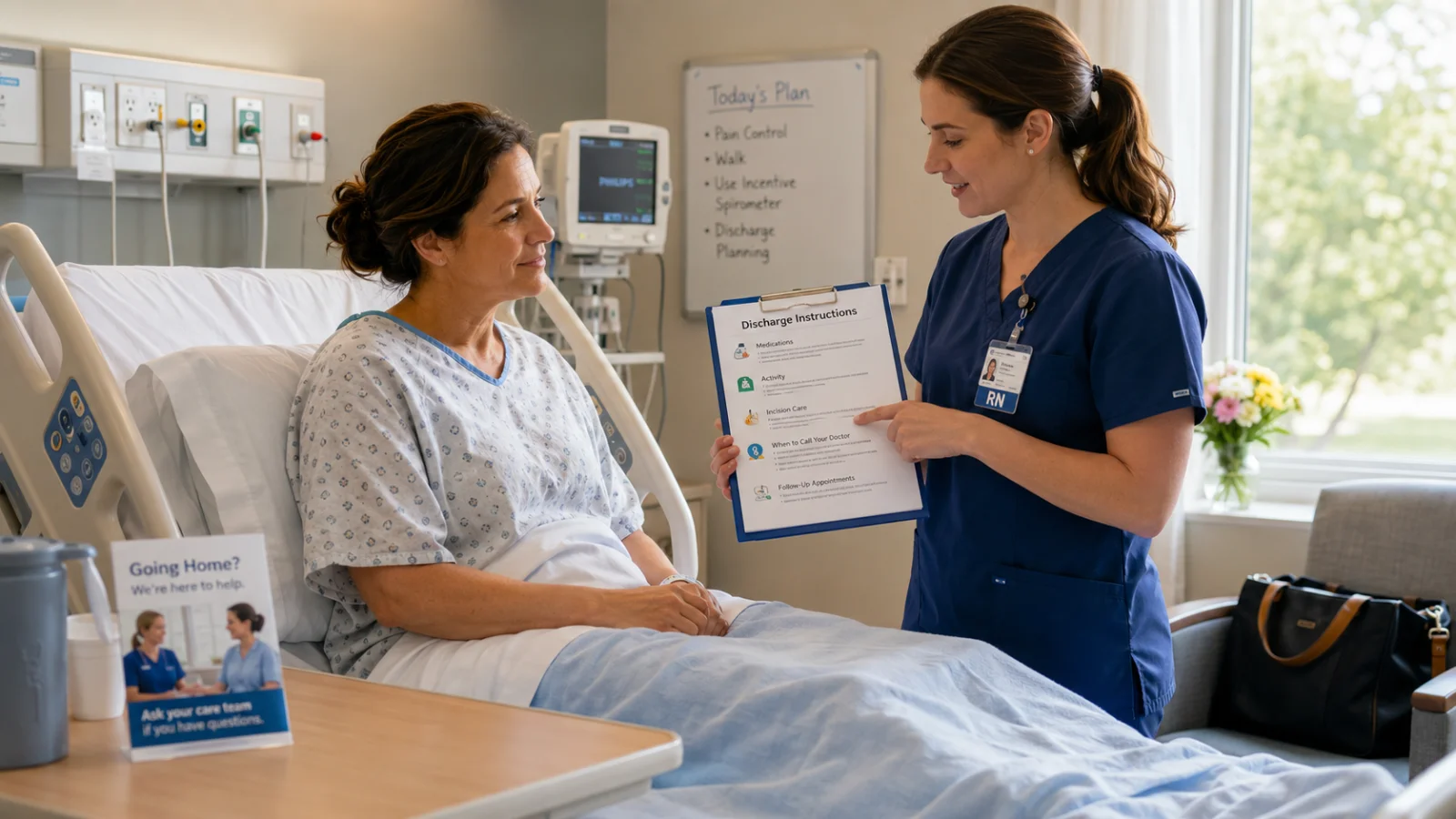
"I built this course for the conversation nobody had with you before you left the hospital — and I'm glad you're here for it now."— Sky WillaBea
What you'll learn
What you'll be able to do
- Identify the most common hidden fall hazards in every room of the home — bedroom, bathroom, kitchen, hallway, and stairs — before an accident occurs.
- Complete a full home safety walk-through using a practical checklist and make low-cost fixes that immediately reduce risk.
- Explain how post-hospital weakness, dizziness, dehydration, and multiple medications combine to raise fall danger in the critical first days home.
- Apply safe movement habits before getting out of bed, walking to the bathroom at night, showering, or navigating stairs.
- Build a personalized, one-page Fall Prevention Plan that caregivers, family members, and home health aides can all follow together.
- Respond confidently if a fall does happen — knowing how to call for help safely, what to tell 911 or a healthcare provider, and how to prevent the next one.
How it works
A school that adapts to you
This isn't a set of static videos. Every lesson is generated live and tuned to where you actually are.
We learn your level
A quick placement check tailors your starting point so you're never bored or lost.
Lessons adapt as you go
Each lesson is written for your pace and your goal, adjusting as your skills grow.
Your AI coach keeps you moving
Checkpoints, feedback, and gentle nudges turn progress into a real result.
The curriculum
What's inside your school
5 modules · 15 lessons
Maria's Story — Understanding Why Falls Happen After the Hospital
This opening module uses Maria's story as an emotional anchor to help patients and caregivers understand that falls after hospital discharge are common, serious, and — most importantly — preventable. It gently dismantles the dangerous belief that 'I'm fine' means 'I'm safe,' and explains the real physical changes the body goes through during a hospital stay. It sets a warm, reassuring tone: falls are not about carelessness. They happen when the body is weaker than we realize, the home has hidden dangers, and simple safety steps are missed. By the end of this module, patients and caregivers will understand why the first days home are the highest-risk days — and why asking for help is one of the smartest things a person can do.
- 1.1Meet Maria — How Falls Really HappenIncluded
- 1.2What Happens to Your Body in the HospitalIncluded
- 1.3Why 'I'm Fine' Can Be Dangerous — and Why Asking for Help Is SmartIncluded
The Home Safety Walk-Through — Finding Dangers Before They Find You
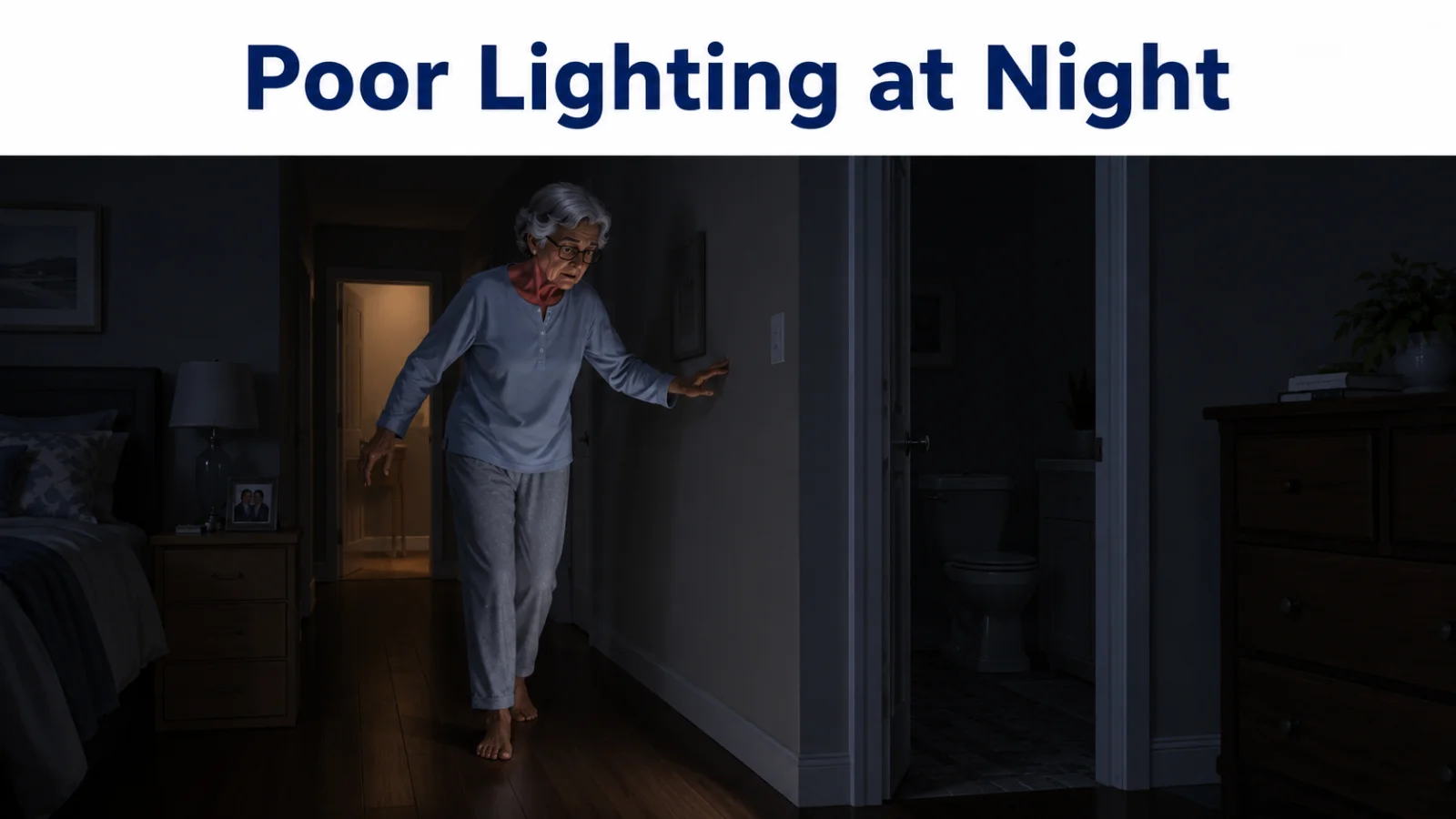
This module transforms patients and caregivers from passive observers of their home into active safety partners. Room by room, they learn to see their familiar surroundings through new eyes — spotting the loose rug, the dark hallway, the cord across the doorway, the low chair that is nearly impossible to rise from safely. The module moves from the most commonly overlooked hazards to a full whole-home review, and it closes with a downloadable Home Fall Risk Checklist that families can complete and keep. Every fix taught in this module is low-cost, practical, and achievable — nothing requires a contractor or major renovation. The goal is to give patients and caregivers a clear action plan they can begin the same day they return home.
- 2.1Lighting, Rugs, and Clutter — The Three Biggest Bedroom and Hallway RisksIncluded
- 2.2Cords, Furniture, Shoes, Pets, and Storage — Hidden Traps in Every RoomIncluded
- 2.3Stairs, Outdoor Steps, and Low Chairs — The Whole-Home Safety CheckIncluded
Bathroom and Shower Safety — The Highest-Risk Room in the Home
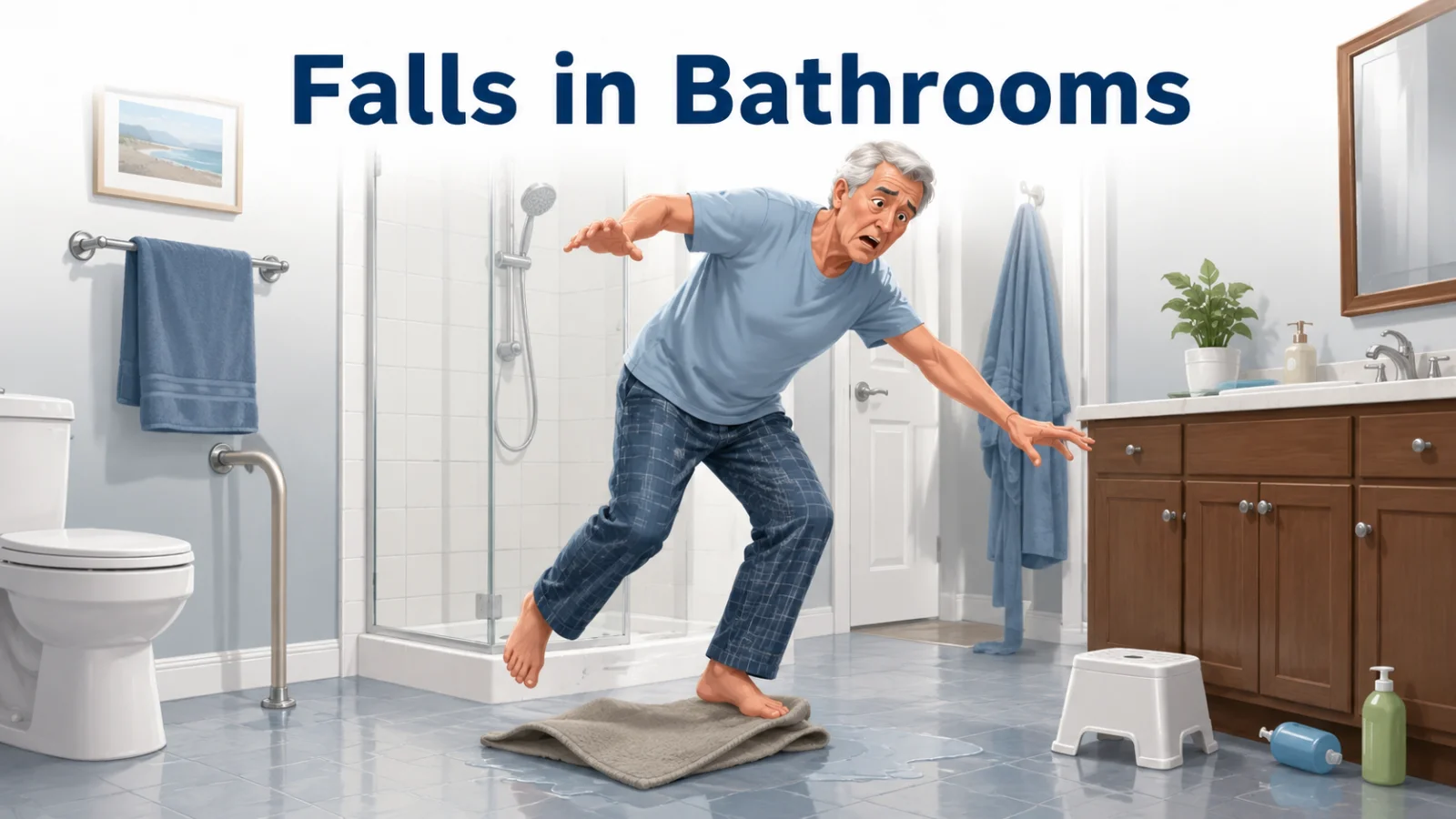
The bathroom is the most dangerous room in the home for fall risk — and the risk is highest at night when the body is tired, the mind is not fully awake, and the floor may be wet or cold. This module teaches patients and caregivers how to transform the bathroom into a much safer space through smart equipment choices, safe movement techniques, and simple nighttime routines. It covers everything from grab bar placement to safe transfer techniques to a five-step nighttime bathroom routine that reduces fall risk dramatically. The tone throughout is practical and empowering: small changes in the bathroom can prevent the exact kind of fall that Maria experienced.
- 3.1Why the Bathroom Is So Dangerous — and How to Change ThatIncluded
- 3.2Safe Transfers — Getting On and Off the Toilet and In and Out of the ShowerIncluded
- 3.3Nighttime Bathroom Trips — When Risk Is HighestIncluded
Medications, Dizziness, and Body Awareness — Know What Is Changing Inside
Falls do not only come from the outside world — they also come from inside the body. This module teaches patients and caregivers how medications, dehydration, blood pressure changes, dizziness, and reduced body awareness combine to dramatically raise fall risk after hospital discharge. It explains which types of medications are most commonly linked to falls, what orthostatic hypotension (sudden dizziness upon standing) is and how to manage it, and why dehydration — even mild dehydration — weakens muscles and clouds thinking. The module closes by helping patients build a safer daily routine that balances movement and rest, supports hydration, and includes simple self-check habits before every transition. This module is the prerequisite for building the Fall Prevention Plan in Module 5.
- 4.1How Medications Can Cause Falls — and What to Watch ForIncluded
- 4.2Dizziness, Dehydration, and the Danger of Standing Up Too FastIncluded
- 4.3Building a Safer Daily Routine — Movement, Rest, and Body AwarenessIncluded
Your Personal Fall Prevention Plan — Simple, Written, and Ready to Use
Everything patients and caregivers have learned in the previous four modules now comes together in one place: a clear, written, personalized Fall Prevention Plan that every member of the care team — the patient, caregiver, family members, home health aide, and healthcare provider — can read and follow. This final module guides students through building that plan step by step, then teaches them exactly what to do if a fall does happen — how to stay calm, how to get help safely, and what to say to 911 or a healthcare provider. The module closes with a forward-looking lesson on maintaining confidence, continuing to build strength, and moving into recovery with a sense of capability and hope.
- 5.1Building Your One-Page Fall Prevention PlanIncluded
- 5.2If a Fall Happens — What to Do, What to Say, and How to RecoverIncluded
- 5.3Moving Forward — Staying Safe, Staying Independent, Staying ConfidentIncluded
Who it's for
Is this you?

Recently Discharged Patient
You just came home from the hospital and want to feel steady and safe before something goes wrong.

Family Caregiver
You're helping a parent or spouse recover at home and need a clear, practical plan everyone can follow.

Walker or Cane User
You use a mobility aid and want to learn safe movement habits for every tricky moment — bed, bathroom, and stairs.

Older Adult Living Alone
You live independently and want to find and fix fall hazards in your home before an accident changes everything.

Home Health Aide
You support patients at home and want a shared safety framework and a fall-response plan you can confidently use.

Discharge Planner or Clinic Staff
You counsel patients leaving care and need a trusted, plain-language resource to send them home with.
Questions
Frequently asked
Your teacher
A note from your teacher

Sky WillaBea
If you or someone you love has just come home from the hospital, I want you to take a slow breath. You made it home. That matters. And I also want to be honest with you, the way I would be if we were sitting together at your kitchen table: the days right after a hospital stay are some of the most important days to pay attention to. Not to worry — to "pay attention". There's a difference, and this whole course is built on that difference.
I've spent years working with patients and families in exactly this moment — the moment when the hospital discharge papers are signed, the instructions blur together, and suddenly everyone is home and a little unsure of what comes next. What I've seen, again and again, is that falls don't happen because people are careless. They happen because nobody told them what had changed in their body, or what to look for in their home, or how much the small things — a loose rug, a dim hallway, a new medication — can quietly add up.
That's what Safe at Home is. It's the conversation I wish every patient and every family could have before they walked out of those hospital doors. We start with Maria — a story that makes it real — and then we move, room by room, through your home. We look at the bedroom. The bathroom (the highest-risk room in any house). The kitchen, the hallway, the stairs. We talk about what's happening inside your body after a hospital stay, and why dizziness, dehydration, and medications deserve your respect right now. None of it is scary. All of it is useful.
By the end, you'll have a one-page Fall Prevention Plan written in your own words, shaped for your own home and your own life — something you can hand to a family member or a home health aide so everyone is working from the same page. You'll also know what to do if a fall does happen, because that knowledge alone can change everything.
I built this course for you — whether you are the person who just came home, the spouse who drove you there, the adult child who lives an hour away and worries, or the home health aide who shows up three mornings a week. You all deserve the same clear, calm information. Come in, take your time, and let's make your home the safe place it should be.
— Sky WillaBea
Start your journey today
Join get instant access — learn at your own pace with an AI coach in your corner.
$29/mo
Recurring billing · cancel anytime
Secure checkout · Instant access
- 5 modules, 15 lessons
- AI-adaptive lessons tuned to your level
- Quizzes & checkpoints to lock in progress
- Your own AI learning coach
- Learn on any device, at your pace
- Full access for as long as you're subscribed