Turn Your Kid Into a Scientist, Explorer & History Detective
A high-energy, adventure-packed online school where 5th graders explore ecosystems, ancient civilizations, forces of nature, and world geography — all through hands-on experiments, maps, and missions that make learning feel like a game.

"The moment a kid realizes their backyard is a living ecosystem and their driveway has the whole rock cycle in it — that's the moment school stops feeling like school."— Teaching With Vision
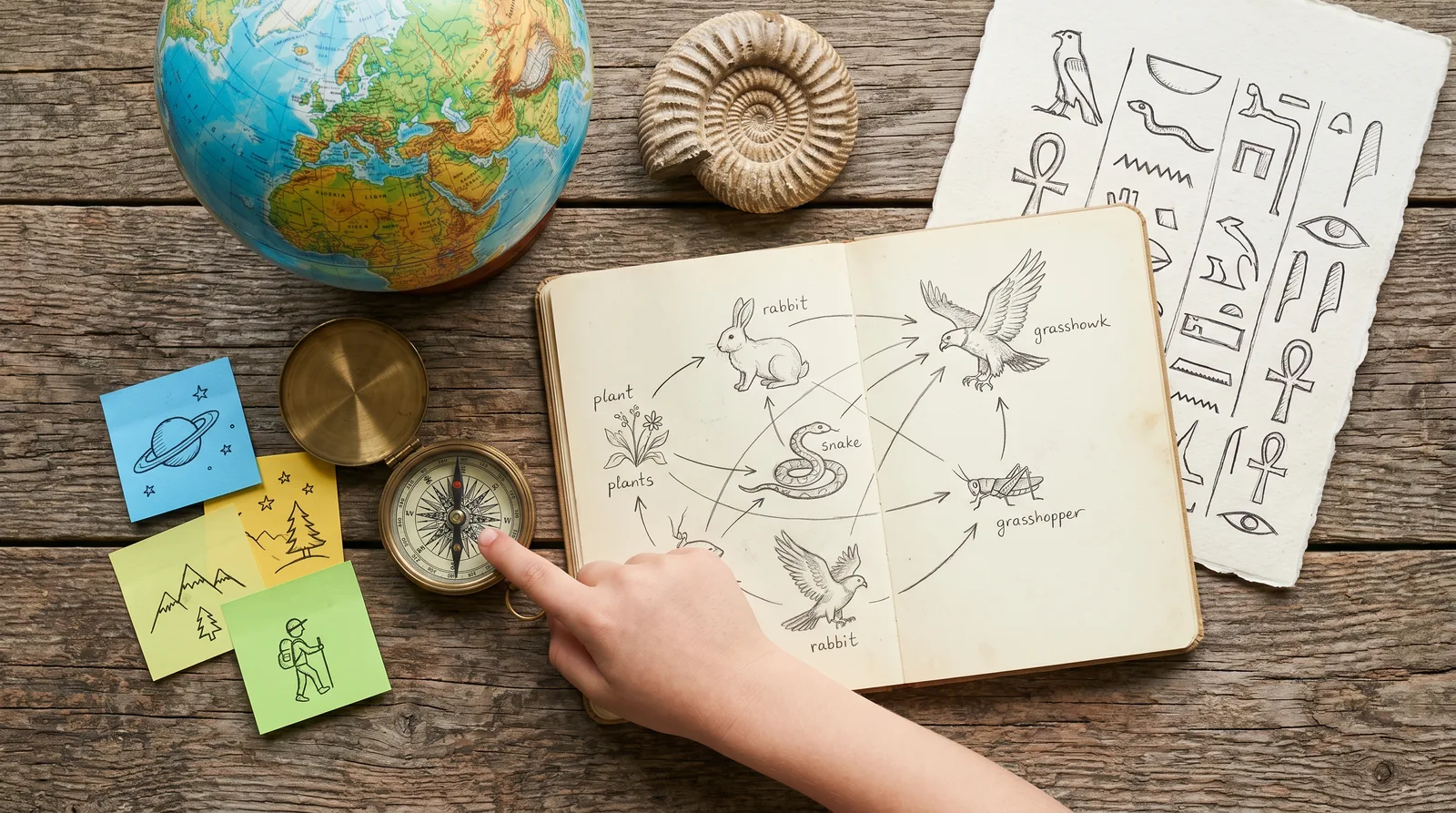
What you'll learn
What you'll be able to do
- Explain the rock cycle, ecosystems, and food webs using real-world examples they can spot in their own backyard
- Conduct simple at-home science experiments that demonstrate 5th-grade physics and earth science concepts
- Locate and describe major world regions, landforms, and cultures on a map from memory
- Retell key events from ancient civilizations (Egypt, Greece, Rome, Aztecs) and explain how they shaped today's world
- Identify the three branches of U.S. government and explain how laws are made and why they matter
- Demonstrate scientific thinking by forming a hypothesis, testing it, and explaining the results in their own words
How it works
A school that adapts to you
This isn't a set of static videos. Every lesson is generated live and tuned to where you actually are.
We learn your level
A quick placement check tailors your starting point so you're never bored or lost.
Lessons adapt as you go
Each lesson is written for your pace and your goal, adjusting as your skills grow.
Your AI coach keeps you moving
Checkpoints, feedback, and gentle nudges turn progress into a real result.
The curriculum
What's inside your school
6 modules · 21 lessons
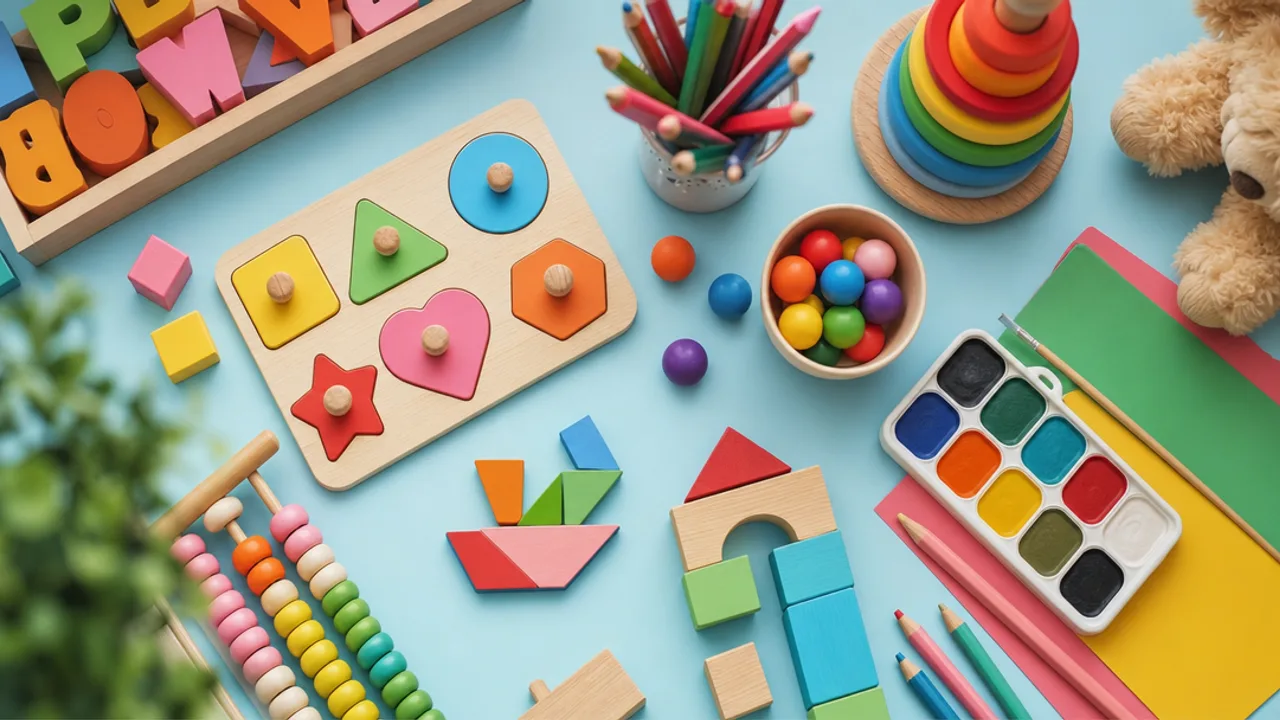
Backyard Science: Ecosystems & Food Webs
Students explore living systems starting in their own backyard, building vocabulary and observation skills before zooming out to global biomes. This module anchors abstract ecology concepts in tangible, local experiences — perfect for curious 10-year-olds who learn best by doing and seeing.
- 1.1What Is an Ecosystem? (And Why Should I Care?)Included
- 1.2Food Chains, Food Webs & Energy FlowIncluded
- 1.3Biomes Around the World: Extreme HabitatsIncluded
- 1.4Ecosystems Under Threat: Conservation MissionsIncluded
Forces of Nature: Earth Science & Physics in Action
Students learn to think and act like real scientists — forming hypotheses, running experiments, and explaining results — while exploring the rock cycle, forces, motion, and Earth's big systems. Every concept is grounded in hands-on experiments that can be done at home with everyday materials.
- 2.1Think Like a Scientist: The Scientific MethodIncluded
- 2.2The Rock Cycle: Earth's Recycling MachineIncluded
- 2.3Forces & Motion: Push, Pull & Why Things MoveIncluded
- 2.4Weather, Water Cycle & Earth's Big SystemsIncluded
World Explorer: Geography, Regions & Cultures
Students develop genuine geographic literacy — reading maps, identifying landforms and regions, and understanding how physical geography shapes human culture. The module builds from foundational map skills to rich cultural exploration, ensuring students can locate and describe major world regions from memory by the end.
- 3.1Map Skills BootcampIncluded
- 3.2World Regions Tour: Continents, Landforms & ClimatesIncluded
- 3.3People & Cultures: How Geography Shapes How We LiveIncluded
Ancient Civilizations: Egypt, Greece, Rome & the Aztecs
Students travel back in time to four of history's most influential civilizations, discovering how each one developed remarkable innovations in government, architecture, science, and culture — and tracing their direct influence on the modern world. Each civilization is explored on the geographic foundation built in Module 3.
- 4.1Ancient Egypt: Pharaohs, Pyramids & the NileIncluded
- 4.2Ancient Greece: Democracy, Mythology & the OlympicsIncluded
- 4.3Ancient Rome: From Republic to EmpireIncluded
- 4.4Aztec Empire: Ingenuity, Trade & ConquestIncluded
How the U.S. Works: Government, Laws & Citizenship
Students connect the ancient democratic ideas explored in the previous module directly to the founding of the United States, then learn how the three branches of government work, how laws are made, and what it means to be an active citizen. The module deliberately builds on Greek and Roman roots to show government as a living, evolving idea.
- 5.1Why Government? From Ancient Ideas to the U.S. ConstitutionIncluded
- 5.2The Three Branches: Who Does What?Included
- 5.3How a Law Is Made: From Idea to RealityIncluded
- 5.4Citizenship in Action: Rights, Responsibilities & Making a DifferenceIncluded
Science & World Quest: Final Missions & Capstone Challenges
Students synthesize everything learned across the full curriculum in two high-energy capstone challenges. The Science Experiment Showdown tests scientific method mastery through independent inquiry. The World Quest Final Mission brings together geography, civilization history, government, and ecosystems knowledge in a creative build-a-civilization project. Both challenges are designed to be genuinely fun, confidence-building, and portfolio-worthy.
- 6.1The Great Science Experiment ShowdownIncluded
- 6.2World Quest Final Mission: Build a CivilizationIncluded
Who it's for
Is this you?

The Backyard Explorer
He's always catching bugs and building dirt ramps — the Ecosystems & Forces of Nature units will finally give his curiosity a name and a framework.
The Homeschool Parent
She needs a structured, standards-aligned 5th grade curriculum that her son will actually want to open — this course delivers both without compromise.

The History Fanatic
He can already name every pharaoh but wants to know why Egypt mattered — the Ancient Civilizations unit goes deep on Egypt, Greece, Rome, and the Aztecs.

The Map-Obsessed Kid
She loves globes, atlases, and 'where is that?' — Map Skills Bootcamp and the World Regions Tour are basically built for her.

The Bored-at-School Whiz
He's smart, distracted, and done with worksheets — the mission-based structure and 'try this right now' experiments are the reset button he needs.
The Future Citizen
She asks 'but why does the government do that?' — the U.S. Government unit walks her all the way from ancient ideas to how a law gets made today.
Questions
Frequently asked
Your teacher
A note from your teacher
Teaching With Vision
Hey — if you're reading this, there's a good chance you've got a kid who is absolutely brilliant, endlessly curious, and bored out of their mind the moment someone hands them a worksheet. I see you. And more importantly, I see that kid.
Here's the thing I believe down to my bones: 5th graders are wired to explore. They want to know why volcanoes happen, who actually built the pyramids, what a food web looks like in their neighborhood, and whether they could design a better government than ancient Rome. (Jury's still out on that last one.) The content they're supposed to learn in 5th grade? It's genuinely incredible stuff. Ecosystems, ancient empires, the forces that move the Earth, how laws get made — this is the good stuff. My job is just to stop it from being boring.
That's what Science & World Quest is. Every unit opens with a mission, not a chapter. Every concept gets a real-world anchor — we don't just talk about the rock cycle, we find it in your driveway. We don't just read about ancient civilizations, we figure out what they invented that you used this morning (more than you'd think). The experiments are do-it-in-your-kitchen real. The maps are draw-it-yourself real. The history is who-were-these-people-and-why-does-it-matter real. By the time your student hits the capstone — designing their own civilization and running their own science experiment showdown — they're not reviewing what they learned. They're using it.
I also built this for the parents and homeschool families in the room. You deserve a curriculum that's rigorous enough to trust and engaging enough that you don't have to battle for every lesson. Science & World Quest is structured, sequenced, and standards-aligned — and it's also the kind of thing kids ask to come back to. Those two things don't have to be opposites.
So here's my invitation: jump in at Unit 1, Backyard Science. Step outside. Look at literally any patch of grass or dirt or trees. I promise, by the end of that first unit, your kid will never look at it the same way again. That's where the quest starts. Let's go.
— Teaching With Vision
Start your journey today
Join 1 others and get instant access — learn at your own pace with an AI coach in your corner.
- 6 modules, 21 lessons
- AI-adaptive lessons tuned to your level
- Quizzes & checkpoints to lock in progress
- Your own AI learning coach
- Learn on any device, at your pace
- Full access for as long as you're subscribed