Mix with dynamics first, clarity always
Learn to mix live audio the way seasoned pros actually do it — sculpting dynamics with compression and gates before ever touching EQ, and stacking invisible layers of gain reduction to build a powerful, natural sound.
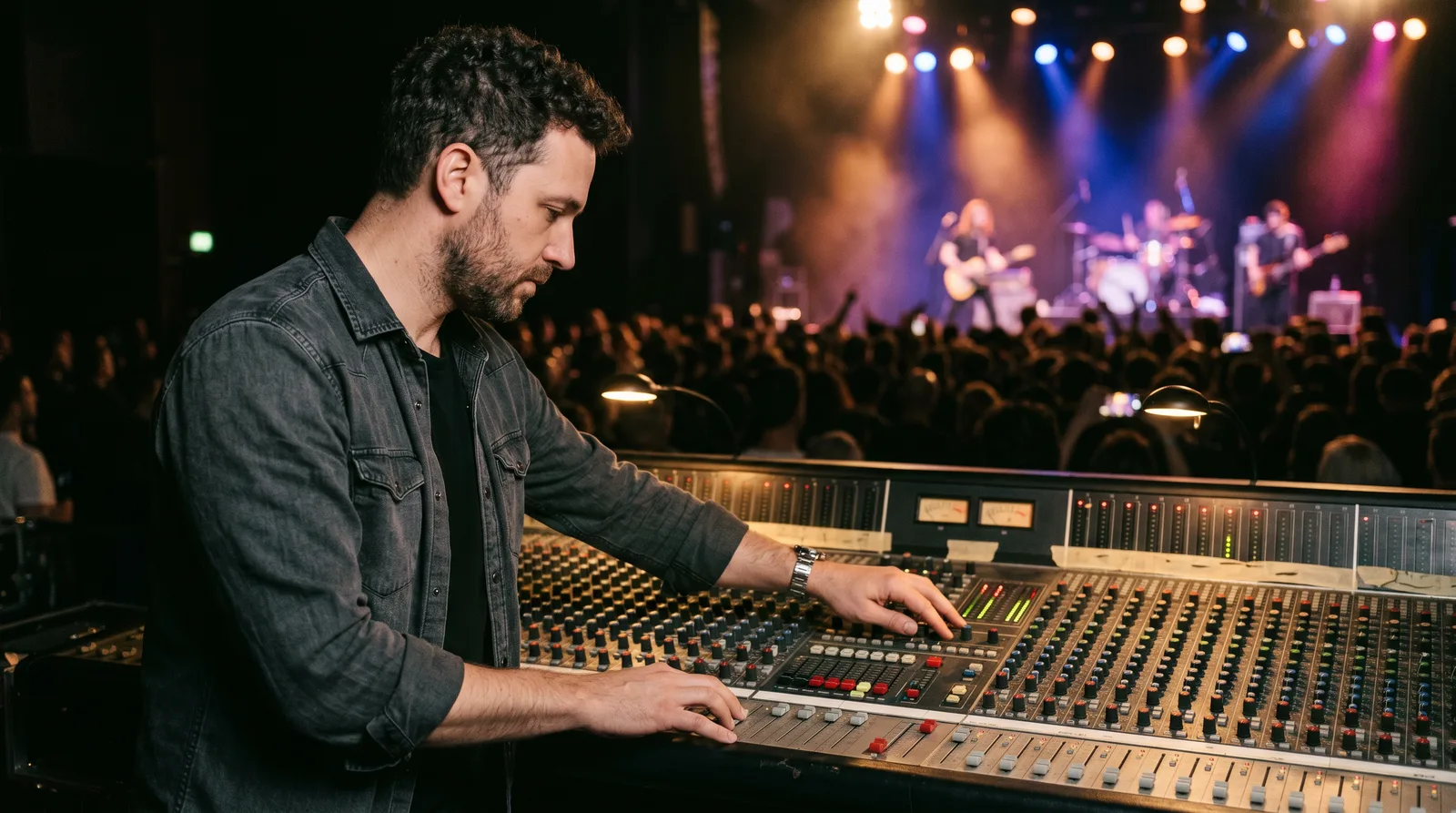
"Control the dynamics first, and the mix will tell you exactly what it needs next."— Matt Jones
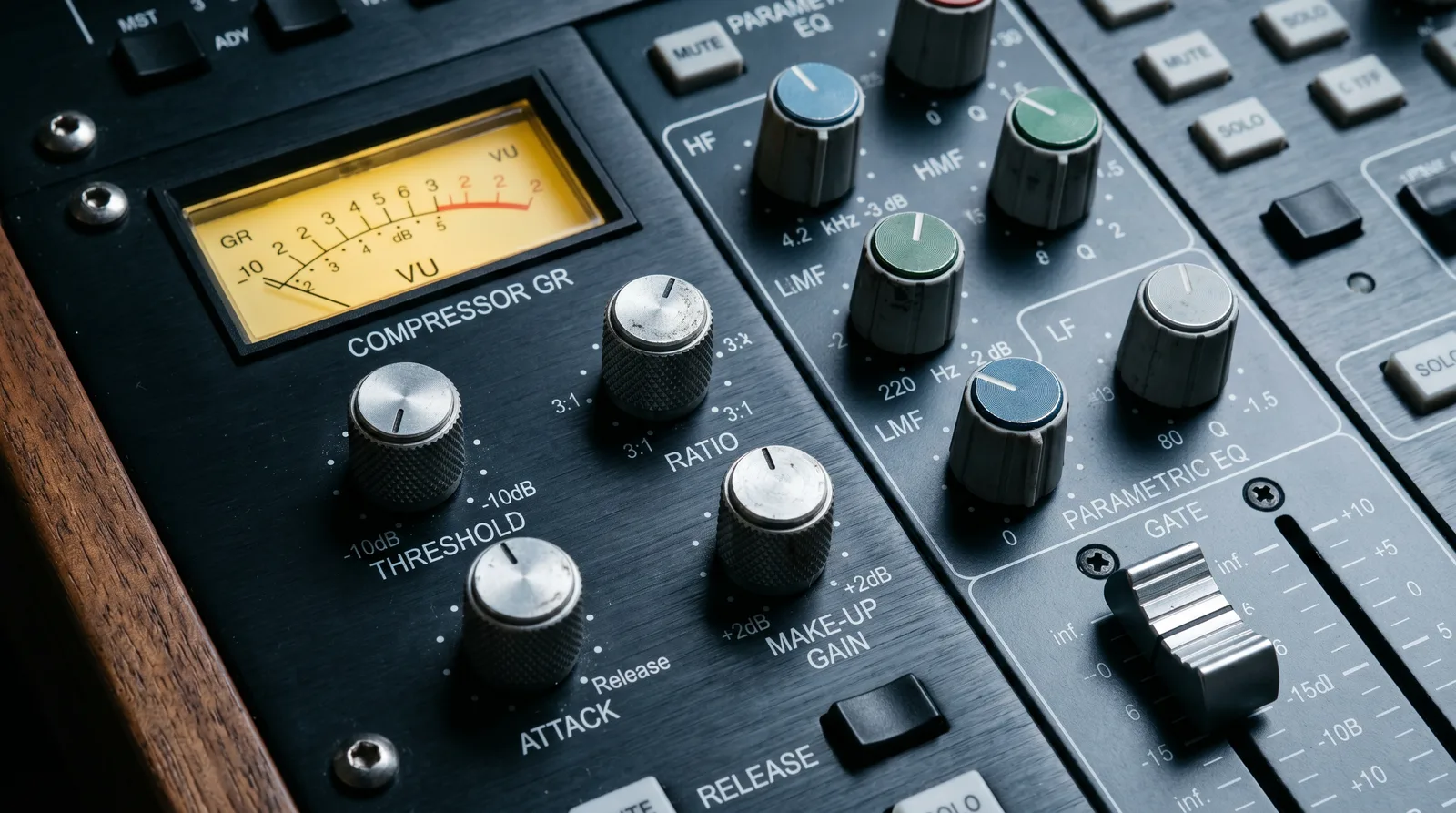
What you'll learn
What you'll be able to do
- Control the dynamic range of any live source using compression and gates before reaching for EQ, building mixes that breathe naturally under pressure.
- Apply a multi-stage, low-ratio compression chain (2–3 dB per stage) that adds up to significant gain reduction without any single stage becoming audible or unnatural.
- Use subtractive EQ as a primary tone-shaping tool — identifying and carving problem frequencies rather than boosting your way to clarity.
- Set attack, release, ratio, and threshold on compressors and gates with purpose, matching each parameter decision to the specific dynamics of a live instrument or voice.
- Diagnose and fix common live mix problems — muddiness, harshness, feedback buildup — using dynamics shaping first and EQ as a surgical last step.
- Develop and articulate a personal, repeatable mixing philosophy so every show starts from a confident, consistent foundation rather than a blank slate.
How it works
A school that adapts to you
This isn't a set of static videos. Every lesson is generated live and tuned to where you actually are.
We learn your level
A quick placement check tailors your starting point so you're never bored or lost.
Lessons adapt as you go
Each lesson is written for your pace and your goal, adjusting as your skills grow.
Your AI coach keeps you moving
Checkpoints, feedback, and gentle nudges turn progress into a real result.
The curriculum
What's inside your school
6 modules · 17 lessons

The Philosophy: Dynamics Before Everything
Establishes the foundational mindset that separates intentional live mixing from reactive knob-turning. Students learn to listen analytically before touching any control, and understand why dynamics shaping must precede tone shaping. This module frames every technique taught afterward — everything downstream flows from this philosophy.
- 1.1Why Most Live Mixes Sound Wrong Before EQ Is Even TouchedIncluded
- 1.2Reading a Sound Source Before Touching a FaderIncluded
- 1.3Signal Path Fundamentals: Where Processing Lives and Why Order MattersIncluded
Compression Fundamentals: Parameters With Purpose
Builds a deep, practical understanding of every parameter on a compressor — not as a checklist of definitions, but as a set of decisions that directly shape the feel and control of a live source. Every parameter is taught in the context of live mixing scenarios, so students always know not just what a knob does, but why they would turn it in a specific direction for a specific reason.
- 2.1Threshold and Ratio: Setting the Rules of EngagementIncluded
- 2.2Attack and Release: Letting the Transient BreatheIncluded
- 2.3Knee, Makeup Gain, and Gain Staging Into the CompressorIncluded
Gates and Expanders: Cleaning the Noise Floor Before Compression
Gates and expanders are the first tool in the processing chain, but they are often misunderstood or over-set in ways that create unnatural, choppy results. This module teaches students to use gates surgically — opening only when a legitimate signal is present, closing cleanly without being audible, and never interfering with the natural decay of an instrument. Critically, students learn why the gate must be set and stable before any compressor is introduced downstream.
- 3.1Gate Parameters: Threshold, Attack, Hold, and ReleaseIncluded
- 3.2Placing the Gate in the Chain and Setting Up for CompressionIncluded
The Multi-Stage Compression Chain: Stacking Invisible Gain Reduction
This is the heart of the curriculum and the technique that most directly reflects the instructor's personal mixing philosophy. Rather than using one compressor to do all the work — which always becomes audible — students learn to split the compression task across two or three stages, each doing only 2–3 dB of gain reduction. The cumulative result is significant, transparent control that sounds natural because no single stage is working hard enough to be heard as compression.
- 4.1Why One Compressor Doing All the Work Sounds Like a CompressorIncluded
- 4.2Building the Chain: Stage One — Taming Wild Peaks at the SourceIncluded
- 4.3Building the Chain: Stage Two and Three — Shaping Body and SustainIncluded
Subtractive EQ: Carving Clarity After Dynamics Are Controlled
EQ is the last tool applied, and only after dynamics are fully shaped. This module teaches subtractive EQ as a surgical discipline — the goal is always to remove what does not belong, never to add what was not captured at the source. Students learn to find problem frequencies by ear before using any analyzer, to cut narrowly and conservatively, and to understand how a well-controlled dynamic signal responds to EQ very differently than a raw, uncompressed one.
- 5.1Finding Problem Frequencies by Ear First, Analyzer SecondIncluded
- 5.2Subtractive EQ Technique: Cut First, Cut Narrow, Cut Only What You Can HearIncluded
- 5.3EQ and Dynamics Working Together: The Full Processing ChainIncluded
Your Repeatable Mixing Philosophy: From Soundcheck to Showtime
Technique without a system is inconsistency. This final module translates everything learned into a personal, repeatable workflow that the student can execute from the moment they walk into a venue. The goal is that every show starts from a confident, structured foundation — not a blank slate — and that when problems arise during the show, the student has a diagnostic process grounded in the philosophy established in module one.
- 6.1Building Your Personal Soundcheck WorkflowIncluded
- 6.2Diagnosing Live Problems Under PressureIncluded
- 6.3Articulating and Owning Your Mixing PhilosophyIncluded
Who it's for
Is this you?

Aspiring FOH Engineers
You're moving from watching to operating and need a real professional framework — not textbook generalities — to build mixes that hold up under live pressure.

Working Live Sound Operators
You've been behind the desk for a while but want to replace instinct-based habits with a disciplined, repeatable signal chain you can trust at every show.

Performing Musicians
You run your own sound at rehearsals or smaller gigs and want to stop guessing with EQ and start controlling your mix from the source signal out.

Studio Engineers Going Live
Your ears are trained but live sound's unforgiving real-time dynamics require a different processing philosophy — this course bridges that gap directly.

AV & Production Technicians
You handle audio as part of a broader production role and need a solid, confident approach to mixing that scales from corporate events to live performance.

Home-Studio Producers Exploring Live
You understand signal processing in the box but want to translate that knowledge into a live context with a dynamics-first methodology that works on any console.
Questions
Frequently asked
Your teacher
A note from your teacher
Matt Jones
If you've ever stood behind a console during a show, listening to a mix that just won't sit right no matter how many EQ bands you move — I built this course for that moment.
I've been in that spot. Chasing frequencies, boosting here, cutting there, reaching for more of this and less of that, and the whole time the mix keeps fighting me. It took a while before I understood what was actually happening: I was treating a dynamics problem with a frequency solution. The EQ wasn't the wrong tool because I was using it badly — it was the wrong tool because I hadn't handled the signal before it got there.
That's the idea behind Shape The Mix. Before you ever reach for EQ, you need to know what your source is doing dynamically. Is it jumping three feet every time the vocalist hits a consonant? Is the kick drum burying itself in a wash of low-end between hits because there's no gate? Is the guitar amp surging and retreating in a way that makes every EQ decision feel like a moving target? These are dynamics problems, and they need dynamics solutions — gates, expanders, and a compression chain built with intention, not instinct.
What I teach in this course isn't abstract signal processing theory. It's a practical, disciplined workflow: read the source, clean the noise floor with a gate, tame wild peaks with a first-stage compressor, shape body and sustain with subsequent stages, and only then use subtractive EQ to carve what's left. Every parameter decision — threshold, ratio, attack, release, knee — gets made in context, for a reason you can hear and repeat. Low ratios, multiple stages, never asking one compressor to do all the heavy lifting. That's how you get a mix that sounds controlled without sounding processed.
By the time we reach the final section, you won't just have a set of techniques — you'll have a mixing philosophy. A soundcheck workflow that starts the same way every night. A diagnostic framework for when things go sideways at showtime. And the confidence to articulate why you're making every decision, which is what separates engineers who get hired again from engineers who get replaced. Come to the console with a plan. Shape The Mix will give you one.
— Matt Jones
Start your journey today
Join get instant access — learn at your own pace with an AI coach in your corner.
$59/mo
Recurring billing · cancel anytime
Secure checkout · Instant access
- 6 modules, 17 lessons
- AI-adaptive lessons tuned to your level
- Quizzes & checkpoints to lock in progress
- Your own AI learning coach
- Learn on any device, at your pace
- Full access for as long as you're subscribed