The 7 Most Common EKG Reading Mistakes New Techs Make (and How to Avoid Them)
Southern Medical Training · October 3, 2026 · 4 min read
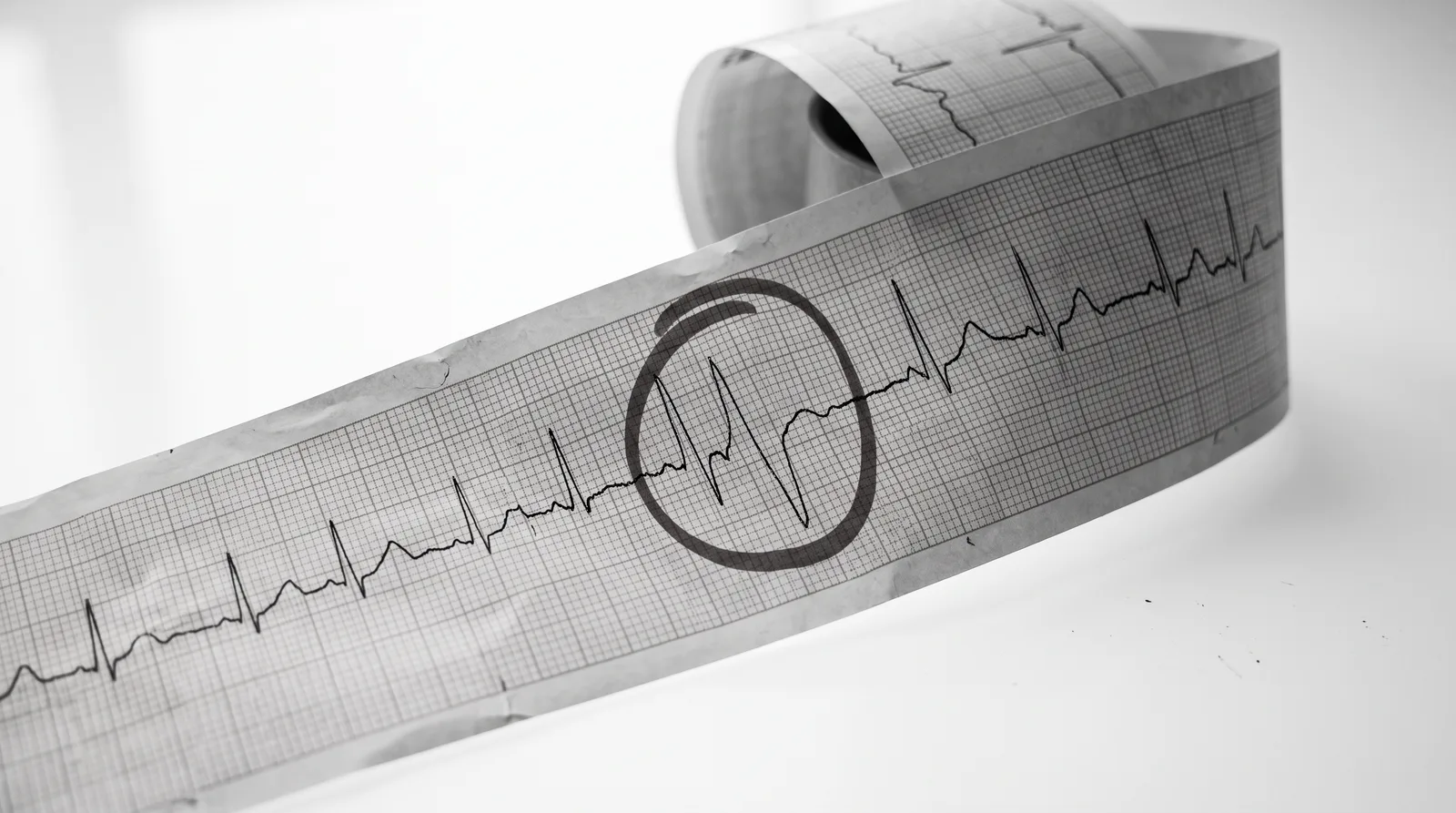
Learning to read an EKG strip is one of those skills that feels straightforward right up until it doesn't. The grid looks logical. The waves have names. There's a system. And then you sit down with a real strip and your brain goes completely quiet.
What I see happen — consistently — is that new techs don't make random mistakes. They make the same mistakes. These patterns show up early, they feel invisible from the inside, and left uncorrected, they calcify into permanent habits. Here are the seven I want you to know about before they become yours.
1. Skipping the Systematic Approach and Jumping to the "Obvious"
The second something on a strip looks familiar, there's a pull to name it and move on. Resist that. A systematic read — rate, rhythm, P waves, PR interval, QRS, QT, ST segment — protects you from the strip that looks like normal sinus rhythm until step four, when you realize the P waves are nowhere near where they should be. Always work your method, even when you think you already know the answer.
2. Miscounting the Heart Rate on an Irregular Rhythm
The 300-150-100-75-60-50 method is a beautiful shortcut — for regular rhythms. Apply it to an irregular rhythm and you'll report a rate that's simply wrong. For irregular rhythms, use the 6-second strip method: count the number of QRS complexes in a 6-second strip and multiply by 10. Know which tool to reach for and when.
3. Mistaking Artifact for Arrhythmia (and Vice Versa)
Sixty-cycle interference, patient movement, a loose lead — artifact can look alarming. A true life-threatening arrhythmia can occasionally look like noise to an untrained eye. The habit to build: always check your leads and your patient before you interpret the strip. If something looks chaotic, is the patient talking? Moving? Is one electrode peeling up? Context is clinical data.
4. Measuring the PR Interval from the Wrong Place
The PR interval starts at the very beginning of the P wave — not the peak — and ends at the very first deflection of the QRS complex. New techs routinely start measuring too late, which compresses the interval and masks first-degree AV block. Use calipers (or their digital equivalent) and find that true onset. A normal PR interval is 0.12–0.20 seconds. Precision here matters.
5. Ignoring Lead Placement and Its Effect on the Strip
A misplaced electrode doesn't just cause artifact — it can invert waves, widen complexes, and generate patterns that mimic actual pathology. Right arm and left arm leads swapped? You'll see a pattern that looks like dextrocardia. Before you interpret anything unusual, ask yourself whether the leads were placed correctly. In a testing scenario, you won't catch this — but in a clinical one, you need to.
6. Calling Every Wide QRS "Bundle Branch Block"
A wide QRS (greater than 0.12 seconds) does not automatically mean bundle branch block. Hyperkalemia widens QRS. Ventricular rhythms widen QRS. Aberrant conduction widens QRS. Paced rhythms widen QRS. Bundle branch block is one answer on a list that has several entries. If you've trained yourself to see wide and think BBB, slow down. Look at the full picture before you commit.
7. Not Knowing What "Normal" Actually Looks Like
This one surprises people, but it's the root of many other errors: most early EKG practice time is spent on abnormals. Pathology is interesting, so it gets attention. But if your baseline image of normal sinus rhythm isn't rock solid — if you don't know exactly how a healthy P wave looks, exactly how tall a normal QRS should be, exactly what a clean ST segment sits at — you won't reliably recognize when something has shifted away from it. Drill normal until it's boring. That's how you get fast at spotting abnormal.
How to Use This List
Print it out. After you interpret a practice strip, run down these seven items like a checklist. Did I use my systematic approach? Did I choose the right rate method? Did I check for artifact? Did I measure from the right spot? This kind of deliberate self-audit is what separates someone who studies EKGs from someone who genuinely learns to read them.
These mistakes aren't signs that you're bad at this — they're signs that you're at the beginning of learning something real. The techs who catch and correct these habits early are the ones who walk into their certification exam and into their first clinical role with genuine confidence, not just hope.
If you want a structured environment to build that foundation — one that walks you through every rhythm systematically and keeps NHA certification standards front and center — that's exactly what EKG Decoded is built for.