Stop shrinking. Start speaking up.
Speak Up School gives you the practical tools—a proven communication formula, a personal boundary map, and daily habits—to say what you need, hold your no, and stop people-pleasing for good. No guilt. No conflict spirals. Just real, lasting change.

"Assertiveness isn't a personality you're born with—it's a skill you build, one honest conversation at a time, and I'm here to walk you through every step."— Audra N. Gillis, LCSW-C, LICSW, CBT, CHT

What you'll learn
What you'll be able to do
- Distinguish assertiveness from aggression and passivity so you can respond—not react—in high-pressure moments.
- Use a proven 3-part assertive communication formula to express needs clearly and calmly in any relationship.
- Identify your personal boundary triggers and map the specific situations where your limits are most at risk.
- Deliver a firm, respectful 'no' without over-explaining, apologizing, or feeling crippling guilt afterward.
- De-escalate pushback and manipulation tactics so boundary violations no longer catch you off guard.
- Build a lasting assertiveness habit through daily micro-practices that rewire people-pleasing thought patterns over time.
How it works
A school that adapts to you
This isn't a set of static videos. Every lesson is generated live and tuned to where you actually are.
We learn your level
A quick placement check tailors your starting point so you're never bored or lost.
Lessons adapt as you go
Each lesson is written for your pace and your goal, adjusting as your skills grow.
Your AI coach keeps you moving
Checkpoints, feedback, and gentle nudges turn progress into a real result.
The curriculum
What's inside your school
6 modules · 19 lessons

Understanding Assertiveness: What It Is and Why It's Hard
This foundational module establishes the conceptual bedrock of the entire course. Students must be able to clearly define assertiveness and contrast it with passivity and aggression before they can practice any skill. The module also surfaces the emotional and psychological roots of non-assertive behavior — particularly people-pleasing and guilt — so students understand why this is hard, not just what to do differently. Without this grounding, all downstream skills lack context and staying power.
- 1.1The Assertiveness Spectrum: Passive, Aggressive, and AssertiveIncluded
- 1.2The People-Pleasing Trap: Costs, Roots, and PatternsIncluded
- 1.3Assertiveness and Self-Worth: Breaking the Guilt ReflexIncluded
Your Personal Boundary Map
Before students can set boundaries, they must know where their boundaries actually are. This module moves from abstract understanding to personal self-knowledge — mapping the specific situations, relationships, and values that define each student's unique boundary landscape. The goal is highly personalized clarity: students leave knowing exactly which limits matter most to them and which contexts put those limits most at risk. This specificity is what makes later skills feel relevant rather than theoretical.
- 2.1What Boundaries Actually Are (and Aren't)Included
- 2.2Identifying Your Trigger Situations and High-Risk RelationshipsIncluded
- 2.3Your Non-Negotiables: Defining the Limits That Matter MostIncluded
The Assertive Communication Formula
With self-knowledge established in the previous module, students are now ready to learn the core verbal and non-verbal skill set. This module teaches the 3-part assertive communication formula (Observe, Feel, Request) as a reliable, repeatable structure that removes the guesswork from difficult conversations. It also addresses the non-verbal dimension — tone, posture, eye contact, pacing — which carries more persuasive weight than words alone. The module closes by stress-testing the formula across the varied real-life scenarios students actually face.
- 3.1The 3-Part Formula: Observe, Feel, RequestIncluded
- 3.2Tone, Body Language, and the Non-Verbal Half of AssertivenessIncluded
- 3.3Applying the Formula Across Real-Life ScenariosIncluded
Saying No Without Guilt or Apology
Saying 'no' deserves its own dedicated module because it is the single most commonly avoided assertive act and the one most directly tied to boundary integrity. A clean 'no' requires both a precise verbal structure and the emotional regulation to hold it when the other person pushes back. This module teaches both. The draft's two-lesson structure is strong; a third lesson on the emotional preparation and body-state regulation needed before delivering the no has been added as a critical prerequisite that was missing.
- 4.1Preparing to Say No: Emotional Regulation Before the MomentIncluded
- 4.2The Anatomy of a Clean 'No'Included
- 4.3Holding the No: Broken Record, Delays, and Graceful ExitsIncluded
Handling Pushback, Guilt Trips, and Manipulation
Once students know how to set and hold limits, they need a dedicated toolkit for navigating the social forces that most reliably dismantle them: manipulation tactics, guilt induction, emotional escalation, and the aftermath of a boundary held. This module ensures students are never blindsided by these forces again. The draft's three-lesson structure is excellent and complete. A sequencing note: this module correctly follows the 'Saying No' module, because students need basic holding skills before they encounter the advanced pressure tactics taught here.
- 5.1Recognizing Manipulation Tactics in Real TimeIncluded
- 5.2De-escalation Responses and Staying Regulated Under PressureIncluded
- 5.3After the Boundary: Managing Guilt, Doubt, and Relationship FalloutIncluded
Building Your Assertiveness Habit for Life
Skills decay without deliberate reinforcement. This final module converts everything learned into a sustainable long-term practice — daily micro-habits, a personal tracking system, a plan for setbacks, and a fully articulated assertive identity. The draft's three-lesson structure is strong. A fourth lesson has been added as a critical closing gap: students need a structured integration and personal action plan session to leave the course with a clear, committed, personalized roadmap rather than a collection of techniques.
- 6.1Daily Micro-Practices That Rewire People-PleasingIncluded
- 6.2Tracking Growth and Staying the Course When You SlipIncluded
- 6.3Your Assertive Identity: Who You Are on the Other Side of ThisIncluded
- 6.4Your Assertiveness Action Plan: Integration and Next StepsIncluded
Who it's for
Is this you?

The chronic people-pleaser
You've built your whole identity around being agreeable—and you're exhausted by it. This course helps you find the exit.

The burned-out professional
You can't keep taking on more at work without imploding—the Assertive Communication Formula gives you the words to push back without burning bridges.

The toxic-relationship survivor
You're rebuilding your sense of self and your trust in your own needs after a relationship that made you feel like you had none.

The over-committed parent
Between family, school, and everyone else's schedules, your boundaries have quietly disappeared—this course helps you reclaim them.

The conflict-avoider
You'd rather say yes and suffer in silence than risk upsetting anyone—until now, because this course teaches you that assertiveness and kindness aren't opposites.

The self-aware staller
You've read all the books, you know the theory, but you still can't say no in the moment—Speak Up School closes the gap between knowing and actually doing.
Questions
Frequently asked
Your teacher
A note from your teacher
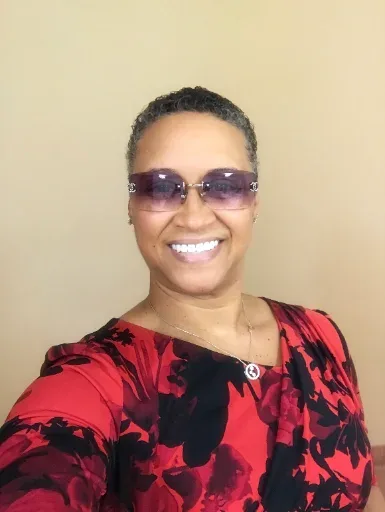
Audra N. Gillis, LCSW-C, LICSW, CBT, CHT
If you're reading this, I want to make a small guess about you: you're probably really good at taking care of other people. You show up, you help out, you make things work. And quietly, privately, you're running on empty—because somewhere along the way, your own needs got moved to the bottom of the list. Maybe they got crossed off entirely.
I know that place. I've spent a long time thinking about why so many capable, caring, intelligent people end up there—and more importantly, what it actually takes to get out. Not just intellectually, not just with a good quote on your phone, but in a real, lasting, behavioral way. The answer, almost every time, is the same: they were never taught the skill of assertiveness. Not the concept—the skill.
That's what Speak Up School is built on. Not vague affirmations about loving yourself. Not advice to "just say no." Real, practical, step-by-step techniques grounded in how human behavior actually changes. We start at the root—the guilt reflex, the people-pleasing patterns, the way your self-worth got tangled up with how available you are to others—and we work forward from there. By the time we get to the communication formula, your boundary map, the pushback scripts, and the daily practices, you're not just collecting information. You're building a new way of operating in the world.
The thing I want you to know is this: assertiveness is not a personality trait you either have or you don't. It is a learnable skill, like any other. And you are not too far gone, too conflict-averse, or too deeply people-pleasing to learn it. The fact that you've gotten this far reading this page tells me you're already ready to do something different.
Come join us. Your needs deserve a seat at the table—and this course will help you pull up the chair.
— Audra N. Gillis, LCSW-C, LICSW, CBT, CHT
Start your journey today
Join get instant access — learn at your own pace with an AI coach in your corner.
$39/mo
Recurring billing · cancel anytime
Secure checkout · Instant access
- 6 modules, 19 lessons
- AI-adaptive lessons tuned to your level
- Quizzes & checkpoints to lock in progress
- Your own AI learning coach
- Learn on any device, at your pace
- Full access for as long as you're subscribed