Master sports massage from pre-event to full recovery
Master the full spectrum of sports massage — from pre-event prep to post-event recovery — with evidence-based techniques, safety protocols, and contraindication knowledge built for working massage therapists.
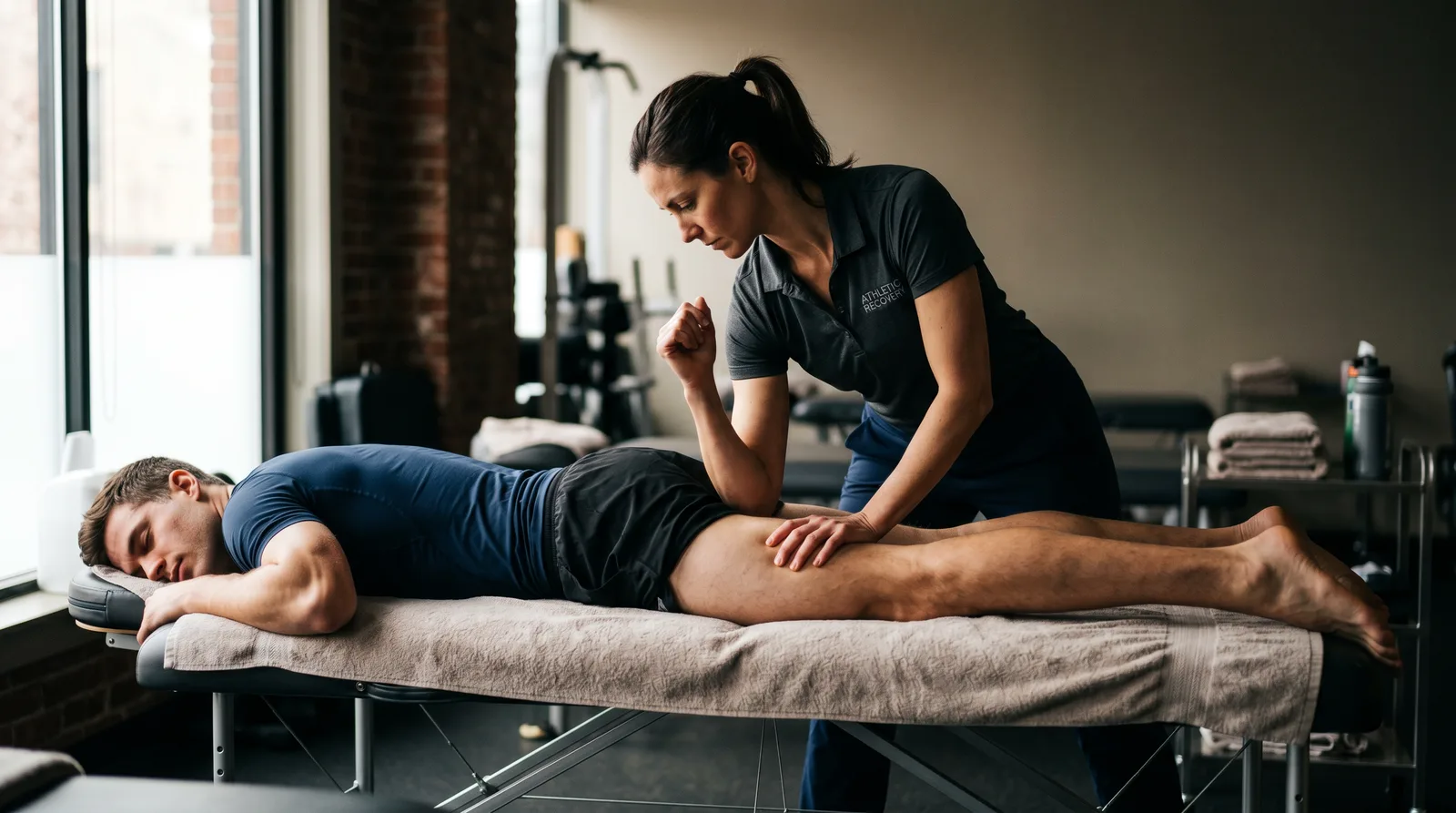
"I built this course around one standard: that you leave it trusted by athletes, coaches, and medical staff — not just competent, but clinically credible."— Steven B Glover
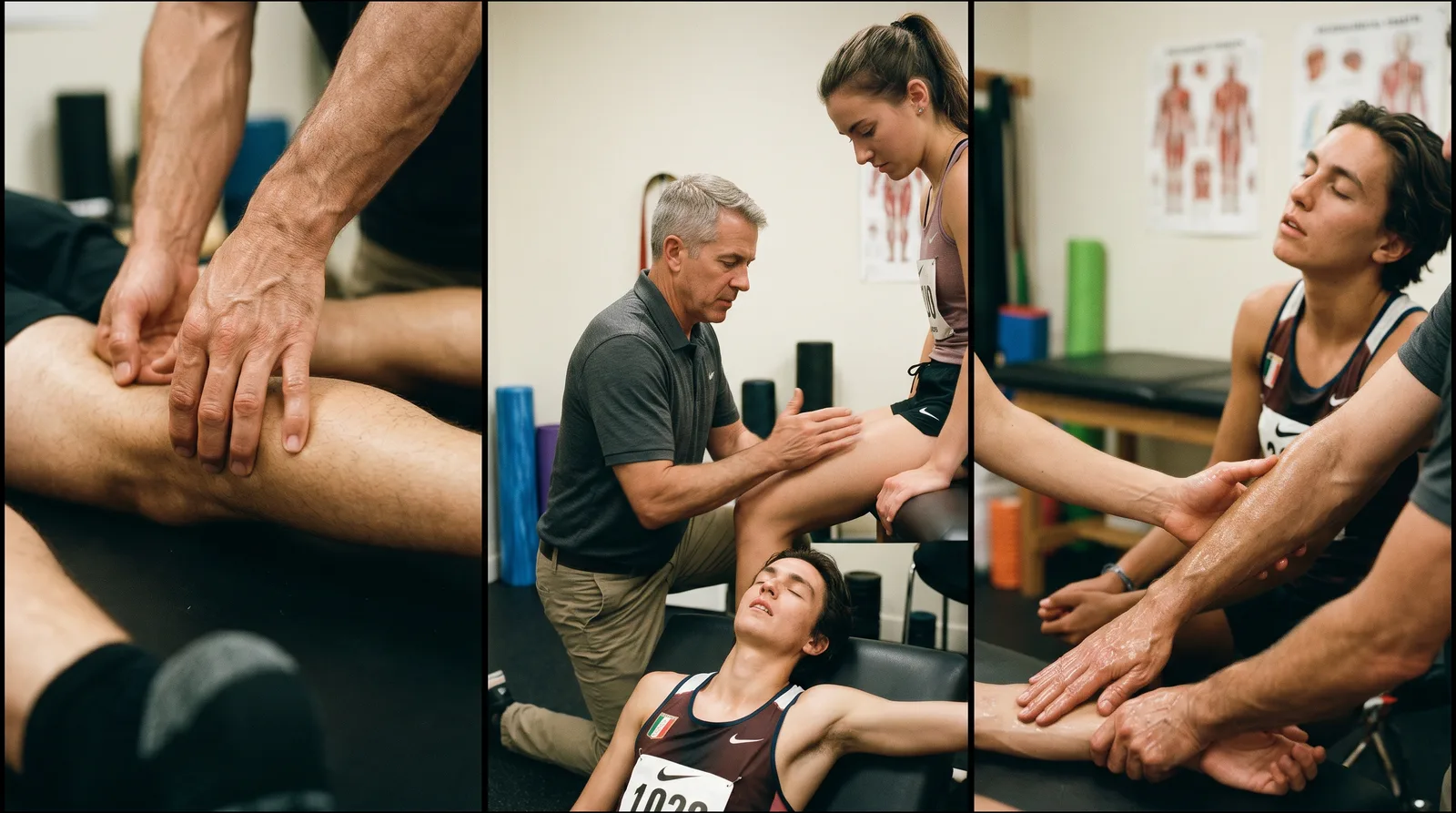
What you'll learn
What you'll be able to do
- Apply the correct sports massage technique — effleurage, petrissage, tapotement, friction, and compression — matched to the athlete's phase of competition.
- Design and execute a structured pre-event massage protocol that primes muscles, boosts circulation, and reduces injury risk within strict time constraints.
- Deliver safe and effective intra-event (event-side) massage interventions to manage acute muscle fatigue and cramping during competition.
- Implement a post-event recovery massage sequence that accelerates lactate clearance, reduces DOMS, and supports tissue repair.
- Accurately assess a client's health history to identify absolute and relative contraindications specific to sports massage.
- Communicate cautions and scope-of-practice boundaries to athletes, coaches, and medical staff to ensure safe, professional service delivery.
How it works
A school that adapts to you
This isn't a set of static videos. Every lesson is generated live and tuned to where you actually are.
We learn your level
A quick placement check tailors your starting point so you're never bored or lost.
Lessons adapt as you go
Each lesson is written for your pace and your goal, adjusting as your skills grow.
Your AI coach keeps you moving
Checkpoints, feedback, and gentle nudges turn progress into a real result.
The curriculum
What's inside your school
6 modules · 13 lessons

Foundations of Sports Massage
Establishes the physiological and conceptual groundwork every sports massage therapist must have before touching an athlete. Students learn how exercise stress affects muscle tissue, connective tissue, and circulation — and why those changes demand a discipline distinct from relaxation or clinical massage. This module is intentionally first: all technique and protocol decisions in later modules depend on understanding the underlying physiology.
- 1.1Exercise Physiology for the Sports Massage TherapistIncluded
- 1.2What Makes Sports Massage UniqueIncluded
Core Sports Massage Techniques
Builds deliberate, confident hands-on competency in all five foundational techniques — effleurage, petrissage, tapotement, friction, and compression — and develops the critical sequencing logic needed to combine them effectively. This module sits before any protocol module so that students arrive at pre-event, intra-event, and post-event practice with solid technical vocabulary and muscle memory rather than learning technique and protocol simultaneously.
- 2.1Effleurage and Petrissage for Athletic TissueIncluded
- 2.2Tapotement, Friction, and CompressionIncluded
- 2.3Technique Integration and Sequencing LogicIncluded
Pre-Event Massage Protocols
Translates foundational knowledge into a structured, time-constrained pre-event protocol designed to prime neuromuscular readiness, boost circulation, and reduce soft-tissue injury risk without inducing relaxation or reducing explosive power. Students learn both the science behind protocol design and the practical skills needed to deliver it confidently in a competition environment.
- 3.1Pre-Event Physiology and Protocol DesignIncluded
- 3.2Delivering Pre-Event Massage at CompetitionIncluded
Intra-Event and Post-Event Massage
Develops competency in the two remaining competition-day phases. The intra-event (event-side) lesson addresses the unique demands of rapid, targeted sideline interventions during active competition; the post-event lesson covers the full recovery sequence designed to accelerate physiological repair. Together these lessons complete the competition-day arc introduced in Module 1.
- 4.1Intra-Event Massage: Managing Fatigue and Cramp SidelineIncluded
- 4.2Post-Event Recovery Massage: Sequencing and ScienceIncluded
Contraindications and Safety in Sports Massage
Equips students to conduct structured health history assessments, accurately categorize absolute and relative contraindications, and apply professional communication skills when cautions or scope-of-practice boundaries arise. Placed after technique and protocol modules so students can contextualize contraindications against the specific techniques they have now practiced — making the clinical reasoning far more concrete and memorable.
- 5.1Absolute and Relative ContraindicationsIncluded
- 5.2Cautions, Scope of Practice, and Professional CommunicationIncluded
Applied Sports Massage Practice
Synthesizes all prior learning into high-fidelity, full-scope performance tasks that mirror real competition-day demands. Students execute complete pre-event, intra-event, and post-event sequences end-to-end, manage contraindication screenings under time pressure, and build a personal professional toolkit for ongoing practice. This capstone module confirms competency across all six course outcomes before certification.
- 6.1Full Competition-Day SimulationIncluded
- 6.2Building Your Sports Massage Practice ToolkitIncluded
Who it's for
Is this you?

Licensed therapists pivoting to sports
You have strong hands-on fundamentals and want to formalize your sports massage skills with evidence-based protocols and real clinical structure.

Student massage therapists
You're still in training and want to graduate with a sports massage specialization that makes you immediately competitive for athletic clientele.

Clinic therapists serving active clients
Your practice is full of runners, cyclists, and gym-goers, and you're ready to upgrade your protocols to match the physiological demands of their training.

Aspiring event-side therapists
You want to work competitions, races, and sporting events and need the sideline decision-making skills and safety knowledge to do it professionally.

Therapists pursuing team contracts
You're building toward working with a sports team and need the structured protocols, scope-of-practice clarity, and professional communication skills to earn that trust.

CE-seeking practitioners
You're a working therapist looking for continuing education that sharpens real clinical reasoning — not just clock hours — and gives you a tangible new specialty.
Questions
Frequently asked
Your teacher
A note from your teacher
Steven B Glover
If you trained as a massage therapist, you learned a lot. But if you've ever stood event-side trying to manage an athlete's hamstring cramp between heats, or wondered whether your pre-event protocol was actually helping or just filling time — you already know that general training only takes you so far. Sports massage demands something more specific: a clinical framework built around how athletes' bodies actually behave under competitive stress.
That's exactly what this course is designed to give you. I built Sports Massage Pro for practitioners who already understand the basics of massage and want to work at a genuinely higher level with active and athletic clients. Not a crash course in sports-sounding terminology — a real, structured progression through exercise physiology, technique application on athletic tissue, and evidence-informed protocol design for every phase of competition. The kind of clinical reasoning that lets you make confident decisions when a coach looks at you sideline and says, "Can you do anything for her?"
What I've found is that most therapists trying to break into sports massage hit the same wall: they know their strokes, but they don't have the sequencing logic or the physiological context to adapt in real time. So we spend serious time in this curriculum on the why behind every technique choice — why compression before effleurage in certain recovery contexts, why tapotement earns its place in pre-event work, why the same stroke applied at the wrong phase can undermine what you're trying to accomplish. That understanding is what separates a therapist who's capable from one who's genuinely trusted by athletes and medical staff alike.
I also want to be direct about something most sports massage courses gloss over: contraindications, scope of practice, and professional communication are not administrative boxes to check. Working within a sporting environment means operating alongside coaches, athletic trainers, and sports medicine professionals who will judge your competence as much by your professional judgment as your hands. This course covers that in full — because your credibility in those relationships is part of what you're building here.
If you're a licensed therapist who wants to take on athletic clients with confidence, a student therapist preparing for a career that includes sports work, or a practitioner who's been dabbling in sports massage and wants to formalize and sharpen your clinical foundation — this is the place to do it. The curriculum runs from first principles all the way through a full competition-day simulation, and you'll finish with both the knowledge and the practical toolkit to pursue this work seriously. Let's get to work.
— Steven B Glover
Start your journey today
Join get instant access — learn at your own pace with an AI coach in your corner.
$197/mo
Recurring billing · cancel anytime
Secure checkout · Instant access
- 6 modules, 13 lessons
- AI-adaptive lessons tuned to your level
- Quizzes & checkpoints to lock in progress
- Your own AI learning coach
- Learn on any device, at your pace
- Full access for as long as you're subscribed