Step onto the deck ready to coach.
Put Me in Coach is the complete certification course for youth swim coaches — covering every stroke, safety protocol, and people skill you need to lead swimmers ages 3 through high school with confidence from day one.
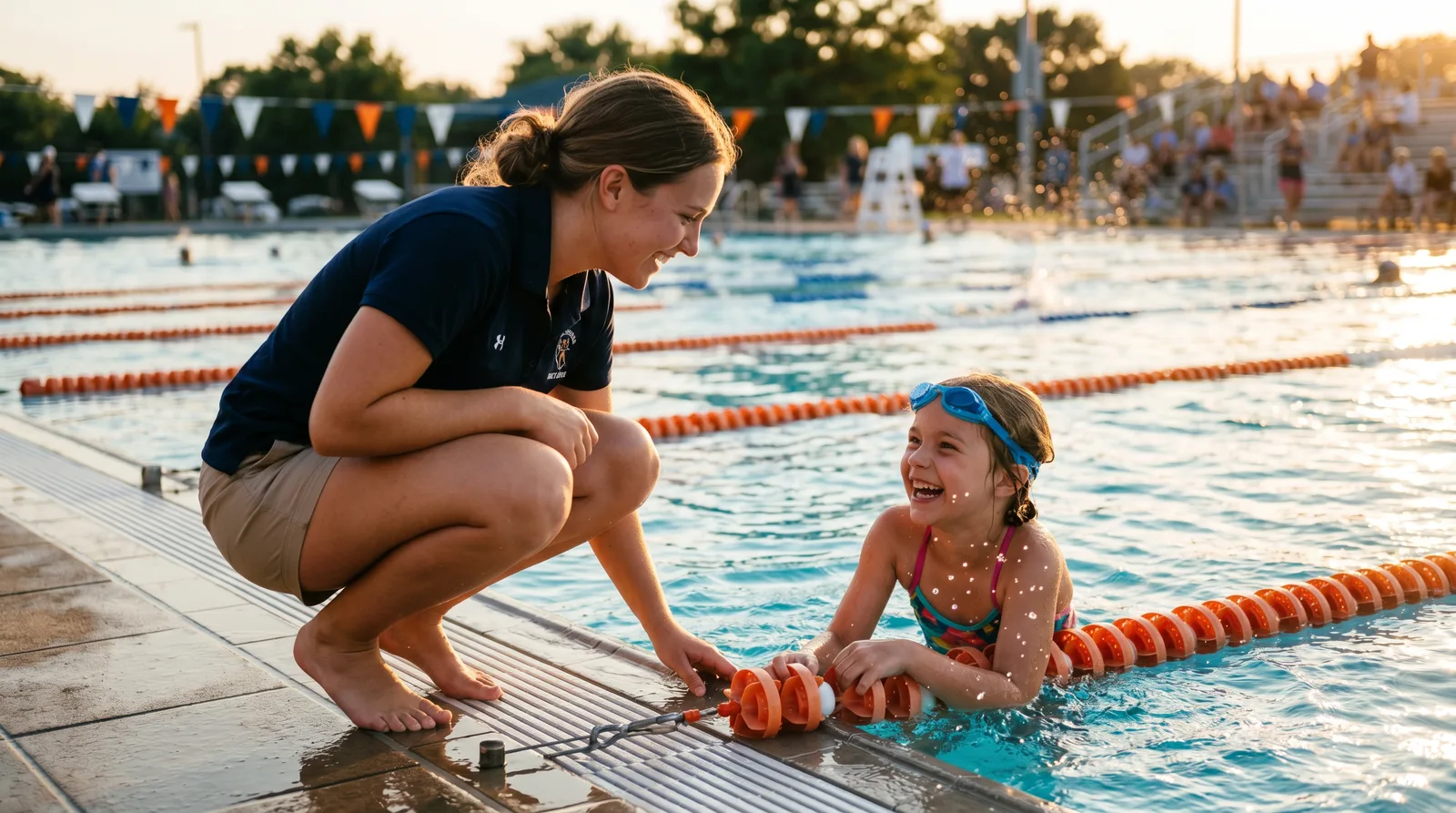
"Every swimmer on your deck deserves a coach who showed up prepared — this course is how you make sure that coach is you."
— TheGuideTeam
What you'll learn
What you'll be able to do
- Design age-appropriate practice plans and drills that build the core strokes, starts, and turns that drive 80% of competitive swim performance.
- Apply youth development principles to communicate effectively with swimmers from toddler learn-to-swim groups through high school varsity athletes.
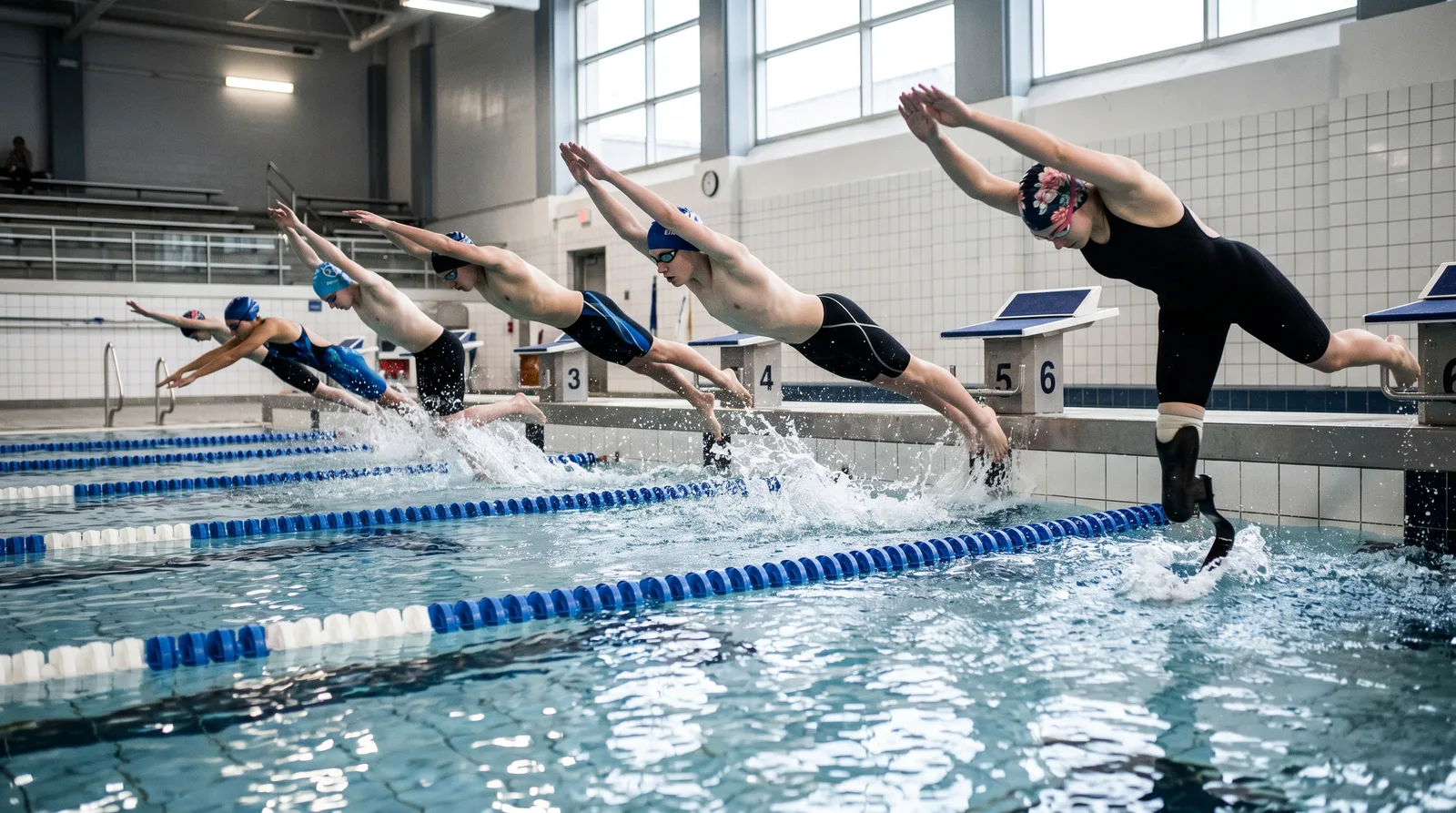
- Create an inclusive pool deck culture where beginners, neurodivergent athletes, and kids with disabilities feel valued, challenged, and celebrated.
- Implement a complete aquatic safety framework — equipment checks, injury recognition, emergency response, and concussion and medical protocols.
- Establish youth protection boundaries, recognize signs of abuse, and follow mandatory reporting responsibilities that keep every child and coach safe.
- Build a winning team identity through positive reinforcement, parent partnerships, and confidence-building rituals that foster a lifelong love of the sport.
How it works
A school that adapts to you
This isn't a set of static videos. Every lesson is generated live and tuned to where you actually are.
We learn your level
A quick placement check tailors your starting point so you're never bored or lost.
Lessons adapt as you go
Each lesson is written for your pace and your goal, adjusting as your skills grow.
Your AI coach keeps you moving
Checkpoints, feedback, and gentle nudges turn progress into a real result.
The curriculum
What's inside your school
6 modules · 30 lessons

Know Your Role, Know Your Swimmers
Establishes the coach's identity, responsibilities, and how to tailor their approach to the developmental stage of each age group from toddlers through high school.
- 1.1The Youth Swim Coach DefinedIncluded
- 1.2Self-Assessment: Where Are You Starting?Included
- 1.3Developmental Stages of Young Swimmers (Ages 3–18)Included
- 1.4Selecting and Understanding Your Age GroupIncluded
- 1.5What Great Youth Coaches Do DifferentlyIncluded
Mastering the Sport: Strokes, Rules, and the Winning 20%
Builds deep technical fluency in competitive swimming — strokes, starts, turns, rules, and equipment — with a focused emphasis on the skills that produce 80% of race results.
- 2.1Swimming Fundamentals: Terminology, Rules, and EquipmentIncluded
- 2.2The Four Strokes: Teaching Technique at Every LevelIncluded
- 2.3Starts and Turns: The 20% That Drives 80% of ResultsIncluded
- 2.4Drills That Work: Building Stroke Mechanics Through RepetitionIncluded
- 2.5Game-Day Strategy: Race Plans, Event Selection, and Relay TeamworkIncluded
Planning and Running Practices That Actually Work
Equips coaches to design structured, engaging, and progressively challenging practice sessions that keep every swimmer improving.
- 3.1Anatomy of a Great PracticeIncluded
- 3.2Building Age-Appropriate Practice PlansIncluded
- 3.3Managing Attention Spans and Keeping Kids EngagedIncluded
- 3.4Rotating Athletes and Managing Competitive Teams FairlyIncluded
- 3.5At-Home Skill Builders: Dryland and Family ExercisesIncluded
Developing Every Swimmer: Inclusion, Communication, and Coaching the Whole Child
Prepares coaches to reach every athlete on the roster — beginners, advanced swimmers, neurodivergent kids, athletes with disabilities, and everyone in between.
- 4.1Communicating Across Ages and Ability LevelsIncluded
- 4.2Coaching Beginners, Late Starters, and Kids with Limited Athletic ExperienceIncluded
- 4.3Understanding and Coaching Neurodivergent AthletesIncluded
- 4.4Adaptive Coaching: Athletes with Physical Disabilities and Exceptional NeedsIncluded
- 4.5Handling Challenging Behaviors and Resolving ConflictIncluded
Aquatic Safety, Injury Prevention, and Emergency Response
Delivers a complete pool-deck safety framework — from equipment checks and injury prevention to emergency protocols and medical recognition.
- 5.1Pool Deck Safety: Environment Checks and Equipment StandardsIncluded
- 5.2Injury Prevention and Recognizing Early Warning SignsIncluded
- 5.3Responding to Common Injuries: Sprains, Head Injuries, and FracturesIncluded
- 5.4Medical Emergencies: Concussion Protocols, Cardiac Events, and When to Call 911Included
- 5.5Drowning Prevention, Water Rescue Awareness, and Supervision StandardsIncluded
Youth Protection, Team Culture, and the Winning Community
Builds the ethical, relational, and cultural foundation that makes a team safe, joyful, and successful long after the season ends.
- 6.1Safe Coach Boundaries: One-on-One Situations, Communication, and Physical ContactIncluded
- 6.2Recognizing Abuse and Understanding Mandatory ReportingIncluded
- 6.3Building a Winning Team Culture Through Positive ReinforcementIncluded
- 6.4Partnering with Parents: Expectations, Communication, and ConflictIncluded
- 6.5Creating a Lifelong Love of the SportIncluded
Who it's for
Is this you?

First-Time Youth Coaches
You just said yes to coaching a rec team and need a structured foundation — fast — before the first practice.

Swim Parents Stepping Up
Your kid loves the sport and you want to help coach, but you need real tools beyond what you learned as a swimmer yourself.

School Aquatics Staff
You're leading a middle or high school swim program and want certification-level preparation for everything from practice design to emergency response.

Recreation Program Coordinators
You manage youth aquatics at a rec center or park district and need coaches who can handle every level — from toddler learn-to-swim to competitive age-groupers.

Returning Coaches Leveling Up
You've been on deck for seasons but never had a formal framework for inclusion, youth protection, or adaptive coaching — and you're ready to fix that.

Community & Church Volunteer Coaches
You coach swimming through a community league or faith-based program and want the safety knowledge and people skills to lead with confidence and care.
Questions
Frequently asked
Your teacher
A note from your teacher

TheGuideTeam
Hey, Coach — I'm glad you're here.
If you're reading this, you've probably already said yes to something that matters. Maybe someone handed you a clipboard and a lane assignment and said, "You're coaching the eight-and-unders." Maybe you've been on deck for years but never had a structured foundation to build on. Maybe you're a parent who watched your kid fall in love with swimming and thought, I want to help grow that. Wherever you're starting from, I want you to know: the fact that you're looking for real preparation says everything about the kind of coach you're going to be.
Here's what I know about youth swim coaching: the technical stuff — strokes, starts, turns, drills — is learnable. And it's important. Starts and turns alone account for a huge portion of competitive race outcomes, and most coaches never give them the focused attention they deserve. We fix that in this course. But I also know that technique is only part of the job. The other part is understanding that a ten-year-old who's having a rough day at school is not the same as a ten-year-old who needs a harder set. Knowing the difference — and responding to it — is what separates good coaches from great ones. We cover that too.
What I've built in Put Me in Coach is the course I wish had existed when I started. It's organized the way a real coaching career develops: first, understanding your swimmers across every developmental stage from age 3 to 18. Then mastering the sport itself — all four strokes, race strategy, and the drills that actually build lasting muscle memory. Then designing practices that work for real kids with real attention spans. Then going deeper into inclusion, adaptive coaching, and communicating across ability levels. And finally, building the safety framework and team culture that make everything else sustainable.
I'm not going to sugarcoat the responsibility you're taking on. Working with young athletes — especially in an aquatic environment — comes with serious obligations around safety, youth protection, and emergency response. This course takes all of that seriously. You'll leave knowing exactly what to do if something goes wrong on deck, and more importantly, how to build an environment where most things go right.
What I will tell you is this: youth swimming has a way of giving back more than you put in. The kid who can barely float in October and swims her first legal butterfly in February? The relay team that drops ten seconds at the championship meet and goes absolutely wild? That's yours. That's what you're signing up for. Come on in — the water's fine, and you're more ready than you think.
— TheGuideTeam
Start your journey today
Get instant access — learn at your own pace with an AI coach in your corner.
$24.99/mo
Recurring billing · cancel anytime
Secure checkout · Instant access
- 6 modules, 30 lessons
- AI-adaptive lessons tuned to your level
- Quizzes & checkpoints to lock in progress
- Your own AI learning coach
- Learn on any device, at your pace
- Full access for as long as you're subscribed