
Become the teacher every student remembers
This diploma-level program gives aspiring and practicing high school teachers a complete professional toolkit — from lesson planning and behaviour management to inclusion, assessment, and sustainable classroom leadership. No fluff. Just evidence-based pedagogy you can use on Monday morning.
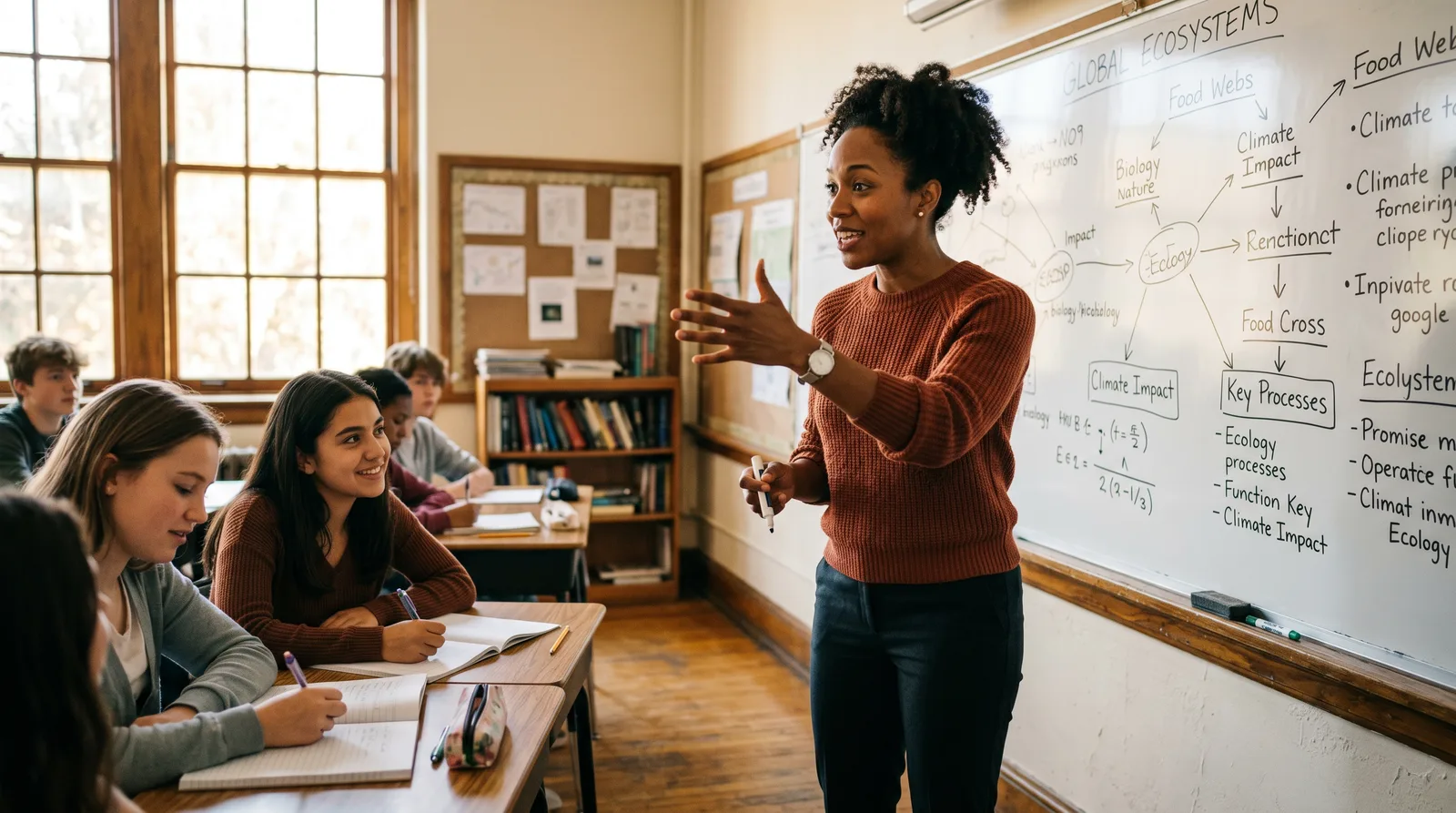
"Great teaching is a craft — and like any craft, it deepens every time you bring honest reflection to your practice."— Enstay
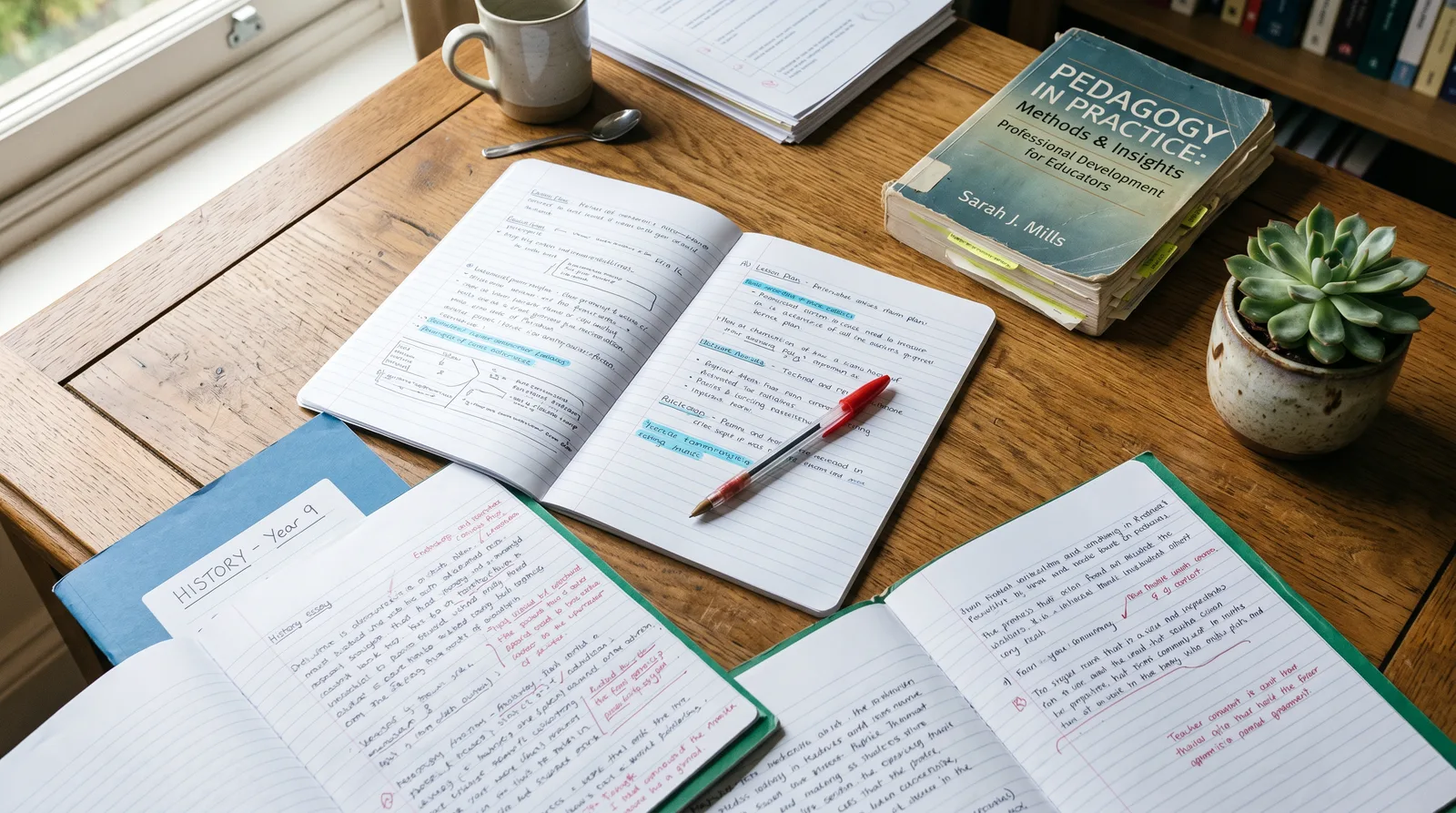
What you'll learn
What you'll be able to do
- Design engaging, curriculum-aligned lesson plans that cater to diverse learning styles and ability levels
- Apply proven classroom management techniques to create a safe, focused, and respectful learning environment
- Use formative and summative assessment strategies to accurately measure and report student progress
- Differentiate instruction effectively to support students with varying needs, including those with learning difficulties
- Build positive relationships with students, parents, and colleagues to foster a strong school community
- Reflect critically on your own teaching practice using professional frameworks to drive continuous improvement
How it works
A school that adapts to you
This isn't a set of static videos. Every lesson is generated live and tuned to where you actually are.
We learn your level
A quick placement check tailors your starting point so you're never bored or lost.
Lessons adapt as you go
Each lesson is written for your pace and your goal, adjusting as your skills grow.
Your AI coach keeps you moving
Checkpoints, feedback, and gentle nudges turn progress into a real result.
The curriculum
What's inside your school
40 modules · 300 lessons

Foundations of High School Education
This opening module establishes the professional and theoretical groundwork for the entire diploma. Trainees explore who their students are as adolescent learners, what it means to hold the identity of a high school teacher, and the key psychological and educational theories that explain how teenagers learn. Completing this module first ensures every subsequent topic — from lesson planning to differentiation — is grounded in a confident understanding of the learner and the profession.
- 1.1Understanding the Adolescent LearnerIncluded
- 1.2The Role and Professional Identity of the High School TeacherIncluded
- 1.3How Teenagers Learn: Key Theories in PracticeIncluded
Lesson Planning and Curriculum Design
Trainees move from understanding learners to designing powerful learning experiences. This module covers the full architecture of effective lesson planning, how individual lessons connect to broader curriculum and schemes of work, which instructional strategies best suit secondary learners, and how to plan from the outset for diverse ability levels and learning styles. Sequenced after the Foundations module so that all planning decisions are informed by who the learners are.
- 2.1Anatomy of an Effective Lesson PlanIncluded
- 2.2Curriculum Alignment and Scheme of Work DesignIncluded
- 2.3Engaging Instructional Strategies for Secondary LearnersIncluded
- 2.4Catering to Diverse Learning Styles and Ability LevelsIncluded
Classroom Management and Learning Environment
A safe, structured, and respectful classroom is the prerequisite for all learning. This module equips trainees with a comprehensive, evidence-based toolkit for establishing and maintaining productive classroom environments — from proactive rule-setting through to restorative conflict resolution and whole-child pastoral care. Positioned after planning so trainees understand that good management begins in lesson design, not only in response to behaviour.
- 3.1Establishing Rules, Routines, and ExpectationsIncluded
- 3.2Behaviour Management Strategies That Actually WorkIncluded
- 3.3Restorative Approaches and Conflict ResolutionIncluded
- 3.4Student Wellbeing, Mental Health Awareness, and Pastoral ResponsibilityIncluded
Assessment, Feedback, and Reporting
This module develops trainees' full assessment literacy — the ability to design, administer, interpret, and act on both formative and summative assessments — and to communicate student progress clearly to students, parents, and institutional stakeholders. Positioned after classroom management because a psychologically safe classroom is the prerequisite for assessment that accurately reflects what students know and can do.
- 4.1Formative Assessment: Checking for Understanding in Real TimeIncluded
- 4.2Summative Assessment Design and MarkingIncluded
- 4.3Giving Feedback That Drives LearningIncluded
- 4.4Reporting, Data Literacy, and Parent CommunicationIncluded
Professional Relationships, Reflection, and Career Development
The culminating module shifts the lens inward and outward simultaneously — inward to reflective practice and professional growth, and outward to the relationships with students, families, colleagues, and the wider community that make teaching sustainable and joyful. Positioned last so trainees can reflect on and integrate everything learned across the diploma, and so that the Teaching Philosophy Statement begun in Module 1 can be meaningfully revisited and completed.
- 5.1Building Positive Student RelationshipsIncluded
- 5.2Working with Parents, Carers, and the Wider School CommunityIncluded
- 5.3Collaboration, Mentoring, and Working in Departmental TeamsIncluded
- 5.4Reflective Practice and Continuous Professional DevelopmentIncluded
- 5.5Teacher Resilience, Wellbeing, and Sustainable PracticeIncluded
Introduction to Education and the Teaching Profession
- 6.1Education Defined: Meaning, Purpose, and FunctionsIncluded
- 6.2Forms and Types of Education: Formal, Non-Formal, InformalIncluded
- 6.3The School as a Social InstitutionIncluded
- 6.4The Teacher’s Role in High School EducationIncluded
- 6.5Teacher Identity: Competencies, Dispositions, and Professional StandardsIncluded
- 6.6Teaching as a Career: Pathways, Expectations, and RealitiesIncluded
- 6.7Professional Communication for Teachers (Written and Spoken)Included
- 6.8Introduction to Reflective Practice and Professional Growth PlansIncluded
Philosophy of Education
- 7.1What is Philosophy of Education and Why it MattersIncluded
- 7.2Aims of Education: Individual, Social, Economic, and National DevelopmentIncluded
- 7.3Major Philosophical Traditions I: Idealism and RealismIncluded
- 7.4Major Philosophical Traditions II: Pragmatism and ExistentialismIncluded
- 7.5Educational Philosophies in Practice: Perennialism, Essentialism, Progressivism, ReconstructionismIncluded
- 7.6Teacher Philosophy Statements: Building Your Personal Teaching PhilosophyIncluded
- 7.7Philosophy, Curriculum, and Pedagogy: Linking Beliefs to Classroom PracticeIncluded
- 7.8Contemporary Debates in Education: Equity, Relevance, and QualityIncluded
Sociology of Education
- 8.1Education and Society: Key Concepts and RelationshipsIncluded
- 8.2Culture, Socialisation, and SchoolingIncluded
- 8.3Social Class and Educational OpportunityIncluded
- 8.4Gender and Education: Participation, Achievement, and BarriersIncluded
- 8.5Language, Identity, and Learning in Diverse ClassroomsIncluded
- 8.6Education, Power, and Inequality: Hidden Curriculum and ReproductionIncluded
- 8.7School Community Partnerships: Parents, Community, and StakeholdersIncluded
- 8.8The Teacher as a Change Agent in SocietyIncluded
Psychology of Education (Overview)
- 9.1Psychology of Education: Scope, Value, and Core ConceptsIncluded
- 9.2How Students Learn: Introduction to Learning ProcessesIncluded
- 9.3Cognitive Development: Overview of Key Stage ModelsIncluded
- 9.4Motivation and Engagement: Intrinsic vs Extrinsic DriversIncluded
- 9.5Classroom Behaviour: Basic Principles of Behaviour and ManagementIncluded
- 9.6Intelligence, Ability, and Individual Differences: An OverviewIncluded
- 9.7Learning Difficulties and Support: Early Identification BasicsIncluded
- 9.8Teacher Mindset and Student Outcomes: Expectations and Self-Fulfilling PropheciesIncluded
Ethics and Professional Conduct for Teachers
- 10.1Professional Ethics: Meaning, Purpose, and Ethical ReasoningIncluded
- 10.2Professional Conduct and the Teacher’s Public TrustIncluded
- 10.3Teacher-Student Boundaries and Safeguarding EssentialsIncluded
- 10.4Confidentiality, Records, and Responsible Information HandlingIncluded
- 10.5Fairness, Equity, and Non-Discrimination in the ClassroomIncluded
- 10.6Academic Integrity: Assessment Ethics and Professional AccountabilityIncluded
- 10.7Conflict Resolution: Professional Relationships and Workplace ConductIncluded
- 10.8Ethical Dilemmas in Schools: Case Studies and Decision FrameworksIncluded
Human Growth and Development
- 11.1Educational Psychology and Adolescent Development: Why It MattersIncluded
- 11.2Domains of Development: Physical, Cognitive, Social, EmotionalIncluded
- 11.3Stages of Development and Implications for Secondary LearnersIncluded
- 11.4Brain Development in Adolescence and Learning ReadinessIncluded
- 11.5Identity Formation and Self-Concept in TeenagersIncluded
- 11.6Moral Development and Values Education in High SchoolIncluded
- 11.7Social Development: Peer Influence, Belonging, and Risk BehaviourIncluded
- 11.8Supporting Wellbeing: Stress, Mental Health Basics, and Referral PathwaysIncluded
Learning Theories and Styles
- 12.1What Learning Is: Key Concepts and Common MisconceptionsIncluded
- 12.2Behaviourism in the Classroom: Reinforcement and PracticeIncluded
- 12.3Cognitivism: Memory, Attention, and Information ProcessingIncluded
- 12.4Constructivism: Active Learning and Knowledge BuildingIncluded
- 12.5Social Learning Theory: Modelling, Observation, and Peer LearningIncluded
- 12.6Multiple Intelligences and Learning Preferences: Classroom ImplicationsIncluded
- 12.7Learning Styles Debate: What the Evidence Says and Practical AlternativesIncluded
- 12.8Metacognition and Study Skills: Teaching Learners How to LearnIncluded
Motivation and Classroom Engagement
- 13.1Motivation Fundamentals: Intrinsic vs ExtrinsicIncluded
- 13.2Goal Orientation: Mastery vs Performance GoalsIncluded
- 13.3Self-Efficacy and Learner Confidence: Building Academic CourageIncluded
- 13.4Engagement Strategies: Participation, Curiosity, and RelevanceIncluded
- 13.5Feedback for Motivation: Praise, Critique, and Growth Mindset LanguageIncluded
- 13.6Supporting Struggling Learners: Persistence and Academic ResilienceIncluded
- 13.7Motivating Mixed-Ability Classes: Scaffolding and ChoiceIncluded
- 13.8Classroom Climate: Relationships, Trust, and Psychological SafetyIncluded
Individual Differences and Inclusive Education
- 14.1Understanding Individual Differences: Ability, Aptitude, and Prior KnowledgeIncluded
- 14.2Diversity in the Classroom: Culture, Language, and Socioeconomic ContextIncluded
- 14.3Introduction to Inclusive Education: Principles and Teacher ResponsibilitiesIncluded
- 14.4Barriers to Learning and Participation: Identifying and RespondingIncluded
- 14.5Differentiated Instruction I: Content, Process, ProductIncluded
- 14.6Differentiated Instruction II: Support, Extension, and ScaffoldingIncluded
- 14.7Special Educational Needs Overview: Classroom-Level SupportIncluded
- 14.8Universal Design for Learning Basics: Planning for Access from the StartIncluded
Learner Behaviour and Classroom Dynamics
- 15.1Understanding Behaviour: Causes, Functions, and TriggersIncluded
- 15.2Classroom Routines and Expectations: Setting Up for SuccessIncluded
- 15.3Positive Behaviour Support and Reinforcement SystemsIncluded
- 15.4Managing Disruption: Low-Level Interventions and De-escalationIncluded
- 15.5Conflict Management: Peer Conflict, Bullying, and Restorative ApproachesIncluded
- 15.6Group Dynamics: Cooperation, Competition, and Classroom CultureIncluded
- 15.7Teacher Authority and Influence: Leadership Styles and PresenceIncluded
- 15.8Behaviour Documentation and Referral: Recording, Reporting, and Follow-UpIncluded
Principles of Curriculum Design
- 16.1Curriculum Defined: Concepts, Levels, and Key TermsIncluded
- 16.2Purposes of Curriculum: Knowledge, Skills, Values, CompetenciesIncluded
- 16.3Curriculum Components: Aims, Content, Methods, AssessmentIncluded
- 16.4Curriculum Design Models: Tyler, Taba, and Backward DesignIncluded
- 16.5Scope and Sequence: Progression Across Grades and TermsIncluded
- 16.6Competency-Based Curriculum Principles and ImplicationsIncluded
- 16.7The Hidden Curriculum and Its Classroom EffectsIncluded
- 16.8Curriculum Quality and Relevance: Context, Culture, and Future SkillsIncluded
National Curriculum Frameworks
- 17.1Understanding a National Curriculum Framework: Structure and PurposeIncluded
- 17.2Policy-to-Practice: How Curriculum Policy Shapes Classroom TeachingIncluded
- 17.3Curriculum Standards and Learning Outcomes: Reading and Using ThemIncluded
- 17.4Cross-Cutting Themes: Citizenship, Values, Gender, ICT, EnvironmentIncluded
- 17.5Integration and Interdisciplinary Learning in Secondary SchoolsIncluded
- 17.6Curriculum Implementation Roles: Teacher, HOD, School LeadershipIncluded
- 17.7Monitoring Curriculum Implementation: Supervision and SupportIncluded
- 17.8Curriculum Change and Reform: Managing Transitions in SchoolsIncluded
Syllabus Interpretation and Schemes of Work
- 18.1Syllabus Documents: Purpose, Parts, and Common TerminologyIncluded
- 18.2Interpreting Syllabus Objectives and Learning OutcomesIncluded
- 18.3Content Analysis: Topics, Subtopics, Depth, and WeightingIncluded
- 18.4Selecting Teaching Strategies from Syllabus RequirementsIncluded
- 18.5Scheme of Work: Structure, Standards, and FormattingIncluded
- 18.6Term Planning: Pacing, Time Allocation, and Assessment PointsIncluded
- 18.7Resource Planning: Texts, Equipment, Digital Tools, and Local MaterialsIncluded
- 18.8Moderation and Quality Assurance of Schemes of WorkIncluded
Lesson Planning and Structuring
- 19.1Lesson Planning Essentials: Purpose, Elements, and TemplatesIncluded
- 19.2Writing Measurable Objectives and Success CriteriaIncluded
- 19.3Lesson Structure: Introductions, Development, Practice, ClosureIncluded
- 19.4Selecting Teaching Methods: Matching Method to Content and LearnersIncluded
- 19.5Learning Activities and Sequencing: Scaffolding and Gradual ReleaseIncluded
- 19.6Assessment in the Lesson: Checks for Understanding and Exit TicketsIncluded
- 19.7Classroom Resources and Teaching Aids: Design and UseIncluded
- 19.8Reflective Lesson Evaluation: Improving Plans Through EvidenceIncluded
Curriculum Adaptation and Differentiation
- 20.1Why Adapt Curriculum: Equity, Access, and Learner DiversityIncluded
- 20.2Differentiation Approaches: Content, Process, Product, EnvironmentIncluded
- 20.3Adapting for Language Needs and Multilingual ClassroomsIncluded
- 20.4Adapting for Special Educational Needs: Accommodations vs ModificationsIncluded
- 20.5Remediation and Enrichment: Planning for Support and ExtensionIncluded
- 20.6Assessment Adaptations: Fairness, Validity, and IntegrityIncluded
- 20.7Resource Adaptation: Low-Cost, Local, and Inclusive MaterialsIncluded
- 20.8Managing Differentiation in Large Classes: Practical Systems and RoutineIncluded
Teaching Methods in Secondary Schools
- 21.1Teaching Methods Overview: Matching Method to Purpose and ContentIncluded
- 21.2Direct Instruction and Explicit Teaching: When and How to Use ItIncluded
- 21.3Demonstration Method: Teaching Practical Skills and ProceduresIncluded
- 21.4Guided Practice and Scaffolding: Gradual Release of ResponsibilityIncluded
- 21.5Inquiry-Based and Discovery Learning in Secondary ClassroomsIncluded
- 21.6Problem-Based Learning: Designing Real-World Learning TasksIncluded
- 21.7Cooperative Learning Methods: Group Roles and AccountabilityIncluded
- 21.8Project-Based Learning: Planning, Implementation, and Assessment EvidenceIncluded
Learner-Centred and Competency-Based Approaches
- 22.1Learner-Centred Teaching: Principles and Teacher Role ShiftsIncluded
- 22.2Competency-Based Education: Outcomes, Performance Criteria, and EvidenceIncluded
- 22.3Differentiated Instruction in Pedagogy: Planning for Mixed-Ability ClassesIncluded
- 22.4Scaffolding Strategies: Prompts, Modelling, Worked Examples, and SupportsIncluded
- 22.5Active Learning Strategies: Think-Pair-Share, Stations, Jigsaw, Gallery WalkIncluded
- 22.6Inclusive Pedagogy: Ensuring Participation and Access for All LearnersIncluded
- 22.7Feedback Loops in Learner-Centred Classes: Checking Understanding and AdjustingIncluded
- 22.8Designing Competency-Based Lesson Activities and Performance TasksIncluded
Teaching Aids and Instructional Materials
- 23.1Instructional Materials: Purpose, Selection, and Quality StandardsIncluded
- 23.2Chalkboard/Whiteboard Mastery: Layout, Pacing, and ClarityIncluded
- 23.3Worksheet Design: Structure, Differentiation, and Assessment ValueIncluded
- 23.4Visual Aids: Charts, Models, Posters, and Graphic OrganisersIncluded
- 23.5Practical and Laboratory Resources: Safety, Setup, and Demonstration ReadinessIncluded
- 23.6Digital Teaching Materials: Slides, Video, Simulations, and Interactive ToolsIncluded
- 23.7Low-Cost and Local Materials: Improvisation for Resource-Limited SchoolsIncluded
- 23.8Managing and Evaluating Teaching Aids: Storage, Reuse, and EffectivenessIncluded
Micro-Teaching and Peer Teaching
- 24.1Micro-Teaching Fundamentals: Purpose, Cycle, and Observation FocusIncluded
- 24.2Micro-Lesson Planning: Objectives, Timing, and Activity SequencingIncluded
- 24.3Delivery Skills I: Voice, Presence, Movement, and Classroom FocusIncluded
- 24.4Delivery Skills II: Explaining, Modelling, Examples, and Clarity ChecksIncluded
- 24.5Peer Teaching Protocols: Observation, Feedback, and Professional LanguageIncluded
- 24.6Remediation Through Re-Teaching: Improving After FeedbackIncluded
- 24.7Building a Teaching Portfolio: Collecting Evidence of CompetenceIncluded
- 24.8Micro-Teaching Assessment: Rubrics, Scoring, and Development TargetsIncluded
Questioning Techniques and Discussion Methods
- 25.1Purposeful Questioning: Planning, Timing, and Cognitive DemandIncluded
- 25.2Question Types and Levels: Recall to Higher-Order ThinkingIncluded
- 25.3Wait Time, Probing, and Redirecting: Improving Answer QualityIncluded
- 25.4Checking for Understanding: Hinge Questions and Quick Diagnostic ChecksIncluded
- 25.5Managing Whole-Class Discussions: Turn-Taking, Norms, and EquityIncluded
- 25.6Small Group Discussion Structures: Think-Pair-Share, Socratic Circles, DebatesIncluded
- 25.7Handling Wrong Answers and Misconceptions: Corrective QuestioningIncluded
- 25.8Questioning for Assessment: Oral Assessment, Participation, and FairnessIncluded
Subject Content Review (Specialisation)
- 26.1Mapping the Subject Syllabus: Topics, Weighting, and ProgressionIncluded
- 26.2Core Concepts I: Foundational Knowledge for Your SubjectIncluded
- 26.3Core Concepts II: Intermediate Knowledge and ConnectionsIncluded
- 26.4Core Concepts III: Advanced/Examination-Level KnowledgeIncluded
- 26.5Subject Vocabulary and Terminology: Precision and Common MisuseIncluded
- 26.6Concept Linking: Building Coherence Across Units and TopicsIncluded
- 26.7Skills, Processes, and Practical Competencies in Your SubjectIncluded
- 26.8Exam Standards and Depth: What “Mastery” Looks Like in Your SubjectIncluded
Subject-Specific Teaching Strategies
- 27.1Pedagogical Content Knowledge (PCK): Teaching the Subject, Not Just Knowing ItIncluded
- 27.2– Selecting Methods for Your Subject: When to Lecture, Demonstrate, Facilitate, or CoachIncluded
- 27.3Explaining and Modelling in Your Subject: Worked Examples and Think-AloudsIncluded
- 27.4Using Representations: Diagrams, Models, Texts, Symbols, and VisualisationsIncluded
- 27.5Teaching for Conceptual Understanding vs Procedural Fluency (Subject Application)Included
- 27.6Designing Subject Tasks: Practice, Application, and TransferIncluded
- 27.7Subject Assessment Strategies: Formative Checks and Summative ToolsIncluded
- 27.8Planning a Subject Unit: Coherence, Pacing, Resources, and EvidenceIncluded
Practical and Demonstration Techniques
- 28.1Practical Work in Your Subject: Purpose, Standards, and SafetyIncluded
- 28.2Demonstration Planning: Setup, Timing, Risk Control, and Learner RolesIncluded
- 28.3Teaching Skills and Procedures: Step-by-Step Instruction and ModellingIncluded
- 28.4Managing Practical Lessons: Groups, Materials, Time, and MovementIncluded
- 28.5Recording and Reporting Practical Work: Observation, Data, and Write-UpsIncluded
- 28.6Improvisation and Low-Cost Practical Resources for Your SubjectIncluded
- 28.7Practical Assessment: Rubrics, Checklists, and Competency EvidenceIncluded
- 28.8Practical Troubleshooting: Common Errors, Fixes, and Contingency PlanningIncluded
Common Learner Difficulties in the Subject
- 29.1Diagnosing Misconceptions: Identifying What Learners Get Wrong and WhyIncluded
- 29.2Common Misconceptions I: High-Frequency Errors in Your SubjectIncluded
- 29.3Common Misconceptions II: Exam Errors and Knowledge GapsIncluded
- 29.4Subject-Specific Language Difficulties: Reading, Writing, and Interpreting QuestionsIncluded
- 29.5Supporting Weak Foundations: Bridging and Remediation StrategiesIncluded
- 29.6Differentiation in Your Subject: Support, Core, and Extension PathwaysIncluded
- 29.7Teaching Problem-Solving and Application: Strategies for TransferIncluded
- 29.8Feedback and Re-Teaching Cycles: Correction, Practice, and MasteryIncluded
Integrating Theory and Practice in Subject Teaching
- 30.1Theory-to-Practice Alignment: Turning Concepts into Classroom ActivitiesIncluded
- 30.2Real-World Contexts: Making Your Subject Relevant and AppliedIncluded
- 30.3Integrating Cross-Cutting Themes Within Your SubjectIncluded
- 30.4Designing Competency-Based Performance Tasks in Your SubjectIncluded
- 30.5Sequencing Lessons for Mastery: Scaffolding Across a UnitIncluded
- 30.6Balancing Content Coverage and Deep UnderstandingIncluded
- 30.7Building a Subject Teaching Portfolio: Evidence, Artefacts, and ReflectionIncluded
- 30.8Capstone Subject Lesson: Full Lesson Delivery and Evidence SubmissionIncluded
Principles of Educational Assessment
- 31.1Assessment in Education: Purpose, Roles, and StakeholdersIncluded
- 31.2Measurement, Assessment, and Evaluation: Key DistinctionsIncluded
- 31.3Types of Assessment: Diagnostic, Formative, SummativeIncluded
- 31.4Assessment for Learning vs Assessment of LearningIncluded
- 31.5Validity, Reliability, Fairness, and Practicality in AssessmentIncluded
- 31.6Alignment: Linking Assessment to Objectives and Curriculum StandardsIncluded
- 31.7Criterion-Referenced and Norm-Referenced AssessmentIncluded
- 31.8Ethical Principles in Educational AssessmentIncluded
Test Construction and Marking Schemes
- 32.1Planning a Test: Purpose, Blueprinting, and WeightingIncluded
- 32.2Writing Objective Test Items: Multiple Choice, True/False, MatchingIncluded
- 32.3Writing Structured and Essay QuestionsIncluded
- 32.4Cognitive Levels in Test Items: Recall to Higher-Order ThinkingIncluded
- 32.5Designing Practical and Performance-Based AssessmentsIncluded
- 32.6Marking Schemes and Answer Keys: Principles and FormatsIncluded
- 32.7Rubrics: Analytic vs Holistic ScoringIncluded
- 32.8Moderation and Standardisation of MarkingIncluded
Continuous Assessment Methods
- 33.1Continuous Assessment: Purpose and Policy RequirementsIncluded
- 33.2Classwork, Homework, and Assignments as Assessment ToolsIncluded
- 33.3Projects, Investigations, and Practical TasksIncluded
- 33.4Portfolios and Learner Evidence FilesIncluded
- 33.5Observation and Oral Assessment TechniquesIncluded
- 33.6Record Keeping: Mark Schedules and Progress TrackingIncluded
- 33.7Weighting and Aggregation of Continuous Assessment MarksIncluded
- 33.8Managing Continuous Assessment in Large ClassesIncluded
Feedback and Remedial Teaching
- 34.1Purpose of Feedback in Learning and AchievementIncluded
- 34.2Types of Feedback: Written, Oral, Peer, and Self-AssessmentIncluded
- 34.3Effective Feedback Characteristics: Timely, Specific, ActionableIncluded
- 34.4Using Assessment Data to Identify Learning GapsIncluded
- 34.5Remedial Teaching Strategies: Reteaching, Support, and PracticeIncluded
- 34.6Enrichment and Extension for High-Performing LearnersIncluded
- 34.7Individualised Feedback and Learner ConferencingIncluded
- 34.8Monitoring Progress After Remedial InterventionIncluded
Examination Management and Integrity
- 35.1School-Based and National Examinations: Structures and ExpectationsIncluded
- 35.2Examination Regulations and Teacher ResponsibilitiesIncluded
- 35.3Exam Preparation: Timetabling, Resources, and Candidate ReadinessIncluded
- 35.4Invigilation Procedures and Best PracticesIncluded
- 35.5Academic Integrity: Malpractice, Cheating, and PreventionIncluded
- 35.6Handling Irregularities and Examination IncidentsIncluded
- 35.7Mark Processing, Result Compilation, and ReportingIncluded
- 35.8Post-Examination Review: Analysis, Reflection, and ImprovementIncluded
Classroom Organisation and Discipline
- 36.1Classroom Management Foundations: Purpose, Principles, and Teacher RoleIncluded
- 36.2Establishing Classroom Rules, Routines, and Expectations Establishing Classroom Rules, Routines, and ExpectationsIncluded
- 36.3Classroom Layout and Learning Environment Design (Space, Seating, Displays)Included
- 36.4Managing Transitions and Time-on-Task in LessonsIncluded
- 36.5Positive Discipline: Reinforcement, Relationships, and ConsistencyIncluded
- 36.6Managing Disruptive Behaviour: Low-Level Interventions and EscalationIncluded
- 36.7De-escalation and Conflict Management in the ClassroomIncluded
- 36.8Managing Large Classes and Mixed-Ability Groups: Practical SystemsIncluded
Time Management and Record Keeping
- 37.1Teacher Time Management: Planning, Prioritising, and Workflow SystemsIncluded
- 37.2Professional Record Keeping: Registers, Mark Books, and SchemesIncluded
- 37.3Managing Assessment Workload: Marking Strategies and EfficiencyIncluded
- 37.4Classroom Documentation: Lesson Notes, Reflections, and Evidence FilesIncluded
- 37.5Learner Progress Tracking: Intervention Logs and Support NotesIncluded
- 37.6Communication Records: Parent Contacts, Meetings, and Follow-UpsIncluded
- 37.7Digital Record Keeping and Data Protection BasicsIncluded
- 37.8Reporting and Reporting Cycles: Weekly, Termly, and Annual RequirementsIncluded
School Policies and Administration
- 38.1Understanding School Policies: Why Policies Matter and How to Use ThemIncluded
- 38.2School Administration Structure: Roles, Departments, and CommitteesIncluded
- 38.3Code of Conduct and Disciplinary Procedures (Learners and Staff)Included
- 38.4Attendance, Punctuality, and Learner Management SystemsIncluded
- 38.5Safeguarding and Child Protection Procedures in SchoolsIncluded
- 38.6Health, Safety, and Risk Management in the School EnvironmentIncluded
- 38.7School Events, Timetables, and Operational PlanningIncluded
- 38.8Resource Management: Textbooks, Equipment, and Asset ControlIncluded
Teacher Leadership and Professional Relations
- 39.1Teacher Leadership: Classroom Leadership and BeyondIncluded
- 39.2Professional Relationships: Colleagues, HODs, and School LeadershipIncluded
- 39.3Communication and Collaboration: Meetings, Reporting, and TeamworkIncluded
- 39.4Managing Professional Conflict: Ethics, Boundaries, and ResolutionIncluded
- 39.5Working with Parents and Guardians: Communication Channels and ProtocolsIncluded
- 39.6Stakeholder Engagement: Community, Partners, and School DevelopmentIncluded
- 39.7Teacher Professionalism: Conduct, Dress, Social Media, and Public TrustIncluded
- 39.8Staff Development and Mentoring: Peer Support and CoachingIncluded
Guidance, Counselling, and Student Welfare
- 40.1Guidance and Counselling in Schools: Purpose and Teacher RoleIncluded
- 40.2Identifying Learner Needs: Warning Signs, Risk Factors, and ReferralsIncluded
- 40.3Basic Counselling Skills for Teachers: Listening, Questioning, and BoundariesIncluded
- 40.4Learner Support Systems: Referral Pathways and Multi-Agency CollaborationIncluded
- 40.5Managing Bullying, Abuse, and Child Protection ConcernsIncluded
- 40.6Supporting Learners with Academic Stress and Exam AnxietyIncluded
- 40.7Supporting Learners with Behaviour Challenges and Social DifficultiesIncluded
- 40.8Inclusive Welfare: Supporting Vulnerable Learners and Ensuring AccessIncluded
Who it's for
Is this you?

Aspiring First-Time Teachers
You're heading into your first classroom placement and want a professional foundation that goes far beyond subject knowledge.

Teaching Assistants Stepping Up
You know the classroom from the inside — now you're ready to lead it, and this program bridges that gap with structured, diploma-level pedagogy.

Mid-Career Changers
You're bringing real-world expertise into education and need the pedagogical toolkit to translate that knowledge into genuine learning for teenagers.

Practicing Teachers Upskilling
You have classroom experience but want to formalise your instincts, sharpen your differentiation, and reflect more critically on your own practice.

Inclusion-Focused Educators
You work in diverse, mixed-ability classrooms and want concrete, evidence-based strategies for SEND, EAL learners, and culturally responsive teaching.
Early-Career Teachers Seeking Confidence
You've started teaching but behaviour management, assessment design, and parent communication still feel uncertain — this program builds that confidence methodically.
Questions
Frequently asked
Your teacher
A note from your teacher
Enstay
If you're reading this, there's a good chance you care deeply about education — and you want to do it properly. Maybe you're preparing for your first classroom and feel the weight of that responsibility. Maybe you've been in front of students for a while and you're ready to replace instinct with a more intentional, reflective approach. Either way, I want you to know: that instinct — that drive to do right by your students — is exactly the right foundation to build on.
The truth is, most teacher preparation focuses heavily on subject content and not nearly enough on the craft of teaching itself. How do you actually plan a lesson that works for a room full of teenagers with different abilities, different backgrounds, and different ideas about whether school is worth their time? How do you build an environment where students feel safe enough to take risks and focused enough to make progress? How do you give feedback that genuinely moves learning forward, rather than feedback that just fills a page? These are the questions this program is built to answer — not theoretically, but practically, with frameworks you can walk into a classroom and use.
Across six modules, we move through the full arc of secondary teaching: understanding the adolescent brain, designing curriculum-aligned lessons, establishing the kind of classroom culture where behaviour manages itself far more often than it has to be managed, assessing and reporting with confidence, differentiating for every learner in the room, and building the professional relationships — with students, parents, colleagues, and yourself — that make a career in teaching sustainable and meaningful. Every unit is grounded in current education research, and every concept is connected to real classroom scenarios so you always know what "good" looks like in practice.
I also want to address something that isn't discussed enough in teacher training: you. Your wellbeing, your resilience, your sense of professional identity. Teaching is genuinely demanding work, and the educators who thrive over the long term are the ones who develop reflective habits and sustainable practices early. That's why the final module doesn't just cover CPD and career development — it takes your long-term wellbeing seriously as a professional priority, not an afterthought.
Whether you're about to walk into your first classroom, stepping up from a TA role, making a career change into education, or formalising years of hard-won classroom wisdom — this program is designed for exactly where you are right now. Come ready to reflect, to challenge your assumptions, and to grow into the kind of teacher your students will remember long after they've left your classroom. I genuinely can't wait to help you get there.
— Enstay
Start your journey today
Join get instant access — learn at your own pace with an AI coach in your corner.
$39/mo
Recurring billing · cancel anytime
Secure checkout · Instant access
- 40 modules, 300 lessons
- AI-adaptive lessons tuned to your level
- Quizzes & checkpoints to lock in progress
- Your own AI learning coach
- Learn on any device, at your pace
- Full access for as long as you're subscribed