Finally understand why you're stuck — and find your way through
A psychology-grounded school that teaches both the hurt and the one who caused it how to break the cycle — through neuroscience, CBT tools, and a proven framework for real healing. Learn why forgiveness gets stuck, what betrayal does to the mind, and how to move forward without erasing what happened.

"Forgiveness isn't about excusing what happened — it's about understanding it so deeply that it loses its grip on you."— Arrandal Towe

What you'll learn
What you'll be able to do
- Identify the specific psychological reasons you are stuck and unable to forgive — including betrayal trauma responses and rumination cycles.
- Understand the neuroscience of hurt: what betrayal literally does to the brain and nervous system and why it keeps replaying.
- Apply a CBT-based step-by-step forgiveness process that honors your pain without requiring you to minimize or excuse what happened.
- Recognize the three conditions required for genuine healing: a sincere apology, a changed outcome, and an end to the offending behavior.
- Deliver or receive a psychologically effective apology — learning exactly what makes an apology heal versus one that re-wounds.
- Navigate forgiveness from both perspectives — as the person hurt and as the person who caused harm — to break the cycle and restore trust.
How it works
A school that adapts to you
This isn't a set of static videos. Every lesson is generated live and tuned to where you actually are.
We learn your level
A quick placement check tailors your starting point so you're never bored or lost.
Lessons adapt as you go
Each lesson is written for your pace and your goal, adjusting as your skills grow.
Your AI coach keeps you moving
Checkpoints, feedback, and gentle nudges turn progress into a real result.
The curriculum
What's inside your school
6 modules · 17 lessons

Why You Can't Just Let It Go
This foundational module establishes the psychological groundwork for the entire course. Students learn why forgiveness is not simply a choice you make once — it is a process obstructed by real, identifiable psychological forces. By naming what is happening inside them, both the offended and the offender gain self-awareness before any healing work begins. This module is deliberately placed first because students cannot move toward forgiveness without first understanding why they are stuck.
- 1.1The Stuck Place — Understanding Emotional ArrestIncluded
- 1.2Rumination Nation — How Hurt Becomes a LoopIncluded
- 1.3The Many Faces of Hurt — Classifying What Was DoneIncluded
What Betrayal Does to the Brain
Before students can apply any forgiveness tools, they need to understand that their suffering is not weakness — it is biology. This module explains the neuroscience of betrayal and hurt with clarity and compassion, validating the physiological reality of being wounded and explaining why the brain and nervous system keep replaying painful experiences. Understanding the 'why' of their symptoms builds self-compassion, reduces shame, and prepares students for the CBT work ahead. Sequenced here — after naming the problem but before introducing solutions — so the science serves as a bridge between awareness and action.
- 2.1Your Brain on Betrayal — The Neuroscience of Being HurtIncluded
- 2.2Why It Keeps Replaying — Memory, Triggers, and the Trauma LoopIncluded
The CBT Path Through Forgiveness
This is the core skills module of the course. Having established the psychological and neurological context for being stuck, students now receive a structured, evidence-based process for moving through forgiveness without minimizing their pain. CBT (Cognitive Behavioral Therapy) tools are taught in accessible, step-by-step form so students can apply them independently. The module begins by redefining forgiveness correctly — because many students will be resistant based on a misunderstanding of what forgiveness requires — before teaching the actual steps. This sequencing is essential: redefining first prevents resistance from derailing the skill work.
- 3.1What Forgiveness Is — And What It Is NotIncluded
- 3.2CBT Step-by-Step — Rewriting the Cognitive Story of Your HurtIncluded
- 3.3Building the Forgiveness Bridge — From Pain to AgencyIncluded
The Three Conditions for Real Healing
This module introduces the original framework at the heart of this course: three specific conditions that, when present, create the conditions for the deepest and most complete healing. These are not requirements for forgiveness (which the previous module established can happen without them) — but they are what transforms forgiveness into full relational restoration. The three conditions are: (1) a sincere apology, (2) a changed outcome, and (3) an end to the offending behavior. Students study each condition separately and then together, learning to recognize whether these conditions are present, absent, or still possible in their own situation. This module serves both the offended (who learns what to look for and ask for) and the offender (who learns what is actually required of them).
- 4.1Condition One — The Sincere ApologyIncluded
- 4.2Condition Two — A Changed OutcomeIncluded
- 4.3Condition Three — An End to the Offending BehaviorIncluded
The Art and Science of a Healing Apology
This module is the dedicated offender-side curriculum — though offended students engage equally, because understanding what a real apology requires helps them recognize it, ask for it, and evaluate it accurately. Students learn not just what to say but the psychological architecture of an apology that genuinely heals. The module covers the components of effective apology in depth, the internal work that must precede words, and how to sustain the apology through changed behavior over time. Sequenced after the Three Conditions module so students already understand what healing requires before learning how to deliver it.
- 5.1Understanding the Harm You Caused — From the Other SideIncluded
- 5.2How to Apologize in a Way That Actually HealsIncluded
- 5.3Sustaining Change — Making Your Apology Real Over TimeIncluded
Both Sides of the Bridge — Healing Together and Apart
The final module holds the full complexity of where forgiveness leads — acknowledging that not all stories end in reconciliation, and that healing is valid and complete whether the relationship is restored or released. Students integrate everything they have learned and make conscious, grounded decisions about what their next chapter looks like. The module serves both the offended and the offender, and both the reconciling and the releasing. A capstone identity lesson closes the course by anchoring the lesson — not the weight — as what students carry forward. Sequenced last because students now have the psychological tools, the neuroscience understanding, the CBT skills, the three-conditions framework, and the apology architecture to make genuinely informed choices.
- 6.1When the Goal Is Reconciliation — Rebuilding Trust TogetherIncluded
- 6.2When the Goal Is Release — Forgiving Without ReturningIncluded
- 6.3Your Forgiveness Identity — Carrying the Lesson, Not the WeightIncluded
Who it's for
Is this you?

The Betrayed Partner
You've been cheated on or deeply let down by someone you trusted, and you can't stop replaying it — this school gives you the neuroscience and the CBT tools to understand why, and a real path to decide what healing looks like for you.

The One Who Caused Harm
You know you hurt someone and you want to make it genuinely right — not just apologize your way out of discomfort — and this school teaches you exactly what a healing apology requires and how to back it up with real change.

The Therapy-Goer
You're already in therapy and doing the work, but you want a structured, evidence-based companion that goes deep on forgiveness specifically and gives you tools to use between sessions.

The Estranged Family Member
A relationship with a parent, sibling, or child broke down — and you're trying to figure out whether to rebuild it or release it — and this school helps you navigate both paths with psychological clarity, not pressure.

The Long-Term Wound Carrier
Something happened years ago that you thought you'd dealt with, but it still surfaces and still hurts — and this school explains exactly why old wounds stay fresh and how to finally interrupt the loop.

The Self-Help Seeker
You've read the books and listened to the podcasts, but vague advice about 'letting go' has never been enough — you need the real psychological framework behind forgiveness, and that's precisely what this school delivers.
Questions
Frequently asked
Your teacher
A note from your teacher
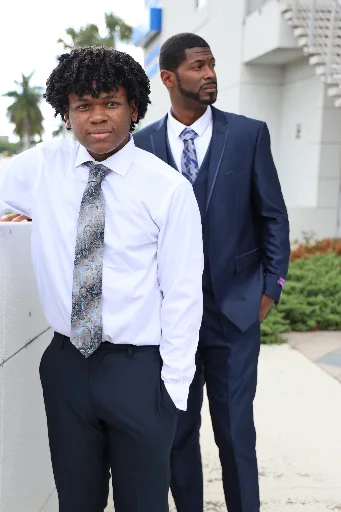
Arrandal Towe
If you're here, you're probably carrying something you've been trying — really trying — to put down. Maybe you've read the books, done some therapy, told yourself a hundred times to move on. And yet here it is again: the replay, the ache, the quiet anger that won't quite go away. I want you to know that I don't think there's anything wrong with you. What you're experiencing has a name, a mechanism, and — this is the part I want you to hold onto — a way through.
I built The Forgiveness Lab because I kept seeing the same gap. People in real pain, genuinely motivated to heal, who had been handed either toxic positivity ("just let it go!") or clinical language that didn't translate into anything they could actually use. The truth is that forgiveness is one of the most psychologically complex things a human being can do. It involves your nervous system, your memory, your identity, and your deepest sense of what's fair. It deserves to be taught with that kind of respect.
What you'll find in this school isn't a prescription to be the bigger person. It's an honest, grounded education in what betrayal actually does to the brain — why it replays, why it hijacks your body, why rumination is not a personal failure but a predictable neurological response. From there, we move into a CBT-based process that gives you real cognitive tools to work with: not to erase the pain, but to stop it from running your life. And we do all of it while honoring the three things that real healing actually requires — because genuine forgiveness isn't unconditional, and I'll never pretend otherwise.
This school also holds space for the person on the other side of the hurt. If you caused harm and you're serious about making it right, you deserve real guidance too — not just a checklist, but a true understanding of what your apology needs to do and what it needs to stop doing. It takes courage to be here, and this curriculum will meet that courage with something useful.
Whether your goal is to rebuild a relationship or to release one — whether you're processing something raw and recent or something long-buried — I want this to be the place where the work finally starts to move. You don't have to carry the weight of what happened forever. But you do have to understand it first. Let's do that together.
— Arrandal Towe
Start your journey today
Join get instant access — learn at your own pace with an AI coach in your corner.
$39/mo
Recurring billing · cancel anytime
Secure checkout · Instant access
- 6 modules, 17 lessons
- AI-adaptive lessons tuned to your level
- Quizzes & checkpoints to lock in progress
- Your own AI learning coach
- Learn on any device, at your pace
- Full access for as long as you're subscribed