Read the hidden theology woven through Western civilisation
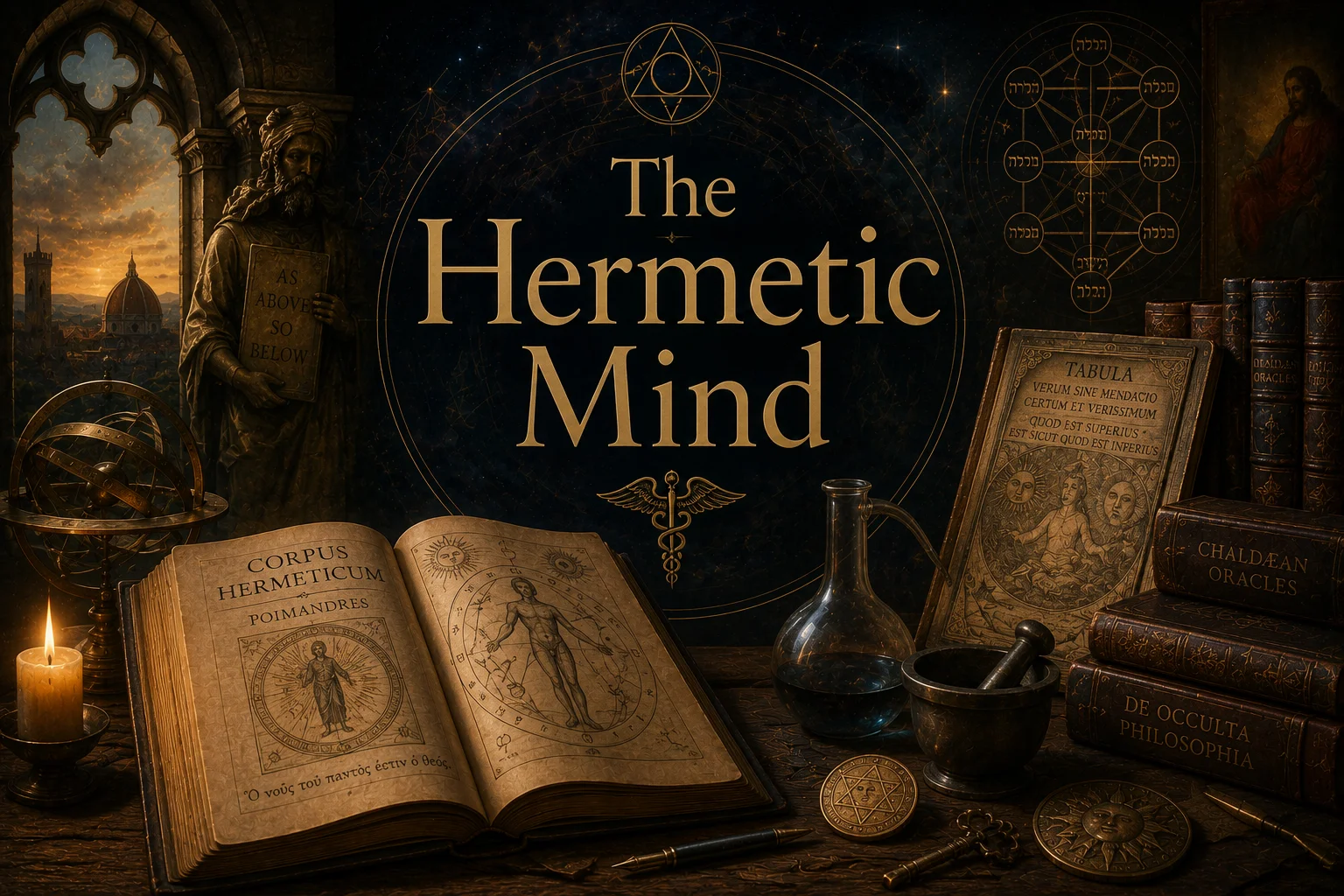
A rigorous yet contemplative introduction to Christian Hermeticism — tracing the Corpus Hermeticum, Renaissance visionaries, and living symbols from alchemy to Kabbalah. Learn to read the Western esoteric tradition not as spectacle, but as a serious theology of creation.
"The symbolic image is not decoration — it is argument, and learning to read it changes everything you subsequently see."
— Carla Paton
What you'll learn
What you'll be able to do
- Trace the historical development of Christian Hermetic thought from the Corpus Hermeticum through the Renaissance and into modernity, situating key figures such as Ficino, Pico della Mirandola, Böhme, Fludd, and Tomberg in their intellectual contexts.
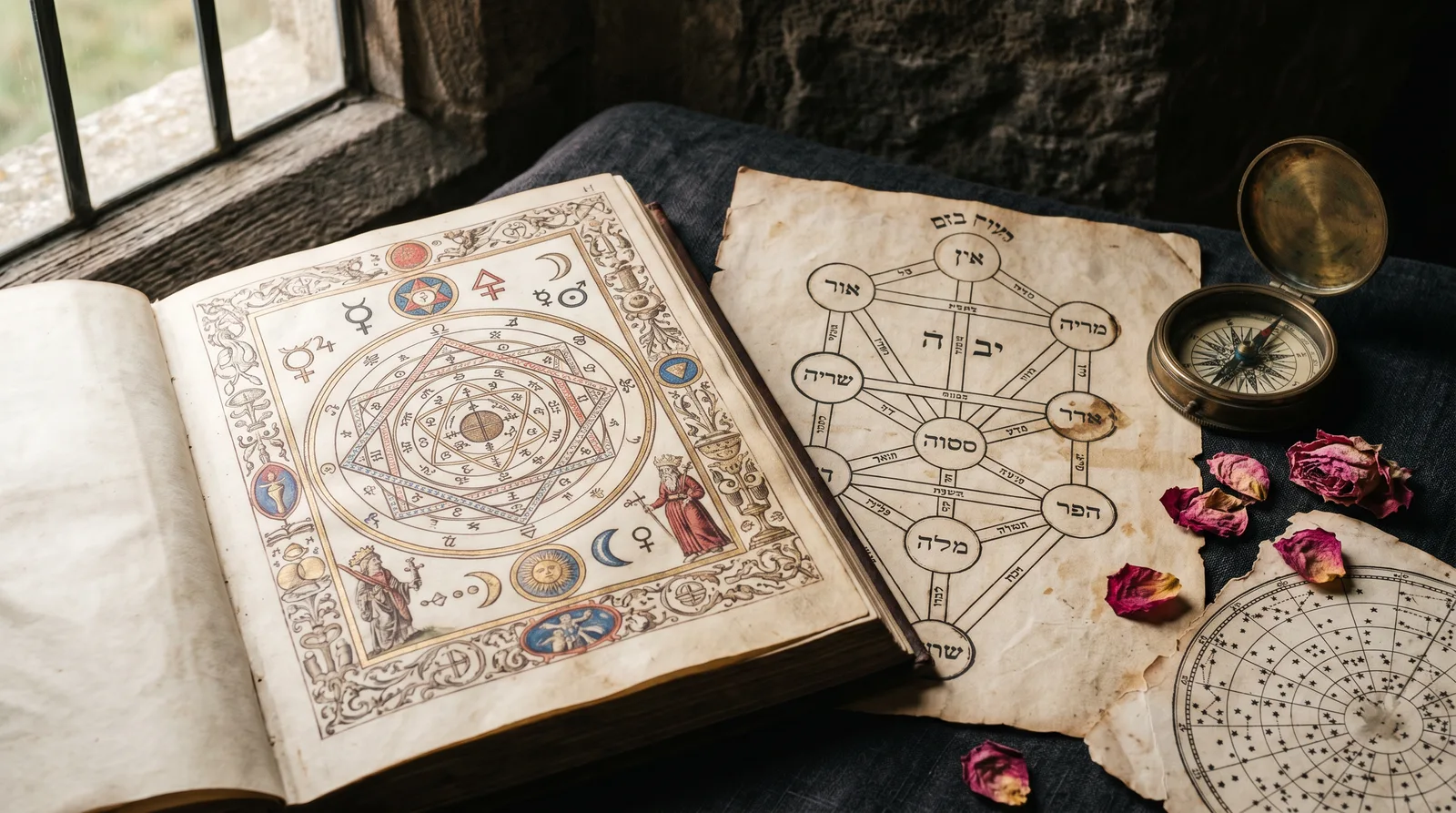
- Interpret Hermetic symbolic texts, diagrams, and sacred images — including alchemical emblems, Kabbalistic sephiroth, and astrological cosmograms — using historical awareness and disciplined reading methods drawn from sources such as Meditations on the Tarot.
- Explain the central doctrines of Christian Hermeticism: the principle of correspondence ('as above, so below'), microcosm and macrocosm, divine Sophia, and the symbolic language of creation and spiritual transformation.
- Analyse how Hermetic thought interacted with, enriched, and sometimes conflicted with orthodox Christianity, Neoplatonism, alchemy, Kabbalah, astrology, and sacred geometry across different historical periods.
- Engage critically and fairly with both enthusiastic defences and serious theological critiques of Hermeticism, forming well-reasoned independent judgments rather than dogmatic conclusions.
- Recognise the lasting influence of Christian Hermetic ideas on Western spirituality, literature, visual art, philosophy, and depth psychology, and apply this lens to texts and cultural works you encounter independently.
How it works
A school that adapts to you
This isn't a set of static videos. Every lesson is generated live and tuned to where you actually are.
We learn your level
A quick placement check tailors your starting point so you're never bored or lost.
Lessons adapt as you go
Each lesson is written for your pace and your goal, adjusting as your skills grow.
Your AI coach keeps you moving
Checkpoints, feedback, and gentle nudges turn progress into a real result.
The curriculum
What's inside your school
6 modules · 19 lessons

Foundations: What Is Christian Hermeticism?
Establishes the intellectual, historical, and methodological ground for the entire course. Students learn what Christian Hermeticism is and is not, where its foundational texts came from, and how to read symbolic material responsibly — equipping them with the critical vocabulary and interpretive tools every subsequent module depends on.
- 1.1The Corpus Hermeticum: Origins, Myth, and ManuscriptIncluded
- 1.2Defining the Tradition: Hermeticism, Esotericism, and ChristianityIncluded
- 1.3Reading Symbolic Texts: A Method for the CourseIncluded
The Renaissance Synthesis: Ficino, Pico, and the Florentine Academy
Examines the intellectual explosion of 15th–16th-century Florence, where classical philosophy, Hermeticism, Neoplatonism, and Christian theology were deliberately fused into a new synthesis. Students encounter the primary figures — Ficino and Pico — as thinkers with specific historical, political, and theological contexts, not simply as romantic heroes of free thought. The module ends with a critical evaluation of whether this synthesis was genuinely Christian or a creative reimagining of Christianity.
- 2.1Marsilio Ficino: Translating a WorldIncluded
- 2.2Pico della Mirandola: The Dignity of Man and Christian KabbalahIncluded
- 2.3Criticism and Defence: Was Renaissance Hermeticism Christian?Included
The Hermetic Universe: Correspondence, Cosmos, and Sacred Science
Moves from historical figures to core doctrines, giving students a thorough grounding in the structural ideas that give Christian Hermeticism its intellectual coherence: the principle of correspondence, the layered cosmos, and the transformation of matter and soul. Paracelsus and Fludd anchor these ideas in specific thinkers, while alchemy receives sustained attention as both a symbolic system and a practical tradition — a necessary prerequisite before students encounter Böhme and Tomberg's alchemical language in later modules.
- 3.1As Above, So Below: The Principle of Correspondence and the Great Chain of BeingIncluded
- 3.2Alchemy: Spiritual Transformation and Sacred MatterIncluded
- 3.3Robert Fludd, Paracelsus, and Hermetic Natural PhilosophyIncluded
Mystics, Theosophers, and the Inner Church: Böhme, Sophia, and the Protestant Hermetic Stream
Traces a distinctive Protestant and mystical current of Christian Hermeticism running from Jakob Böhme through the Sophia tradition and into Romantic and Idealist philosophy. This module establishes the crucial prerequisite — that Hermeticism was not only a Catholic Renaissance phenomenon but had a living Protestant mystical stream — before students encounter Tomberg's ecumenical synthesis in the final module. It also introduces divine Sophia as one of the tradition's most theologically rich and contested figures.
- 4.1Jakob Böhme: The Shoemaker Who Saw GodIncluded
- 4.2Divine Sophia: Wisdom, Femininity, and the Soul of the WorldIncluded
- 4.3The Hermetic Current in Romanticism and German IdealismIncluded
Kabbalah, Sacred Geometry, and the Architecture of Creation
Provides dedicated and systematic treatment of the two symbolic systems — Kabbalah and sacred geometry — that permeate Christian Hermetic literature but can easily remain opaque without focused study. Placed here, after students have encountered Pico's Christian Kabbalah and alchemical symbolism, this module builds the structural literacy they need to fully appreciate Tomberg's layered synthesis in the final module. A new lesson on astrology as a Hermetic science is added to address a gap in the draft, since astrological cosmology is foundational to both Fludd and Tomberg.
- 5.1Christian Kabbalah: The Tree of Life and the LogosIncluded
- 5.2Sacred Geometry: The Language of CreationIncluded
- 5.3Astrology as Hermetic Cosmology: Reading the HeavensIncluded
Valentin Tomberg and the Living Tradition: Meditations on the Tarot
Brings the full weight of the course's historical, doctrinal, and symbolic preparation to bear on a careful reading of Tomberg's Meditations on the Tarot — widely regarded as the most ambitious synthesis of Christian Hermeticism in the 20th century. Students now possess the vocabulary, the historical context, and the reading methods to engage Tomberg substantively rather than superficially. The module closes by stepping back to evaluate Christian Hermeticism's legacy and to equip students to carry the tradition's questions into their own further reading.
- 6.1Valentin Tomberg: Life, Conversion, and Anonymous MasterpieceIncluded
- 6.2Reading the Arcana: The Magician, The High Priestess, and The HermitIncluded
- 6.3Tomberg's Synthesis: Hermeticism, Kabbalah, Alchemy, and Astrology UnitedIncluded
- 6.4Legacy, Critique, and Living Practice: Christian Hermeticism TodayIncluded
Who it's for
Is this you?

Theologians & seminarians
You want to understand how the esoteric tradition relates to — and sometimes challenges — orthodox Christian theology, with the historical and doctrinal precision your formation demands.

Jungian psychology enthusiasts
The archetypes, the alchemical imagery, the anima mundi — you encounter them in depth psychology and want the serious intellectual history behind the symbols Jung was drawing on.

Historians of ideas
You study the Renaissance, the Reformation, or Western modernity and want a rigorous grounding in the Hermetic currents that shaped Ficino, Böhme, and the broader intellectual landscape.

Independent scholars
You have read widely across philosophy, mysticism, and comparative religion on your own terms, and you are ready for a structured, scholarly framework to deepen and organise that learning.

Philosophers of religion
Questions of cosmology, the nature of the soul, and the symbolic structure of reality draw you here — Hermeticism offers a serious philosophical tradition that rewards close, careful analysis.

Artists & cultural historians
You encounter Hermetic imagery in Renaissance painting, Romantic poetry, or twentieth-century literature and want to read those symbols with the depth and precision they were created to carry.
Questions
Frequently asked
Your teacher
A note from your teacher

Carla Paton
If you have picked up a book like Meditations on the Tarot, or found yourself genuinely moved by the Corpus Hermeticum, or paused over a Renaissance alchemical emblem wondering what, exactly, it was trying to say — and then found that almost nowhere offered you a serious place to take those questions — then I think I understand where you are. The tradition you have glimpsed is real, it is deep, and it deserves better than the treatments it usually receives: either breathless popularisation that dispenses with historical rigour, or academic dismissal that refuses to engage the ideas on their own terms.
What I have tried to build in this course is the thing I wished had existed when I first encountered these texts: a genuinely scholarly introduction that is also contemplative in spirit. We begin where the tradition itself begins — with the Corpus Hermeticum, its mythic Hermes Trismegistus, its actual manuscript history, and the question of what it means to call something both 'Hermetic' and 'Christian.' We read Ficino not as a curiosity but as a theologian and translator of worlds. We sit with Böhme's strange luminous vision. We follow Sophia through Romanticism and German Idealism. And we spend real time with Tomberg — unhurried, careful time — because his synthesis deserves nothing less.
I want to be honest about what this course is not. It is not an initiation. It will not teach you to practise magic or cast horoscopes. It does not ask you to adopt any particular spiritual position. What it does ask is that you bring your full intellectual seriousness — the same seriousness you would bring to reading Aquinas, or Hegel, or a critical edition of scripture — and apply it to a tradition that has, for too long, been denied that quality of attention.
The method we use throughout — reading symbolic texts with historical awareness, theological precision, and genuine openness — is itself one of the course's central gifts. By the time you have worked through alchemical emblems, Kabbalistic sephiroth, sacred geometry, and the great Arcana of the Tarot as Tomberg reads them, you will have developed a way of seeing that changes how you read Western art, literature, philosophy, and depth psychology. That lens does not switch off when the course ends.
I designed this course for people like the ones I most love to teach: theologians who sense that the esoteric tradition has something to say to them; Jungian analysts who want the historical grounding behind the symbols they encounter clinically; historians of ideas who have circled the Renaissance and want to go deeper; independent scholars who have simply refused to stop asking the questions that formal institutions lost patience with. You are welcome here. The tradition is worth your time. Let us think about it together, carefully and without haste.
Come and read these texts with me.
— Carla Paton
Start your journey today
Get instant access — learn at your own pace with an AI coach in your corner.
$19/mo
Recurring billing · cancel anytime
Secure checkout · Instant access
- 6 modules, 19 lessons
- AI-adaptive lessons tuned to your level
- Quizzes & checkpoints to lock in progress
- Your own AI learning coach
- Learn on any device, at your pace
- Full access for as long as you're subscribed