Master the science of human movement
From the bones and levers that make motion possible to the wearable technology reshaping rehabilitation — this is the rigorous, clinically grounded kinesiology education that connects every principle to the real, moving body.
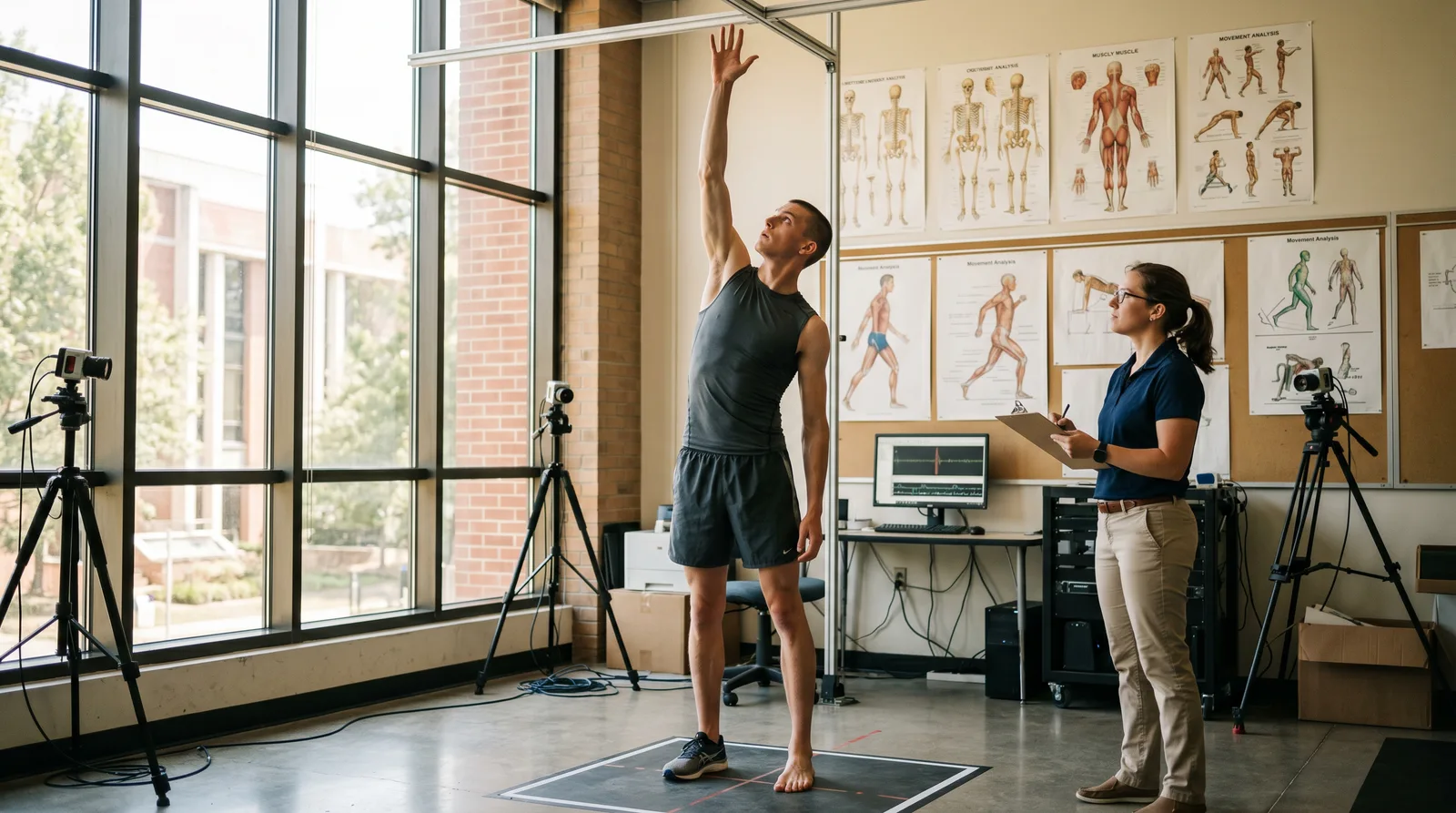
"I believe the best way to understand the body is to build from first principles — history, mechanics, assessment, application — so that every skill you develop has a foundation solid enough to last a career."— John-Edward
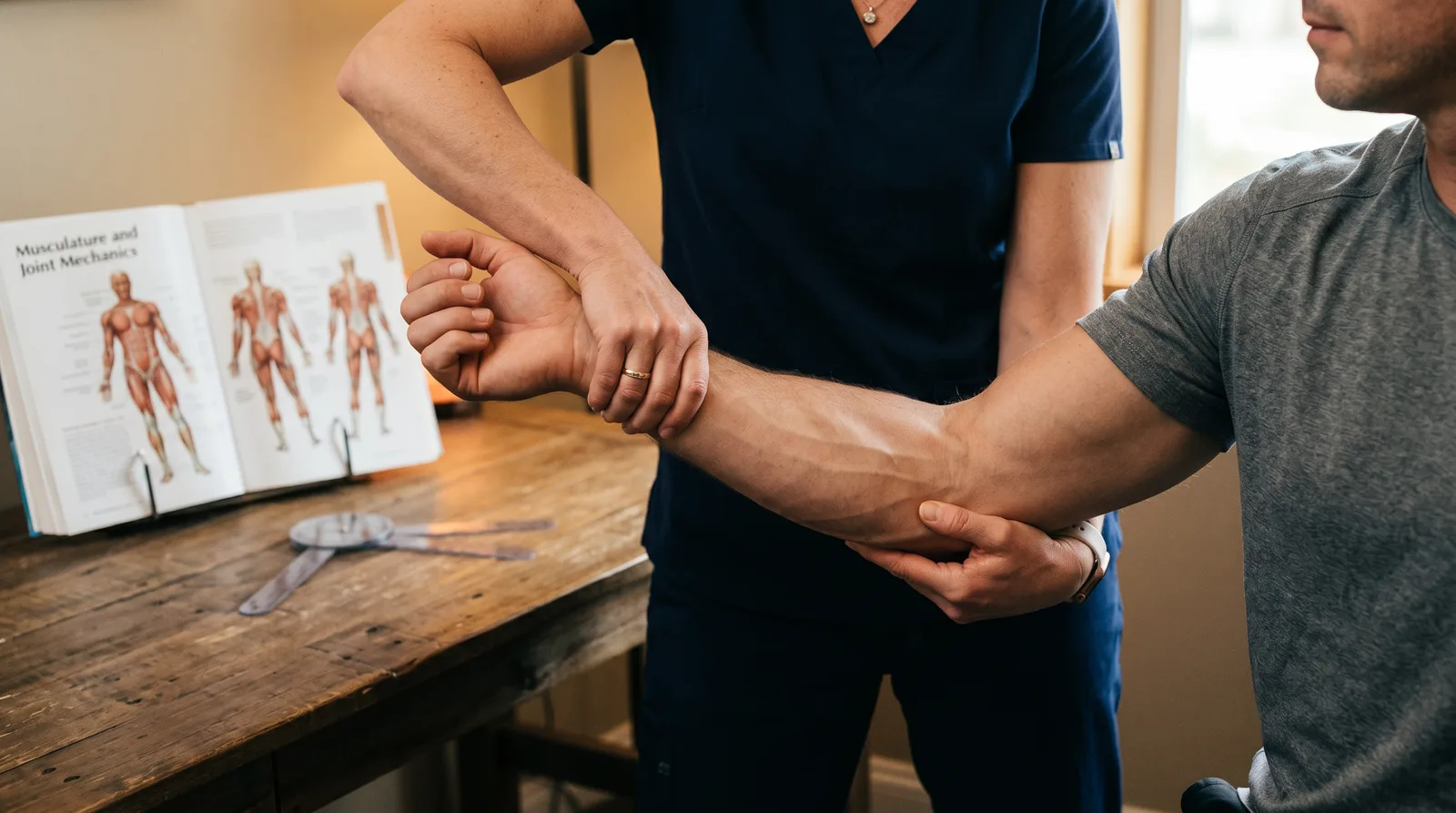
What you'll learn
What you'll be able to do
- Trace the full history of kinesiology from its 19th-century origins through its evolution into a modern health science
- Explain the biomechanical and physiological principles that govern human movement, posture, and force production
- Identify and apply the major assessment methods used by kinesiologists — from manual muscle testing to gait analysis
- Distinguish how kinesiology is used across clinical rehabilitation, athletic performance, ergonomics, and occupational therapy settings
- Design basic movement programs grounded in kinesiological principles for injury prevention or performance enhancement
- Evaluate the current scope and professional extent of kinesiology practice, including licensing, research frontiers, and interdisciplinary roles
How it works
A school that adapts to you
This isn't a set of static videos. Every lesson is generated live and tuned to where you actually are.
We learn your level
A quick placement check tailors your starting point so you're never bored or lost.
Lessons adapt as you go
Each lesson is written for your pace and your goal, adjusting as your skills grow.
Your AI coach keeps you moving
Checkpoints, feedback, and gentle nudges turn progress into a real result.
The curriculum
What's inside your school
6 modules · 29 lessons

Origins and Evolution of Kinesiology
Traces kinesiology from its 19th-century scientific roots through its development into a recognized modern health discipline.
- 1.1The Birth of Movement ScienceIncluded
- 1.2From Physical Education to Health ScienceIncluded
- 1.3Kinesiology Goes Global: 20th-Century MilestonesIncluded
- 1.4Kinesiology Today: Scope, Credentials, and Professional IdentityIncluded
Foundations of Human Movement
Builds the biomechanical and physiological principles every kinesiologist must understand before applying any method.
- 2.1Anatomy in Motion: Bones, Joints, and LeversIncluded
- 2.2Muscle Mechanics: How Force Is ProducedIncluded
- 2.3Neuromuscular Control and CoordinationIncluded
- 2.4Biomechanical Principles: Forces, Torque, and MotionIncluded
- 2.5Physiological Responses to MovementIncluded
Assessment Methods in Kinesiology
Surveys the core tools kinesiologists use to measure, test, and analyze movement across clinical and performance contexts.
- 3.1Observational and Postural AssessmentIncluded
- 3.2Manual Muscle TestingIncluded
- 3.3Range of Motion and Flexibility AssessmentIncluded
- 3.4Gait Analysis: From Observation to TechnologyIncluded
- 3.5Functional Movement Screening and Performance TestingIncluded
Applied Kinesiology: Fields and Settings
Distinguishes how kinesiological principles and methods are applied across rehabilitation, sport, ergonomics, and occupational health.
- 4.1Kinesiology in Clinical RehabilitationIncluded
- 4.2Athletic Performance and Sport ScienceIncluded
- 4.3Ergonomics and Workplace Movement HealthIncluded
- 4.4Kinesiology in Occupational Therapy and Disability ContextsIncluded
- 4.5Kinesiology for Aging, Chronic Disease, and Public HealthIncluded
Designing Movement Programs
Equips learners to build evidence-based movement programs for injury prevention or performance using kinesiological principles.
- 5.1Principles of Movement Program DesignIncluded
- 5.2Needs Analysis and Goal SettingIncluded
- 5.3Injury Prevention Program DesignIncluded
- 5.4Performance Enhancement Program DesignIncluded
- 5.5Monitoring, Progression, and Program EvaluationIncluded
The Frontier: Research, Technology, and the Future of Kinesiology
Evaluates the current and emerging extent of kinesiology practice, interdisciplinary roles, and the technologies reshaping the field.
- 6.1Reading and Applying Kinesiology ResearchIncluded
- 6.2Wearable Technology and Movement AnalyticsIncluded
- 6.3Interdisciplinary Roles: Where Kinesiology Meets Medicine, Neuroscience, and PsychologyIncluded
- 6.4Licensing, Professional Regulation, and Career PathwaysIncluded
- 6.5Research Frontiers and the Next Chapter of Movement ScienceIncluded
Who it's for
Is this you?

Curious Beginners
You want to understand how the human body actually works in motion — and you're ready for a real explanation, not a simplified one.

Fitness Trainers
You design movement for clients every day and want the biomechanical and physiological depth to back every decision you make.

Physical Therapy Students
You need a coherent kinesiology foundation that connects anatomy, assessment, and clinical application before you enter the clinic.

Allied Health Professionals
You work alongside kinesiologists in rehab, occupational therapy, or public health and want the fluency to collaborate more effectively.

Athletes & Coaches
You want to understand the science of performance, injury prevention, and movement quality from the inside out — not just feel it.

Educators & Academics
You teach health, physical education, or life sciences and need a rigorous, current, and professionally grounded kinesiology reference.
Questions
Frequently asked
Your teacher
A note from your teacher
John-Edward
If you've ever watched someone move and wondered why — why that gait looks uneven, why that shoulder keeps failing, why one athlete recovers faster than another — you already have the instinct that drives good kinesiology. This school is where that instinct becomes science.
I built The Kinesiology Lab because I kept seeing the same gap: people who were smart, motivated, and genuinely curious about human movement — fitness professionals, physical therapy students, educators, athletes, allied health practitioners — who had pieces of the picture but had never had a single, coherent place to put it all together. Anatomy here, biomechanics there, a little exercise science, some clinical observation — but no unified foundation that explained how it all connects and why it matters. That gap has real consequences. It shows up in programs that aren't grounded in sound principles, in assessments that miss what they're looking for, in professionals who feel uncertain at the edges of their knowledge.
This school is the answer I wish had existed sooner. We start at the beginning — the actual beginning, with the 19th-century scientists who first applied systematic inquiry to the moving body — because understanding where kinesiology came from is the fastest way to understand what it is and what it asks of you. Then we build, methodically and deliberately, through the anatomy of motion, the mechanics of force production, neuromuscular control, biomechanical principles, and physiological responses. Every concept is introduced with precision, and every piece of precision is grounded in something you can feel, observe, or apply. That's not a teaching style preference — it's the only way the science actually sticks.
By the time we reach assessment and applied practice, you'll have the foundation to understand why manual muscle testing tells us what it does, why gait analysis catches what the eye misses, and why a well-designed movement program looks so different from a generic workout. And when we get to the frontier — wearable technology, interdisciplinary roles, research literacy, professional licensing — you'll be equipped to engage with it seriously, not just as a consumer of trends but as someone who can evaluate and apply what the evidence actually says.
I want to be direct with you about what this school is and isn't. It is a rigorous academic and applied foundation, delivered in a way that respects your intelligence and your time. It is not a shortcut, a certification mill, or a collection of loosely connected facts. It's the kind of education that changes how you see every body in motion — including your own. If you're ready for that, I'm glad you're here. Let's begin.
— John-Edward
Start your journey today
Join get instant access — learn at your own pace with an AI coach in your corner.
$59/mo
Recurring billing · cancel anytime
Secure checkout · Instant access
- 6 modules, 29 lessons
- AI-adaptive lessons tuned to your level
- Quizzes & checkpoints to lock in progress
- Your own AI learning coach
- Learn on any device, at your pace
- Full access for as long as you're subscribed