Turn your home into a maths adventure
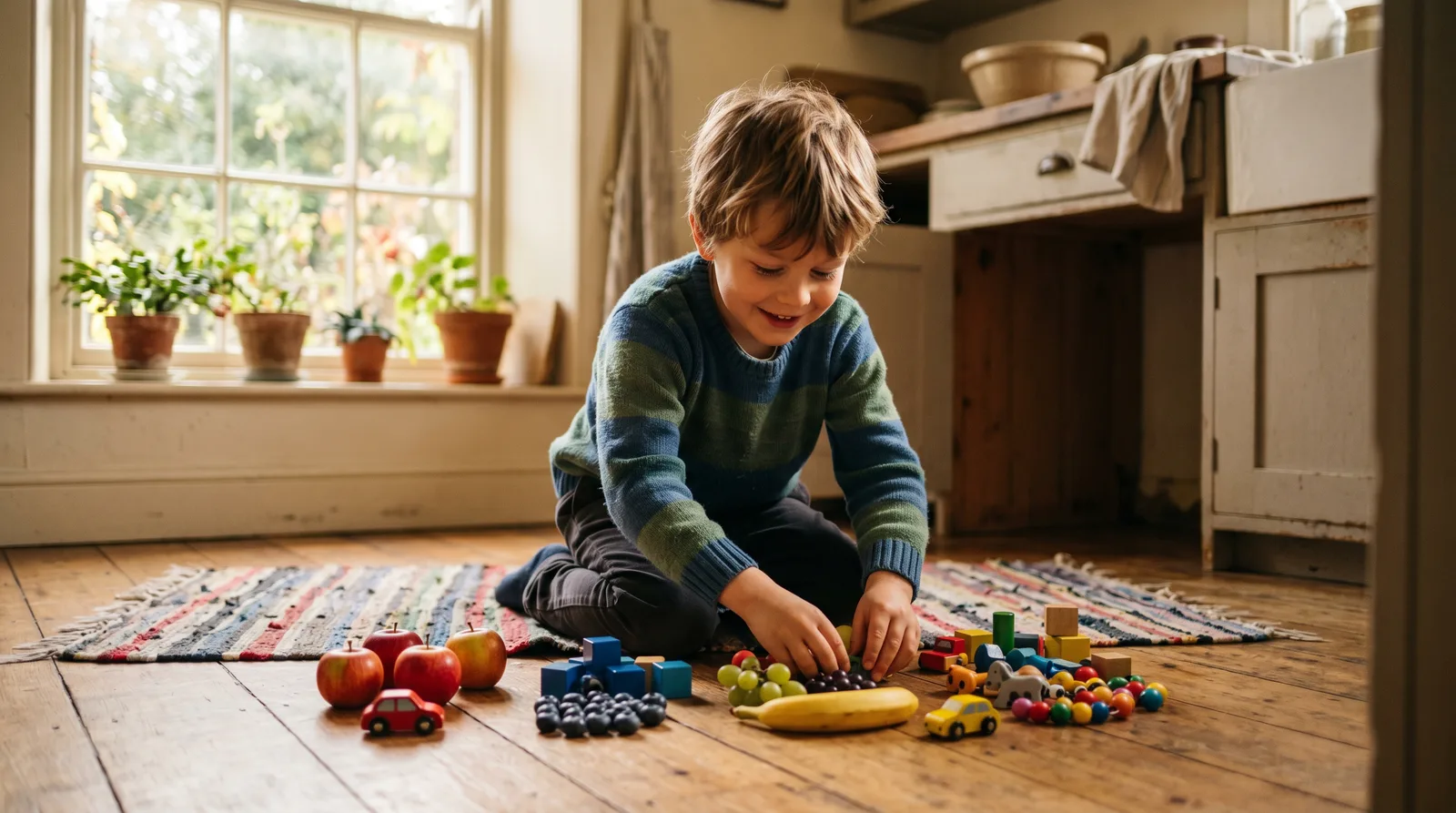
A play-based early math adventure that turns everyday household items into counting tools, helping children ages 5–7 build confident number sense through hands-on discovery.
"I believe every child deserves to feel like a maths genius — and with the right real-world tools, every single one of them can."— Nisky
What you'll learn
What you'll be able to do
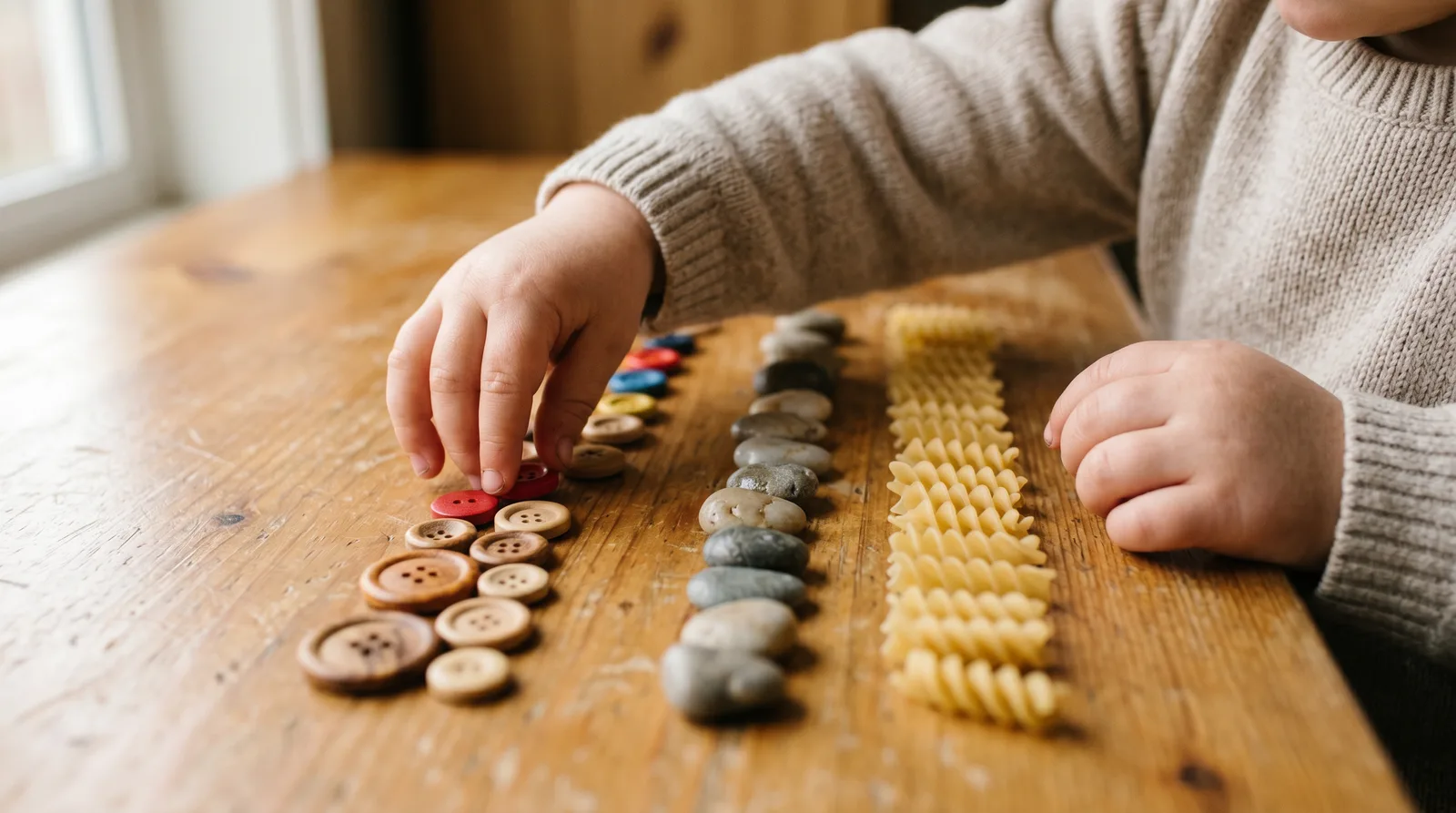
- Confidently count collections of objects up to 20 using household items as props
- Recognise and name numerals 1–20 by sight in everyday environments
- Match quantities to written numbers through hands-on sorting and grouping activities
- Understand one-to-one correspondence by touching and counting real objects
- Begin comparing groups of objects using language like 'more', 'fewer', and 'the same'
- Develop early number sequencing skills by ordering numerals and object sets from smallest to largest
How it works
A school that adapts to you
This isn't a set of static videos. Every lesson is generated live and tuned to where you actually are.
We learn your level
A quick placement check tailors your starting point so you're never bored or lost.
Lessons adapt as you go
Each lesson is written for your pace and your goal, adjusting as your skills grow.
Your AI coach keeps you moving
Checkpoints, feedback, and gentle nudges turn progress into a real result.
The curriculum
What's inside your school
5 modules · 11 lessons

Spotting Numbers in the Wild
Children build an awareness that numerals exist all around them in everyday life. This foundational module develops numeral recognition for 1–20 by anchoring learning in familiar, real-world environments before any formal counting or matching is introduced. It establishes the visual vocabulary children need for every module that follows.
- 1.1Numbers Are Everywhere!Included
- 1.2Learning the Look of Numbers 1–10Included
- 1.3Meeting Numbers 11–20Included
Counting with Real Things
Children move from recognising numerals to understanding what those numerals mean through concrete, hands-on counting with household objects. This module firmly establishes one-to-one correspondence and accurate oral counting up to 20 — the prerequisite skills for matching, comparing, and ordering in later modules.
- 2.1One Touch, One CountIncluded
- 2.2Counting Collections Up to 20Included
Matching Numbers to Amounts
With numeral recognition and accurate counting in place, children now connect the written symbol to the quantity it represents. This module builds the crucial symbol–quantity link through sorting and labelling activities, ensuring children understand that '7' doesn't just look a certain way — it means exactly seven things.
- 3.1Numbers and Their GroupsIncluded
- 3.2Sorting, Grouping, and LabellingIncluded
More, Fewer, or the Same?
Having matched numbers to amounts, children now compare two or more groups using precise mathematical language. This module develops comparative thinking and introduces the vocabulary of 'more', 'fewer', and 'the same' — a prerequisite for understanding number order and relative magnitude in the final module.
- 4.1Which Group Has More?Included
- 4.2Finding 'The Same'Included
Putting Numbers in Order
In this culminating module, children synthesise all prior learning — numeral recognition, accurate counting, symbol–quantity matching, and comparative language — to sequence numerals and object sets from smallest to largest. Ordering is placed last because it requires fluency with every skill built in the preceding modules.
- 5.1The Number Line on the FloorIncluded
- 5.2Ordering Object Sets Smallest to LargestIncluded
Who it's for
Is this you?

The Reception-year parent
Their child just started school and they want a playful, pressure-free way to reinforce the numbers being introduced in the classroom.

The stay-at-home caregiver
They spend their days with a curious 5-year-old and want structured, screen-friendly activities that feel more like play than lessons.

The home-educating parent
They're covering early-years maths at home and want a complete, hands-on curriculum that doesn't require specialist teaching knowledge.

The 'maths anxious' grown-up
Numbers weren't their thing at school, and they want a warm, confidence-first approach they can deliver without second-guessing themselves.

The grandparent carer
They look after a grandchild several days a week and want engaging, no-fuss activities that genuinely support their learning.

The parent of a hesitant learner
Their child shuts down when things feel too 'schooly', and they need an approach that sneaks in real learning through pure, irresistible play.
Questions
Frequently asked
Your teacher
A note from your teacher
Nisky
I know what it feels like to sit down with a young child and a set of numbers — and watch their little face go from curious to overwhelmed in about thirty seconds. Maybe you've been there too. You want to help, but you're not sure whether to drill flashcards, download yet another app, or just hope school is handling it. It can feel like maths is this big, serious subject that needs special equipment, a special room, and a special degree to teach properly.
Here's what I've come to believe: the best early maths classroom is already in your home. It's the buttons in a jar. The stairs you climb every morning. The apples in the fruit bowl. Children this age are wired for hands-on discovery — they need to touch, move, sort, and compare before abstract numbers make any sense at all. That's not a workaround. That's the actual science of how young children build number sense.
The Number Detective is the course I wish every parent and caregiver had in their pocket. We start by spotting numbers in the wild — on doors, on packaging, in the world your child already moves through every day. Then we count real collections of objects, match quantities to written numerals, compare groups using words like more and fewer, and finally, place numbers in order from smallest to largest. Five modules. Clear, playful, step-by-step. No prior experience with learning apps required, and nothing to buy.
What I care most about is how your child feels about numbers after we're done. Not just whether they can recite them, but whether they feel capable — like someone who notices maths and isn't afraid of it. That confidence, built early, changes everything about how a child approaches school. Every lesson is designed so your child finishes it feeling like a brilliant little detective who just cracked the case. Because honestly? They will have.
If your child is between five and seven, this is the right moment. The foundations being laid right now will underpin everything that comes next — addition, subtraction, all of it. I'd love to be part of building those foundations with you. Come and join the investigation. 🔍
— Nisky
Start your journey today
Join get instant access — learn at your own pace with an AI coach in your corner.
$5/mo
Recurring billing · cancel anytime
Enrolling a child? Sign up as a parent — you'll add your student right here after.
Secure checkout · Instant access
- 5 modules, 11 lessons
- AI-adaptive lessons tuned to your level
- Quizzes & checkpoints to lock in progress
- Your own AI learning coach
- Learn on any device, at your pace
- Full access for as long as you're subscribed