Learn to revise a poem until it's unforgettable
Most poets know how to draft — few know how to revise. This workshop teaches the exacting, transformative craft moves that turn a decent poem into an unforgettable one.
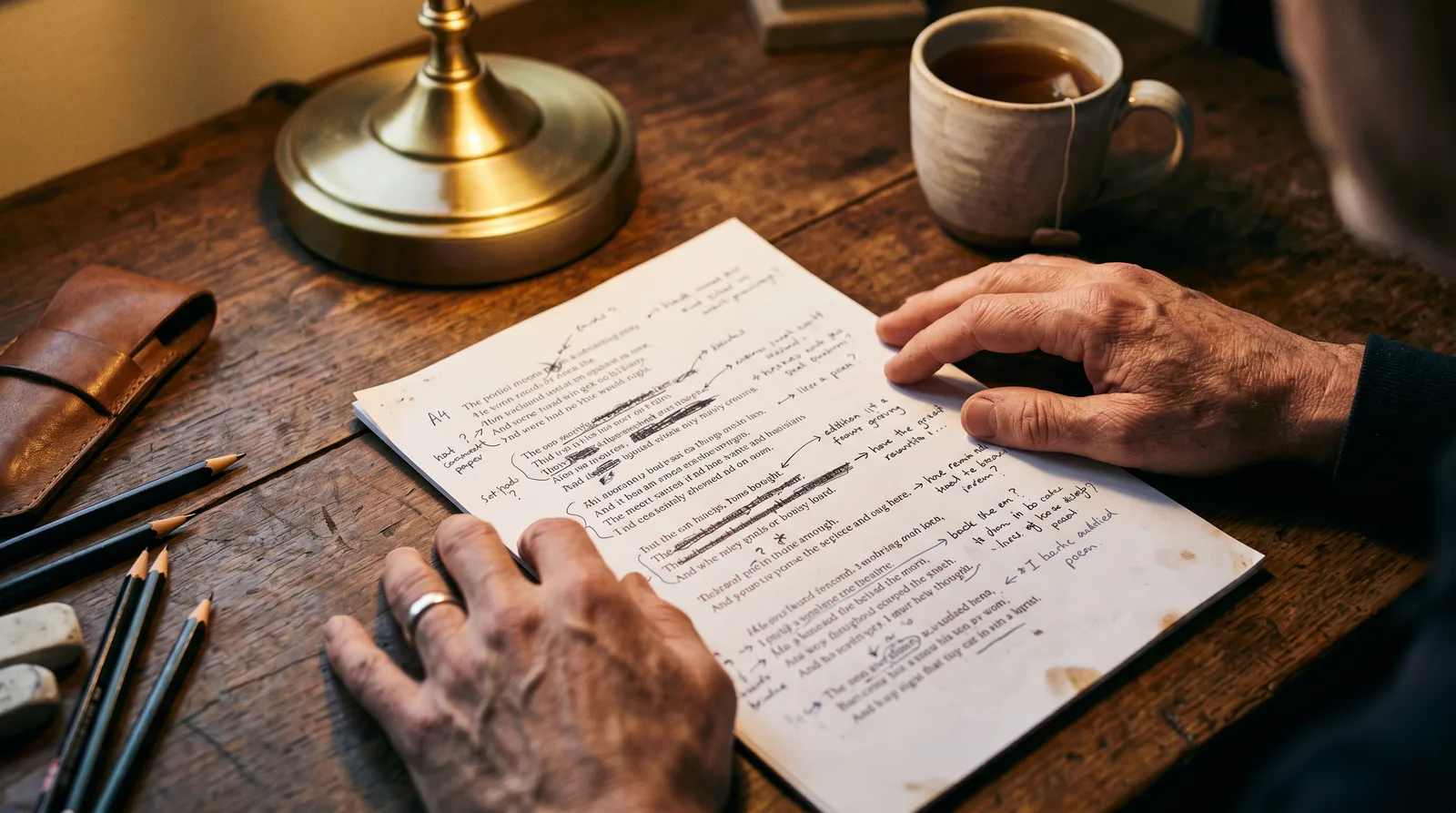
"The first draft is permission; revision is where the poem actually gets made — and that's a skill you can learn."
— Carla Paton
What you'll learn
What you'll be able to do
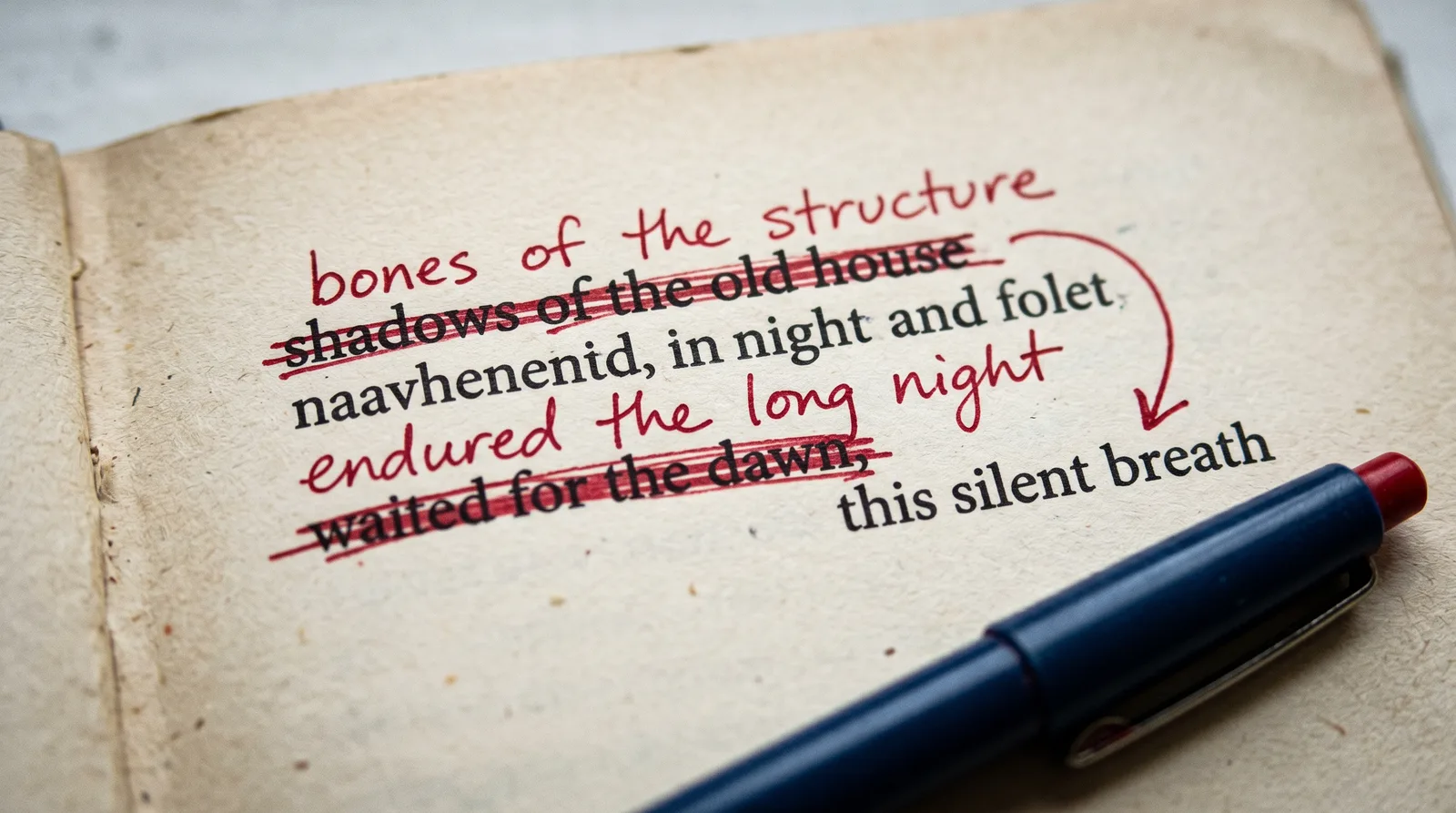
- Identify and cut clichés, replacing them with images that are startlingly specific and earned
- Swap weak verbs for precise, muscular ones that carry the full emotional weight of a line
- Construct sharper, concrete images that anchor abstract feeling in sensory reality
- Craft endings that resonate — closing a poem with inevitability rather than convenience
- Shape sound deliberately: control assonance, consonance, and rhythm across multiple drafts
- Use line breaks and white space as expressive tools, and develop a disciplined multi-draft revision practice anchored by reading aloud
How it works
A school that adapts to you
This isn't a set of static videos. Every lesson is generated live and tuned to where you actually are.
We learn your level
A quick placement check tailors your starting point so you're never bored or lost.
Lessons adapt as you go
Each lesson is written for your pace and your goal, adjusting as your skills grow.
Your AI coach keeps you moving
Checkpoints, feedback, and gentle nudges turn progress into a real result.
The curriculum
What's inside your school
6 modules · 14 lessons

The Revision Mindset & Multi-Draft Practice
Before any craft technique can land, students must shift their relationship to revision itself — from reluctant clean-up to the real work of the poem. This foundational module dismantles the myth that good poems arrive whole, establishes a disciplined multi-draft workflow, and introduces reading aloud as the primary diagnostic tool that will anchor every subsequent module.
- 1.1Re-Seeing, Not Just Re-ReadingIncluded
- 1.2The Multi-Draft WorkflowIncluded
Cutting Clichés & Finding the Earned Image
Clichés are the enemy of presence. This module trains students to spot the phrases and images that have worn smooth through overuse, understand why they feel safe but cost the poem its power, and replace them with images that are startlingly specific, personally earned, and impossible to have predicted. By the end, students have a reliable diagnostic lens they'll apply in every subsequent draft.
- 2.1Diagnosing the ClichéIncluded
- 2.2Building the Earned ImageIncluded
The Muscle of the Verb
No single craft move upgrades a poem more immediately and visibly than replacing weak, vague, or default verbs with precise, muscular ones. This module gives students a systematic method for auditing every verb in their draft, understanding the full semantic and emotional weight a verb can carry, and making deliberate choices about connotation, sound, and specificity — including the decision of when not to use a verb at all.
- 3.1Auditing Your VerbsIncluded
- 3.2Precision, Connotation & the Verb That Carries WeightIncluded
Image & the Sensory Architecture of the Poem
Sharp images do more than decorate — they are the structural load-bearing walls of the poem, anchoring abstract feeling in sensory reality and giving the reader a place to stand inside the experience. This module teaches students to construct images that are concrete, layered, and emotionally purposeful, while also confronting the common failure modes: the decorative image that floats free of meaning, and the over-explained image that tells the reader how to feel. Note: Sound design — the natural partner to image — is addressed in its own dedicated module immediately following, so students can give each craft dimension the focused attention it deserves.
- 4.1Sharpening the Image: Anchoring Feeling in Sensory RealityIncluded
- 4.2The Over-Explained Image & Trusting the ReaderIncluded
Sound Design & Reading Aloud
A poem heard is different from a poem seen. This module treats sound as a structural and emotional element — not ornamentation — and teaches students to make deliberate choices about assonance, consonance, rhythm, and pace across multiple drafts. Reading aloud is deepened here from a diagnostic tool to a compositional one: the poet's own voice and breath as the final arbiter of what stays and what goes.
- 5.1Sound Design: Assonance, Consonance & RhythmIncluded
- 5.2Reading Aloud as a Revision ToolIncluded
Line Breaks, White Space & Endings That Resonate
The final module addresses the two most visible and least understood structural tools in poetry — the line break and the ending — and brings the entire course together in a full, integrated revision. Line breaks and white space are taught as expressive decisions that control pace, emphasis, tension, and meaning. Endings are taught as the place where everything the poem has built must arrive with inevitability. The module closes with a capstone revision session in which students apply every craft move from the course to a single poem, producing their most fully realised draft.
- 6.1Why the Line Breaks HereIncluded
- 6.2White Space, Silence & the Architecture of the PageIncluded
- 6.3Crafting the Inevitable EndingIncluded
- 6.4The Full Revision: Bringing All Craft Moves TogetherIncluded
Who it's for
Is this you?

The Stuck Drafter
You fill notebooks with first drafts but rarely return to revise them — this course gives you the exact tools and process to finish what you start.

The Workshop Veteran
You've heard plenty of feedback on your poems; now you want to internalize the diagnostic skills so you can revise with confidence before anyone else sees the work.

The Lyric Essayist
Your prose already leans toward the poetic, and you want to bring the precision of line, image, and sound to your hybrid writing.

The Self-Taught Poet
You've read widely and written steadily without formal instruction — this structured craft curriculum fills the gaps that self-study leaves.

The Returning Writer
You wrote seriously years ago and are coming back to poetry — you want to rebuild your craft practice with more rigor and intentionality than before.

The Perfection-Seeker
You know a poem isn't done when it's drafted, and you're looking for a methodical, repeatable approach to making each one as good as it can be.
Questions
Frequently asked
Your teacher
A note from your teacher

Carla Paton
I know the feeling of looking at a draft you care about and not knowing what it needs. You can tell something is off — a flatness somewhere, an ending that settles rather than lands, a line that sounds like it could have been written by anyone. You've read enough poetry to know the poem could be better. But revision, for most of us, was never actually taught. We were told to "revise," as if that were self-explanatory — as if wanting to improve something were the same as knowing how.
That gap between the draft and the poem it wants to become is exactly where The Revision Room lives.
What I've built here is a structured, craft-obsessed workshop that breaks revision into its real component skills. Not vague advice like "cut what doesn't work," but specific, learnable moves: how to hear a cliché before a reader does and replace it with an image that's startlingly, undeniably yours; how to audit every verb on the page and find the ones that are merely adequate when the poem needs them to be exact; how to construct a sensory architecture that anchors feeling in physical reality rather than drifting into abstraction; how to treat a line break as an expressive decision rather than a formatting accident; how to close a poem so that the last line feels not just finished, but inevitable.
The course moves through six modules in deliberate sequence — from revision mindset and multi-draft workflow all the way through sound design, white space, and the craft of the ending — before bringing every skill to bear in a final, integrated revision. At every stage, the work comes back to the same question: what does this poem, specifically, need? Not what worked in someone else's poem. Not a general principle applied mechanically. The actual poem in front of you, and what it's asking for.
I teach this material because I believe revision is where poetry actually gets made. The first draft is permission; the revision is the work. If you're ready to stop hoping a poem will improve on its own and start doing the precise, patient, genuinely exciting work of making it better — you're in the right room.
— Carla Paton
Start your journey today
Get instant access — learn at your own pace with an AI coach in your corner.
$19/mo
Recurring billing · cancel anytime
Secure checkout · Instant access
- 6 modules, 14 lessons
- AI-adaptive lessons tuned to your level
- Quizzes & checkpoints to lock in progress
- Your own AI learning coach
- Learn on any device, at your pace
- Full access for as long as you're subscribed