Raise a child who eats until full — and stops, because they want to
A compassionate, evidence-informed course that teaches parents to raise children who feel genuinely full — in body and heart — by addressing both the physical and emotional roots of eating. No diets, no restriction, no shame.
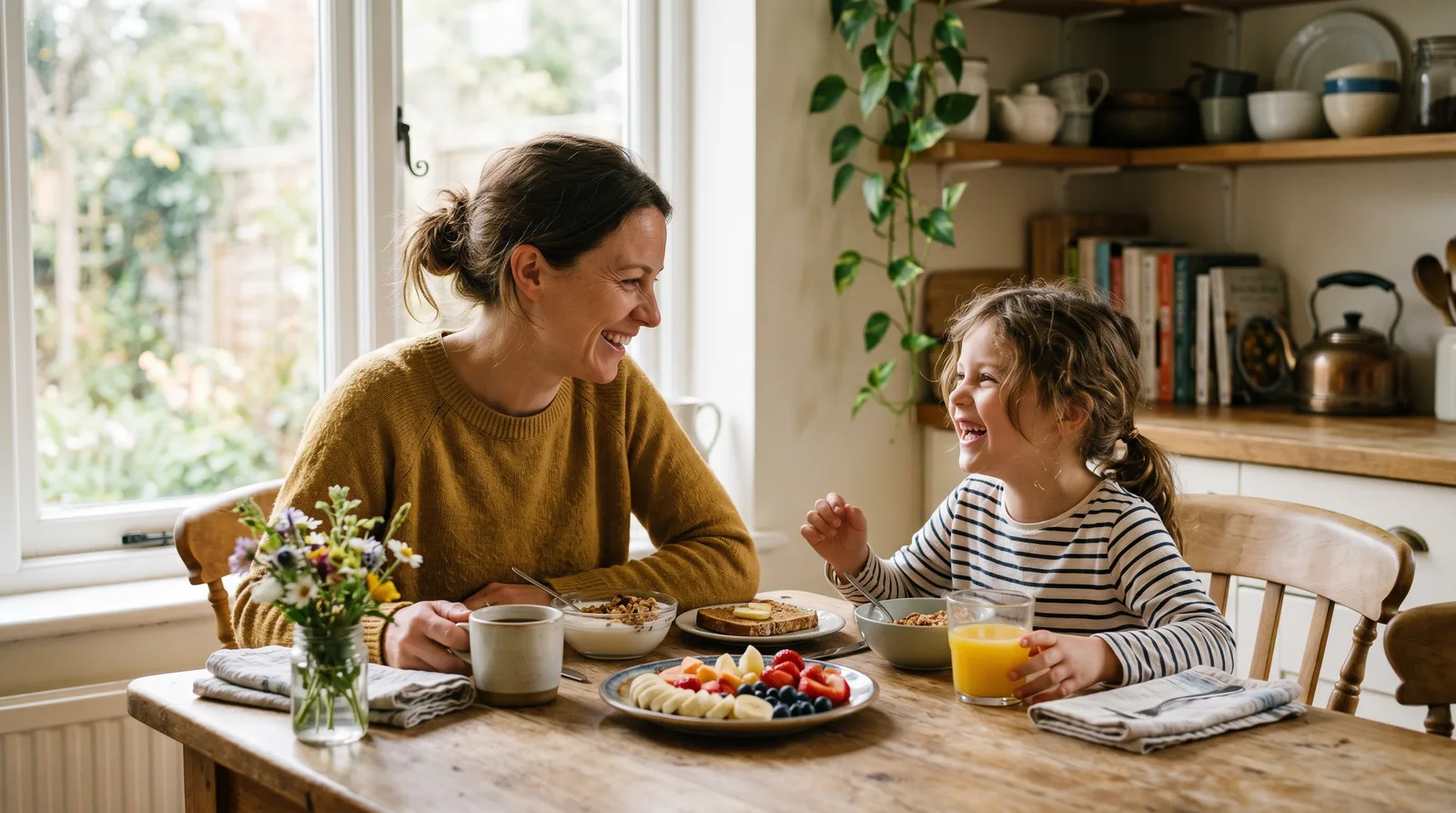
"Your child doesn't need more food rules — they need you to understand what they're actually hungry for."— Leigh Baumann
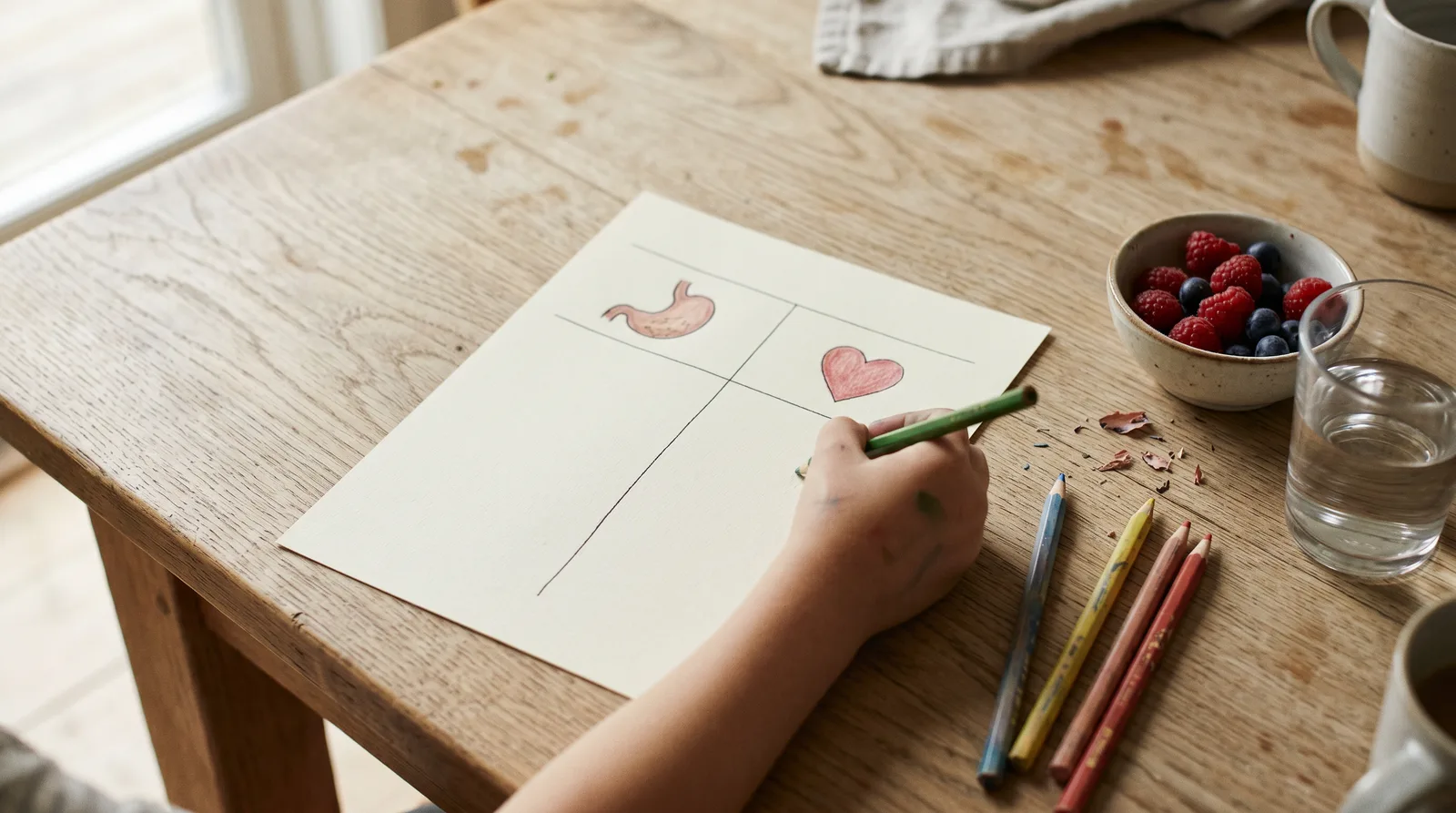
What you'll learn
What you'll be able to do
- Identify whether your child is experiencing body hunger or heart hunger — and respond to each with confidence
- Replace food-as-comfort with five practical connection-based strategies that children actually respond to
- Create calmer, screen-free family meals where children naturally slow down and listen to fullness cues
- Shift from 'food police' to 'food guide' — setting up a home food environment that works without control or conflict
- Support your child's body image and self-worth, and give them language to handle teasing or social pressure around food
- Build habits that grow with your child into adulthood — raising someone who trusts their body, enjoys eating, and doesn't need a diet
How it works
A school that adapts to you
This isn't a set of static videos. Every lesson is generated live and tuned to where you actually are.
We learn your level
A quick placement check tailors your starting point so you're never bored or lost.
Lessons adapt as you go
Each lesson is written for your pace and your goal, adjusting as your skills grow.
Your AI coach keeps you moving
Checkpoints, feedback, and gentle nudges turn progress into a real result.
The curriculum
What's inside your school
8 modules · 17 lessons

The Satiety Secret
Sets the philosophical and emotional foundation for the entire course. Parents discover why fullness is never just about food — and why chasing the 'right diet' for their child is the wrong starting point. This module reframes the problem and opens parents to a more compassionate, effective approach before any strategies are introduced.
- 1.1Why Diets Don't Work for KidsIncluded
- 1.2What Emotional Nourishment Actually DoesIncluded
The Two Hungers
The conceptual heart of the course. Parents learn to distinguish body hunger (the need for physical nourishment) from heart hunger (the need for connection, comfort, stimulation or rest) — and, critically, to teach this language to their children. Mastering this distinction is the prerequisite skill that makes every later module actionable.
- 2.1Body Hunger — Reading the Physical SignalsIncluded
- 2.2Heart Hunger — Recognising the Emotional AskIncluded
- 2.3Teaching Children the Language of Two HungersIncluded
Why Children Eat When They're Not Hungry
Equips parents to identify the specific emotional and environmental triggers that drive non-hungry eating in their child. The sequencing is deliberate: parents understand the triggers before they are given strategies — because responding to the right trigger is what makes the strategy work. Covers stress, boredom, loneliness, habit, fatigue and screens.
- 3.1Stress, Boredom and Loneliness as Eating TriggersIncluded
- 3.2Habit, Fatigue and Screens as Eating TriggersIncluded
Building Emotional Satiety
This is the strategy module that delivers on the course's central promise: replacing food-as-comfort with five practical, connection-based alternatives that children genuinely respond to. Parents learn that the goal is not to take food away — it is to fill the heart hunger through its proper source. This module must follow trigger identification to ensure strategies are applied to the right need.
- 4.1Connection and Conversation as NourishmentIncluded
- 4.2Play, Movement, Rest and Comfort as Emotional FuelIncluded
Helping Children Feel Physically Full
Returns to the body hunger side of the equation with practical, non-restrictive nutrition knowledge. Parents learn which foods genuinely satisfy, how eating pace and environment affect fullness signals, and how to help children tune back in to their own satiety cues. Positioned after the emotional modules so that food is discussed in its proper context — as nourishment, not control.
- 5.1Food That Actually Satisfies — Protein, Fibre and Whole FoodsIncluded
- 5.2Calmer Meals — Slow Eating, Screen-Free Tables and Listening to Fullness CuesIncluded
The Parent's Role
A pivotal module that helps parents examine and shift their own behaviour — because the most powerful determinant of a child's relationship with food is the environment the parent creates. Moves parents from reactive control (food police) to proactive environment design (food guide). Positioned here because parents now have enough context to evaluate their own role honestly.
- 6.1From Food Police to Food GuideIncluded
- 6.2Creating a Healthy Home Food EnvironmentIncluded
Building Confident Kids
Addresses the often-overlooked dimension of a child's inner world: body image, self-worth and the social pressures that can derail even the most supportive home environment. Positioned late in the course so that parents approach these sensitive topics with the full context and confidence built in earlier modules. Directly delivers the course outcome on body image, self-worth and handling social pressure.
- 7.1Body Image, Self-Worth and Avoiding ShameIncluded
- 7.2Supporting Children Through Teasing, Bullying and Social Pressure Around FoodIncluded
Raising Lifelong Healthy Eaters
The culminating module. Zooms out from day-to-day strategies to the long arc: what kind of adult do we want our child to become in relation to food, their body and themselves? Parents consolidate everything into a personalised, sustainable family plan — not a diet, not a programme they follow, but a way of living that grows with their child. Delivers the final course outcome on habits that endure into adulthood.
- 8.1Habits That Grow With Your ChildIncluded
- 8.2Your Family's Satiety Plan — Bringing It All TogetherIncluded
Who it's for
Is this you?

The worried parent
You've noticed your child eating out of boredom or emotion and want to gently address it before habits become entrenched.

The mealtime-battle survivor
Dinnertime has become a nightly standoff and you're desperate for a calmer, conflict-free approach to food in your home.

The diet-wary parent
You're conscious of the harm diets and food shame can cause and want a genuinely non-restrictive framework you can trust.

The body-image protector
Your child is already facing comments about their body and you need real language and tools to build their confidence and resilience.

The time-poor parent
Your family life is full and you need practical, evidence-backed strategies that work without a complete lifestyle overhaul.

The long-game thinker
You're less concerned about right now and more focused on raising an adult who has a healthy, trusting relationship with food for life.
Questions
Frequently asked
Your teacher
A note from your teacher

Leigh Baumann
If you've ever stood in the kitchen watching your child eat — not because they're hungry, but because something else is going on — and felt that quiet, helpless ache of not knowing what to do, I want you to know: that feeling is not a failure. It's actually the beginning of the most important thing you can learn as a parent.
I created The Satiety Secret because I kept seeing the same thing, over and over — caring, thoughtful parents who knew deep down that food rules and restriction weren't the answer, but who had nothing to replace them with. They were stuck between worrying about their child's health and not wanting to make food into a battleground. Between wanting to help and being terrified of doing harm. That tension is exhausting. And it's unnecessary, because there is a better way.
This course is built around one idea that changed everything for the families I've worked with: children are rarely just physically hungry. When a child reaches for food outside of meals, eats past fullness, or seems to use snacks the way adults use a glass of wine at the end of the day — they are often feeding something that isn't hunger at all. Heart hunger is real, it's valid, and once you know how to see it, you can meet it. Not with food, but with something that actually satisfies it.
What I'll teach you in this course isn't a diet. It's not a meal plan, a point system, or a list of foods to avoid. It's a way of understanding your child — their body, their emotions, their triggers, and their strengths — so that you can guide them towards a relationship with food that will serve them for life. You'll come away knowing how to make meals calmer, how to talk about bodies and hunger without shame, how to respond to a bad day without reaching for the biscuit tin, and how to build a home environment where healthy eating happens naturally, without policing, without conflict, and without turning food into a forbidden thing.
Your child doesn't need a diet. They need you to understand what they're really asking for. Let me show you how.
— Leigh Baumann
Start your journey today
Join get instant access — learn at your own pace with an AI coach in your corner.
$49/mo
Recurring billing · cancel anytime
Secure checkout · Instant access
- 8 modules, 17 lessons
- AI-adaptive lessons tuned to your level
- Quizzes & checkpoints to lock in progress
- Your own AI learning coach
- Learn on any device, at your pace
- Full access for as long as you're subscribed