Read the scrolls that rewrote history
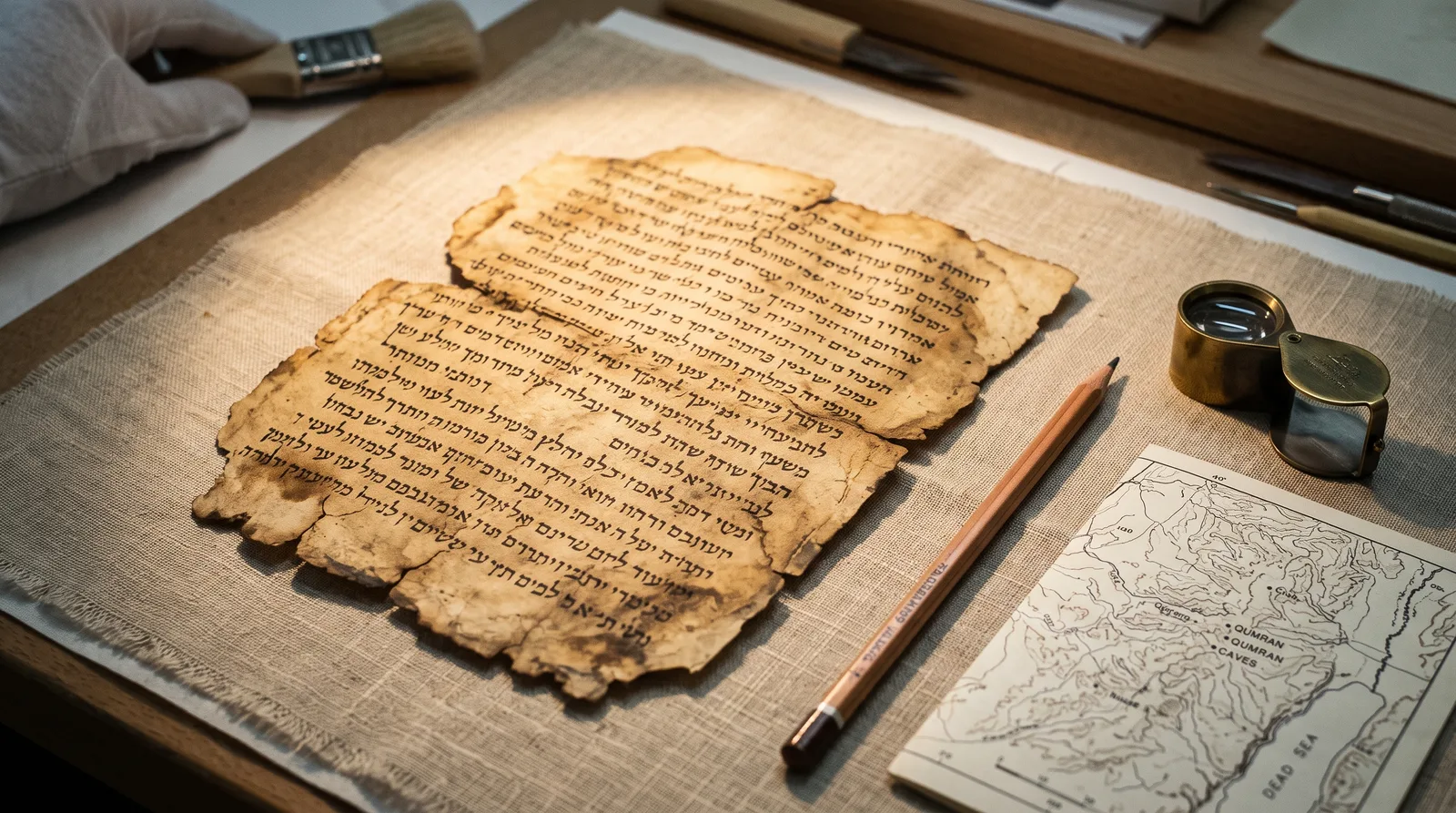
A rigorous, evidence-based journey through the Dead Sea Scrolls — from the caves of Qumran to the scribal communities that shaped the Hebrew Bible, Second Temple Judaism, and the birth of early Christianity. No prior expertise required, only serious curiosity.
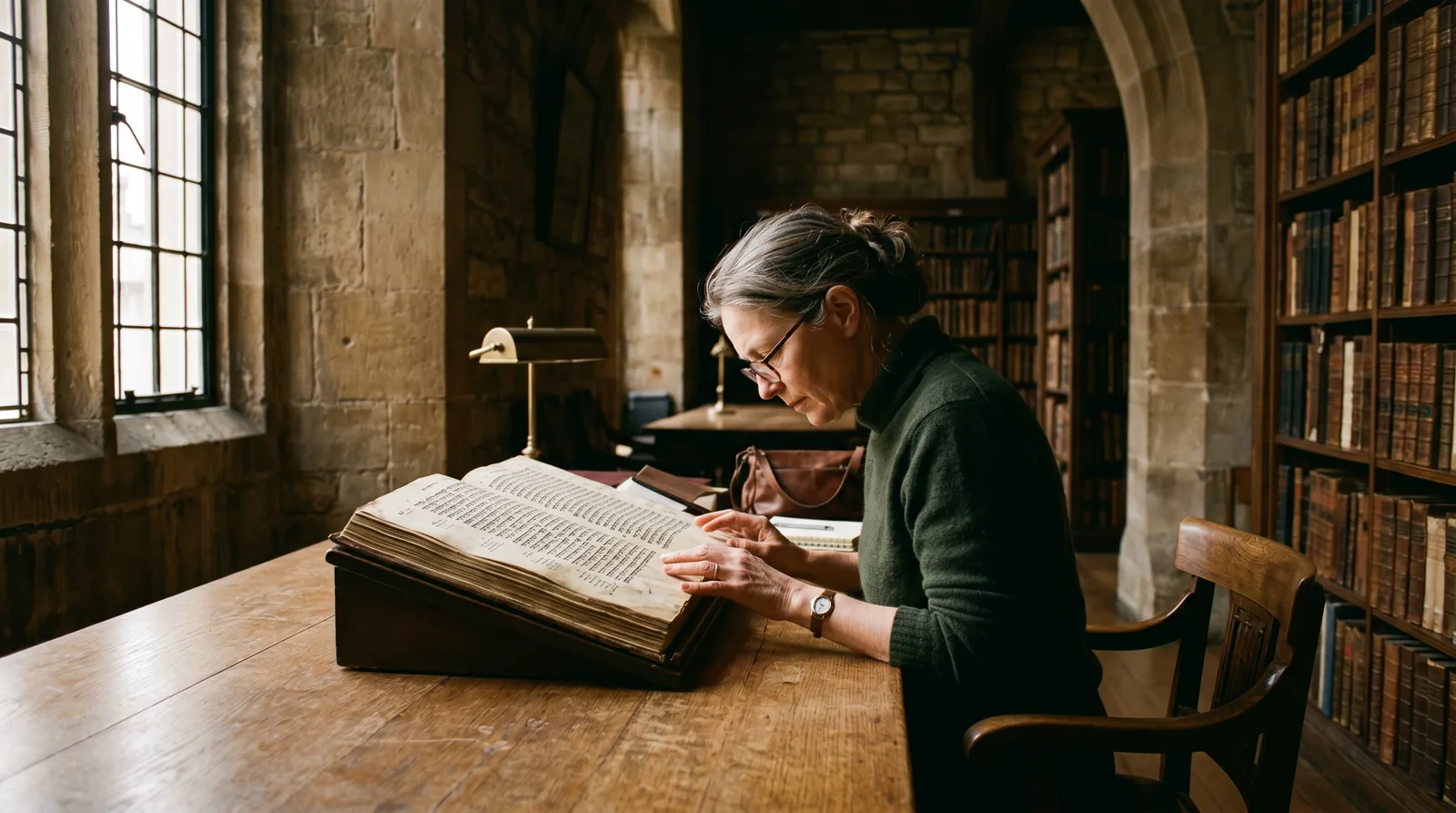
"The scrolls don't need embellishment — they need the kind of careful, contextualized reading that lets the actual evidence speak."— Carla Paton
What you'll learn
What you'll be able to do
- Trace the full story of the Dead Sea Scrolls' discovery at Qumran, including the archaeological excavations and the long, contested road to publication
- Situate the Scrolls within the political and religious landscape of Second Temple Judaism, from the Maccabean revolt to the Roman destruction of Jerusalem
- Identify and compare the major manuscript types — biblical, sectarian, and apocryphal — and explain what makes each historically significant
- Analyze the Community Rule, the War Scroll, and other sectarian texts to reconstruct the beliefs, rituals, and social structure of the Yahad community
- Evaluate competing scholarly theories about who wrote the Scrolls — Essenes, priestly scribes, or others — and assess the evidence for each
- Explain how the biblical manuscripts among the Scrolls have reshaped our understanding of the transmission and formation of the Hebrew Bible
How it works
A school that adapts to you
This isn't a set of static videos. Every lesson is generated live and tuned to where you actually are.
We learn your level
A quick placement check tailors your starting point so you're never bored or lost.
Lessons adapt as you go
Each lesson is written for your pace and your goal, adjusting as your skills grow.
Your AI coach keeps you moving
Checkpoints, feedback, and gentle nudges turn progress into a real result.
The curriculum
What's inside your school
6 modules · 28 lessons

Caves, Jars, and Scholars: The Discovery and Recovery of the Scrolls
Traces the full arc from a Bedouin shepherd's accidental find in 1947 through the archaeological excavations, acquisitions, and the decades-long publication controversy.
- 1.1The Shepherd's Find: Qumran Cave 1 and the First ScrollsIncluded
- 1.2Digging Qumran: Archaeology of the Site and the Eleven CavesIncluded
- 1.3Buying and Smuggling: How the Scrolls Reached InstitutionsIncluded
- 1.4The Scroll Wars: Secrecy, Monopoly, and the Fight for PublicationIncluded
- 1.5Digital Scrolls: Modern Technology and Ongoing DiscoveriesIncluded
A World in Crisis: Second Temple Judaism and Its Many Faces
Situates the Scrolls within the turbulent political and religious landscape of Judea from the Maccabean revolt through the Roman destruction of Jerusalem in 70 CE.
- 2.1After the Exile: Rebuilding Judaism in the Persian and Hellenistic PeriodsIncluded
- 2.2Maccabees and Hasmoneans: Revolution, Priesthood, and PowerIncluded
- 2.3Pharisees, Sadducees, and Sectarians: A Pluralist JudaismIncluded
- 2.4Roman Judea and the Road to Catastrophe: 63 BCE–70 CEIncluded
A Library in the Desert: What the Scrolls Actually Are
Introduces students to the full range of manuscript types — biblical, sectarian, and apocryphal — and explains what makes each category historically significant.
- 3.1Counting and Classifying: The Scope of the Qumran LibraryIncluded
- 3.2Biblical Manuscripts: Every Book of the Hebrew Bible (Almost)Included
- 3.3Sectarian Texts: Rules, Hymns, Calendars, and War PlansIncluded
- 3.4Apocryphal and Pseudepigraphical Works: The Fringe of the CanonIncluded
- 3.5Reading a Damaged Scroll: Paleography, Scribal Hands, and Dating MethodsIncluded
Inside the Yahad: Community Life, Belief, and Practice
Uses the sectarian texts as primary evidence to reconstruct the theology, rituals, hierarchy, and social organization of the Qumran community.
- 4.1The Community Rule (1QS): Joining, Living, and Leaving the YahadIncluded
- 4.2Dualism, Predestination, and the Two SpiritsIncluded
- 4.3The War Scroll: Eschatology, Holy War, and the Final BattleIncluded
- 4.4Calendars, Purity, and Halakhah: Where They Differed from JerusalemIncluded
- 4.5Hymns, Prayer, and the Psalms Scroll: Spiritual Life at QumranIncluded
Who Wrote the Scrolls? Authorship, Identity, and Competing Theories
Evaluates the major scholarly hypotheses — Essene, priestly, Jerusalem library, and others — and assesses what the evidence does and does not support.
- 5.1The Essene Hypothesis: Origin, Strength, and Ongoing DebatesIncluded
- 5.2Alternative Theories: Sadducean Priests, Zealots, and the Jerusalem Library ThesisIncluded
- 5.3The Teacher of Righteousness and the Wicked Priest: Reading the PesharimIncluded
- 5.4Weighing the Evidence: What Scholarship Can and Cannot ConcludeIncluded
Rewriting the Bible: The Scrolls and the Hebrew Canon
Explains how the biblical manuscripts among the Scrolls have fundamentally changed scholarly understanding of the transmission, fluidity, and formation of the Hebrew Bible.
- 6.1Before the Masoretes: Textual Plurality in the Second Temple PeriodIncluded
- 6.2The Great Isaiah Scroll: A Case Study in Textual TransmissionIncluded
- 6.3Canon Formation: What Was 'Scripture' at Qumran?Included
- 6.4The Scrolls, the New Testament, and Early ChristianityIncluded
- 6.5The Scrolls' Legacy: Redefining Ancient Judaism and Biblical ScholarshipIncluded
Who it's for
Is this you?

History enthusiasts
You've read broadly about the ancient world and want a rigorous, source-grounded account of one of archaeology's most consequential discoveries.

Religious studies students
You're studying biblical literature, early Judaism, or Christian origins and want the Dead Sea Scrolls scholarship that your coursework references but rarely unpacks.

Theology readers
You take scripture seriously and want to understand what the Qumran manuscripts mean for the transmission, formation, and authority of the Hebrew Bible.

Archaeology enthusiasts
You're drawn to the excavations at Qumran, the eleven caves, and the material evidence — and want to understand how the physical record is read and interpreted.

Self-directed scholars
You read deeply on your own terms and want a structured, expert-led framework for a subject you've circled without a reliable guide into its complexity.

Early Christianity researchers
You're investigating the Jewish world that shaped the New Testament and want to understand exactly how — and how cautiously — the Scrolls illuminate that world.
Questions
Frequently asked
Your teacher
A note from your teacher

Carla Paton
If you've found your way to The Scroll Vault, I suspect you already know the outlines of the story — a cave, some jars, ancient manuscripts — and you're hungry for what comes after the headline. You want to know what the texts actually say. You want to understand the world that produced them, the scholars who fought over them, and what it means for our understanding of the Bible that these manuscripts exist at all. That's precisely what this school is built to give you.
The Dead Sea Scrolls are not easy material to teach well. The tendency, in popular treatments, is to reach too quickly for the sensational — hidden gospels, secret sects, conspiracies in the Vatican. The tendency in purely academic treatments can be the opposite: so much specialist apparatus that the human story disappears entirely. What I've tried to build here is a third path. Rigorous, grounded in archaeology and primary sources, honest about what scholarship can and cannot conclude — but also genuinely engaged with the drama of the evidence. Because there is real drama here, and you don't need to invent any of it.
We begin with the discovery itself, because how the Scrolls were found, bought, smuggled, hoarded, and eventually forced into public view is inseparable from how we understand them. The "Scroll Wars" — the decades-long battle over publication access — shaped which questions scholars could ask and when. That history matters. From there we build the historical world of Second Temple Judaism with real care, because you cannot read the Community Rule or the War Scroll without understanding the Maccabean crisis, the fractures within the priestly establishment, and the pressure of Roman occupation. Context here is not decoration — it is the interpretive key.
The heart of the school is close engagement with the manuscripts themselves. We work through the major text types — biblical, sectarian, apocryphal — and then go deep into the Yahad community's own documents. What did they believe about the cosmic war between light and darkness? How did someone join, or get expelled? What does the Psalms Scroll tell us about spiritual life in the desert? And then the authorship question: I'll lay out the Essene hypothesis, the alternatives, and the evidence for each, and I'll be direct about where the record runs out.
The final part of the school may be the most significant for anyone who cares about the Bible. The textual evidence from Qumran tells us that the Hebrew scriptures existed in multiple competing forms well into the first century CE. That is not a minor footnote — it reshapes how we think about canon, transmission, and authority. We'll work through what that evidence actually shows, using the Great Isaiah Scroll as our central case study, and we'll follow the implications forward into early Christianity and the long legacy of the Scrolls in modern scholarship.
Come with your questions. Come with your skepticism. The material can bear the weight of both.
— Carla Paton
Start your journey today
Join get instant access — learn at your own pace with an AI coach in your corner.
$19/mo
Recurring billing · cancel anytime
Secure checkout · Instant access
- 6 modules, 28 lessons
- AI-adaptive lessons tuned to your level
- Quizzes & checkpoints to lock in progress
- Your own AI learning coach
- Learn on any device, at your pace
- Full access for as long as you're subscribed