Dwell in the Garden That Never Closed
A rich, symbol-laden theological journey through Eden, the Ark, the Cross, and the New Jerusalem — so you can live as a saint in the Risen King's garden every single day, not just at Christmas or Easter.
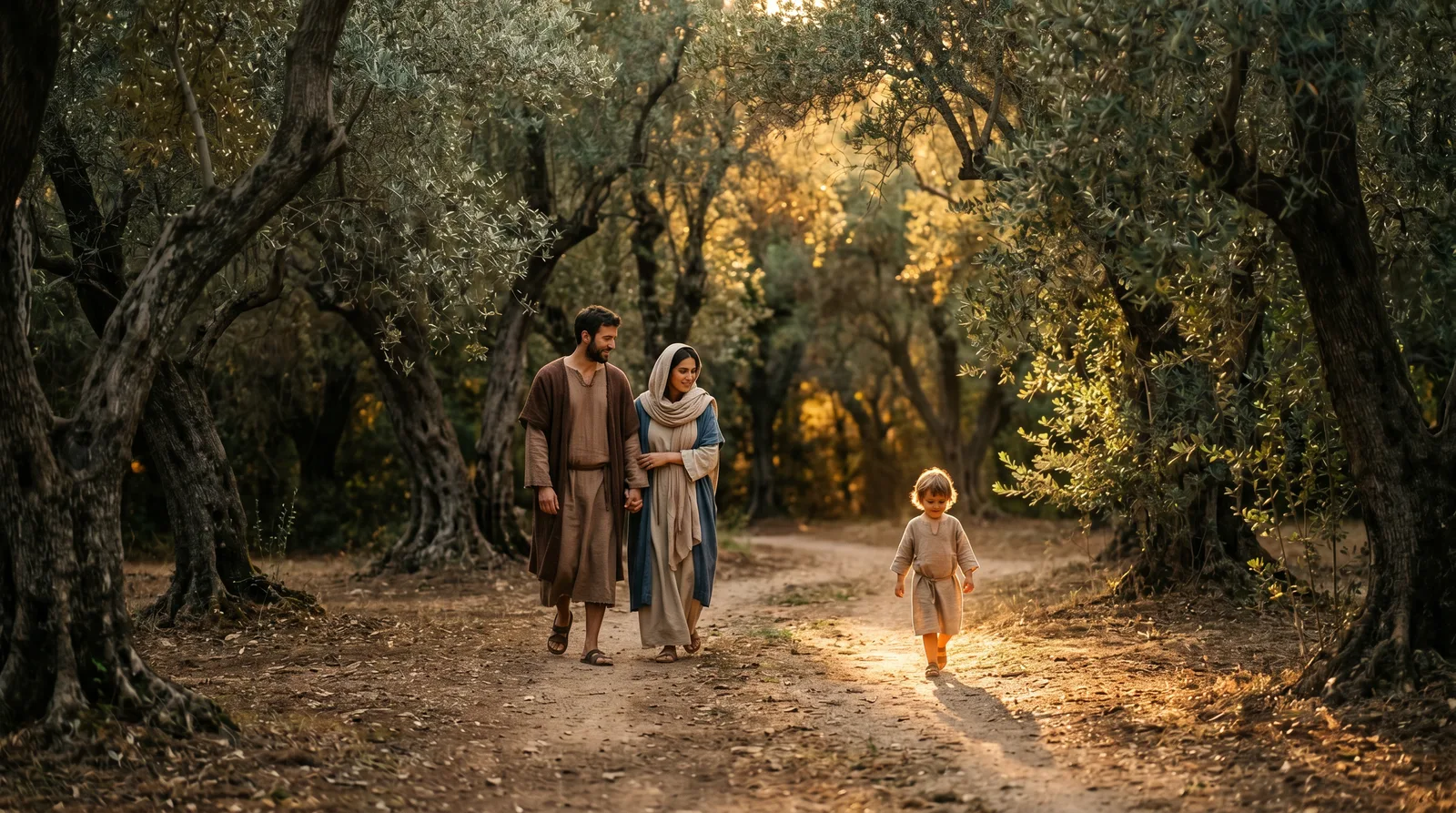
"The garden never closed — and everything I teach is an invitation to stop living like it did."— David Clilverd

What you'll learn
What you'll be able to do
- Articulate the full Second Adam/Second Eve typology — how Joseph and Mary mirror, and redeem, the roles of Adam and Eve — and explain its significance for everyday Christian identity.
- Trace the unbroken thread from Eden to Noah's Ark to Bethlehem to Pentecost and the New Jerusalem, understanding history not as a cycle but as a single, still-unfolding act of divine love.
- Explain the four pivotal events — Incarnation, Cross, Resurrection, Pentecost — not as a seasonal calendar to observe but as a living reality to inhabit at all times of the year.
- Describe the sacramental life (Baptism, Confirmation, Communion) through the lens of the Second Garden: dying and rising, the indwelling Spirit as free gift, and shared communion as ongoing encounter with the Risen King.
- Reflect confidently on what it means to be a 'saint' in the earliest Christian sense — not a rank of holiness but a synonym for 'one in whom God dwells' — and apply that identity to daily relationships, creation-care, and acts of kindness as fruits of the Spirit-river.
- Cultivate a personal, year-round spirituality centred on the Risen Victor and King rather than the infant in the manger, using the New Jerusalem imagery (Tree of Life, river of the Holy Spirit, fruits on either bank) as a daily map for building up, not tearing down.
How it works
A school that adapts to you
This isn't a set of static videos. Every lesson is generated live and tuned to where you actually are.
We learn your level
A quick placement check tailors your starting point so you're never bored or lost.
Lessons adapt as you go
Each lesson is written for your pace and your goal, adjusting as your skills grow.
Your AI coach keeps you moving
Checkpoints, feedback, and gentle nudges turn progress into a real result.
The curriculum
What's inside your school
6 modules · 22 lessons

The Second Garden: Eden Revisited
Establishes the theological foundation of the entire course. Students discover that the story of Eden is not simply a story of loss but of a love that immediately begins working to restore what was broken — and that Joseph and Mary are the living, historical answer to the first Adam and Eve. This module must come first because every subsequent module builds on this typology.
- 1.1The First Garden and What Was LostIncluded
- 1.2The Second Eve: Mary's Yes and What It ReversedIncluded
- 1.3The Second Adam: Joseph's Faithfulness and What It MirrorsIncluded
- 1.4The Family in the Garden: Walking with God's SonIncluded
The Unbroken Thread: Eden, Ark, Bethlehem, Pentecost
Builds directly on Module 1 by zooming out to show the single, continuous arc of divine love running from creation through the Flood, through the Incarnation, to Pentecost and beyond. Students learn to read history not as a cycle of repeated religious events but as one unbroken love story in which God never stopped moving toward humanity. Noah's Ark is introduced here as a crucial link in that chain — the world carried through judgment into new life — which makes the typological connections to Bethlehem and Pentecost land with clarity and power.
- 2.1Noah's Ark: The Garden Carried Through the FloodIncluded
- 2.2Bethlehem to Pentecost: One Continuous EventIncluded
- 2.3History as Love Story, Not CycleIncluded
The Four Pivotal Realities: Incarnation, Cross, Resurrection, Pentecost
Having established in Module 2 that these four events are one continuous action, this module now gives each of the four movements its own deep examination. Students move from knowing that these events happened to understanding what each one means, why each one is irreplaceable, and — crucially — how each one is a present, living reality rather than a past episode. Module 2 gave the bird's-eye view; Module 3 gives the close-up. This sequencing ensures students have the 'why one story' framework before they dive into the details of each movement.
- 3.1The Incarnation: God Re-enters His GardenIncluded
- 3.2The Cross: Tree of Life, Not Symbol of DefeatIncluded
- 3.3The Resurrection: The King Returns to His GardenIncluded
- 3.4Pentecost: The River of the Spirit Flows AgainIncluded
The Sacramental Life in the Second Garden
Moves from the theological and historical (Modules 1–3) into the lived, embodied, communal experience of Christian life. Baptism, Confirmation, and Communion are examined not as religious rituals to be explained but as the ways in which the realities of Modules 1–3 become personally real for each believer. The garden imagery introduced in Module 1 and deepened through Modules 2 and 3 is now applied to the sacramental life: the waters of Baptism are the garden river; Confirmation is the laying on of hands through which the Pentecost gift becomes personal; Communion is the meal at the garden table with the Risen King. A fourth lesson is added here — absent from the draft — to address the 'born again / personal encounter' theme the user explicitly named, which is the experiential, non-institutional counterpart to the three sacraments and without which the module is incomplete.
- 4.1Baptism: Dying and Rising in the Garden RiverIncluded
- 4.2Confirmation: The Laying On of Hands and the Free GiftIncluded
- 4.3Communion: Bread Broken at the Garden TableIncluded
- 4.4Born Again: The Personal Encounter with the Risen KingIncluded
Saints in the Garden: Identity, Kindness, and the Fruits of the River
With the theological and sacramental foundations firmly laid in Modules 1–4, this module turns to lived identity and daily practice. Who are we, in light of everything? The answer the course offers — rooted in the user's source material — is that we are saints in the earliest, most radical sense of that word: not exceptionally holy individuals but simply people in whom God dwells. From that identity flows everything else: the way we see others, the way we treat creation, and the daily acts of kindness that are the fruits growing on the banks of the Spirit-river. An additional lesson on creation-care is introduced here — a genuine gap in the draft — because the user's material explicitly names care for 'all other living things and the planet itself' as a fruit of this theology.
- 5.1Saints: The Original Meaning and Its Radical ImplicationsIncluded
- 5.2The Fruits on the River Bank: Kindness as TheologyIncluded
- 5.3God's Eyes in Us: Seeing Others as God Sees ThemIncluded
- 5.4Stewards of the Garden: Creation-Care as an Act of LoveIncluded
The New Jerusalem: Living in the Garden That Has No End
The culminating module draws every thread of the course together and turns it forward. Students are not being taught to look back at a golden age that was lost, or to wait passively for a golden age yet to come — they are being invited to recognise that the New Jerusalem is already breaking in, that the Spirit-river is already flowing, that the garden is already here in every home where love dwells, and that the Risen King is already reigning. The final module adds a lesson — absent from the draft — on year-round, daily spirituality centred on the Risen King rather than the seasonal infant, completing the course's central reorientation from calendar-observance to lived presence.
- 6.1The New Jerusalem: Already and Not YetIncluded
- 6.2Mercy Triumphs Over Judgement: Hope as Theological ConvictionIncluded
- 6.3Year-Round Spirituality: The Risen King at the CentreIncluded
Who it's for
Is this you?

The Hungry Pew-Sitter
You love your church but feel faith should run deeper than the liturgical seasons — this school gives you the theological roots to live it year-round.

The Lapsed Re-Returner
You've come back to faith as an adult and want a framework that makes the whole story — Genesis to Revelation — feel coherent and personally alive.

The Tradition-Crosser
You sit between Catholic, Orthodox, and Protestant influences and need a school that honours the deep shared inheritance rather than policing denominational lines.

The Scripture Lover
You read your Bible faithfully and yet sense there's a unifying thread you haven't quite grasped — the Eden-to-New Jerusalem narrative ties it all together for you.

The Spiritually Restless
You pray, you believe, but the gap between Sunday worship and Monday morning feels too wide — this school builds a daily, embodied spirituality that closes it.

The Reflective Small-Group Leader
You lead others in faith formation and want richer material — the Second Garden framework gives you imagery and depth that sparks genuine transformation in a group.
Questions
Frequently asked
Your teacher
A note from your teacher
David Clilverd
I know what it feels like to love the faith deeply and still sense that something is missing.
Not missing from the faith itself — but missing from how I'd been taught to inhabit it. I'd been handed a calendar: Advent, Christmas, Lent, Easter, Pentecost — observe each season, then return to ordinary time. And ordinary time felt exactly that. Ordinary. As though the story went quiet between the high feasts and I had to wait for the next one to feel God near again.
What changed everything for me was sitting with a question that sounds almost too simple: what if the garden never actually closed? Not metaphorically. Theologically. What if the Incarnation, the Cross, the Resurrection, and the outpouring of the Spirit are not a sequence of past events arranged on a calendar, but a single, living, still-unfolding reality — a garden that was restored and that you are already standing in, right now, whether you feel it or not? That question cracked something open, and what poured through was the most coherent, beautiful, and personally transforming framework I've ever encountered for reading the whole of Scripture.
That's what I built this school to share with you. Not a new theology — the threads are ancient, carried by the Church across every tradition — but a way of gathering those threads into one picture. The Second Adam and the Second Eve. The Ark as Eden carried through the flood. The Cross as the Tree of Life restored. Pentecost as the river of Eden flowing again, now through human hearts. The New Jerusalem not as a distant destination but as a present address, already and not yet, pressing into Tuesday morning. These aren't images I invented; they're images the Church has always held. I just want to hand them to you whole, so you can live inside them.
I teach the way I wish I'd been taught: with warmth, with wonder, and with enough theological substance that you come away changed rather than merely informed. I don't want you to finish this school and say 'that was interesting.' I want you to finish it and find that the way you see your neighbour, the way you receive Communion, the way you step outside on an ordinary morning, has quietly and permanently shifted. Because He is walking with you now, today, in this garden. That has always been the point. Come and discover what it means for your real life.
— David Clilverd
Start your journey today
Join get instant access — learn at your own pace with an AI coach in your corner.
$29/mo
Recurring billing · cancel anytime
Secure checkout · Instant access
- 6 modules, 22 lessons
- AI-adaptive lessons tuned to your level
- Quizzes & checkpoints to lock in progress
- Your own AI learning coach
- Learn on any device, at your pace
- Full access for as long as you're subscribed