Teach your parakeet to sing on cue
Train your parakeet to sing, whistle tunes, and vocalize on cue with proven, bird-friendly techniques. Turn a quiet budgie into a cheerful, musical companion — no prior bird experience required.
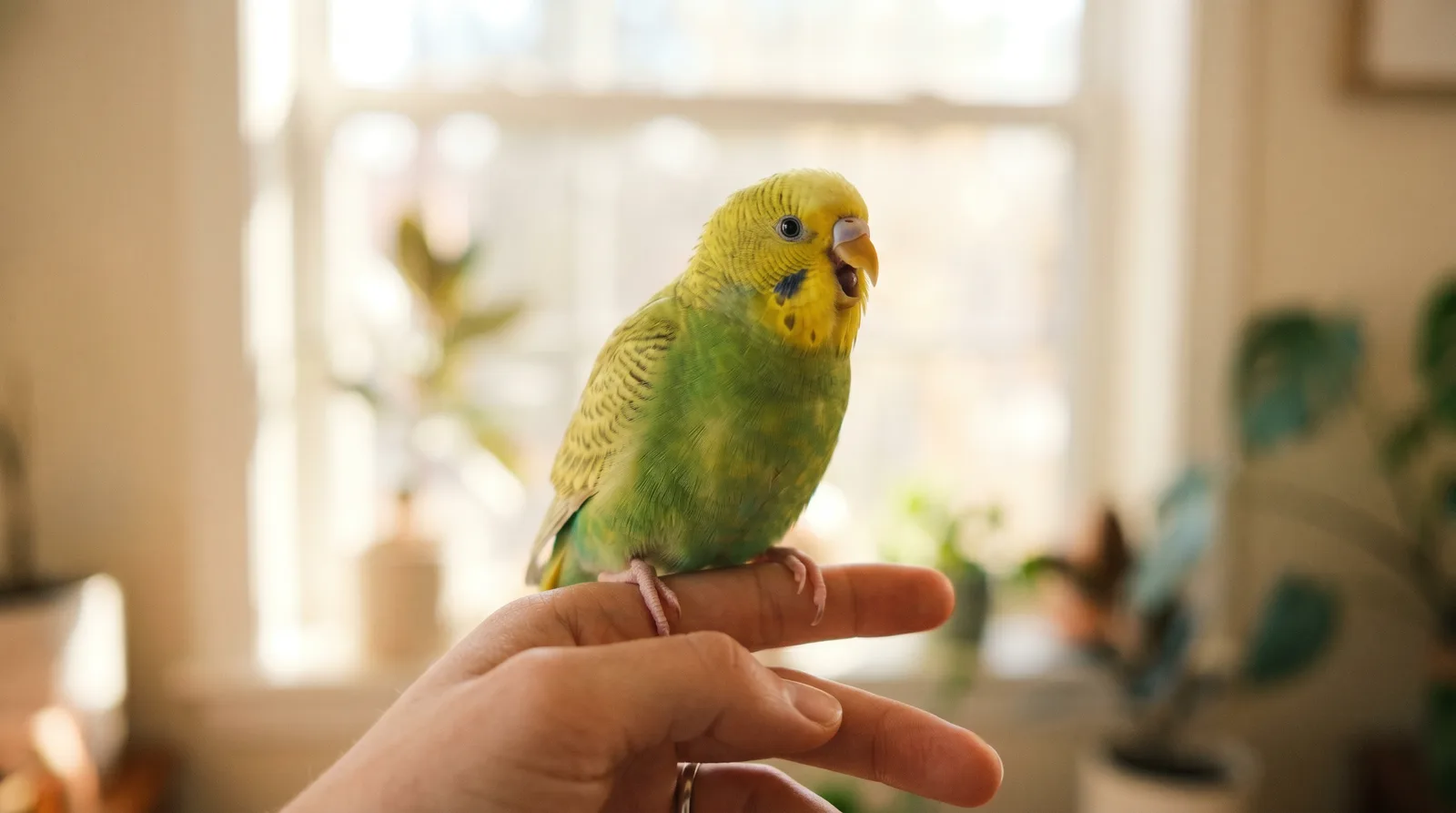
"When you learn to listen to your bird first, teaching them to sing becomes the most natural thing in the world."— Yael Cohen
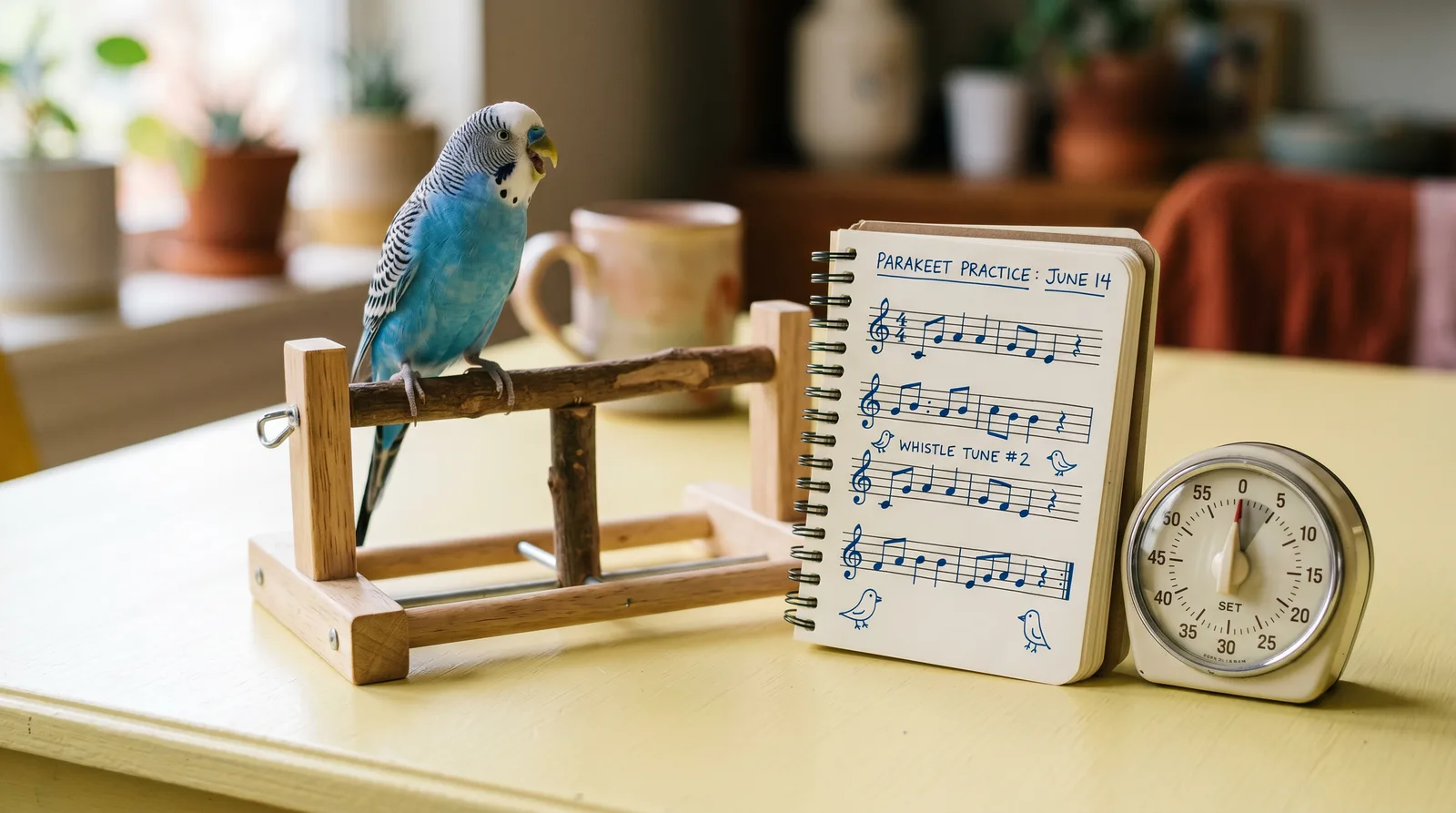
What you'll learn
What you'll be able to do
- Recognize the signs that your parakeet is ready and motivated to learn new sounds
- Use proven repetition and reward schedules to teach your bird specific whistled melodies
- Troubleshoot silence or regression — understanding why a bird stops vocalizing and how to re-engage it
- Create a daily 5-minute training routine that fits into any schedule without stressing your bird
- Distinguish healthy, expressive singing from stress calls or illness-related vocal changes
- Record and share polished clips of your parakeet performing tunes on cue
How it works
A school that adapts to you
This isn't a set of static videos. Every lesson is generated live and tuned to where you actually are.
We learn your level
A quick placement check tailors your starting point so you're never bored or lost.
Lessons adapt as you go
Each lesson is written for your pace and your goal, adjusting as your skills grow.
Your AI coach keeps you moving
Checkpoints, feedback, and gentle nudges turn progress into a real result.
The curriculum
What's inside your school
6 modules · 17 lessons

Understanding Your Parakeet's Voice
Before any training begins, learners build a deep understanding of how parakeets produce and use sound — covering the full vocal spectrum from healthy song to stress calls and illness signals. This foundational module ensures owners can confidently interpret what their bird is communicating at any moment, which is a non-negotiable prerequisite to all teaching that follows.
- 1.1How Parakeets Communicate Through SoundIncluded
- 1.2Reading Readiness — Is Your Bird in the Mood to Learn?Included
- 1.3Healthy Song vs. Stress Calls vs. Illness SignalsIncluded
Setting Up for Success
Effective training collapses without the right environment, the right motivators, and a sustainable daily schedule. This module removes all the practical barriers to starting — covering room setup, distraction control, choosing high-value rewards, and building a realistic 5-minute routine — so that by the end, learners are physically and logistically ready to begin Session 1.
- 2.1The Ideal Training EnvironmentIncluded
- 2.2Rewards That Actually Work for BirdsIncluded
- 2.3Building Your Daily 5-Minute RoutineIncluded
Teaching the First Whistled Melody
This is the core skill-building module where the actual teaching begins. Learners move from preparation into deliberate, structured practice — selecting an appropriate tune, applying a scientifically grounded repetition schedule, and using approximation-based shaping to guide the bird from silence to a recognizable melody. Every concept here is applied immediately in real sessions.
- 3.1Choosing and Preparing Your First TuneIncluded
- 3.2The Repetition Schedule — How Often and How MuchIncluded
- 3.3Shaping and Rewarding ApproximationsIncluded
Adding Cues and Building a Repertoire
Once the first melody is reliably produced, learners add a clean visual or gestural cue so the bird performs on request, then carefully introduce a second tune using contrast-based techniques that prevent interference with the first. The module culminates in chaining both tunes into a short, sequenced mini-performance — directly delivering the 'record and share' outcome that comes in the next module.
- 4.1Putting the Tune on CueIncluded
- 4.2Teaching a Second Tune Without Erasing the FirstIncluded
- 4.3Chaining Into a Mini PerformanceIncluded
Troubleshooting Silence and Regression
Even well-trained birds go quiet, regress, or plateau — and without a diagnostic framework, owners often respond in ways that make the problem worse. This module is deliberately sequenced after skill-building and before recording (since regression can occur at any point, including mid-repertoire) and equips learners to identify the root cause of silence and apply the right fix rather than a generic one.
- 5.1Why Birds Go Quiet — Diagnosing the CauseIncluded
- 5.2Re-Engagement Strategies That Actually WorkIncluded
Recording and Sharing Your Parakeet's Performances
The capstone module translates all the training work into polished, shareable content. Learners set up a reliable recording environment, capture the cued performance on camera with clean audio, apply simple editing to produce a finished clip, and share it confidently. This module is last because it requires a repertoire, cued behaviors, and a bird confident enough to perform on demand — all of which are built in the preceding modules.
- 6.1Setting Up the Perfect Recording SessionIncluded
- 6.2Capturing the Cued Performance on CameraIncluded
- 6.3Simple Editing and Sharing Your Bird's ProgressIncluded
Who it's for
Is this you?

First-time bird keepers
You just brought your budgie home and want to build a real bond from day one — this course gives you a clear, gentle starting point with zero assumed knowledge.

Quiet-bird puzzlers
Your parakeet barely makes a peep and you're not sure why — the readiness-reading and re-engagement modules were written with your bird in mind.

Enthusiast hobbyists
You already love your birds and want to go deeper — learning cued performances, multi-tune repertoires, and the avian behaviour science behind it all.

Busy parents & families
The whole family loves the bird but no one has hours to spare — the 5-minute daily routine makes real progress possible without rearranging your life.

Social media bird lovers
You want to capture and share those magical 'singing on cue' moments — the recording and editing module helps you produce clips your followers will obsess over.

Caring & cautious keepers
Bird welfare is your priority and you'll only train if it's genuinely stress-free — the course's focus on the bird's happiness and health signals will give you full confidence.
Questions
Frequently asked
Your teacher
A note from your teacher
Yael Cohen
If you've ever watched your parakeet tilt their head, chirp softly at the radio, and thought "there's something musical in there" — you're right. And I know how frustrating it feels to sense that potential but have no idea how to reach it.
Maybe you've tried playing tunes near the cage and nothing happened. Maybe your bird chatters away on their own but clams up the moment you pay attention. Maybe you've read conflicting advice online and ended up more confused than when you started. I've been there, and I've heard every version of that story from bird keepers just like you.
Here's what changed things for me: understanding that parakeets don't learn despite their nature — they learn through it. Budgerigars are wired to communicate, to mimic, to connect through sound. The moment you stop trying to impose a training method and start working with how your bird actually thinks, everything shifts. Sessions stop feeling like drills. Your bird starts leaning toward you instead of away. And those first wobbly notes of a real, recognisable tune? Honestly, there's nothing quite like it.
That's exactly what The Singing Parakeet is built around. Every technique in this course — from reading your bird's readiness before you even begin, to the reward schedules that shape a melody note by note, to troubleshooting the silence that sometimes creeps in — is designed to be kind to your bird first, and effective second. (Spoiler: when it's kind, it's also more effective.)
By the end, you won't just have a bird that whistles a tune. You'll have a bird that looks to you as the source of something fun. That's the bond this course is really about — and it's available to any parakeet owner willing to show up for five minutes a day.
Come and join us. Your bird is already trying to tell you something — let's give you the tools to answer back.
— Yael Cohen
Start your journey today
Join get instant access — learn at your own pace with an AI coach in your corner.
$5/mo
Recurring billing · cancel anytime
Secure checkout · Instant access
- 6 modules, 17 lessons
- AI-adaptive lessons tuned to your level
- Quizzes & checkpoints to lock in progress
- Your own AI learning coach
- Learn on any device, at your pace
- Full access for as long as you're subscribed