Turn your bicycle into a life-changing journey
Learn to plan, pack, and pedal a long-distance cycle tour — affordably and independently — no racing fitness required, just an open road and a willing spirit.
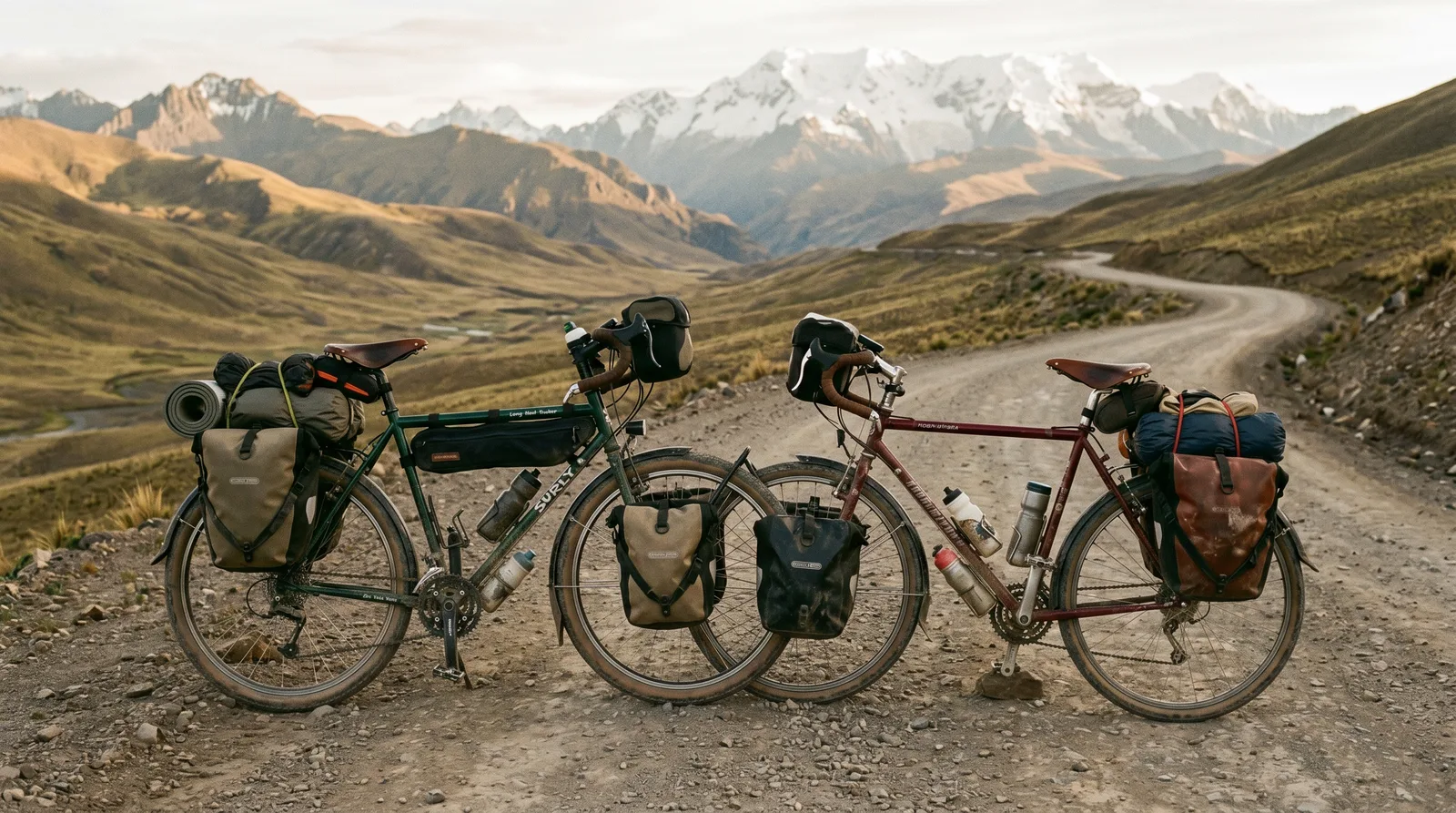
The road gives back everything you bring to it with curiosity — my job is simply to make sure you leave with everything you need.— David Clilverd
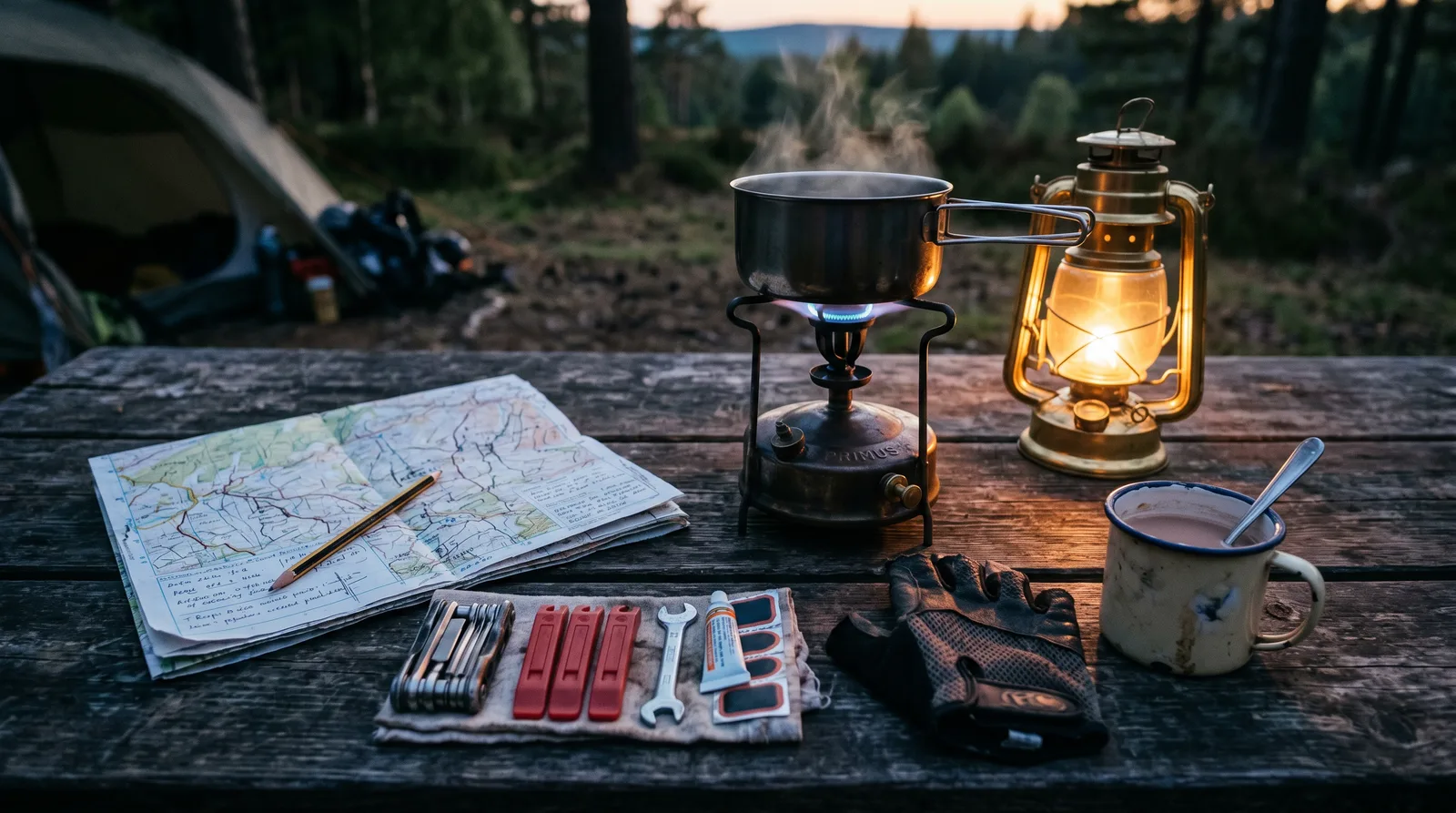
What you'll learn
What you'll be able to do
- Choose, load, and pack a touring bicycle with the right bags and gear for months of self-supported travel
- Plan a long-distance route across countries or continents using maps, local knowledge, and touring-club resources
- Wild camp confidently and legally — finding safe, beautiful spots and cooking simple, nourishing meals on a camp stove
- Perform essential roadside repairs including fixing punctures, replacing spokes, and truing wheels with a minimal toolkit
- Travel for weeks or months on a genuinely low budget by mastering wild camping, local food, and charity-ride fundraising models
- Develop the mental resilience, cultural openness, and slow-travel mindset to connect deeply with people and places along the way
How it works
A school that adapts to you
This isn't a set of static videos. Every lesson is generated live and tuned to where you actually are.
We learn your level
A quick placement check tailors your starting point so you're never bored or lost.
Lessons adapt as you go
Each lesson is written for your pace and your goal, adjusting as your skills grow.
Your AI coach keeps you moving
Checkpoints, feedback, and gentle nudges turn progress into a real result.
The curriculum
What's inside your school
6 modules · 23 lessons

The Slow Cyclist Mindset — Why Touring Changes Everything
Before a single bag is packed or a pedal is turned, the most important preparation is mental. This opening module establishes the philosophy of cycle touring — slow, deliberate, human-paced travel — and immediately distinguishes it from racing or performance cycling. Drawing on first-hand accounts like Dervla Murphy's 'Full Tilt' and the Oxford-to-Kathmandu journey, students discover that touring is open to anyone, regardless of fitness or experience. The module also introduces the organised touring community (the CTC and equivalent clubs worldwide) as a practical support network from day one, ensuring students feel connected and resourced before they begin the practical modules.
- 1.1Slow Travel vs. Fast Travel — A Different Way to MoveIncluded
- 1.2You Don't Have to Be Fit — Managing Fitness and Pace RealisticallyIncluded
- 1.3Joining the Community — Clubs, Resources, and Shared KnowledgeIncluded
The Right Bicycle and How to Load It
With the right mindset established, students now get hands-on with the machine itself. This module covers everything from choosing a suitable touring frame — with proper attention to steel geometry, rack mounts, and tyre clearance — to the full system of bags (panniers, handlebar bags, saddlebags) and the careful art of weight distribution. The module closes with a ruthless but practical examination of what gear actually earns its place over a year on the road. Correct sequencing here is critical: students must understand the bicycle and its load before they can plan routes or camp confidently.
- 2.1Choosing a Touring Bicycle — Steel, Geometry, and What Actually MattersIncluded
- 2.2Bags, Panniers, and the Art of Packing Everything You NeedIncluded
- 2.3Essential Kit — The Gear That Earns Its WeightIncluded
Planning Your Route — From Daydream to Daily Map
With bicycle and kit sorted, this module teaches students how to translate a grand ambition — 'Oxford to Kathmandu' or any comparable long journey — into a workable, flexible plan. The emphasis throughout is on corridors not rigid itineraries, using a layered toolkit of paper maps, digital navigation, local knowledge, and touring-club route libraries. The module also covers the practical and legal infrastructure of international touring: visas, border crossings, and staying legally compliant across multiple jurisdictions — a prerequisite topic that must be understood before departure.
- 3.1Sketching a Long-Distance Route — Corridors, Not ItinerariesIncluded
- 3.2Maps, GPS, and Local Knowledge — Navigating Without Getting LostIncluded
- 3.3Borders, Visas, and Staying Legal on the RoadIncluded
Wild Camping — Finding, Setting Up, and Living in Beautiful Places
This module is the heart of the self-supported touring lifestyle — the ability to stop anywhere beautiful, make a home for the night, and cook a nourishing meal. Students learn the art and judgment of finding wild camp spots (timing, terrain, water, and legal awareness), how to set up and break camp efficiently, how to cook well on a petrol stove with locally sourced ingredients, and how to leave no trace so that the wild places they visit remain beautiful for those who follow. A new lesson on water sourcing and safety has been added, as access to safe drinking water is a critical and frequently overlooked prerequisite for wild camping on international tours.
- 4.1Finding the Perfect Wild Camp Spot — Timing, Terrain, and InstinctIncluded
- 4.2Water Sourcing, Purification, and Safe Hydration on the RoadIncluded
- 4.3Cooking on the Road — Fuel, Food, and the Primus StoveIncluded
- 4.4Leave No Trace — Respecting Wild Places and Local CommunitiesIncluded
Roadside Repairs — The Skills That Keep You Moving
Mechanical self-sufficiency is not optional on a long tour — it is a safety requirement. This module builds genuine competence in the repairs most likely to be needed in the field: puncture fixing, spoke replacement and wheel truing, and routine drivetrain maintenance. A new lesson on pre-departure bike preparation and daily checks has been added at the start — a critical prerequisite gap in the draft, since students need to understand their bike's baseline condition before they can diagnose and fix problems in the field. The module closes with guidance on when and how to use local bike shops in countries where they are available, and what to do when they are not.
- 5.1Know Your Bike — Pre-Departure Checks and Daily Maintenance HabitsIncluded
- 5.2The Minimal Toolkit — What to Carry and WhyIncluded
- 5.3Punctures — Fast, Confident Fixes at the RoadsideIncluded
- 5.4Spokes, Wheel Truing, and Keeping Your Bike Rolling StraightIncluded
- 5.5Drivetrain Care and Common Roadside FixesIncluded
The Low-Budget Life — Affording a Year on the Road
The final module brings everything together under the financial philosophy that makes long-distance touring genuinely accessible to anyone: wild camping eliminates accommodation costs, local market food eliminates restaurant costs, and a self-sufficient bike eliminates transport costs. Students build realistic budgets, master low-cost eating strategies, explore the charity-ride fundraising model (as used on the Oxford-to-Kathmandu Oxfam journey), and close the course by consolidating the slow-travel mindset — cultural openness, human connection, and the life-changing perspective that only months on the road can provide. A new final lesson on safety, health, and emergency planning has been added as an essential gap: students must know how to handle medical situations, theft, and genuine emergencies before they depart.
- 6.1Building a Touring Budget — The Real Cost of a Long JourneyIncluded
- 6.2Eating Well for Almost Nothing — Local Markets, Simple Cooking, and Roadside FoodIncluded
- 6.3Charity Rides and Fundraising — Touring With a Bigger PurposeIncluded
- 6.4Safety, Health, and Emergency Planning — Being Ready for the UnexpectedIncluded
- 6.5The Slow-Travel Mindset — Connecting With People, Places, and YourselfIncluded
Who it's for
Is this you?

The Bucket-List Dreamer
You've had a long-distance tour on your list for years and this school finally gives you the practical roadmap to stop planning and start pedalling.

The Budget Traveller
You're done with expensive holidays and want to know exactly how to travel for weeks or months at a genuinely low cost — wild camping, local food, and all.

The Solo Adventurer
You want the freedom of travelling entirely on your own terms, and this course gives you the safety knowledge, mindset tools, and self-sufficiency to do it confidently alone.

The Mechanically Nervous
The thought of a breakdown in the middle of nowhere has been holding you back — the repairs module fixes that, turning roadside panic into calm, capable action.

The Touring Couple
You and your partner want a shared adventure that's genuinely yours — this school helps you plan a route, share the load, and travel together at a pace that works for both of you.
The Career-Break Cyclist
You have a window of time, a bicycle, and a nagging feeling this is the moment — this school turns that feeling into a fully planned, affordable, life-changing journey.
Questions
Frequently asked
Your teacher
A note from your teacher
David Clilverd
Maybe you've been thinking about it for years. A long journey. A real one — not a two-week holiday with a return flight already booked, but the kind where you genuinely don't know exactly where you'll sleep, or which road you'll take, or what conversation is waiting for you around the next bend. You've looked at maps late at night. You've watched grainy videos of other people doing it and thought: could I?
I'm here to tell you that you can. And I want to show you exactly how.
I built The Slow Cyclist because the gap between dreaming about a long-distance tour and actually starting one isn't a gap in fitness or money or even courage — it's a gap in practical knowledge. Nobody tells you how to load panniers so your bike doesn't handle like a shopping trolley. Nobody explains that a long-distance route is better sketched as a corridor than planned as a rigid itinerary. Nobody walks you through the quiet art of reading a hillside for a wild camp spot, or tells you what to do when you hear a spoke ping on a remote road with two hundred miles still to go. That's what I want to give you.
This school is everything I wish I'd known before I started — and everything I've learned since. It's organised around the real shape of a long tour: the mindset shift that makes it possible, the bike setup that makes it comfortable, the route planning that makes it manageable, the wild camping that makes it affordable and genuinely beautiful, the roadside repairs that keep you moving, and the budget habits that mean a journey measured in months doesn't have to cost a fortune. Each lesson is practical and specific, drawn from real roads and real situations rather than theoretical checklists.
I won't tell you this is easy — some days are hard, and the curriculum is honest about that. But I will tell you that the hard days are rarely the ones you regret, and that almost everything that feels daunting before you set off feels entirely manageable once you have the knowledge and the plan. The goal here isn't to make you a superhuman endurance athlete. It's to make you a confident, curious, capable traveller on two wheels.
If you're ready to stop watching other people's journeys and start planning your own, this is where we begin. Pull up a chair. The stove is on.
— David Clilverd
Start your journey today
Join get instant access — learn at your own pace with an AI coach in your corner.
$29/mo
Recurring billing · cancel anytime
Secure checkout · Instant access
- 6 modules, 23 lessons
- AI-adaptive lessons tuned to your level
- Quizzes & checkpoints to lock in progress
- Your own AI learning coach
- Learn on any device, at your pace
- Full access for as long as you're subscribed