Master the molecular language of life
From enzyme kinetics to oxidative phosphorylation, this school builds the kind of rigorous biochemistry understanding that holds up in an exam room, a clinical setting, or a research lab — through precise, visually anchored lessons that never sacrifice depth for accessibility.
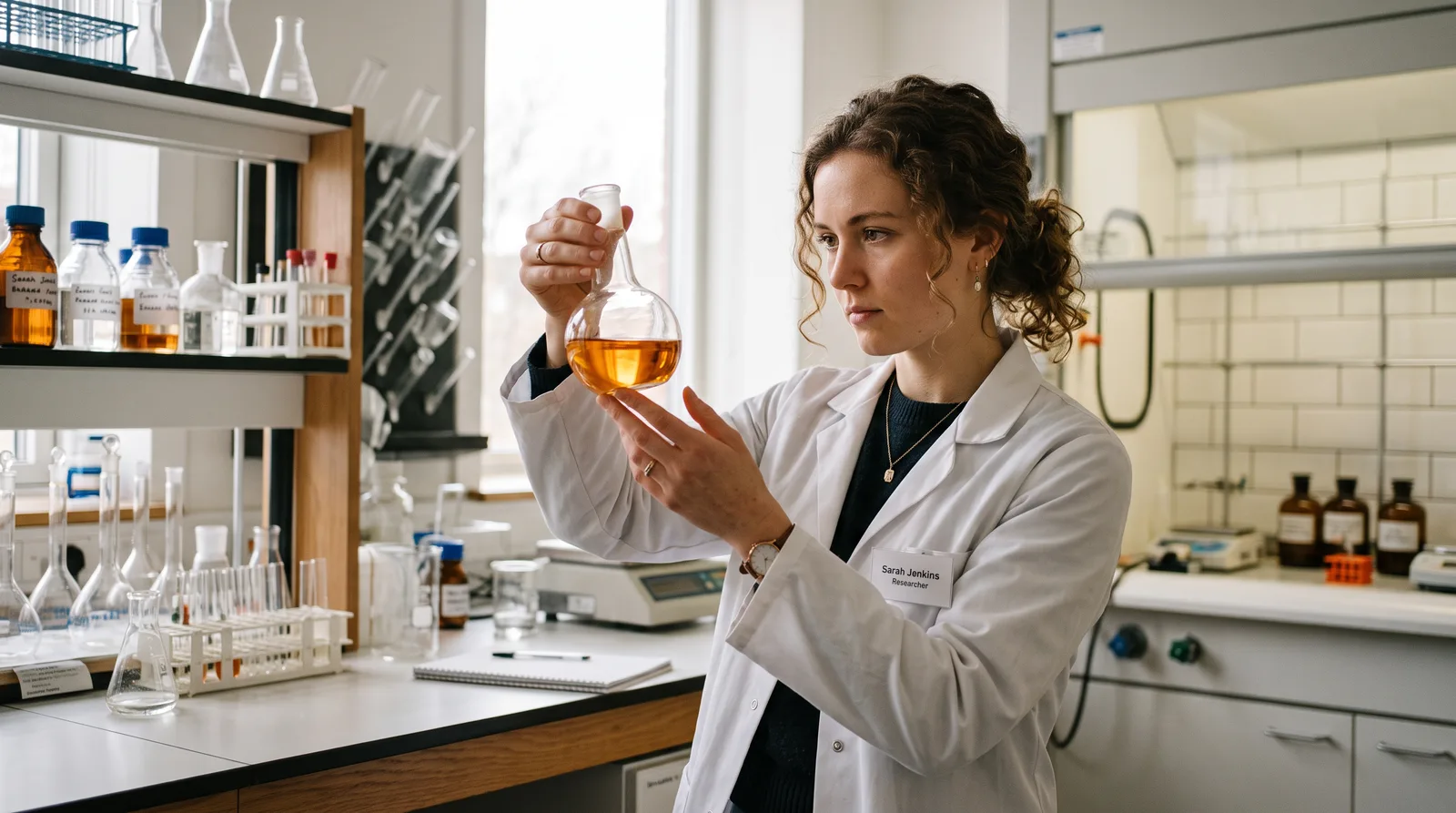
I will never simplify a concept past the point of accuracy — because the depth is exactly where biochemistry becomes useful.— Tracy Burke
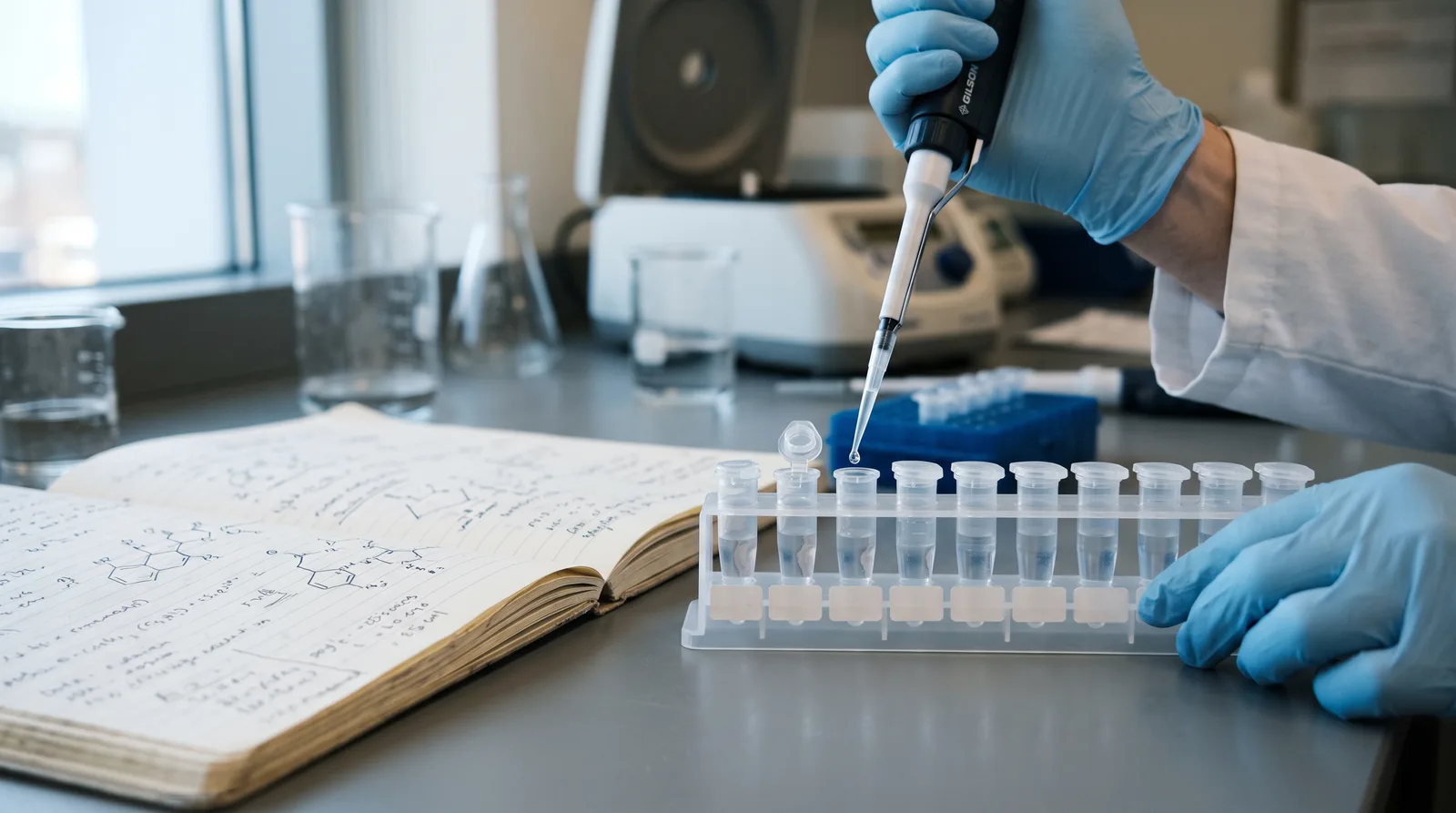
What you'll learn
What you'll be able to do
- Explain protein structure across all four levels and predict how mutations alter function
- Trace the complete flow of energy through glycolysis, the citric acid cycle, and oxidative phosphorylation
- Apply enzyme kinetics principles — including Michaelis-Menten and inhibition models — to real enzymatic data
- Decode how DNA replication, transcription, and translation are regulated at the molecular level
- Interpret metabolic integration across tissues and explain how hormones redirect flux during fed and fasted states
- Read and critically evaluate primary biochemistry literature, including gel, blot, and assay data
How it works
A school that adapts to you
This isn't a set of static videos. Every lesson is generated live and tuned to where you actually are.
We learn your level
A quick placement check tailors your starting point so you're never bored or lost.
Lessons adapt as you go
Each lesson is written for your pace and your goal, adjusting as your skills grow.
Your AI coach keeps you moving
Checkpoints, feedback, and gentle nudges turn progress into a real result.
The curriculum
What's inside your school
6 modules · 29 lessons

The Chemical Foundation of Life
Establishes the chemical and thermodynamic principles that underpin every biochemical process covered in the course.
- 1.1Water, pH, and BuffersIncluded
- 1.2Thermodynamics and Biological EnergyIncluded
- 1.3Functional Groups and Biomolecular ReactivityIncluded
- 1.4Weak Interactions and Molecular RecognitionIncluded
Proteins: Structure, Folding, and Function
Builds a complete understanding of how amino acid sequence determines three-dimensional structure and biological activity.
- 2.1Amino Acid Chemistry and PropertiesIncluded
- 2.2Primary and Secondary StructureIncluded
- 2.3Tertiary and Quaternary StructureIncluded
- 2.4Protein Folding, Stability, and MisfoldingIncluded
- 2.5Mutations, Variants, and Functional ConsequencesIncluded
Enzyme Kinetics and Mechanisms
Develops quantitative and mechanistic frameworks for understanding how enzymes catalyze reactions and how that activity is regulated.
- 3.1Catalysis and the Active SiteIncluded
- 3.2Michaelis-Menten KineticsIncluded
- 3.3Enzyme Inhibition ModelsIncluded
- 3.4Allosteric Regulation and CooperativityIncluded
- 3.5Coenzymes, Cofactors, and Catalytic MechanismsIncluded
Energy Metabolism: From Glucose to ATP
Traces the complete oxidative breakdown of glucose and the mitochondrial machinery that converts that energy into ATP.
- 4.1Glycolysis: Pathway and RegulationIncluded
- 4.2Pyruvate Dehydrogenase and Acetyl-CoAIncluded
- 4.3The Citric Acid CycleIncluded
- 4.4Oxidative Phosphorylation and the Electron Transport ChainIncluded
- 4.5ATP Yield, Efficiency, and Mitochondrial DynamicsIncluded
Nucleic Acids, Gene Expression, and Regulation
Covers the structure of DNA and RNA and the molecular mechanisms by which genetic information is faithfully replicated and expressed.
- 5.1DNA and RNA StructureIncluded
- 5.2DNA Replication and FidelityIncluded
- 5.3Transcription and RNA ProcessingIncluded
- 5.4Translation and the Genetic CodeIncluded
- 5.5Gene Regulation at the Molecular LevelIncluded
Metabolic Integration, Hormonal Control, and Reading the Literature
Connects individual pathways into a whole-body metabolic network, shows how hormones rewire that network, and builds skills to critically evaluate biochemical research.
- 6.1Lipid Metabolism: Fatty Acid Oxidation and SynthesisIncluded
- 6.2Amino Acid Catabolism and the Urea CycleIncluded
- 6.3Metabolic Integration Across TissuesIncluded
- 6.4Hormonal Signals and Metabolic FluxIncluded
- 6.5Reading Primary Biochemistry LiteratureIncluded
Who it's for
Is this you?

Pre-med students
Build the mechanistic biochemistry foundation that carries you through the MCAT and into medical school with genuine understanding, not memorized pathways.

Undergraduate biology majors
Go beyond the survey course and develop the molecular reasoning and quantitative kinetics skills that upper-division and graduate work will demand.

Graduate students
Sharpen the biochemical foundation your research rotations and qualifying exams require, especially in enzyme mechanisms, metabolic regulation, and data interpretation.

Clinicians refreshing core science
Reconnect with the molecular-level biochemistry behind drug mechanisms, metabolic disease, and hormonal physiology — rebuilt from the ground up, without condescension.

Pharmacy and health sciences students
Understand the enzymatic and metabolic machinery that underlies pharmacology, so drug action and toxicity make sense at the molecular level.

Rigorous self-learners
If you have a chemistry background and want to understand how life actually works at the molecular scale — without a dumbed-down survey — this school is built for you.
Questions
Frequently asked
Your teacher
A note from your teacher

Tracy Burke
If you've ever stared at a metabolic pathway diagram and felt the distinct sense that you were memorizing a map of a country you've never visited — I know exactly where you are. Most biochemistry instruction asks you to hold an enormous amount of information in short-term memory and reproduce it under pressure. What it rarely does is give you the conceptual architecture that would make the information stick, connect, and actually mean something.
That's the problem this school is designed to solve.
The Biochemistry Lab is built around a single conviction: biochemistry is not a collection of facts to be catalogued. It is a mechanistic, physical science — one where the behavior of every molecule follows from chemistry you already understand, if someone takes the time to show you the thread. When you understand why a nonpolar side chain drives a protein toward a folded hydrophobic core, you don't need to memorize that fact. When you grasp what Km actually represents — the substrate concentration at which an enzyme is running at half its maximum rate — a Michaelis-Menten curve stops being an abstract plot and starts being a portrait of an enzyme's relationship with its substrate. That's the level of understanding I'm after, in every lesson.
I want to be honest about what this school is and isn't. It is rigorous. I use exact scientific vocabulary, I expect you to follow quantitative reasoning, and I will not simplify a concept past the point of accuracy. If you're looking for a shortcut to a passing grade with minimal effort, this probably isn't your school. But if you want to finish a unit on oxidative phosphorylation and actually understand how a proton gradient does thermodynamic work to drive ATP synthesis — if you want to be able to look at a Western blot and form an independent opinion about what the data show — then you're exactly who I built this for.
The curriculum moves deliberately from foundations to integration. We begin with the physical chemistry that biochemistry runs on — water structure, thermodynamics, weak interactions — because these aren't just introductory pleasantries. They are the explanatory tools you'll reach for constantly. We move through proteins, enzymes, energy metabolism, and gene expression, and we end where the science gets genuinely complex and genuinely interesting: the coordinated regulation of metabolism across the entire organism, and the primary literature where working biochemists report what they actually found.
Come ready to think precisely. I'll meet you there.
— Tracy Burke
Start your journey today
Join get instant access — learn at your own pace with an AI coach in your corner.
$59/mo
Recurring billing · cancel anytime
Enrolling a child? Sign up as a parent — you'll add your student right here after.
Secure checkout · Instant access
- 6 modules, 29 lessons
- AI-adaptive lessons tuned to your level
- Quizzes & checkpoints to lock in progress
- Your own AI learning coach
- Learn on any device, at your pace
- Full access for as long as you're subscribed