Understand how Christianity became Christianity
A rigorous, four-century journey through the Roman world, the apostolic age, and the councils and controversies that forged Christian doctrine — for learners who want history, not hagiography.
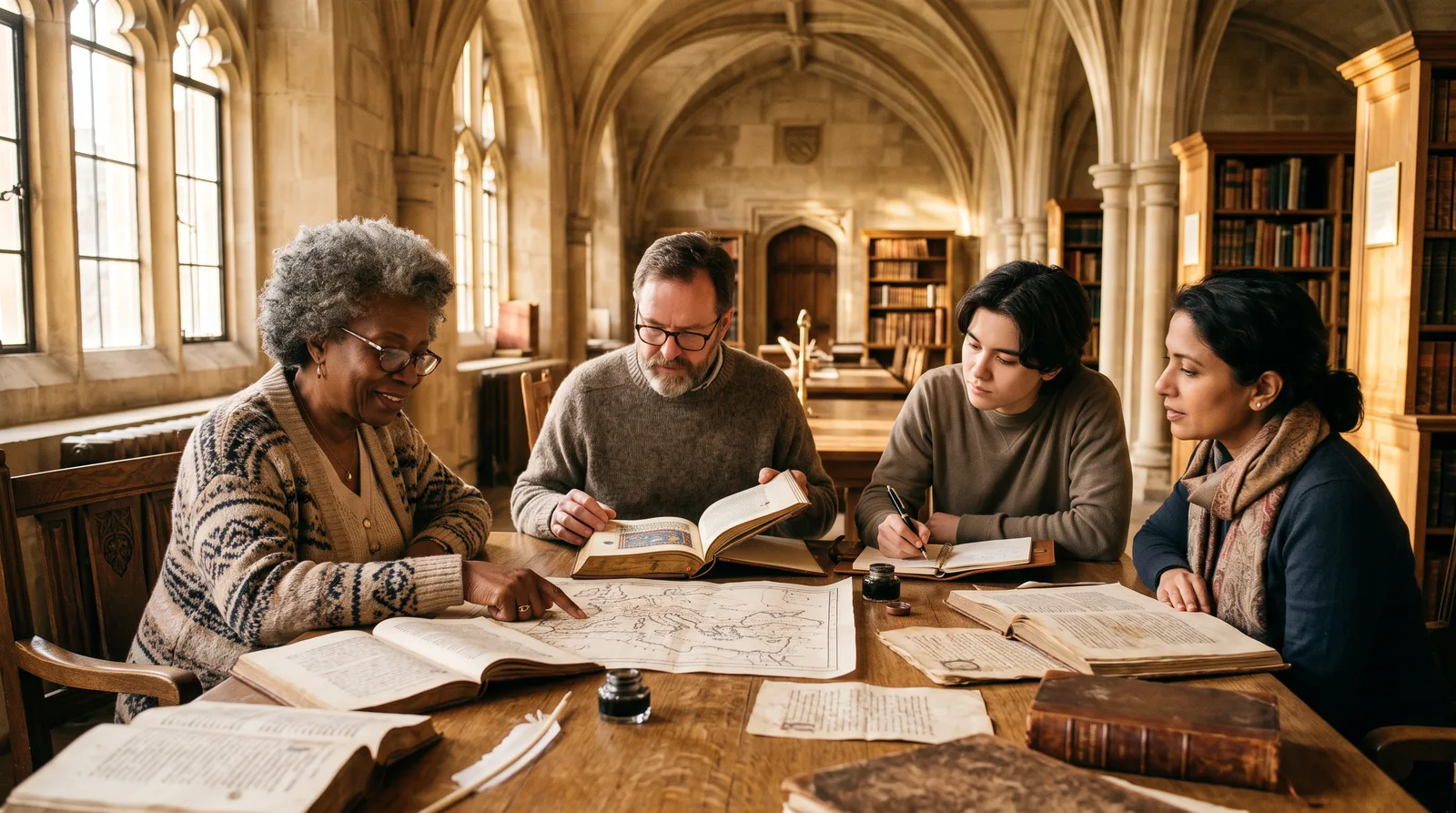
"The early Church deserves to be understood on its own terms — not idealized, not dismissed, but studied with the same rigor and respect we would give any formative chapter of history."
— Theoria

What you'll learn
What you'll be able to do
- Situate the rise of Christianity within its first-century context — Roman imperial politics, Second Temple Judaism, and Greek philosophy — and explain how each shaped the early Church
- Trace the missionary expansion of the apostles and the spread of Christian communities across the Mediterranean world through the first four centuries
- Analyze the lives, letters, and theological contributions of key Church Fathers — from Clement of Rome and Ignatius to Athanasius, Origen, and Augustine
- Explain the development of core Christian doctrines — including the Trinity, the person of Christ, the biblical canon, and salvation — by examining the councils and controversies that forged them
- Identify and evaluate major early heresies such as Gnosticism, Marcionism, Arianism, and Donatism, and articulate the orthodox responses that defined Christian belief
- Engage primary historical sources alongside modern scholarship to distinguish historical evidence from later tradition and develop an informed, nuanced reading of early Christian history
How it works
A school that adapts to you
This isn't a set of static videos. Every lesson is generated live and tuned to where you actually are.
We learn your level
A quick placement check tailors your starting point so you're never bored or lost.
Lessons adapt as you go
Each lesson is written for your pace and your goal, adjusting as your skills grow.
Your AI coach keeps you moving
Checkpoints, feedback, and gentle nudges turn progress into a real result.
The curriculum
What's inside your school
6 modules · 29 lessons

The World That Received the Gospel
Examines the first-century political, religious, and philosophical landscape that shaped the emergence of Christianity.
- 1.1Rome, Power, and the Pax RomanaIncluded
- 1.2Second Temple JudaismIncluded
- 1.3Greek Philosophy and the Hellenistic MindIncluded
- 1.4The Cultural Mosaic of the Early EmpireIncluded
Resurrection, Apostles, and the Birth of the Church
Traces the Church's origins from the resurrection of Jesus through the missionary expansion of the apostles across the Mediterranean world.
- 2.1The Resurrection and the First CommunityIncluded
- 2.2Pentecost and the Early Jerusalem ChurchIncluded
- 2.3Paul, the Gentile Mission, and the LettersIncluded
- 2.4Peter, James, and the Other ApostlesIncluded
- 2.5The Destruction of Jerusalem and Its AftermathIncluded
Spreading Faith, Facing Persecution
Follows the growth of Christian communities across the Roman world while examining the waves of persecution that tested and spread the faith.
- 3.1Christianity Across the MediterraneanIncluded
- 3.2Who Were the Early Christians?Included
- 3.3Roman Persecution and the Martyr ChurchIncluded
- 3.4Martyrdom, Memory, and IdentityIncluded
- 3.5The Apostolic Fathers — Clement, Ignatius, and PolycarpIncluded
Defending and Defining the Faith
Examines how early Christian thinkers engaged pagan critics, responded to heresy, and began constructing the theological vocabulary of orthodoxy.
- 4.1The Apologists — Justin Martyr and the Defense of ChristianityIncluded
- 4.2Gnosticism and MarcionismIncluded
- 4.3Irenaeus and the Response to GnosticismIncluded
- 4.4Tertullian and Latin ChristianityIncluded
- 4.5The Formation of the Biblical CanonIncluded
The Great Theologians of the Third and Fourth Centuries
Surveys the towering figures — Origen, Athanasius, the Cappadocians, and Augustine — whose thought defined classical Christian doctrine.
- 5.1Origen — Scripture, Allegory, and Controversial GeniusIncluded
- 5.2Arianism and the Council of NicaeaIncluded
- 5.3Athanasius and the Nicene FaithIncluded
- 5.4The Cappadocians and the Council of ConstantinopleIncluded
- 5.5Augustine — Sin, Grace, and the City of GodIncluded
Constantine, Councils, and the Transformed Church
Examines the fourth-century revolution in the Church's fortunes — from imperial favor to doctrinal councils — and the new challenges that came with it.
- 6.1Constantine's Conversion and the Edict of MilanIncluded
- 6.2The Church and the Empire — Partnership and TensionIncluded
- 6.3Donatism and the Debate over the Pure ChurchIncluded
- 6.4The Rise of MonasticismIncluded
- 6.5The Early Church's Enduring LegacyIncluded
Who it's for
Is this you?

Theology students
Patristics and church history underpin every serious theological education — this school provides the historical depth to match classroom doctrine.

Pastors in formation
Understanding how creeds were forged, canons formed, and heresies answered gives ministers the doctrinal grounding their congregations deserve.

Serious Bible readers
When the New Testament ends, this school picks up — tracing what happened to the communities, the letters, and the faith across four transformative centuries.

History enthusiasts
The collision of the gospel with Rome, Judaism, and Greek philosophy is one of antiquity's most consequential stories — and this school tells it rigorously.

Adult converts & inquirers
If you've joined or are exploring a Christian tradition and want to understand its roots, this school gives you the historical foundation to make sense of it all.

Lifelong learners
For intellectually curious adults who want more than a Wikipedia summary — this is the course that finally does justice to the questions they've been carrying for years.
Questions
Frequently asked
Your teacher
A note from your teacher

Theoria
Perhaps you have been reading the New Testament for years and find yourself asking questions that the text alone cannot answer. Where did these communities go after Acts ends? Who decided which books belonged in the Bible — and on what grounds? What exactly were Arius and Athanasius fighting about, and why did it matter enough to divide an empire? If those questions have stayed with you, I want you to know: they are exactly the right questions, and you have come to the right place.
I designed this school for the learner who takes the early Church seriously — not as a collection of inspiring stories to be celebrated, but as a complex, contested, and genuinely fascinating chapter of history to be understood. The men and women who shaped Christianity in its first four centuries were not figures in stained glass. They were pastors writing urgent letters to frightened congregations. They were theologians arguing with precise, sometimes agonizing care about the nature of God. They were martyrs choosing death over a pinch of incense, and emperors who discovered that doctrine was also politics. They deserve to be met on their own terms.
What this school offers is a rigorous framework for doing exactly that. We begin where history requires us to begin — with Rome, with Second Temple Judaism, with the Hellenistic philosophical world — because the gospel landed in a specific world, and that world shaped everything from Paul's missionary strategy to the vocabulary the councils eventually used to define the Trinity. We move through the apostolic age, the age of persecution, the patristic golden age, and the Constantinian transformation with care and in sequence, because each era is the necessary context for the next.
I want to be honest with you about what this school is and is not. It is not a devotional experience, though many students find it deepens their faith considerably. It is not a survey that skims the surface. It engages primary sources — the letters of Ignatius, the apologies of Justin Martyr, the arguments of Athanasius — alongside the best of modern scholarship, and it asks you to think carefully about the difference between historical evidence and later tradition. That distinction matters, and learning to make it is one of the most valuable things a serious student of Christian history can do.
If you are a pastor in formation, a theology student, a serious Bible reader, or simply someone who has always wanted to understand how the Church became what it is — I invite you to begin. The world that received the gospel is waiting to be explored, and there is no better time to start than now.
— Theoria
Start your journey today
Get instant access — learn at your own pace with an AI coach in your corner.
$39/mo
Recurring billing · cancel anytime
Secure checkout · Instant access
- 6 modules, 29 lessons
- AI-adaptive lessons tuned to your level
- Quizzes & checkpoints to lock in progress
- Your own AI learning coach
- Learn on any device, at your pace
- Full access for as long as you're subscribed