
Lead from composure, not exhaustion
Pastors carry what no one else will — but absorbing your congregation's pain without a plan is quietly destroying your capacity to lead. This school gives you the clinical frameworks and tactical regulation tools to stay steady when the room is not.
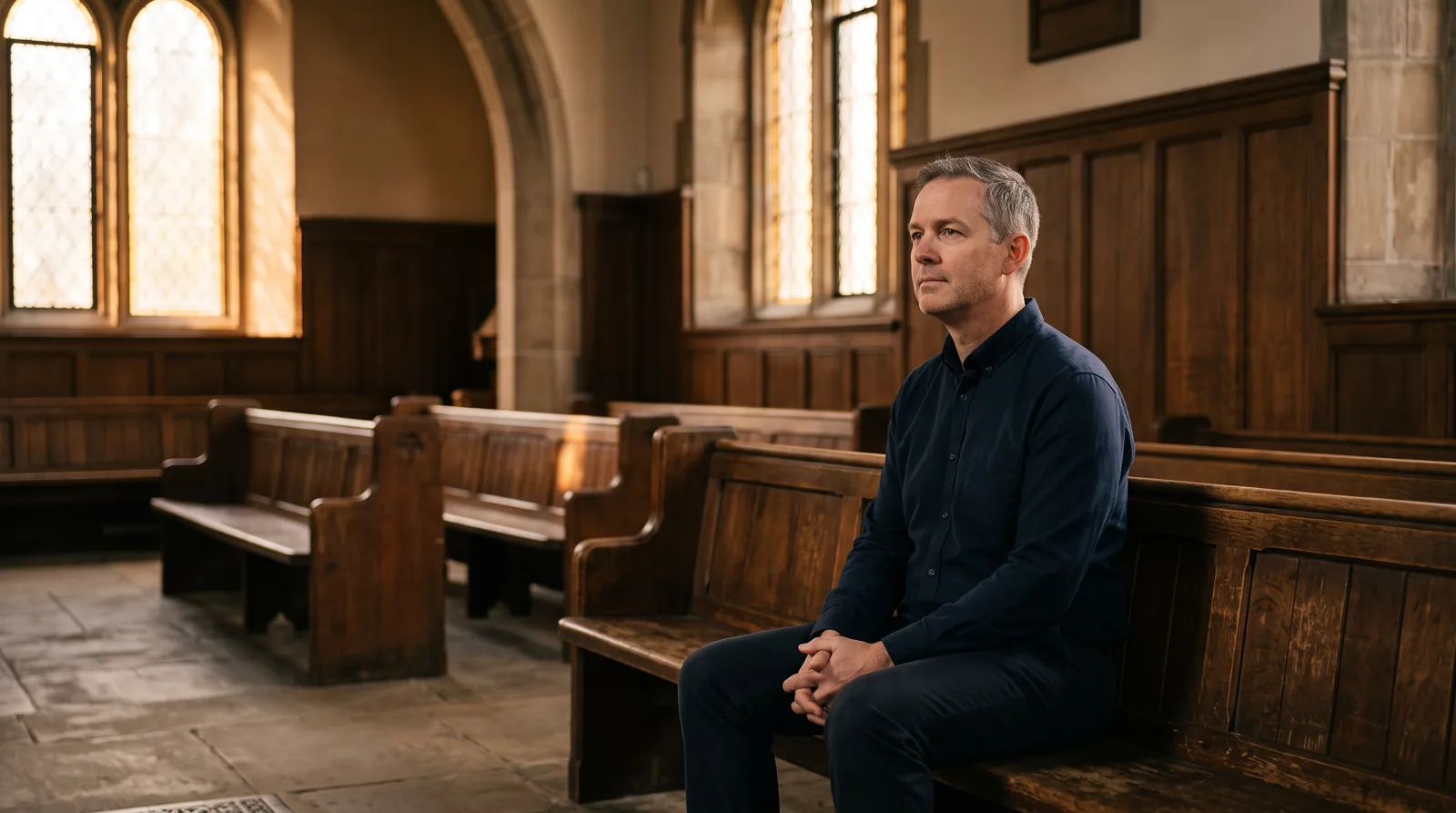
"You cannot be the steady presence your congregation needs if no one has ever taught you how to stay steady — this school fixes that."
— Bud Welton

What you'll learn
What you'll be able to do
- Identify the physiological and psychological signatures of compassion fatigue before they escalate into burnout or emotional reactivity
- Apply cognitive reframing techniques in real time during acute congregational crises to interrupt anxious thought spirals
- Use tactical nervous-system regulation strategies — including breath-work, somatic grounding, and cortisol-load management — to recover composure mid-crisis
- Build a personal secondary trauma processing protocol that prevents emotional residue from accumulating across ministry seasons
- Cultivate and sustain a non-anxious presence that stabilizes rather than amplifies anxiety in the room
- Establish sustainable emotional boundaries and after-care rhythms that protect long-term pastoral health without abandoning the congregation
How it works
A school that adapts to you
This isn't a set of static videos. Every lesson is generated live and tuned to where you actually are.
We learn your level
A quick placement check tailors your starting point so you're never bored or lost.
Lessons adapt as you go
Each lesson is written for your pace and your goal, adjusting as your skills grow.
Your AI coach keeps you moving
Checkpoints, feedback, and gentle nudges turn progress into a real result.
The curriculum
What's inside your school
6 modules · 24 lessons

The Absorbing Pastor: Understanding What's Happening Inside You
Establishes the physiological and psychological foundations of compassion fatigue, secondary trauma, and emotional reactivity so pastors can recognize what is happening in their bodies and minds before it escalates.
- 1.1The Shock Absorber Role: Why Pastors Are Uniquely VulnerableIncluded
- 1.2Compassion Fatigue vs. Burnout vs. Secondary Trauma: Knowing the DifferenceIncluded
- 1.3Reading Your Own Warning Signs: Physiological and Psychological SignaturesIncluded
- 1.4The Cortisol Load: What Chronic Crisis Exposure Does to Your Brain and BodyIncluded
The Regulated Pastor: Tactical Nervous-System Tools for the Acute Moment
Equips pastors with immediately deployable physiological regulation techniques to recover composure and interrupt the stress response during live congregational crises.
- 2.1How the Nervous System Hijacks Your LeadershipIncluded
- 2.2Breathwork That Works Under Pressure: Tactical Protocols for Real MomentsIncluded
- 2.3Somatic Grounding: Anchoring the Body When the Room Is in ChaosIncluded
- 2.4Cortisol-Load Management: Recovery Micro-Practices Between CrisesIncluded
The Clear-Thinking Pastor: Cognitive Reframing in Real Time
Trains pastors to recognize and interrupt anxious thought spirals using cognitive reframing frameworks they can apply in the middle of acute congregational crises.
- 3.1Anxious Thought Spirals: How Fear Distorts Pastoral PerceptionIncluded
- 3.2The Cognitive Reframe: A Field-Ready Framework for Acute MomentsIncluded
- 3.3Differentiating Your Emotion from the Room's EmotionIncluded
- 3.4Reframing the Pastoral Role Itself: From Fixer to Steady PresenceIncluded
The Non-Anxious Presence: Leading with Composure in the Midst of Chaos
Develops the pastoral capacity to remain a stabilizing, differentiated, non-anxious presence that regulates the emotional temperature of the room rather than amplifying it.
- 4.1What Non-Anxious Presence Actually Means (and Doesn't Mean)Included
- 4.2Differentiation: Staying Connected Without Getting FusedIncluded
- 4.3Voice, Posture, and Pace: The Embodied Signals That Calm a RoomIncluded
- 4.4Leading Through Congregational Crisis Without Becoming the CrisisIncluded
The Processing Pastor: Building a Secondary Trauma Protocol
Guides pastors to construct a personalized, repeatable protocol for processing secondary trauma and emotional residue so it does not accumulate silently across ministry seasons.
- 5.1What Is Secondary Trauma Processing — and Why Pastors Skip ItIncluded
- 5.2The After-Crisis Debrief: A Personal Processing RitualIncluded
- 5.3Narrative Processing: Using Story to Metabolize What You've WitnessedIncluded
- 5.4Building Your Trauma Processing Team: Supervision, Therapy, and Peer SupportIncluded
The Sustainable Pastor: Boundaries, Aftercare, and Long-Term Rhythms
Establishes the practical emotional-boundary structures and long-term aftercare rhythms that protect pastoral health across ministry seasons without requiring the pastor to abandon their congregation.
- 6.1Emotional Boundaries Are Not Abandonment: Reframing the Boundary ProblemIncluded
- 6.2Designing Your Emotional Off-Ramp: Daily and Weekly Aftercare RhythmsIncluded
- 6.3Seasonal Audit: Assessing Your Emotional Load Across the Ministry CalendarIncluded
- 6.4Your Personal Sustainability Plan: Integrating Every Framework into One Living DocumentIncluded
Who it's for
Is this you?

The parish pastor on the edge
He's been the first call in every crisis for years and is starting to feel the cumulative weight — this school gives him the language and the tools to intervene before depletion becomes burnout.

The chaplain in high-exposure ministry
She carries secondary trauma from acute, close-contact work with little institutional support — the trauma processing protocols and cortisol-load tools in this school are built for exactly her context.

The senior leader managing a team
He knows his own regulation affects his staff's — this school helps him model non-anxious leadership and build the sustainable rhythms that make him a stabilizing force, not an anxious one.

The ministry leader questioning her longevity
She loves the work but is quietly wondering how much longer she can sustain it — the sustainability framework and seasonal audit tools in this school help her redesign her ministry life before she hits a wall.

The young pastor building good habits early
He's only a few years into ministry and already noticing the emotional load — this school helps him build a personal processing protocol and clear boundaries before bad patterns get entrenched.

The experienced pastor who's been white-knuckling it
She's navigated decades of congregational crisis through sheer resilience — now she wants the clinical framework to finally understand what's been happening inside her and build something more sustainable.
Questions
Frequently asked
Your teacher
A note from your teacher

Bud Welton
If you're reading this, there's a good chance you already know what I'm talking about — even if you've never had the language for it.
You walk into your office on a Monday morning and you're already tired. Not from the weekend, exactly. Something heavier than that. A family you sat with in the ICU. A marriage that didn't make it. The congregant who called at 11pm. The board meeting that left everyone looking at you to hold it together. You did hold it together. You always do. But something is accumulating, and you can feel it even if you can't name it — a slow erosion of the thing that called you to this work in the first place.
I built this school because that experience is not a character flaw. It is a predictable, physiological, psychologically documented consequence of doing the kind of work you do — without a clinical framework for understanding what's happening inside you, and without tactical tools for managing it. The problem is not your faith. It's not your commitment. It's not even your schedule. The problem is that no one in seminary taught you what sustained crisis exposure does to a human nervous system — or what to do about it.
What you'll find in this school is not a lecture about self-care. It's a precise map of the mechanisms at work: how compassion fatigue, burnout, and secondary trauma are distinct phenomena that require distinct responses; how your nervous system hijacks your leadership in the acute moment before your theology can catch up; how cognitive distortion operates under pressure; and how the emotional residue from one season of ministry seeps into the next if it has nowhere to go. I want you to understand the machinery — because understanding the machinery gives you leverage.
And then we get tactical. You'll leave with breathwork protocols designed for real crisis moments — not a yoga studio. A cognitive reframe framework you can apply mid-conversation. A personal secondary trauma processing ritual. A sustainability plan that integrates emotional boundaries, aftercare rhythms, and a processing team — all built around the reality of your ministry context, not an idealized version of it.
This school is for pastors who are serious about the long game. Who understand that a depleted, dysregulated leader cannot offer a congregation the steady, non-anxious presence it needs. Who are willing to apply to themselves the same care and rigor they bring to the people they serve. If that's you — I'm glad you're here. Let's do the work.
— Bud Welton
Start your journey today
Get instant access — learn at your own pace with an AI coach in your corner.
$27 · 30 days access
One-time payment · no subscription
Secure checkout · Instant access
- 6 modules, 24 lessons
- AI-adaptive lessons tuned to your level
- Quizzes & checkpoints to lock in progress
- Your own AI learning coach
- Learn on any device, at your pace
- 30 days of full access