Master the science of a happier, more resilient life
The Happiness Quotient is a research-grounded course that translates positive psychology, CBT, ACT, and mindfulness into practical, personalized skills — so you don't just understand well-being, you actually build it.

"I'd rather give you one tool you truly understand and will actually use than ten that sound impressive and gather dust."
— G. Timothy Marte, PsyM, CPLC, PGC
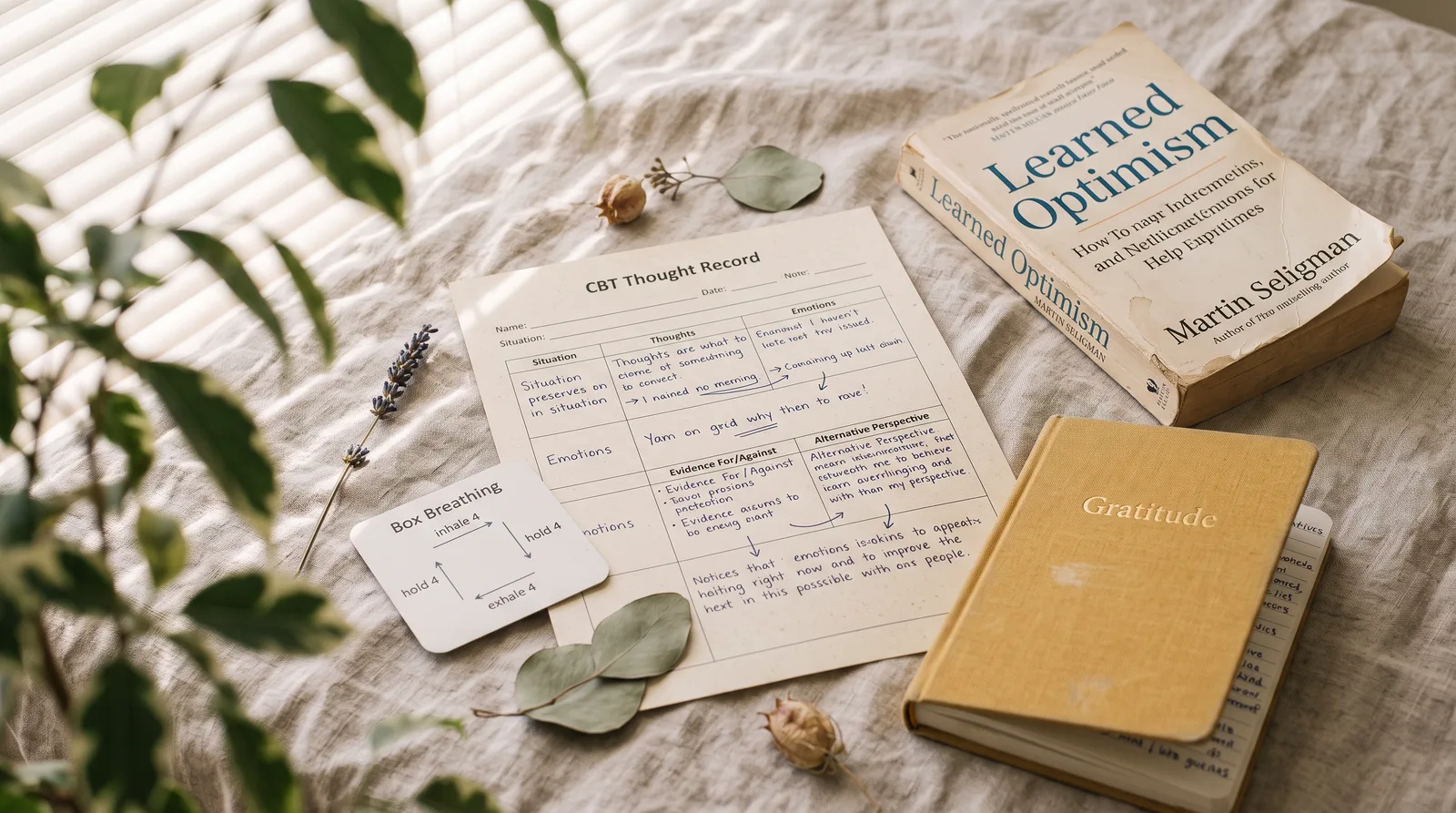
What you'll learn
What you'll be able to do
- Explain the major scientific models of happiness and well-being — including hedonic, eudaimonic, and PERMA frameworks — and what the evidence actually says about each.
- Identify the thought patterns, behaviors, and life circumstances that drive or undermine mood and long-term life satisfaction.
- Apply core techniques from CBT, Acceptance and Commitment Therapy (ACT), and mindfulness-based interventions to manage stress and build emotional resilience.
- Evaluate adjunctive well-being tools — including exercise, sleep, nutrition, breathwork, and expressive arts — and accurately judge where the evidence is strong and where it is limited.
- Describe how positive psychology interventions are used in clinical, community, and coaching settings, and recognize the ethical boundaries of applying them.
- Design a personalized, measurable well-being plan that integrates the course's evidence-based tools into a sustainable daily practice.
How it works
A school that adapts to you
This isn't a set of static videos. Every lesson is generated live and tuned to where you actually are.
We learn your level
A quick placement check tailors your starting point so you're never bored or lost.
Lessons adapt as you go
Each lesson is written for your pace and your goal, adjusting as your skills grow.
Your AI coach keeps you moving
Checkpoints, feedback, and gentle nudges turn progress into a real result.
The curriculum
What's inside your school
10 modules · 49 lessons

The Science of Happiness
Establishes what happiness is, how researchers define and measure it, and what the evidence says about its key drivers.
- 1.1What Is Happiness, Really?Included
- 1.2The PERMA FrameworkIncluded
- 1.3The Happiness Set Point and the Pie ChartIncluded
- 1.4Measuring Well-BeingIncluded
- 1.5Common Myths About HappinessIncluded
Mindset and Attitude
Explores the cognitive habits — optimism, gratitude, self-compassion, and growth mindset — that shape emotional life and can be deliberately cultivated.
- 2.1Optimism: Learning to Expect BetterIncluded
- 2.2Gratitude as a PracticeIncluded
- 2.3Self-Compassion Over Self-CriticismIncluded
- 2.4Growth Mindset and Emotional FlexibilityIncluded
- 2.5Attention and the Negativity BiasIncluded
Cognitive and Behavioral Foundations
Teaches the core CBT model — including cognitive restructuring and behavioral activation — as a practical toolkit for changing mood-related thought and behavior patterns.
- 3.1The CBT Model: Thoughts, Feelings, and BehaviorsIncluded
- 3.2Spotting Cognitive DistortionsIncluded
- 3.3Cognitive RestructuringIncluded
- 3.4Behavioral ActivationIncluded
- 3.5Building Positive Routines and HabitsIncluded
Acceptance, Mindfulness, and Meaning
Introduces ACT and mindfulness-based approaches, showing how psychological flexibility, values clarity, and present-moment awareness deepen well-being.
- 4.1The ACT Model: Flexibility Over ControlIncluded
- 4.2Defusion: Changing Your Relationship with ThoughtsIncluded
- 4.3Mindfulness-Based Stress Reduction (MBSR) EssentialsIncluded
- 4.4Values ClarificationIncluded
- 4.5Living with Purpose and MeaningIncluded
Positive Psychology in Practice
Translates positive psychology research into hands-on interventions — strengths use, flow, savoring, and kindness — applicable in personal and professional contexts.
- 5.1Character Strengths and the VIAIncluded
- 5.2Flow: The Psychology of Optimal ExperienceIncluded
- 5.3Savoring and Positive Emotion AmplificationIncluded
- 5.4Acts of Kindness and Prosocial BehaviorIncluded
- 5.5Strengths-Based Interventions in Coaching and Community SettingsIncluded
Relationships and Connection
Examines the central role of social bonds — quality over quantity — in mental health, and builds communication and community-building skills.
- 6.1Why Relationships Are the Strongest Predictor of HappinessIncluded
- 6.2Active Constructive RespondingIncluded
- 6.3Belonging, Loneliness, and CommunityIncluded
- 6.4Setting Healthy BoundariesIncluded
The Body–Mind Connection
Covers the physiological pillars of well-being — exercise, sleep, nutrition, nature, and stress physiology — and evaluates the evidence behind each.
- 7.1Stress Physiology and the HPA AxisIncluded
- 7.2Exercise as Medicine for MoodIncluded
- 7.3Sleep and Psychological HealthIncluded
- 7.4Nutrition, the Gut–Brain Axis, and MoodIncluded
- 7.5Nature Exposure and Restorative EnvironmentsIncluded
Adjunctive and Complementary Techniques
Evaluates the evidence for breathwork, relaxation training, journaling, expressive arts, and biofeedback as tools to support — not replace — core well-being practices.
- 8.1Breathwork and the Nervous SystemIncluded
- 8.2Progressive Muscle Relaxation and Autogenic TrainingIncluded
- 8.3Expressive Writing and JournalingIncluded
- 8.4Music, Art, and Movement-Based ApproachesIncluded
- 8.5Biofeedback and Technology-Assisted Well-BeingIncluded
Clinical Applications and Ethics
Shows how course approaches integrate into therapeutic treatment for depression, anxiety, and stress disorders, and addresses scope of practice, referral, and cultural humility.
- 9.1Positive Psychology and CBT in Clinical TreatmentIncluded
- 9.2Recognizing When Professional Support Is NeededIncluded
- 9.3Scope of Practice and Ethical BoundariesIncluded
- 9.4Cultural Humility in Well-Being PracticeIncluded
- 9.5Referral Pathways and Collaborative CareIncluded
Your Happiness Quotient Plan
A capstone module in which learners synthesize every course tool into a personalized, measurable, and sustainable well-being plan.
- 10.1Auditing Your Current Well-BeingIncluded
- 10.2Setting SMART Well-Being GoalsIncluded
- 10.3Selecting Your Evidence-Based ToolkitIncluded
- 10.4Designing Your Daily and Weekly PracticeIncluded
- 10.5Tracking Progress and Staying the CourseIncluded
Who it's for
Is this you?

Burnout recoverers
She's exhausted and knows something has to change — this course gives her both the science to understand why she crashed and the CBT, ACT, and mindfulness tools to rebuild sustainably.

Psychology students
He's studying counseling and wants a rigorous, accessible grounding in positive psychology frameworks and their clinical applications before he enters practicum.

Wellness coaches
She's already working with clients but wants an evidence-based framework — including clear ethical boundaries and scope-of-practice guidance — to back up her practice with real science.

Older adults seeking meaning
She's navigating a life transition and wants a thoughtful, research-grounded course on values, purpose, and emotional resilience — not empty cheerfulness.

Skeptical optimizers
He's drawn to self-improvement but tired of pseudoscience — this course appeals because it teaches him to evaluate the evidence, not just follow the trend.

Allied health professionals
She works in nursing or social work and wants to integrate evidence-based well-being tools into her practice while understanding exactly where the clinical boundaries lie.
Questions
Frequently asked
Your teacher
A note from your teacher

G. Timothy Marte, PsyM, CPLC, PGC
If you've ever typed "how to be happier" into a search bar and found yourself drowning in contradictory advice — some of it backed by a single study, some of it backed by nothing at all — I want you to know: that confusion is completely reasonable. The wellness space is genuinely noisy, and it can be hard to tell the rigorous from the feel-good. That's exactly why I built this course.
I've spent a long time sitting at the intersection of clinical practice and research — working with people who are struggling, studying what the evidence actually shows, and trying to make that evidence genuinely useful in real lives. What I kept finding was a gap. The science of well-being is rich, sophisticated, and increasingly practical. But most of it never makes it out of academic journals and into the hands of people who could actually use it. The Happiness Quotient is my attempt to close that gap.
This course isn't a positivity program. I'm not going to tell you to think happy thoughts or that gratitude journaling will change your life if you just commit hard enough. What I am going to do is walk you through what the research on happiness, resilience, and mental well-being actually shows — the PERMA framework, the set-point research, the cognitive and behavioral science behind CBT, the psychological flexibility model at the heart of ACT, and the mindfulness literature — and help you build skills from all of it. Skills that are grounded, personalized, and realistic about what they can and can't do.
I also wrote this course for the people who want to support others — the early-career counselors, social workers, nurses, coaches, and educators who need more than intuition. There's a full section on how positive psychology is used in clinical and community settings, what ethical practice looks like, where the boundaries of non-clinical coaching lie, and how to refer when someone needs more than a well-being plan can provide. Because good practice starts with knowing your scope.
By the end, you'll have your own Happiness Quotient plan — a real, measurable, personalized framework built from the tools that fit your life. Not a list of things you should do. A practice you've actually designed for yourself, with a clear understanding of why each piece is in it. I'd love to help you build it.
— G. Timothy Marte, PsyM, CPLC, PGC
Start your journey today
Get instant access — learn at your own pace with an AI coach in your corner.
$59/mo
Recurring billing · cancel anytime
Secure checkout · Instant access
- 10 modules, 49 lessons
- AI-adaptive lessons tuned to your level
- Quizzes & checkpoints to lock in progress
- Your own AI learning coach
- Learn on any device, at your pace
- Full access for as long as you're subscribed