Learn to read the universe from your backyard
The Night Sky School takes you from "which one's the North Star?" to tracking galaxies, mastering your telescope, and capturing your first astrophotos — all in plain language that keeps the wonder fully intact.
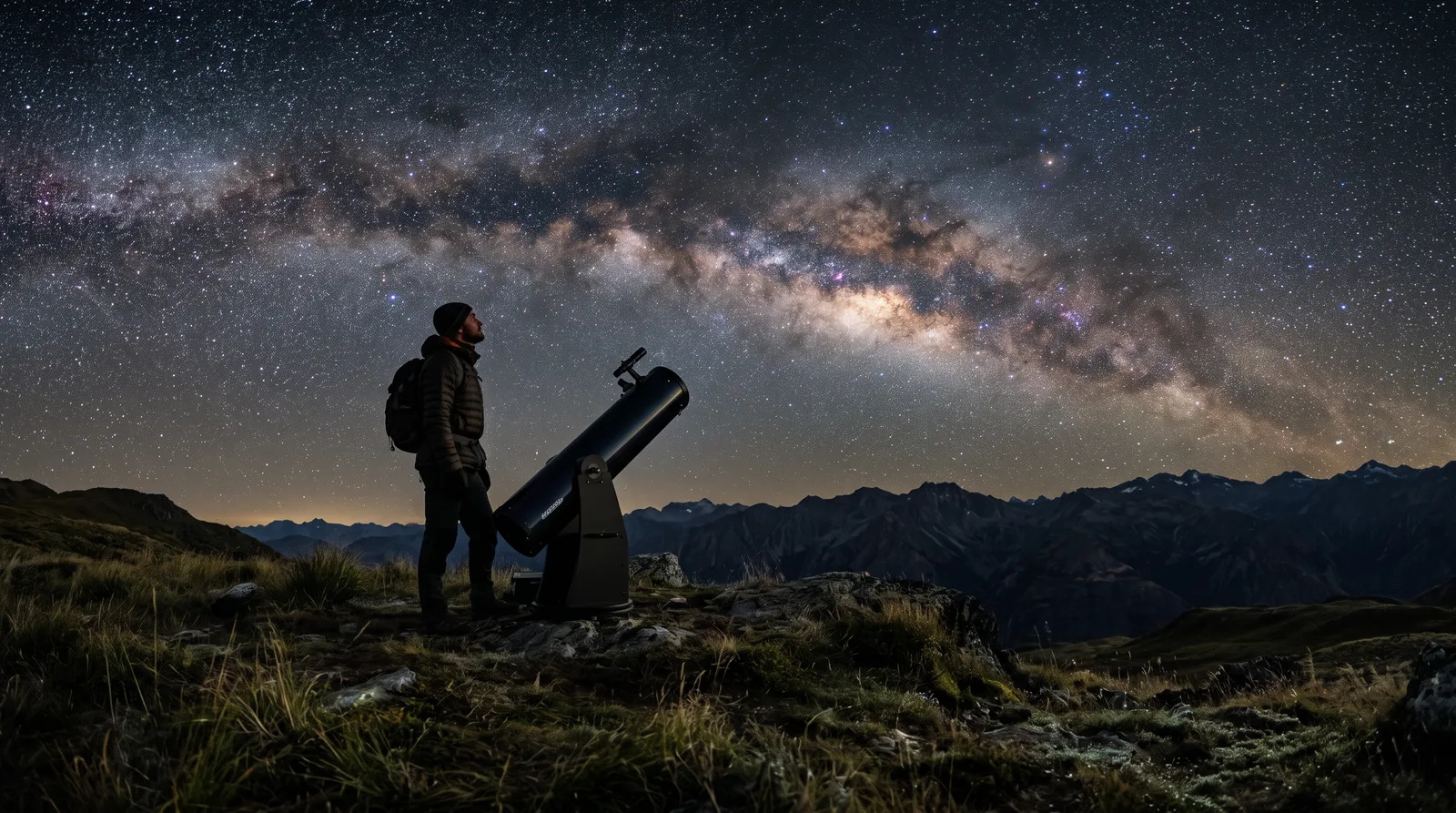
"The universe doesn't require a PhD — it just requires a clear night and someone to show you where to look."
— Tracy Burke
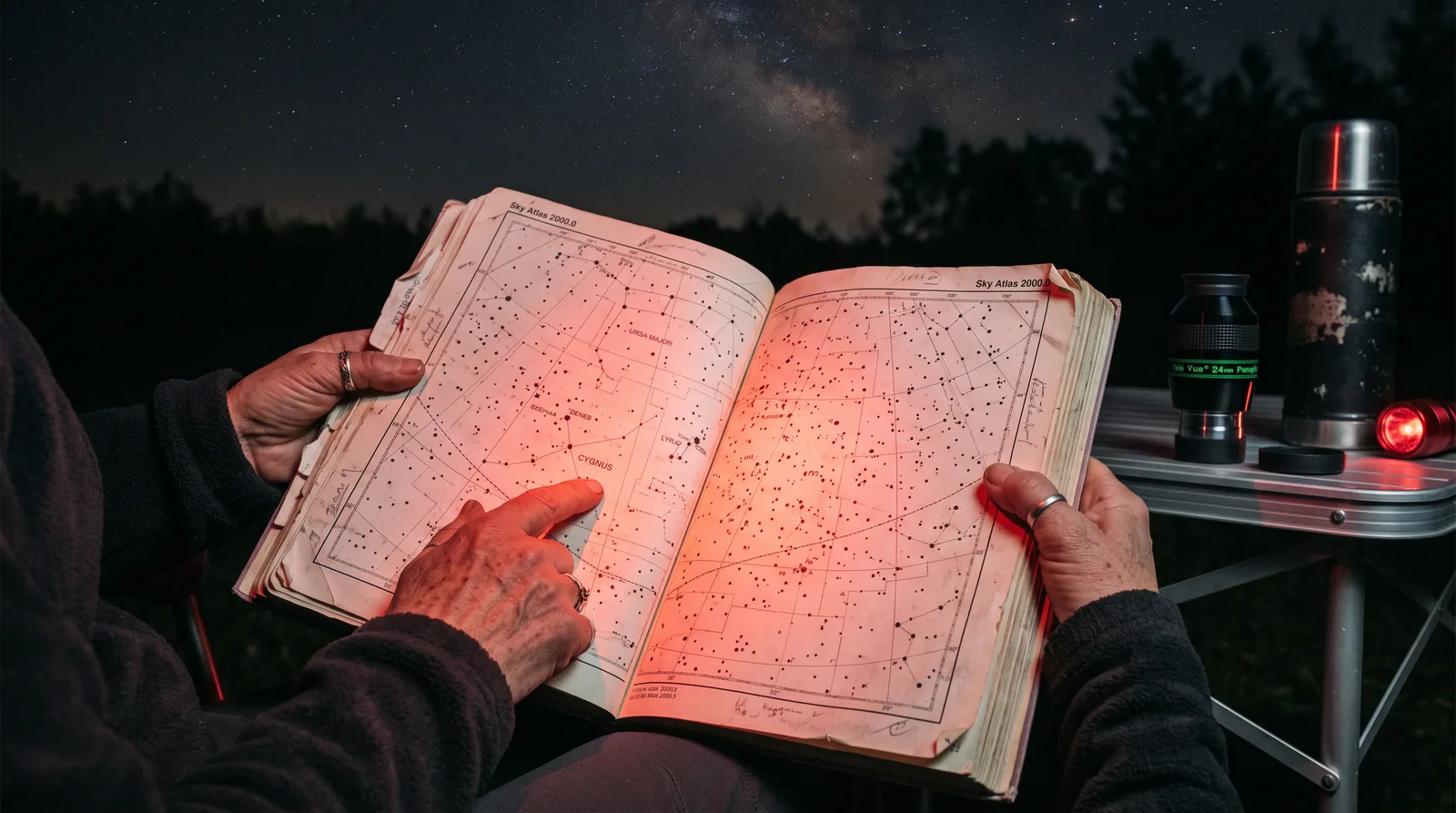
What you'll learn
What you'll be able to do
- Identify and locate the major constellations, stars, and planets visible from your hemisphere with the naked eye
- Set up, align, and operate a beginner or intermediate telescope to observe deep-sky objects
- Understand the life cycle of stars, the structure of the Milky Way, and the scale of the solar system
- Use free and low-cost stargazing apps and sky charts to plan your observing sessions
- Capture your first astrophotography images with a smartphone or DSLR camera
- Explain core cosmological concepts — dark matter, the Big Bang, and exoplanets — in plain language
How it works
A school that adapts to you
This isn't a set of static videos. Every lesson is generated live and tuned to where you actually are.
We learn your level
A quick placement check tailors your starting point so you're never bored or lost.
Lessons adapt as you go
Each lesson is written for your pace and your goal, adjusting as your skills grow.
Your AI coach keeps you moving
Checkpoints, feedback, and gentle nudges turn progress into a real result.
The curriculum
What's inside your school
6 modules · 28 lessons

Reading the Night Sky
Build the foundational skills to navigate the sky with your naked eye, learning the celestial sphere, major stars, and seasonal constellations.
- 1.1How the Sky WorksIncluded
- 1.2Your First Night OutIncluded
- 1.3Constellations and AsterismsIncluded
- 1.4Brightest Stars and How to Star-HopIncluded
- 1.5Tracking the PlanetsIncluded
Mastering Your Telescope
Go from unboxing to confident observing by learning telescope types, alignment, eyepieces, and how to locate deep-sky targets.
- 2.1Telescope Types ExplainedIncluded
- 2.2Setting Up and CollimatingIncluded
- 2.3Eyepieces, Magnification, and FiltersIncluded
- 2.4Polar Alignment and Go-To MountsIncluded
- 2.5Your First Deep-Sky ObjectsIncluded
Planning and Tools
Use free apps, sky charts, and observing logs to plan productive sessions and track your progress as a backyard astronomer.
- 3.1Essential Stargazing AppsIncluded
- 3.2Reading Printed and PDF Star ChartsIncluded
- 3.3Planning an Observing SessionIncluded
- 3.4Keeping an Observing LogIncluded
The Solar System Up Close
Explore the scale, structure, and members of our solar system — from the Sun and Moon to planets, moons, and small bodies.
- 4.1Scale of the Solar SystemIncluded
- 4.2The Moon in DetailIncluded
- 4.3The Inner and Outer PlanetsIncluded
- 4.4Comets, Asteroids, and Meteor ShowersIncluded
Stars, Galaxies, and the Cosmos
Understand stellar evolution, the structure of the Milky Way, and the large-scale universe — including dark matter and the Big Bang.
- 5.1The Life Cycle of StarsIncluded
- 5.2The Milky Way — Our Home GalaxyIncluded
- 5.3Galaxies Beyond the Milky WayIncluded
- 5.4Dark Matter, Dark Energy, and the Big BangIncluded
- 5.5Exoplanets and the Search for LifeIncluded
Astrophotography for Beginners
Capture your first stunning images of the night sky using the smartphone or camera you already own, no advanced equipment required.
- 6.1Smartphone AstrophotographyIncluded
- 6.2DSLR and Mirrorless Camera BasicsIncluded
- 6.3Tracking Mounts and Long ExposuresIncluded
- 6.4Image Stacking and Basic ProcessingIncluded
- 6.5Sharing Your Work and Going FurtherIncluded
Who it's for
Is this you?

First-telescope owners
Just unboxed a beginner scope and needs to know how to set it up, aim it, and actually see something stunning through the eyepiece.

Curious teens
Fascinated by space and ready to move beyond YouTube clips into real, hands-on understanding of the sky above them.

Lifelong learners
Finally has the time to explore a longtime curiosity about the cosmos and wants a warm, non-intimidating place to start.

Passionate hobbyists
Already spends nights under the stars but wants to go deeper into the science, better equipment technique, and astrophotography.

Parents stargazing with kids
Wants to share the wonder of the night sky with their family and be the one who can actually answer 'but what IS that star?'

Aspiring astrophotographers
Dreams of capturing the Milky Way or a nebula on camera and needs a clear, practical path from smartphone snaps to processed images.
Questions
Frequently asked
Your teacher
A note from your teacher

Tracy Burke
If you've ever stood under a truly dark sky and felt the simultaneous urge to understand everything and the creeping suspicion that you understand nothing — I get it. That feeling is exactly where I started.
The night sky is humbling. It's also one of the most accessible and endlessly rewarding hobbies a person can have. But there's a gap between "I find this fascinating" and "I actually know what I'm looking at," and crossing that gap without a guide can take years of frustration: telescope manuals that assume you already know everything, star charts that look like someone spilled glitter on a page, and YouTube rabbit holes that answer one question while raising twelve more.
That's why I built The Night Sky School — to be the guide I wish I'd had. Every section of this curriculum is designed to meet you where you are and walk you forward at a pace that feels exciting rather than overwhelming. We start with the naked-eye sky, because before you point a telescope at anything, you need to understand how the whole system moves. Then we get into your equipment — not with a dry spec sheet, but with real explanations of why each choice matters and what you'll actually see as a result. By the time we get to deep-sky objects, galaxies, and the cosmological science behind it all, you won't just be memorizing facts. You'll be building a mental model of the universe that makes every night out richer than the last.
I also want to be honest with you about something: this hobby can feel expensive and gatekept. It isn't, and it doesn't need to be. The tools section of this school is built around free apps and low-cost resources, because the best thing between you and the night sky is knowledge, not a bigger gear budget. The astrophotography section starts with your smartphone for the same reason — let's see what you can do with what you already have.
Whether you're a teen who just got their first telescope as a gift, a retiree finally making time for a lifelong curiosity, or a committed hobbyist who wants to understand the science behind what they're observing — there's a seat for you here. The universe is not waiting for you to get a PhD. Come as you are, bring your questions, and let's go look at some stars.
— Tracy Burke
Start your journey today
Get instant access — learn at your own pace with an AI coach in your corner.
$39/mo
Recurring billing · cancel anytime
Enrolling a child? Sign up as a parent — you'll add your student right here after.
Secure checkout · Instant access
- 6 modules, 28 lessons
- AI-adaptive lessons tuned to your level
- Quizzes & checkpoints to lock in progress
- Your own AI learning coach
- Learn on any device, at your pace
- Full access for as long as you're subscribed