Understand the office before you hold it.
A rigorous, Scripture-first study of biblical eldership and ordination — tracing the office from the patriarchs to the Pastoral Epistles, through church history, and into the life of your congregation today.
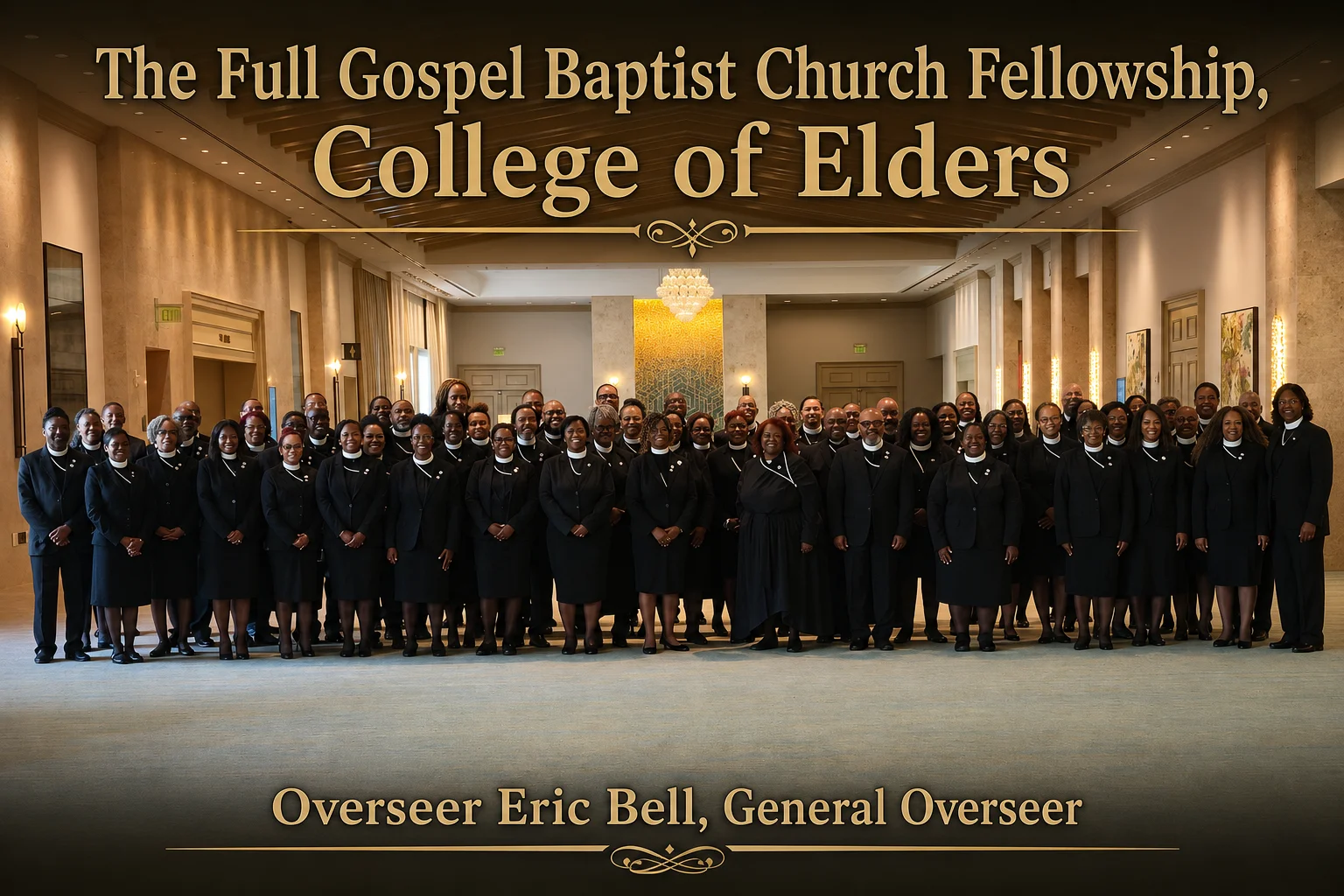
The church does not need better leadership techniques — it needs officers who understand the office they hold.
— Bishop Andy Lewter
2026 Annual Conference with Overseer Eric Bell
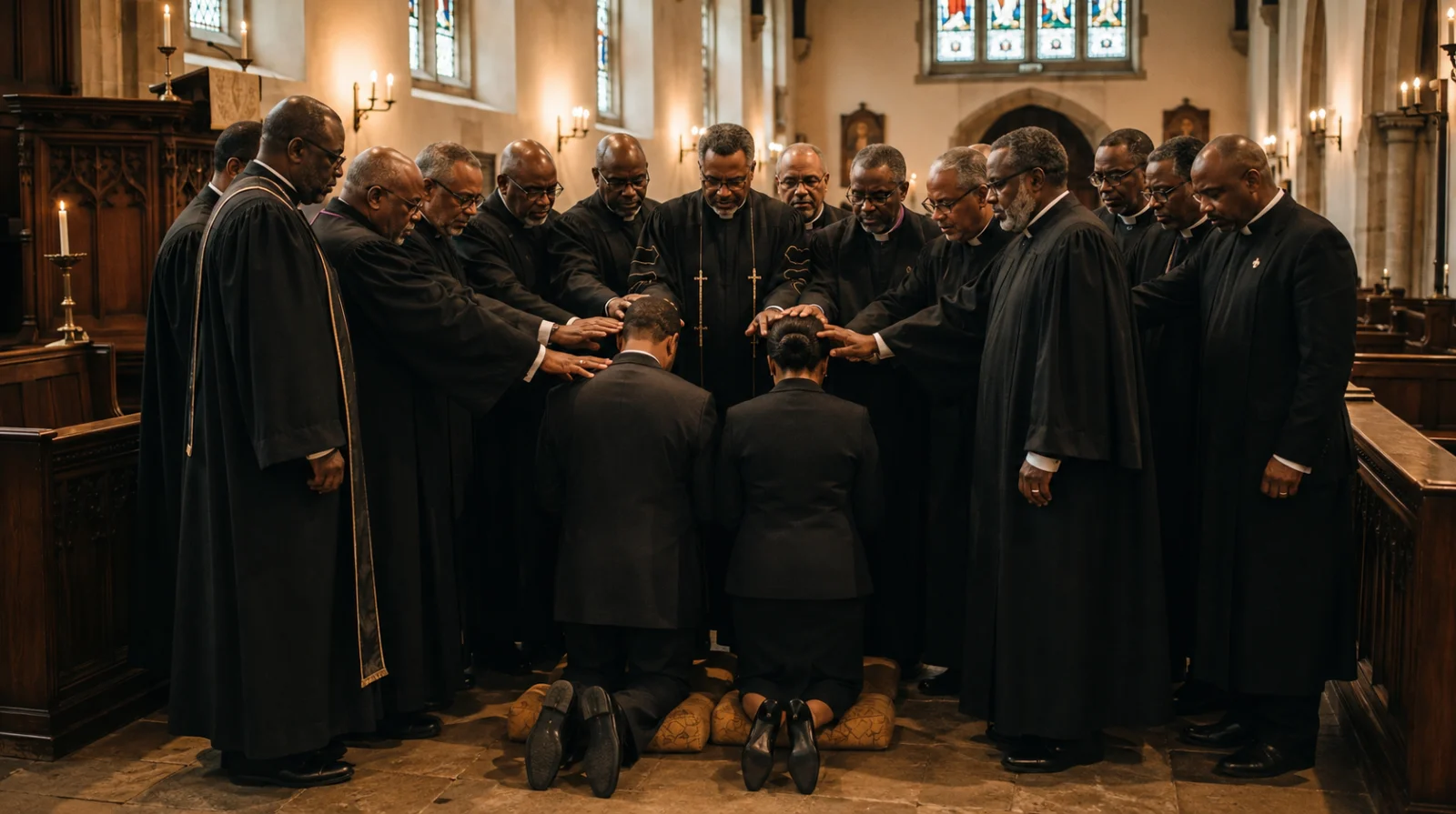
What you'll learn
What you'll be able to do
- Trace the biblical-theological origins of the eldership office from the Old Testament through the New Testament and into church history
- Distinguish clearly between the various offices of elder — ruling, teaching, and bishop — and articulate their distinct scriptural functions
- Interpret and apply the key New Testament qualifications and call narratives for elders across the Gospels, Acts, and the Epistles
- Explain the theology of ordination: what it is, what it is not, and how the laying on of hands functions as the church's formal act of recognition
- Evaluate how different church traditions — Presbyterian, Anglican, Baptist, and others — handle ordination and office, identifying areas of agreement and genuine disagreement
- Design or reform an ordination process for a local church or denomination that is biblically faithful, practically wise, and pastorally sound
How it works
A school that adapts to you
This isn't a set of static videos. Every lesson is generated live and tuned to where you actually are.
We learn your level
A quick placement check tailors your starting point so you're never bored or lost.
Lessons adapt as you go
Each lesson is written for your pace and your goal, adjusting as your skills grow.
Your AI coach keeps you moving
Checkpoints, feedback, and gentle nudges turn progress into a real result.
The curriculum
What's inside your school
10 modules · 45 lessons

The Elder in the Old Testament
Traces the origins and functions of the elder office through the Old Testament narrative, law, and prophetic literature.
- 1.1Elders Before Sinai: Patriarchal and Egyptian RootsIncluded
- 1.2Elders at Sinai: Moses, the Seventy, and the Covenant CommunityIncluded
- 1.3Elders in the Land: Judges, Kings, and Local GovernanceIncluded
- 1.4Elders in Exile and Restoration: Synagogue OriginsIncluded
The Elder in the New Testament
Surveys the New Testament witness to the eldership office — its emergence, terminology, and theological grounding in the person and work of Christ.
- 2.1Jesus and the Twelve: Prototypes of Pastoral OfficeIncluded
- 2.2Elders in Acts: Appointment, Authority, and the Jerusalem CouncilIncluded
- 2.3Elder, Overseer, and Deacon: Sorting Out New Testament TerminologyIncluded
- 2.4The Pauline Pastoral Epistles and the Ordered ChurchIncluded
- 2.5Elders in Hebrews, James, and Peter: A Catholic WitnessIncluded
Offices, Roles, and Functions
Distinguishes the specific offices of ruling elder, teaching elder, and bishop and articulates their distinct scriptural duties and authority.
- 3.1The Ruling Elder: Governance, Discipline, and Pastoral CareIncluded
- 3.2The Teaching Elder: Preaching, Teaching, and Word MinistryIncluded
- 3.3The Bishop: Oversight, Succession, and Ecclesiastical AuthorityIncluded
- 3.4Deacons and the Diaconate: Support, Service, and OfficeIncluded
- 3.5Elders as a Plurality: The Session, Presbytery, and Collegial RuleIncluded
Qualifications and the Call to Office
Interprets and applies the New Testament qualifications for elders and examines both the internal call and the church's external confirmation of that call.
- 4.1The Qualifications of 1 Timothy 3 and Titus 1: A Close ReadingIncluded
- 4.2Character Over Competency: What the Qualifications PrioritizeIncluded
- 4.3The Internal Call: Desire, Gifting, and the Spirit's LeadingIncluded
- 4.4The External Call: Examination, Election, and the Church's RoleIncluded
- 4.5Disqualification, Restoration, and the Ongoing StandardIncluded
The Theology and Practice of Ordination
Builds a comprehensive theology of ordination — grounding the laying on of hands in Scripture and distinguishing ordination from sacrament, magic, and mere ceremony.
- 5.1What Ordination Is — and Is NotIncluded
- 5.2The Laying On of Hands: Biblical Roots and Theological MeaningIncluded
- 5.3Ordination Vows, Charges, and the Public CovenantIncluded
- 5.4Ordination and Authority: What Changes — and What Doesn'tIncluded
- 5.5The Ordination Service: Liturgy, Symbol, and Pastoral FormationIncluded
Traditions, Comparisons, and Designing Faithful Practice
Evaluates how major church traditions handle ordination and office, then guides students in designing or reforming an ordination process that is biblically faithful and pastorally wise.
- 6.1Presbyterian Polity: Elders, Sessions, and PresbyteriesIncluded
- 6.2Episcopal Polity: Bishops, Priests, and the Historic SuccessionIncluded
- 6.3Baptist and Congregationalist Polity: The Gathered Church and OrdinationIncluded
- 6.4Points of Convergence and Genuine Disagreement Across TraditionsIncluded
- 6.5Designing a Faithful Ordination Process for Your Church or DenominationIncluded
From Presbyter to Pastor
From Presbyter to Pastor — The Historical Development
Traces how the New Testament office of presbyter/elder evolved historically into the modern pastoral role, examining the theological and institutional shifts that shaped today's understanding of ordained ministry.
- 7.1The Apostolic and Sub-Apostolic TransitionIncluded
- 7.2Ignatius, Cyprian, and the Rise of the Monarchical BishopIncluded
- 7.3Medieval Priesthood and the Sacramental ElderIncluded
- 7.4The Reformation Recovery and Its Unfinished WorkIncluded
From "Rev." to "Elder"
From Reverend to Elder — Titles, Tradition, and Meaning
Examines the meaning behind clergy titles (Reverend, Pastor, Elder, Bishop, and others), with particular attention to how title and honorific carry deep theological and cultural significance in African American church life.
- 8.1What Is in a Title? The Theology of Naming and OfficeIncluded
- 8.2Reverend, Pastor, Elder — Tracing the Titles Through HistoryIncluded
- 8.3Title, Honor, and Dignity — The African American Ecclesial TraditionIncluded
- 8.4Titles in the Local Church — Pastoral Wisdom and Practical FaithfulnessIncluded
The Elder in the Black Church Tradition
The Elder in the Black Church Tradition
Chronicles the distinctive emergence of eldership in the African American church — from invisible-institution leadership under slavery, through brush arbors and plantation missions, to the Black church as a seat of dignity and spiritual authority.
- 9.1The Invisible Institution and Its LeadersIncluded
- 9.2Brush Arbors, Plantation Missions, and the Contested PulpitIncluded
- 9.3Freedom, Institution-Building, and the Elder as Public FigureIncluded
- 9.4Theology from the Tradition: Gifts, Suffering, and Prophetic OfficeIncluded
The Modern Presbytery
The Modern Presbytery — Collegial Leadership for a Changing Church
Presents a model of shared, collegial eldership (the presbytery) as a sustainable alternative to solo pastoral leadership, equipping elders to lead collaboratively amid today's cultural and generational challenges.
- 10.1The Lone Pastor Problem — A DiagnosisIncluded
- 10.2Anatomy of a Presbytery — Structure, Authority, and AccountabilityIncluded
- 10.3Leading Together Across Generational and Cultural DifferenceIncluded
- 10.4Sustaining the Presbytery — Formation, Renewal, and the Long GameIncluded
Who it's for
Is this you?

Pastoral candidate
He's preparing for ordination examination and needs the biblical and theological depth to answer with confidence, not just competency.

Ruling elder in office
He holds the office faithfully but wants the exegetical grounding to understand why the office works the way it does — and to lead his session with greater clarity.

Seminary student
He's studying systematic or practical theology and wants a focused, curriculum-length treatment of polity and ordination that bridges the classroom and the church.

Pastor reforming church practice
She leads a congregation whose ordination process has grown thin or informal, and she needs the theological foundation to rebuild it faithfully.
Denominational officer or trainer
He oversees the examination and installation of officers and wants rigorous, tradition-sensitive material he can commend to candidates and fellow elders.

Serious layperson
She is not pursuing ordination but believes the church's governance matters deeply, and she wants to understand eldership, office, and polity at a level far beyond the typical Sunday school answer.
Questions
Frequently asked
Your teacher
A note from your teacher
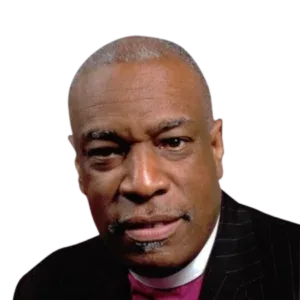
Bishop Andy Lewter
If you have ever stood before a congregation to be examined, ordained, or installed — or if you have sat on the examining side of that table — you know that something weighty is happening. There is a gravity to those moments that sermons about leadership strategy simply cannot account for. And yet, if we are honest, many of us arrived at that moment with surprisingly little theological clarity about the office itself. We knew the practical expectations. We had read a few books on church leadership. But the biblical and theological story of the eldership — where it came from, what it means, why it is ordered the way it is — that story had never been told to us in full.
That gap is what this school was built to close.
I am convinced that the church's leadership crisis is, at its root, a theological crisis. We have lost the category of office and replaced it with the category of role. We treat elders as ministry volunteers with extra responsibilities rather than as men set apart by the church's formal act of recognition to exercise a God-ordained authority. And when the theology of the office erodes, so does everything that depends on it — church discipline, doctrinal accountability, the integrity of ordination itself. The remedy is not a better leadership model. It is a return to the text.
This school does that work. We begin where the office begins — in the family structures of the patriarchs, in the seventy elders appointed at Sinai, in the governance of the covenant community across the long arc of the Old Testament. We follow the office into the New Testament, where Jesus appoints the Twelve, where elders begin appearing in the churches of Acts, where Paul writes to Timothy and Titus with careful instructions about who may hold office and why. We study what ordination actually is, what the laying on of hands actually signifies, and how different church traditions have answered those questions across the centuries. And then we put it all to work — asking what a faithful, biblically grounded ordination process looks like for a real church in a real denomination.
I want to be clear about what you will find here and what you will not. You will not find a shortcut to examination preparation, a simple grid for sorting out all polity disputes, or a guarantee that every exegetical question has a clean answer. You will find careful, honest engagement with the text; fair treatment of traditions other than my own; and a consistent effort to let doctrine land not in the abstract but in the life of the church. The goal, in the end, is not merely that you know more about eldership — it is that you hold and exercise the office with greater fidelity, greater humility, and greater pastoral wisdom.
I am glad you are here. The church needs men and women who take this seriously. Come, and let us study together.
— Bishop Andy Lewter
Start your journey today
Get instant access — learn at your own pace with an AI coach in your corner.
$49/mo
Recurring billing · cancel anytime
Secure checkout · Instant access
- 10 modules, 45 lessons
- AI-adaptive lessons tuned to your level
- Quizzes & checkpoints to lock in progress
- Your own AI learning coach
- Learn on any device, at your pace
- Full access for as long as you're subscribed