Master every parasite that threatens human health
From Plasmodium's evasion of the immune system to the microscopic fingerprints that separate Entamoeba histolytica from its harmless look-alike — The Parasite Lab gives you the rigorous, case-driven command of parasitology that clinical rotations and board exams demand.
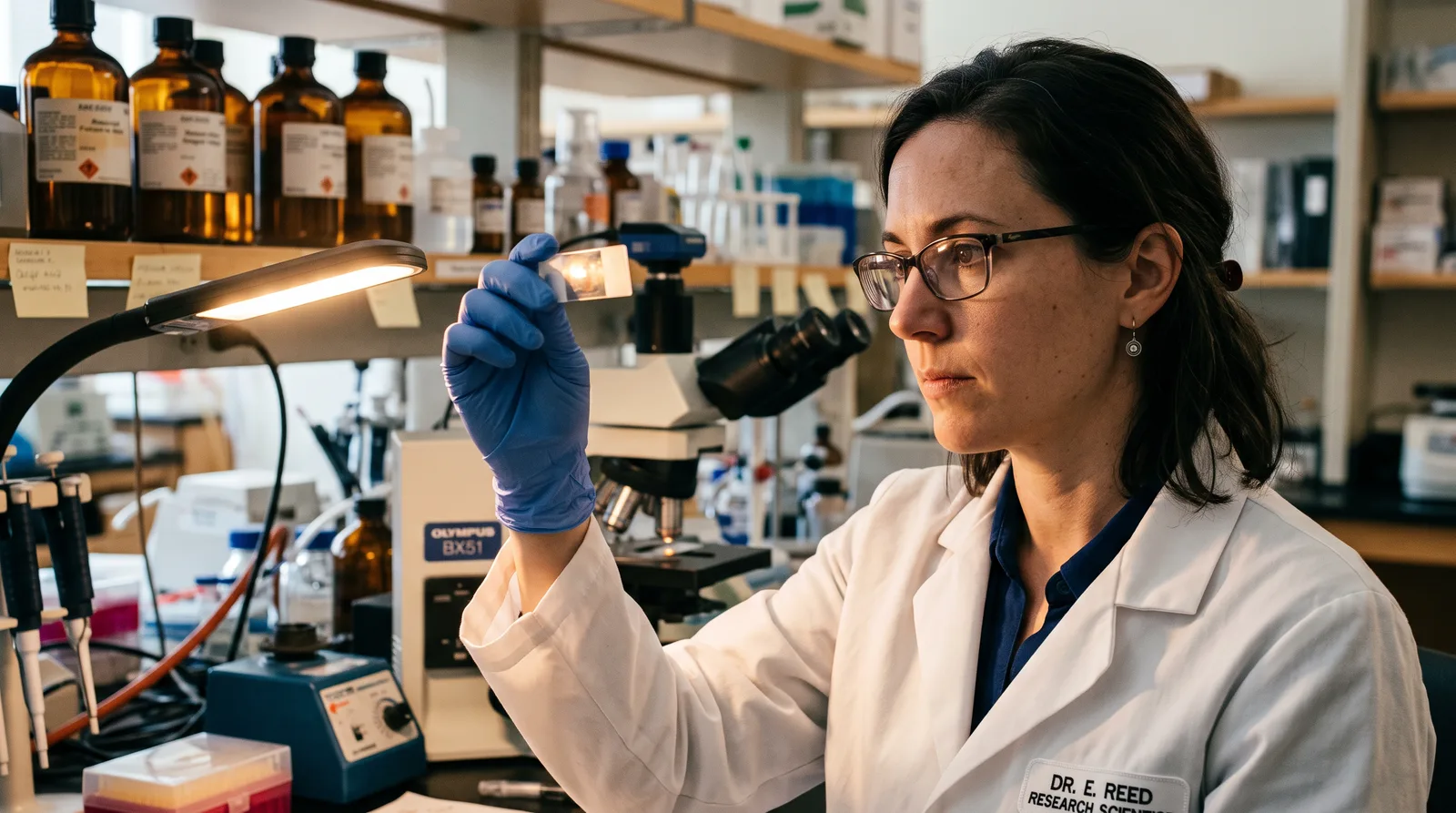
"I will never simplify the science — but I will make even the most complex life cycle and diagnostic criterion click through the right case at the right moment."
— Tracy Burke
What you'll learn
What you'll be able to do
- Identify the morphology, life cycle, and host-parasite relationships of major protozoan and helminth pathogens
- Interpret microscopic and molecular diagnostic findings to accurately differentiate parasitic infections
- Apply epidemiological knowledge to assess geographic risk and transmission routes for key parasitic diseases
- Select and justify evidence-based treatment protocols for common and neglected parasitic infections
- Design infection-control and prevention strategies appropriate for clinical, veterinary, and public health settings
- Critically evaluate primary research and case reports to stay current with emerging parasitic threats
How it works
A school that adapts to you
This isn't a set of static videos. Every lesson is generated live and tuned to where you actually are.
We learn your level
A quick placement check tailors your starting point so you're never bored or lost.
Lessons adapt as you go
Each lesson is written for your pace and your goal, adjusting as your skills grow.
Your AI coach keeps you moving
Checkpoints, feedback, and gentle nudges turn progress into a real result.
The curriculum
What's inside your school
6 modules · 30 lessons

Foundations of Parasitology
Establishes the conceptual and biological bedrock — taxonomy, host-parasite dynamics, and parasite life-cycle logic — that underpins every clinical and laboratory topic that follows.
- 1.1The Parasite Kingdom: Taxonomy and ClassificationIncluded
- 1.2Host-Parasite Relationships and Immune EvasionIncluded
- 1.3Life-Cycle Logic: Transmission, Vectors, and ReservoirsIncluded
- 1.4Pathogenesis: How Parasites Cause DiseaseIncluded
- 1.5Epidemiological Framework: Geographic Risk and Burden of DiseaseIncluded
Protozoan Pathogens
Delivers a rigorous, organ-system–organized study of the major protozoa — including blood, intestinal, and tissue-dwelling species — with emphasis on morphology, life cycle, and clinical presentation.
- 2.1Intestinal Protozoa: Giardia, Cryptosporidium, and EntamoebaIncluded
- 2.2Blood and Tissue Protozoa: Plasmodium and MalariaIncluded
- 2.3Kinetoplastid Parasites: Leishmania and TrypanosomaIncluded
- 2.4Opportunistic Protozoa: Toxoplasma, Microsporidia, and CyclosporaIncluded
- 2.5Free-Living Amoebae and Emerging Protozoan ThreatsIncluded
Helminth Pathogens
Provides comprehensive coverage of the three major helminth groups — nematodes, trematodes, and cestodes — examining their anatomy, life cycles, and disease burden.
- 3.1Intestinal Nematodes: Ascaris, Hookworm, Strongyloides, and TrichurisIncluded
- 3.2Tissue and Blood Nematodes: Filariae and TrichinellaIncluded
- 3.3Trematodes: Schistosoma, Liver Flukes, and Lung FlukesIncluded
- 3.4Cestodes: Taenia, Echinococcus, and NeurocysticercosisIncluded
- 3.5Neglected Tropical Diseases: Dracunculiasis, Strongyloidiasis, and BeyondIncluded
Diagnostic Parasitology
Builds hands-on competency in selecting, performing, and interpreting the full spectrum of parasitological diagnostic methods, from classical microscopy to cutting-edge molecular assays.
- 4.1Specimen Collection, Processing, and SafetyIncluded
- 4.2Microscopy Mastery: Wet Mounts, Stains, and Morphological IDIncluded
- 4.3Concentration Techniques and Specialized StainsIncluded
- 4.4Serological and Antigen-Based DetectionIncluded
- 4.5Molecular Diagnostics: PCR, Sequencing, and Multiplex PanelsIncluded
Treatment, Pharmacology, and Drug Resistance
Equips students to select, dose, and justify antiparasitic regimens, understand mechanisms of action and resistance, and navigate treatment challenges in special populations.
- 5.1Antiprotozoal Agents: Mechanisms and Clinical UseIncluded
- 5.2Anthelmintic Agents: Mechanisms and Clinical UseIncluded
- 5.3Drug Resistance: Mechanisms, Detection, and ImplicationsIncluded
- 5.4Treatment in Special Populations: Pregnancy, Pediatrics, and Immunocompromised PatientsIncluded
- 5.5Case-Based Pharmacotherapy: Putting It All TogetherIncluded
Prevention, Control, and Emerging Threats
Translates parasitological knowledge into actionable infection-control strategies for clinical, veterinary, and public health contexts, and builds critical appraisal skills for tracking new threats.
- 6.1Vector Control and Environmental InterventionsIncluded
- 6.2Vaccines, Chemoprophylaxis, and Mass Drug AdministrationIncluded
- 6.3One Health: Zoonotic Parasites and Veterinary IntersectionsIncluded
- 6.4Infection Control in Clinical and Laboratory SettingsIncluded
- 6.5Emerging and Re-emerging Parasitic Threats: Critical Appraisal of the LiteratureIncluded
Who it's for
Is this you?

Pre-med students
Builds the rigorous parasitology foundation that sets you apart in medical school applications, interviews, and early coursework.

Medical students
Transforms rote life-cycle memorization into the clinical reasoning and diagnostic confidence you need for boards and rotations.

Clinical lab professionals
Sharpens your bench skills from morphological ID and stain interpretation to molecular panel analysis for accurate, defensible results.

Veterinary students
Grounds you in the One Health framework where zoonotic parasites cross the human-animal interface — and what to do when they do.

Public health practitioners
Equips you with the epidemiological and population-level tools to assess risk, design control strategies, and evaluate mass drug administration programs.

Biomedical science undergrads
Provides the evidence-based, graduate-level depth in host-parasite biology and pharmacology that undergraduate curricula rarely reach.
Questions
Frequently asked
Your teacher
A note from your teacher

Tracy Burke
If you've ever stared at a stool O&P report, an eosinophilia workup, or a returning traveler's blood smear and felt like your training left you a module short — I built this course for that moment.
Parasitology has a reputation for being the course where students memorize life cycles long enough to pass an exam and then promptly forget everything except that Plasmodium vivax likes reticulocytes. I understand why that happens. The traditional approach treats parasitology as a taxonomy exercise — a long list of organisms, their vectors, and their drugs — without giving you the clinical and diagnostic reasoning framework that makes the information actually stick and actually useful. The Parasite Lab is my attempt to fix that, completely.
Every organism in this curriculum is taught in context: what it does to the host, why the immune system struggles to clear it, what the diagnostic specimen will look like under a microscope or on a PCR panel, how the drug works at the mechanistic level, and — critically — what goes wrong when the textbook answer doesn't fit the patient in front of you. That last piece matters most. Real clinical and laboratory practice is full of atypical presentations, co-infections, immunocompromised hosts, and patients who traveled somewhere you need to know how to think about. The case-based structure throughout this course is designed specifically to build that reasoning capacity, not just knowledge retrieval.
I also want to be honest about what makes parasitology hard in a way most courses don't acknowledge: it is genuinely complex, and that complexity deserves respect rather than simplification. Host-parasite immune evasion is sophisticated biology. Drug resistance mechanisms require real pharmacological thinking. Differentiating morphologically similar organisms under the microscope takes practiced pattern recognition. I will not water any of that down — but I will make it navigable, structured, and, I think, genuinely fascinating.
Whether you are a pre-med student building your scientific foundation, a medical student preparing for boards and rotations, a clinical lab professional strengthening your diagnostic bench skills, a veterinary student approaching parasitology from the One Health angle, or a public health practitioner who needs to think at the population level about transmission and control — there is a track through this material that is built for you. The field is broad; the course is organized so you can go deep where your work demands it.
I invite you to bring your curiosity, your clinical questions, and your skepticism. The literature on parasitic disease is evolving — on drug resistance, on molecular diagnostics, on emerging threats — and one of the most important things I can give you is a framework for evaluating that evidence critically rather than just absorbing the current consensus and calling it settled. Come ready to think, and come ready to look at things under a very high-powered lens.
— Tracy Burke
Start your journey today
Get instant access — learn at your own pace with an AI coach in your corner.
$49/mo
Recurring billing · cancel anytime
Enrolling a child? Sign up as a parent — you'll add your student right here after.
Secure checkout · Instant access
- 6 modules, 30 lessons
- AI-adaptive lessons tuned to your level
- Quizzes & checkpoints to lock in progress
- Your own AI learning coach
- Learn on any device, at your pace
- Full access for as long as you're subscribed