Learn to read plants like an open book
From the chemistry humming inside a single cell to the ecology threading through an entire garden, The Plant Whisperer gives curious adults a rigorous yet joyful grounding in botanical science — so you can identify, understand, and design with plants the way a field botanist does.
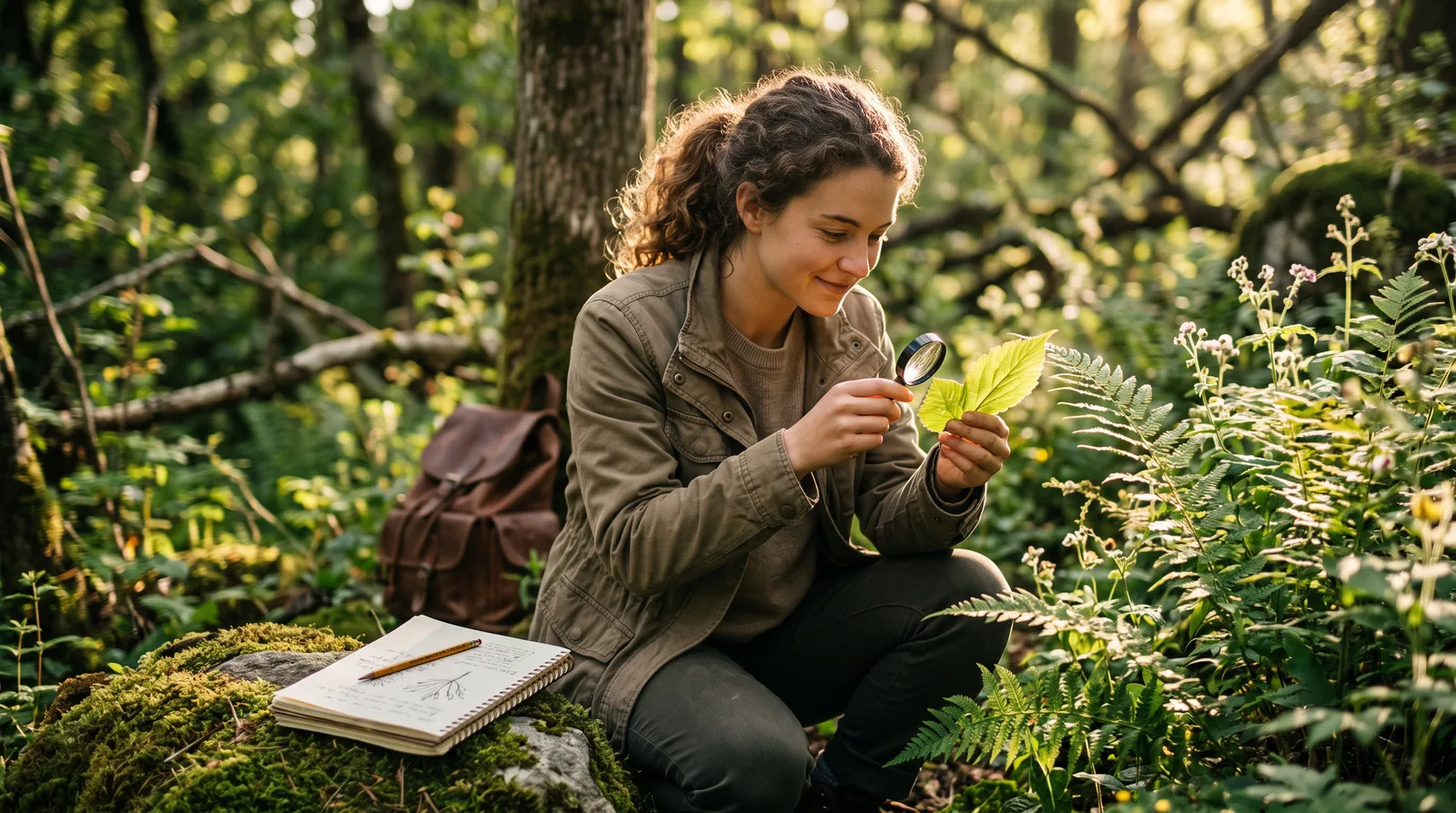
"The Latin names, the cell biology, the ecology — none of it is intimidating once you see it growing right in front of you."
— Tracy Burke
What you'll learn
What you'll be able to do
- Identify plant families and key species by their morphological features in the field or garden
- Explain core plant physiology — photosynthesis, transpiration, and nutrient uptake — in plain language
- Read and interpret a plant's environment through its adaptations, leaf shape, and growth habit
- Confidently use botanical terminology and dichotomous keys to classify unknown plants
- Design planting schemes informed by ecological relationships, soil science, and seasonal cycles
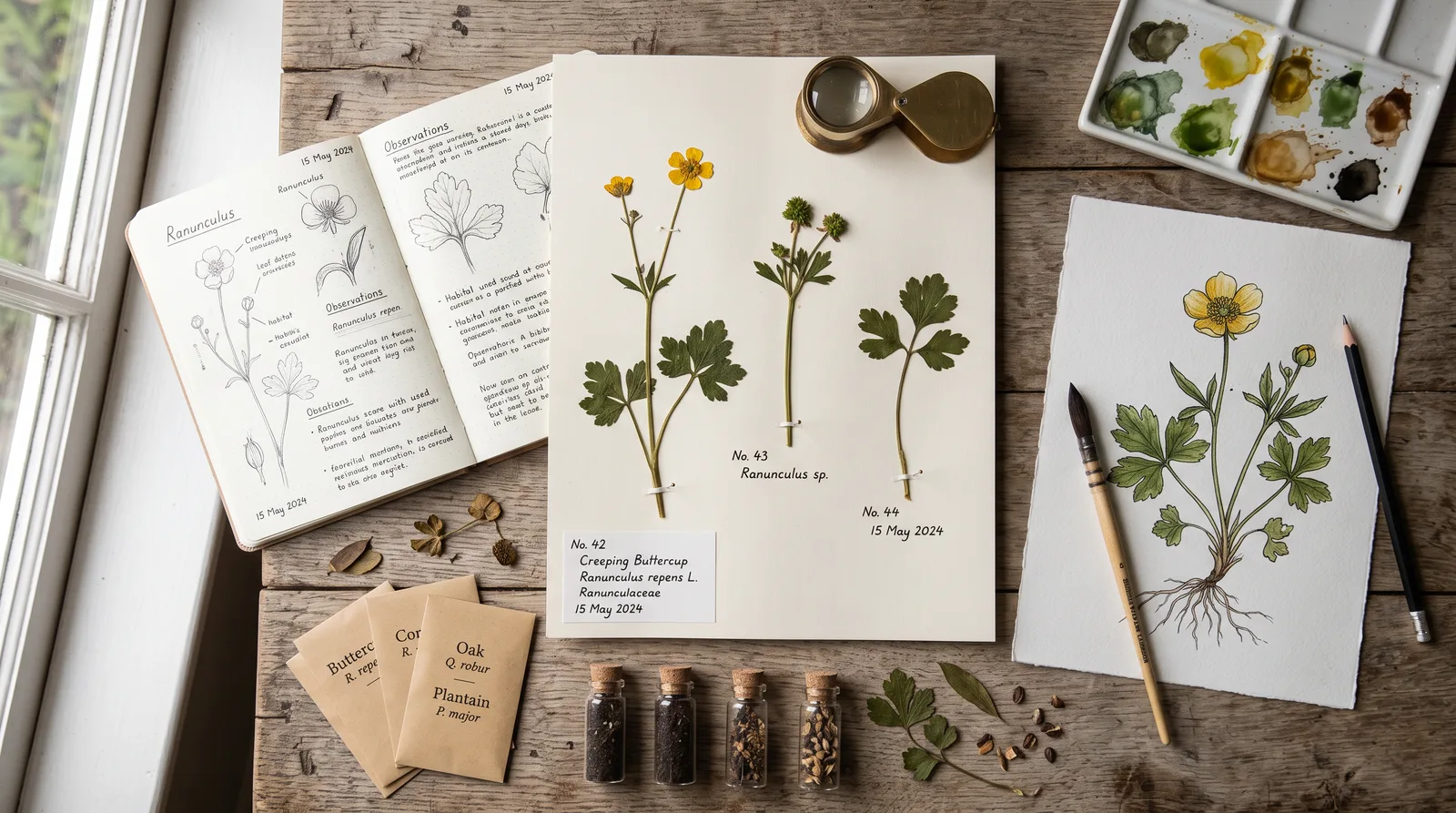
- Press, document, and build a personal herbarium as a lasting scientific reference collection
How it works
A school that adapts to you
This isn't a set of static videos. Every lesson is generated live and tuned to where you actually are.
We learn your level
A quick placement check tailors your starting point so you're never bored or lost.
Lessons adapt as you go
Each lesson is written for your pace and your goal, adjusting as your skills grow.
Your AI coach keeps you moving
Checkpoints, feedback, and gentle nudges turn progress into a real result.
The curriculum
What's inside your school
6 modules · 28 lessons

The Living Plant: Cells, Structure, and the Big Picture
Establishes the foundational vocabulary and structural logic of plant life, from the cell outward to the whole organism.
- 1.1What Makes a Plant a PlantIncluded
- 1.2Inside the Plant CellIncluded
- 1.3Roots, Stems, and Leaves: The Plant Body PlanIncluded
- 1.4Flowers, Fruits, and Seeds: The Reproductive SystemIncluded
- 1.5Your Botanical Toolkit: Terminology and Observation SkillsIncluded
How Plants Work: Physiology in Plain Language
Demystifies the invisible chemical and physical processes that keep plants alive, growing, and responding to the world.
- 2.1Photosynthesis: Turning Light into FoodIncluded
- 2.2Respiration, Energy, and Why Plants Breathe TooIncluded
- 2.3Water on the Move: Transpiration and the Soil–Plant–Air ContinuumIncluded
- 2.4Feeding the Plant: Nutrient Uptake and Deficiency SignsIncluded
- 2.5Plant Hormones and Growth SignalsIncluded
Reading Plants: Adaptation, Environment, and Ecological Relationships
Teaches students to decode a plant's form as a direct record of the environment it evolved to survive in.
- 3.1Leaf Shape as a Field GuideIncluded
- 3.2Survival Strategies: Xerophytes, Hydrophytes, and Everything BetweenIncluded
- 3.3Soil Science for Plant ReadersIncluded
- 3.4Ecological Relationships: Pollinators, Mycorrhizae, and Plant CommunitiesIncluded
- 3.5Seasonal Cycles and PhenologyIncluded
Classification and Identification: Naming the Plant World
Gives students the tools and confidence to place any plant into its correct family and genus using scientific methods.
- 4.1The Naming System: Binomial Nomenclature and TaxonomyIncluded
- 4.2Major Plant Families You'll Meet EverywhereIncluded
- 4.3Using a Dichotomous KeyIncluded
- 4.4Field Identification Skills and Common PitfallsIncluded
Designing with Plants: Ecology-Informed Planting
Applies botanical and ecological knowledge to create planting schemes that work with nature rather than against it.
- 5.1Site Reading: Matching Plants to PlaceIncluded
- 5.2Plant Guilds and Companion PlantingIncluded
- 5.3Layering and Structure: Designing a Plant CommunityIncluded
- 5.4Seasonal Continuity: Planning for Year-Round InterestIncluded
The Personal Herbarium: Pressing, Documenting, and Building Your Collection
Guides students through the complete process of creating a scientifically rigorous and personally meaningful pressed-plant reference collection.
- 6.1A Brief History of Herbaria and Why They Still MatterIncluded
- 6.2Ethical and Legal Collection GuidelinesIncluded
- 6.3Pressing and Drying Techniques for Perfect SpecimensIncluded
- 6.4Mounting, Labeling, and Scientific DocumentationIncluded
- 6.5Organizing, Storing, and Continuously Growing Your HerbariumIncluded
Who it's for
Is this you?

The Passionate Gardener
She's grown a lot but wants the science behind her intuitions — why plants struggle, thrive, and what they're actually asking for.

The Nature Walker
He spends every weekend outdoors and is ready to move past 'I think that's a wildflower' to genuine field identification confidence.

The Curious Beginner
She has no science background but an unshakeable curiosity about the living world and wants a structured, joyful way in.

The Science Enthusiast
He loves biology and ecology broadly and wants the botanical piece — the physiology, taxonomy, and ecological relationships — treated rigorously.

The Herbarium Builder
She's drawn to the art and science of pressing and documenting plants and wants a method rooted in real naturalist tradition.

The Ecological Designer
He's designing gardens and green spaces and wants plant knowledge grounded in soil science, plant guilds, and seasonal ecology — not just aesthetics.
Questions
Frequently asked
Your teacher
A note from your teacher

Tracy Burke
If you've ever crouched beside a plant and thought, I wish I actually knew what was going on in there — you're exactly who I made this school for.
Maybe you've been gardening for years and you're tired of following rules you don't fully understand. Maybe you love being outdoors and you're ready to move past "I think that's some kind of oak." Maybe you just find the natural world endlessly compelling and you want a framework that makes it even richer. Whatever brought you here, I want you to know: botanical science is not dry, and it is not hard to love. It just needs to be taught by someone who actually loves it.
I built The Plant Whisperer because I believe the science of plants should be accessible without being dumbed down. There is a gorgeous precision to this subject — the Latin names, the cell biology, the taxonomy — and I refuse to strip that out in the name of keeping things easy. What I do instead is introduce every technical idea next to something real: a leaf you can hold, a process you've watched happen in your own garden, a relationship between species that will genuinely make you stop and stare. That's the approach you'll find in every part of this curriculum, from the first plant cell all the way through to mounting your first herbarium specimen.
We go deep without going dense. You'll learn how photosynthesis and transpiration work at a physiological level — not as a party trick, but because understanding them changes how you read a plant in distress or design a planting for a difficult site. You'll get comfortable with dichotomous keys and binomial nomenclature, not as a test to pass, but as tools that genuinely expand what you can do outdoors. And you'll build a personal herbarium that isn't just a craft project — it's a scientific record in the tradition of the great naturalists, and it will still be useful to you in twenty years.
This school is for people who are curious enough to want the real thing. If that's you, I'd love to have you along.
Come find out what your plants are actually saying.
— Tracy Burke
Start your journey today
Get instant access — learn at your own pace with an AI coach in your corner.
$39.99/mo
Recurring billing · cancel anytime
Enrolling a child? Sign up as a parent — you'll add your student right here after.
Secure checkout · Instant access
- 6 modules, 28 lessons
- AI-adaptive lessons tuned to your level
- Quizzes & checkpoints to lock in progress
- Your own AI learning coach
- Learn on any device, at your pace
- Full access for as long as you're subscribed