Dismantle your map of reality — and rebuild it from the inside
Using Don Juan's three-book perceptual apprenticeship as a living developmental map, this practice-based school teaches you to stop the internal dialogue, inhabit your body as a sensing instrument, and move between ordinary and non-ordinary reality with intention — not as philosophy, but as a discipline you can begin today.
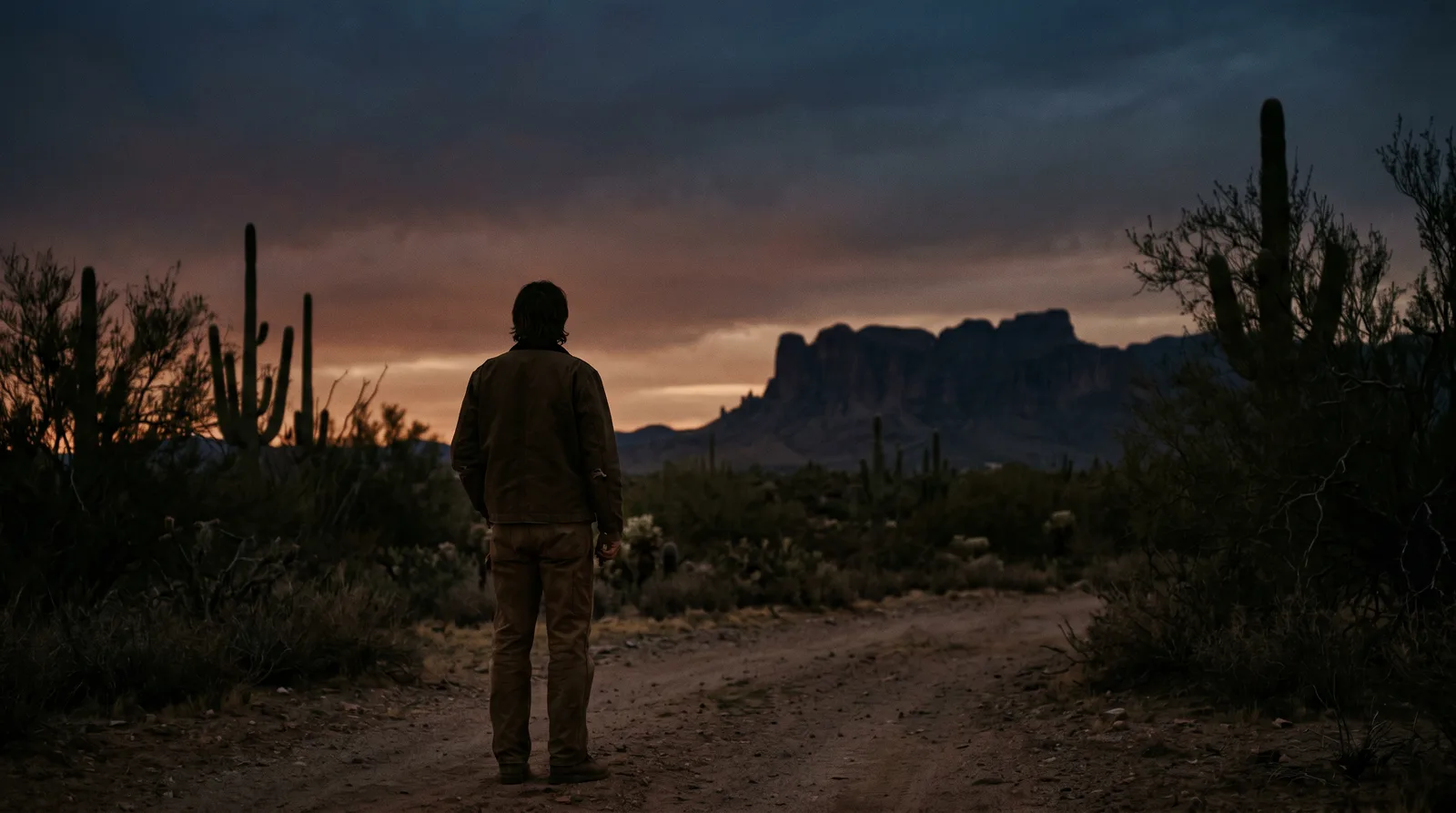
The separate reality is not somewhere else — it is what your current map has been carefully trained not to see.— Joseph Riggio

What you'll learn
What you'll be able to do
- Identify and articulate the specific perceptual assumptions — the 'tonal' — that silently organize your everyday experience of reality.
- Apply the three-book arc of Don Juan's apprenticeship as a structured developmental map for expanding your own modes of knowing.
- Practice stopping the internal dialogue through somatic and attentional exercises drawn from the nagual tradition as literary metaphor.
- Distinguish between ordinary consensus reality and what Castaneda calls 'a separate reality,' and navigate between them with intention and clarity.
- Develop a personal phenomenological journal practice that tracks subtle perceptual shifts, dreams, body signals, and liminal encounters as data.
- Integrate transpersonal and embodied ways of knowing into your existing personal, creative, or professional framework without losing intellectual rigor.
How it works
A school that adapts to you
This isn't a set of static videos. Every lesson is generated live and tuned to where you actually are.
We learn your level
A quick placement check tailors your starting point so you're never bored or lost.
Lessons adapt as you go
Each lesson is written for your pace and your goal, adjusting as your skills grow.
Your AI coach keeps you moving
Checkpoints, feedback, and gentle nudges turn progress into a real result.
The curriculum
What's inside your school
6 modules · 26 lessons

The Inherited Map — Meeting the Tonal
Surfaces the hidden perceptual assumptions that silently organize everyday reality, giving students a precise vocabulary for what they are about to dismantle.
- 1.1The Map Is Not the Territory — But You Live as If It IsIncluded
- 1.2Naming the Tonal — Your Inherited Inventory of the WorldIncluded
- 1.3The Phenomenology of Habit — How the Body Holds the MapIncluded
- 1.4Your First Inventory — A Phenomenological Journal PracticeIncluded
The First Book — Entering the Apprenticeship
Uses The Teachings of Don Juan as a developmental map for the first threshold: agreeing to have your ordinary framework of knowing disrupted.
- 2.1The Separate Reality as Premise — What Don Juan Is Actually TeachingIncluded
- 2.2The Rule of the Nagual — Contracting with the UnknownIncluded
- 2.3Allies and Thresholds — Recognizing the Moment Ordinary Knowing Breaks DownIncluded
- 2.4Somatic Practice — Relocating Attention from the Head to the BodyIncluded
The Second Book — Stopping the Internal Dialogue
Draws on A Separate Reality to work directly with the internal narrator that continuously re-stabilizes consensus reality, and begins to interrupt it.
- 3.1The Internal Dialogue as World-MaintenanceIncluded
- 3.2Seeing vs. Looking — Two Modes of Perceptual EngagementIncluded
- 3.3Practices of Interruption — Peripheral Vision, Silence, and Sustained AttentionIncluded
- 3.4Dreaming as Data — Working the Hypnagogic ThresholdIncluded
- 3.5The Phenomenological Check-In — What Has Shifted So Far?Included
The Third Book — Journey Without a Map
Uses Journey to Ixtlan to explore what perception and selfhood look like when the old map has genuinely loosened, and a new orientation must be built from direct experience.
- 4.1Erasing Personal History — Dissolving the Story That Fixes Your IdentityIncluded
- 4.2Death as Advisor — Using Impermanence as a Perceptual ToolIncluded
- 4.3Losing the Human Form — What Remains When the Social Self Steps BackIncluded
- 4.4Controlled Folly — Acting Fully Without Grasping the OutcomeIncluded
- 4.5Ixtlan as Orientation — Learning to Navigate Without ArrivingIncluded
Navigating Between Worlds — Tonal and Nagual in Daily Life
Develops the practical skill of moving consciously between ordinary and non-ordinary perception without losing coherence in either register.
- 5.1The Art of the Return — Re-entering Consensus Reality with IntentionIncluded
- 5.2Body as Bridge — Somatic Signals as Navigation InstrumentsIncluded
- 5.3The Witness Position — Holding Both Worlds Without Collapsing Into EitherIncluded
- 5.4Mapping Your Own Phenomenology — Building a Personal Perceptual LexiconIncluded
Integration — Living the Separate Reality
Consolidates expanded perceptual capacities into the student's existing personal, creative, or professional context without sacrificing intellectual rigor.
- 6.1Rigor and the Nagual — Intellectual Honesty as a Spiritual PracticeIncluded
- 6.2Your Existing Framework as the New TonalIncluded
- 6.3The Ongoing Apprenticeship — Designing Your Personal Practice ArchitectureIncluded
- 6.4The Living Map — Presenting Your Perceptual JourneyIncluded
Who it's for
Is this you?

Contemplative practitioners
Long-term meditators who have developed genuine stillness but sense their practice has reached a conceptual ceiling this curriculum is designed to pierce.

Depth psychologists & therapists
Clinicians who work with the unconscious, liminal states, and transpersonal experience and want a rigorous perceptual framework to deepen their own capacity and sharpen their practice.

Somatic practitioners
Bodyworkers and movement teachers who already trust the body as a site of knowing and want a philosophical and experiential framework that meets them there.

Philosophers of mind
Academically trained thinkers drawn to phenomenology, enactivism, or consciousness studies who want to test their frameworks against direct, disciplined first-person inquiry.

Serious spiritual seekers
People who have moved through multiple traditions and are ready for an apprenticeship model that demands embodied practice over the accumulation of beliefs.

Artists & creative practitioners
Writers, visual artists, and makers whose work lives at the edge of the known and who want to develop the perceptual range and phenomenological vocabulary to go further.
Questions
Frequently asked
Your teacher
A note from your teacher
Joseph Riggio
If you've found your way here, I suspect you already know the particular discomfort I'm describing: the sense that the frameworks you've inherited — whether from Western psychology, academic philosophy, conventional spirituality, or secular rationalism — are useful, but not complete. That they account for a great deal of experience, and leave something important unnamed. Something you've touched in deep meditation, in a moment of genuine grief, in a dream that didn't feel like a dream, in a body sensation that seemed to know something your mind hadn't caught up to yet.
I spent years moving between rigorous intellectual inquiry and direct experiential practice, and what I kept noticing was a gap. The intellectual frameworks were precise but disembodied. The experiential practices were potent but conceptually unmoored. Castaneda's Don Juan trilogy — whatever one makes of its contested history — offered something neither camp was providing: a developmental map for perceptual expansion that was simultaneously rigorous, embodied, and unflinching about the cost of real transformation. Not a collection of peak experiences, but an apprenticeship. A structure. A practice that demands everything and gives back exactly what you're willing to actually do.
That is what this school is built on. Not on reverence for Castaneda as a figure, and not on the New Age mythology that grew up around his work. But on the observation that the three-book arc of Don Juan's teaching encodes something genuinely rare: a phenomenology of moving from a fixed, inherited map of reality, through the disciplines that loosen its hold, to the capacity to navigate between worlds with intention and clarity. That arc can be taught. It can be practiced. And it can be integrated — without abandoning the intellectual standards you've worked hard to develop.
What I want for you, by the end of this school, is something concrete: that you can name the specific assumptions organizing your perception — your tonal — and that you have practiced, in your own body and attention, what it feels like when those assumptions are interrupted. That you have a phenomenological journal that is genuinely yours. That you understand the difference between looking and seeing, and that you have begun, even in small ways, to practice the latter. And that you have a personal practice architecture you can actually sustain — one that carries this work forward into your life, your creative work, your therapy room, your philosophy, without it becoming another framework you merely believe in.
This is an invitation to a kind of precision that most spiritual schools don't ask for, and a kind of openness that most intellectual schools won't permit. If that tension sounds like home — come in. The apprenticeship is already underway.
— Joseph Riggio
Start your journey today
Join get instant access — learn at your own pace with an AI coach in your corner.
$97/yr
Recurring billing · cancel anytime
Secure checkout · Instant access
- 6 modules, 26 lessons
- AI-adaptive lessons tuned to your level
- Quizzes & checkpoints to lock in progress
- Your own AI learning coach
- Learn on any device, at your pace
- Full access for as long as you're subscribed