Master Tui Na from the Treatment Table Up
A clinically grounded, step-by-step training in Chinese therapeutic massage — from meridian theory and hand technique mechanics to complete 60-minute protocols you can deliver to real clients from day one.
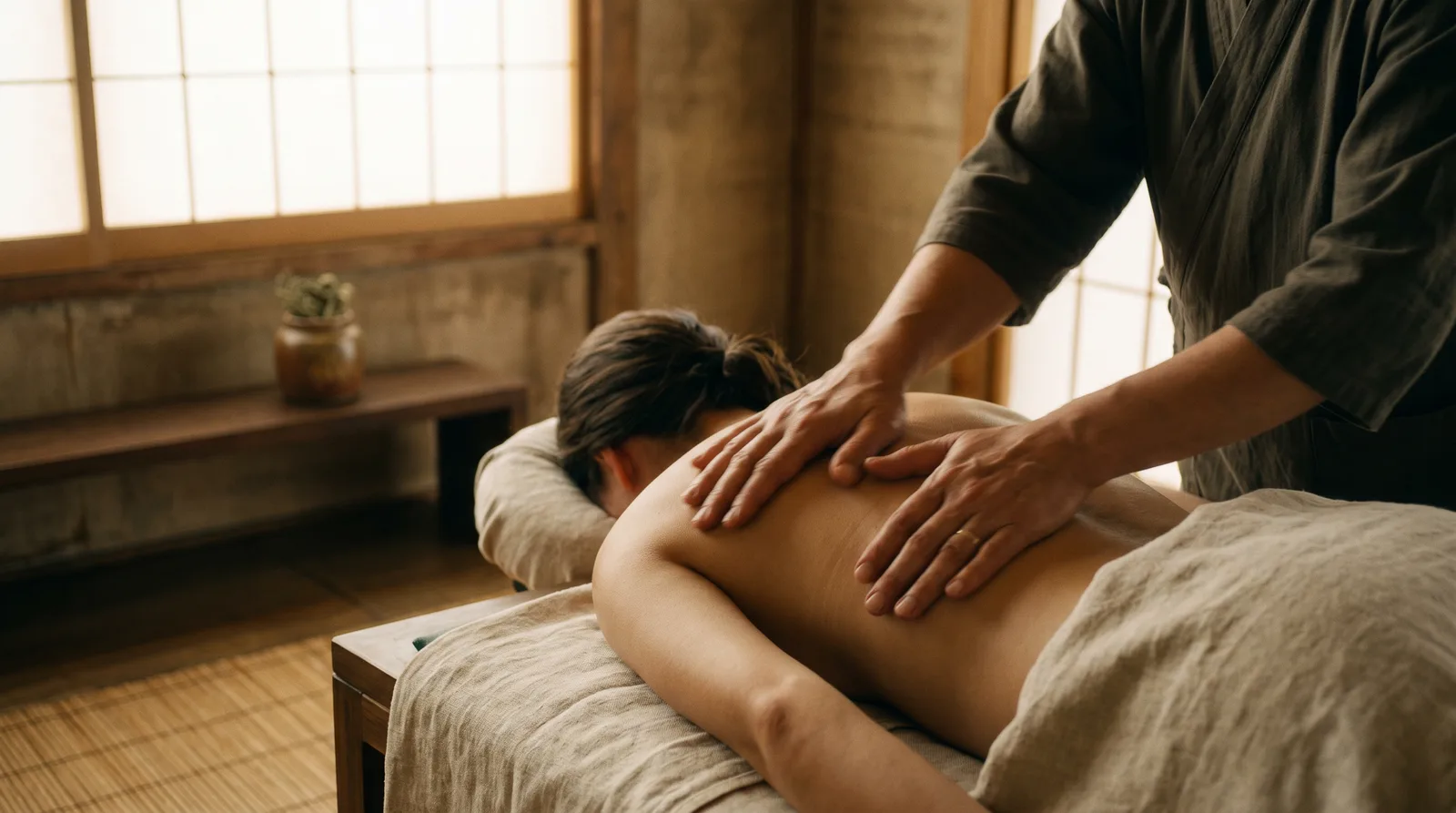
Every technique I teach you has a reason — and when you understand the reason, the technique stops being a drill and starts being medicine.— Rabiah Abdussabur
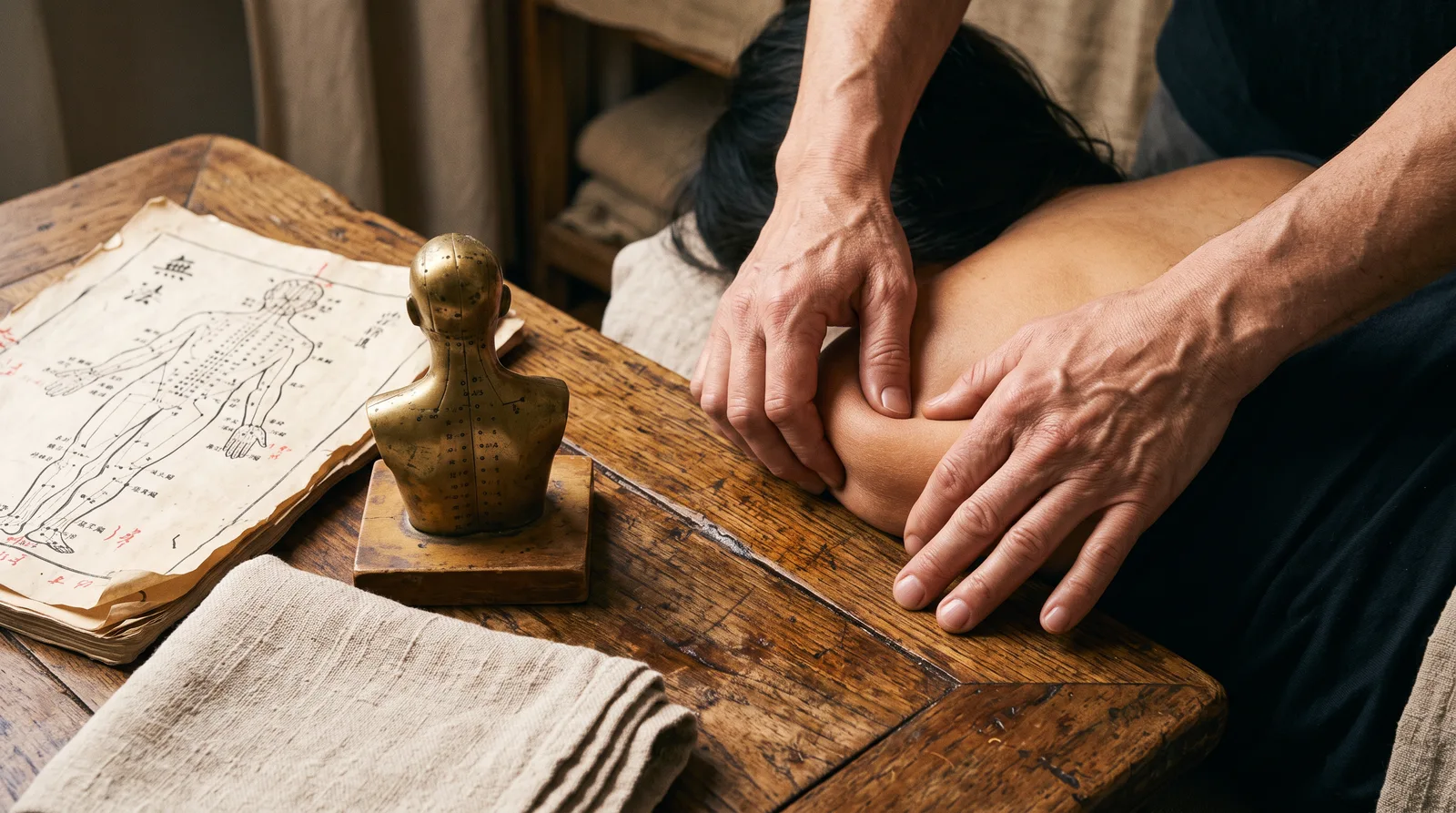
What you'll learn
What you'll be able to do
- Execute the eight core Tui Na hand techniques — including Gun Fa, An Fa, and Rou Fa — with correct pressure, rhythm, and body mechanics
- Map the 12 primary meridians and key acupoints relevant to Tui Na treatment so you can build a coherent therapeutic rationale for every session
- Design and deliver a complete 60-minute Tui Na treatment protocol for common musculoskeletal complaints such as neck tension, lower back pain, and frozen shoulder
- Assess a client's TCM pattern differentiation (excess vs. deficiency, cold vs. heat) and adapt your technique selection and pressure accordingly
- Apply Tui Na pediatric (Xiao Er) techniques safely for children's common conditions including digestive distress and respiratory issues
- Integrate Tui Na seamlessly into an existing massage or acupuncture practice, including client intake, session documentation, and scope-of-practice guidelines
How it works
A school that adapts to you
This isn't a set of static videos. Every lesson is generated live and tuned to where you actually are.
We learn your level
A quick placement check tailors your starting point so you're never bored or lost.
Lessons adapt as you go
Each lesson is written for your pace and your goal, adjusting as your skills grow.
Your AI coach keeps you moving
Checkpoints, feedback, and gentle nudges turn progress into a real result.
The curriculum
What's inside your school
6 modules · 27 lessons

Foundations of Tui Na & TCM Theory
Establishes the theoretical bedrock — TCM principles, Qi, Yin/Yang, and the role of Tui Na within Chinese medicine — so every technique and protocol that follows has a coherent clinical rationale.
- 1.1What Is Tui Na? History, Scope & Clinical ContextIncluded
- 1.2Qi, Yin/Yang & the Five Elements in BodyworkIncluded
- 1.3TCM Pattern Differentiation: Excess, Deficiency, Cold & HeatIncluded
- 1.4The Eight Therapeutic Principles of Tui NaIncluded
Meridian Mapping & Acupoint Mastery
Guides you through the 12 primary meridians and the high-priority acupoints used most frequently in Tui Na so you can build a precise, theory-driven treatment plan.
- 2.1The 12 Primary Meridians: Pathways, Organs & Clinical RelevanceIncluded
- 2.2Locating Key Acupoints for Musculoskeletal TreatmentIncluded
- 2.3Acupoints for Internal & Systemic ConditionsIncluded
- 2.4Connecting Points to Patterns: Building a Therapeutic RationaleIncluded
Core Tui Na Hand Techniques
Delivers step-by-step training in the eight essential Tui Na hand techniques, with an emphasis on correct body mechanics, pressure calibration, and rhythmic consistency.
- 3.1Body Mechanics, Posture & Practitioner Self-CareIncluded
- 3.2Rolling & Pressing: Gun Fa and An FaIncluded
- 3.3Kneading, Rubbing & Circular Work: Rou Fa, Mo Fa & Ca FaIncluded
- 3.4Grasping, Pinching & Vibration: Na Fa, Nie Fa & Zhen FaIncluded
- 3.5Technique Integration & Pressure Calibration DrillsIncluded
Clinical Treatment Protocols for Common Conditions
Translates theory and technique into complete, session-ready protocols for the musculoskeletal complaints practitioners encounter most frequently.
- 4.1Designing a 60-Minute Tui Na Treatment SessionIncluded
- 4.2Neck Tension & Cervical Pain ProtocolIncluded
- 4.3Lower Back Pain & Lumbar ProtocolIncluded
- 4.4Frozen Shoulder & Shoulder Girdle ProtocolIncluded
- 4.5Adapting Protocols to TCM Pattern DifferentiationIncluded
Pediatric Tui Na (Xiao Er Tui Na)
Covers the specialized techniques, unique point locations, and safety considerations of the pediatric Tui Na tradition for treating children's common conditions.
- 5.1Principles & Safety Guidelines of Pediatric Tui NaIncluded
- 5.2Pediatric-Specific Points & Hand TechniquesIncluded
- 5.3Treating Pediatric Digestive DistressIncluded
- 5.4Treating Pediatric Respiratory ConditionsIncluded
Integrating Tui Na Into Your Practice
Prepares you to launch or expand a professional Tui Na offering — covering client intake, session documentation, scope of practice, and ethical business integration.
- 6.1Client Intake & TCM-Informed Health HistoryIncluded
- 6.2Session Documentation & Treatment NotesIncluded
- 6.3Scope of Practice, Contraindications & Referral ProtocolsIncluded
- 6.4Combining Tui Na with Massage, Acupuncture & Other ModalitiesIncluded
- 6.5Building Your Tui Na Caseload & Communicating Value to ClientsIncluded
Who it's for
Is this you?

Licensed Massage Therapists
Ready to move beyond soft-tissue work and add a TCM-grounded, clinically credentialed modality that expands both their scope and their caseload.

Acupuncturists
Deepening their manual medicine skillset so they can integrate precise Tui Na technique alongside needling for more complete clinical outcomes.

TCM Students
Building clinical-ready Tui Na protocols, pattern differentiation skills, and session documentation habits before entering supervised practice.

Pediatric Wellness Practitioners
Seeking the specialized Xiao Er Tui Na training — pediatric points, modified techniques, and safety guidelines — to safely treat children for digestive and respiratory conditions.

Holistic Health Educators
Looking to teach or refer Tui Na with authority, grounded in the same meridian theory, acupoint rationale, and clinical language used in professional TCM settings.

Integrative Clinic Owners
Building a multi-modality practice and wanting their team trained in Tui Na protocols, intake documentation, contraindication frameworks, and scope-of-practice guidelines.
Questions
Frequently asked
Your teacher
A note from your teacher

Rabiah Abdussabur
If you have been practicing massage, acupuncture, or TCM bodywork for any length of time, you have likely felt the gap — the moment when a client presents with a complex pattern and your current tools take you only so far. You know the anatomy. You know the tissue. But the diagnostic framework that would tell you which technique, applied where, in what sequence, with what quality of pressure — that framework is missing. That is the gap Tui Na fills, and it is the gap this school was built to close.
Tui Na is not a collection of massage strokes with Chinese names. It is a complete clinical system — one in which every hand technique carries a specific therapeutic intent, every acupoint selection reflects a diagnostic reasoning, and every session is built on a coherent understanding of your client's TCM pattern. When that system is transmitted properly, your hands stop guessing and start communicating. That is the standard I hold this training to.
Inside The Tui Na Studio, I walk you through the complete architecture of this medicine: the theoretical foundations of Qi, Yin/Yang, and Five Elements as they apply directly to bodywork decisions; the 12 primary meridian pathways and the acupoints you will use most in clinical practice; the eight core hand techniques with detailed body mechanics and pressure calibration guidance; and then the clinical protocols — real session structures for neck tension, lower back pain, and frozen shoulder, each adaptable to your client's pattern. We also cover Pediatric Tui Na, because Xiao Er Tui Na is a distinct and underserved skillset, and because families who trust you with their children deserve a practitioner who has been trained specifically for that work.
I want to speak plainly to the objection I hear most often: "I can learn some techniques from videos, but can I really develop clinical competence this way?" My answer is that clinical competence is built from two things — conceptual clarity and deliberate repetition on a body. This school gives you the conceptual clarity most online trainings never provide: not just what to do, but why, and how to adjust when the client in front of you doesn't match the textbook case. The repetition is yours to do — and I give you the specific drills and self-assessment criteria to do it purposefully.
Whether you are a massage therapist adding a credentialed modality, an acupuncturist expanding your hands-on repertoire, or a TCM student who wants clinical protocols ready before graduation, you are in the right place. The treatment table is waiting. Let's begin.
— Rabiah Abdussabur
Start your journey today
Join get instant access — learn at your own pace with an AI coach in your corner.
$79/mo
Recurring billing · cancel anytime
Secure checkout · Instant access
- 6 modules, 27 lessons
- AI-adaptive lessons tuned to your level
- Quizzes & checkpoints to lock in progress
- Your own AI learning coach
- Learn on any device, at your pace
- Full access for as long as you're subscribed