Master the Art and Science of Tui Na
Learn every core hand technique, meridian pathway, and clinical protocol — then apply them with confidence on real bodies, in real sessions, from day one.
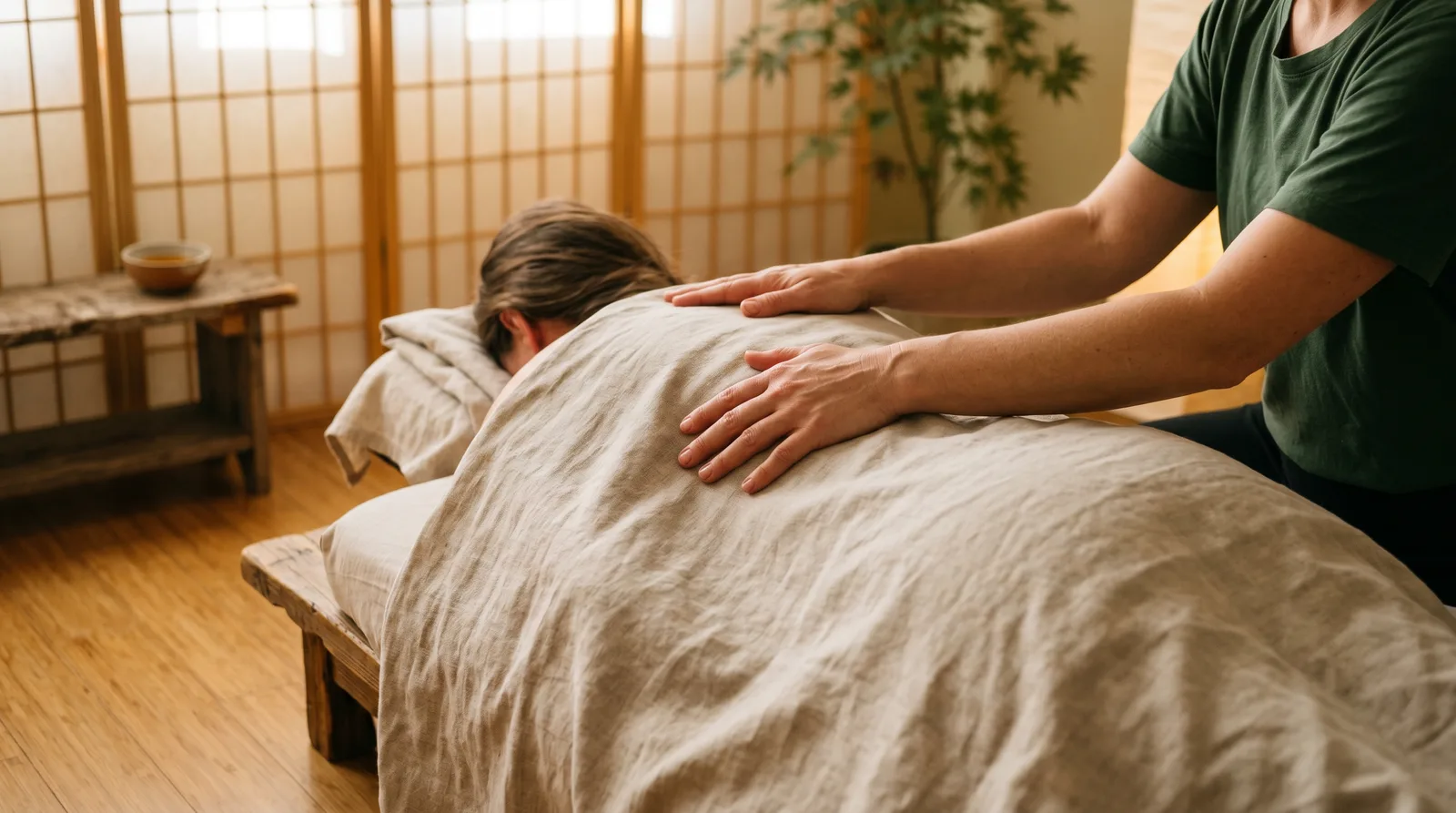
"I designed every lesson to do one thing: make sure that when your hands meet a body, you know exactly what you're doing and why."— Rabiah Abdussabur
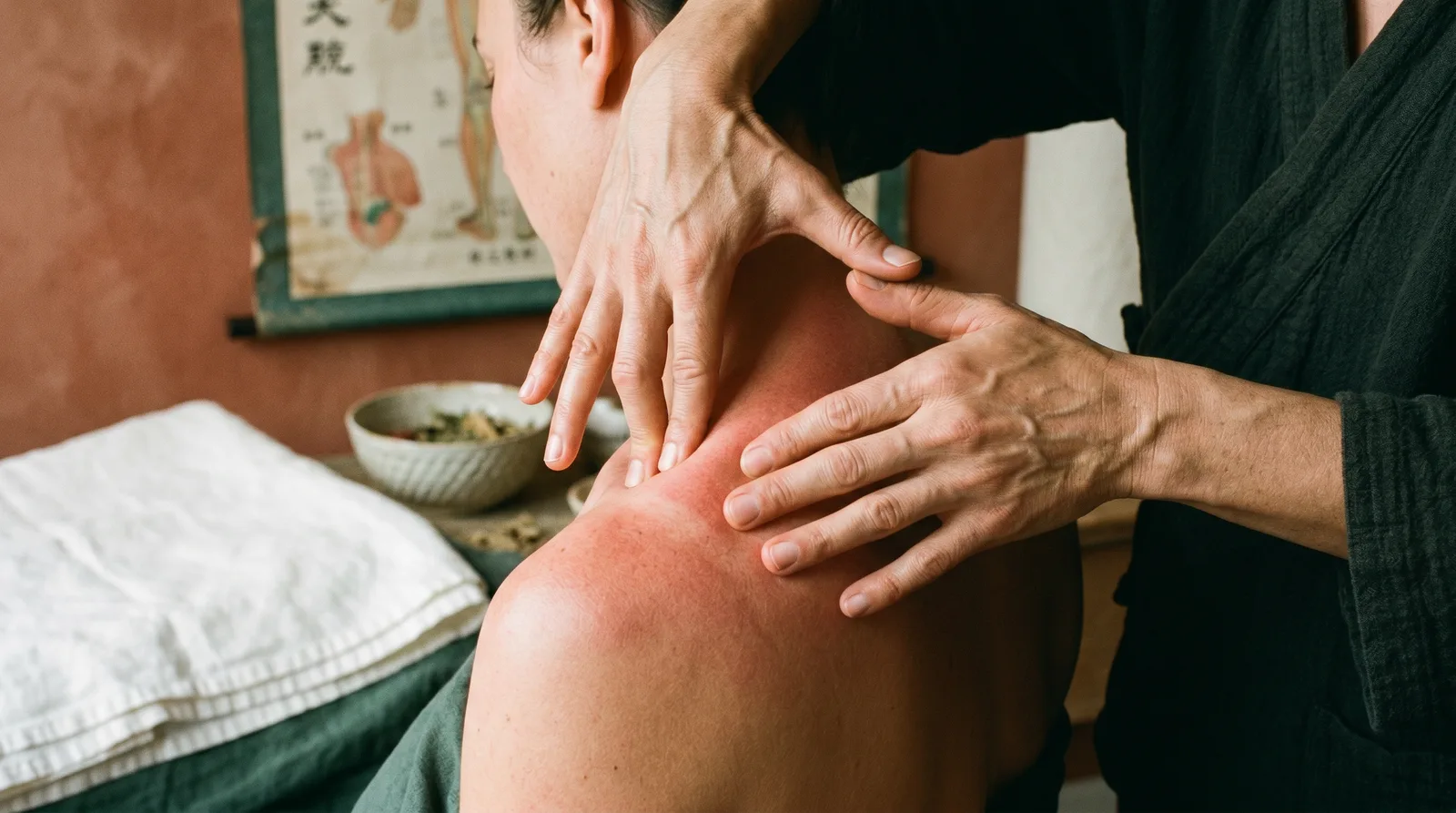
What you'll learn
What you'll be able to do
- Execute the eight core Tui Na hand techniques — rolling, kneading, pressing, grasping, and more — with correct form and therapeutic pressure.
- Map the 12 primary meridians and key acupoints onto a live body and explain their clinical relevance to a client.
- Design a full-body Tui Na session protocol tailored to common complaints such as neck tension, low-back pain, and insomnia.
- Identify contraindications and safety boundaries to ensure every session is both effective and risk-free.
- Integrate Tui Na seamlessly into an existing massage or acupuncture practice with professional intake and treatment documentation.
- Communicate the principles of Qi, Yin-Yang, and the Five Elements to clients in plain, confidence-inspiring language.
How it works
A school that adapts to you
This isn't a set of static videos. Every lesson is generated live and tuned to where you actually are.
We learn your level
A quick placement check tailors your starting point so you're never bored or lost.
Lessons adapt as you go
Each lesson is written for your pace and your goal, adjusting as your skills grow.
Your AI coach keeps you moving
Checkpoints, feedback, and gentle nudges turn progress into a real result.
The curriculum
What's inside your school
5 modules · 25 lessons

Foundations of Tui Na & Traditional Chinese Medicine
Establishes the TCM theoretical framework — Qi, Yin-Yang, Five Elements, and the meridian system — that underpins every Tui Na technique and clinical decision.
- 1.1What Is Tui Na? History, Scope & Clinical RoleIncluded
- 1.2Qi, Yin-Yang & the Five Elements ExplainedIncluded
- 1.3The 12 Primary Meridians: Pathways & FunctionsIncluded
- 1.4Key Acupoints: Location, Palpation & Clinical SignificanceIncluded
- 1.5Safety, Contraindications & Scope of PracticeIncluded
Core Tui Na Hand Techniques
Develops correct form, rhythm, and therapeutic pressure for each of the eight foundational Tui Na hand techniques through guided practice progressions.
- 2.1Rolling (Gun Fa) & Kneading (Rou Fa)Included
- 2.2Pressing (An Fa) & Pushing (Tui Fa)Included
- 2.3Grasping (Na Fa) & Pinching (Nie Fa)Included
- 2.4Vibrating (Zhen Fa) & Percussing (Ji Fa)Included
- 2.5Technique Integration & Transitioning Fluidly Between MethodsIncluded
Regional Body Protocols
Applies hand techniques and acupoint knowledge to systematic, region-by-region treatment sequences covering the full body.
- 3.1Head, Neck & Shoulder ProtocolIncluded
- 3.2Back & Lumbar ProtocolIncluded
- 3.3Upper Limb ProtocolIncluded
- 3.4Lower Limb ProtocolIncluded
- 3.5Abdomen & Chest ProtocolIncluded
Condition-Specific Clinical Protocols
Translates regional skills into targeted treatment plans for the most common complaints clients bring to the treatment table.
- 4.1Neck Tension & Cervical PainIncluded
- 4.2Low-Back Pain & Lumbar StiffnessIncluded
- 4.3Headache & Stress ReliefIncluded
- 4.4Insomnia & AnxietyIncluded
- 4.5Digestive Complaints & FatigueIncluded
Session Design & Professional Integration
Equips practitioners to plan, document, and deliver complete Tui Na sessions within an existing professional practice.
- 5.1Client Intake, Assessment & Treatment PlanningIncluded
- 5.2Designing a Full-Body Tui Na SessionIncluded
- 5.3Treatment Documentation & Progress TrackingIncluded
- 5.4Integrating Tui Na with Massage or Acupuncture PracticeIncluded
- 5.5Client Communication, Aftercare & Self-Care GuidanceIncluded
Who it's for
Is this you?

Licensed Massage Therapists
You want to expand beyond Swedish and deep tissue with a credentialed, clinically structured modality that sets you apart and broadens what you can offer.

Acupuncturists
You already work with meridians and Qi — Tui Na deepens your hands-on repertoire and gives your patients measurable physical relief alongside needlework.

TCM Students
You are building clinical competency and need a structured, practice-ready pathway into Chinese bodywork that reinforces the theory you are already studying.

Wellness Practitioners
You work in holistic health and want a results-driven, evidence-informed modality that gives clients real, measurable outcomes — not just relaxation.

Bodywork Educators
You teach manual therapy and want a thorough, well-structured Tui Na reference that clarifies technique mechanics and clinical application with precision.

Career-Changers Entering Integrative Health
You are transitioning into a healing profession and want to build a credible, distinctive skillset from the ground up on a solid theoretical foundation.
Questions
Frequently asked
Your teacher
A note from your teacher

Rabiah Abdussabur
If you have ever sat with a client who has tried everything for their neck tension, their chronic low-back ache, or the insomnia that has quietly been eroding their quality of life — and you have felt that pull to offer something more precise, more rooted, more complete — then I think you already know why Tui Na matters.
I built The Tui Na Studio because I kept seeing the same gap. Practitioners who were skilled, caring, and genuinely committed to their clients, but who had never had access to a systematic, clinically grounded pathway into Chinese therapeutic massage. A weekend workshop that left them with enthusiasm but no real framework. A TCM textbook that explained the theory beautifully but left the hands with nothing to do. I wanted to create something different: a curriculum that respects both the depth of this medicine and the practical reality of your treatment room.
What you will find here is not a surface-level introduction. We begin with the foundations that make Tui Na make sense — Qi, Yin-Yang, the Five Elements, the meridian system — but we never let theory float free of the body. Every concept is anchored to anatomy, to palpation, to what you will actually feel under your hands. From there, we work through each of the eight core hand techniques with the precision they deserve, because correct form is not just about looking professional — it is about protecting your own body and delivering consistent, therapeutic outcomes for every client.
The clinical protocols are where this training becomes genuinely practice-changing. Whether you are designing a full-body session, addressing a specific complaint, or figuring out how to weave Tui Na into an existing acupuncture or massage practice, the curriculum walks you through it in a structured, step-by-step way. You will finish with intake forms, treatment planning frameworks, documentation habits, and the language to talk about what you do with clarity and confidence.
I want to be honest with you: Tui Na takes practice. The techniques require repetition, body awareness, and patience. But the curriculum is designed to meet you where you are, move you forward steadily, and leave you with a modality you have genuinely internalized — not just watched a video about. If you are ready to do that work, I am ready to guide you through it. Come learn with me.
— Rabiah Abdussabur
Start your journey today
Join get instant access — learn at your own pace with an AI coach in your corner.
$79/mo
Recurring billing · cancel anytime
Secure checkout · Instant access
- 5 modules, 25 lessons
- AI-adaptive lessons tuned to your level
- Quizzes & checkpoints to lock in progress
- Your own AI learning coach
- Learn on any device, at your pace
- Full access for as long as you're subscribed