Turn Your Rights Into a Shield
Six modules of battle-tested, plain-language legal education teach you exactly what to say, document, and file — so you can stand your ground, hold police accountable, and bring your whole community with you.
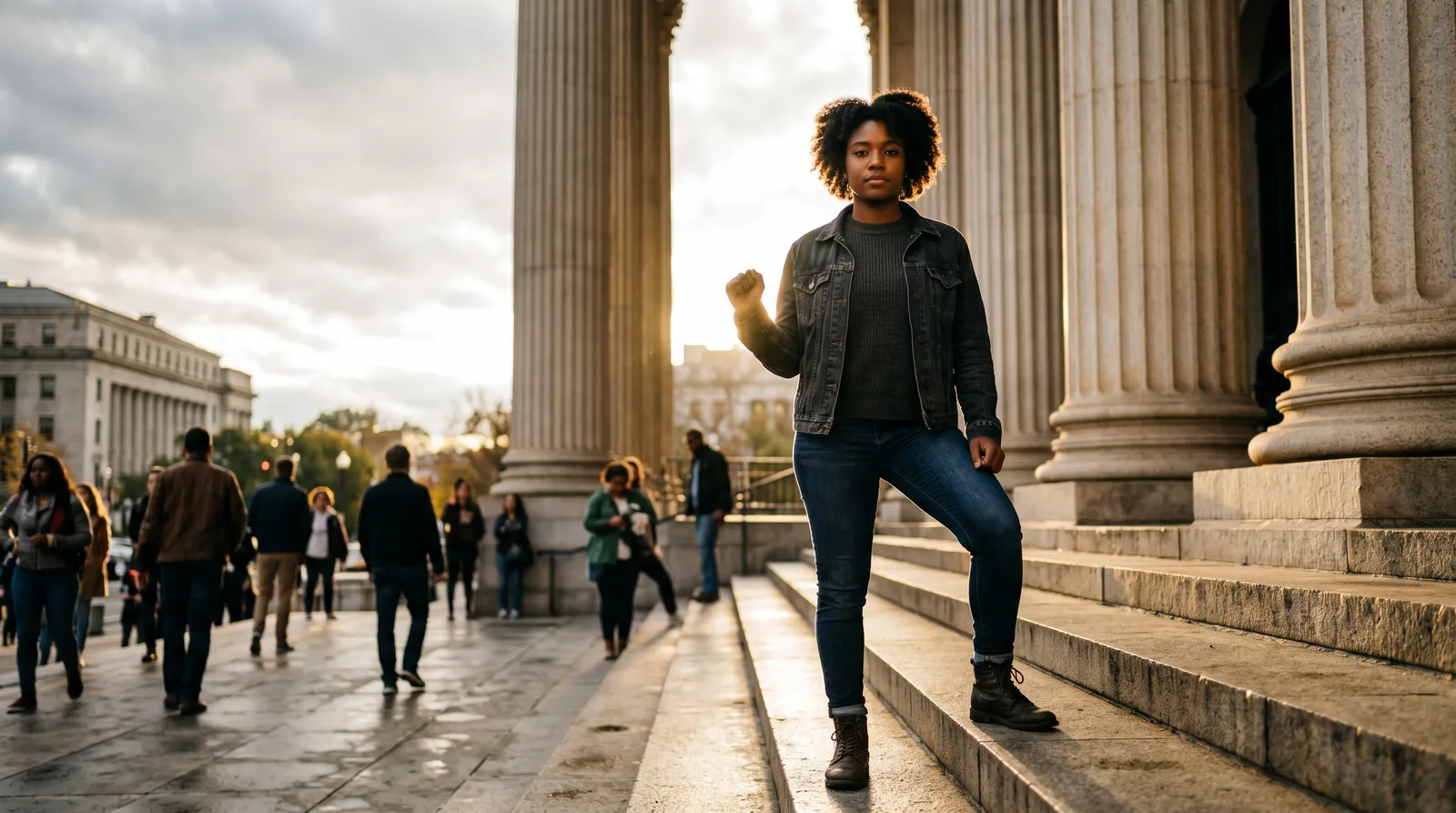
"The law has real tools in it — but they only work if you know how to pick them up, and that's exactly what I'm going to teach you."— Demetrius Demetrius
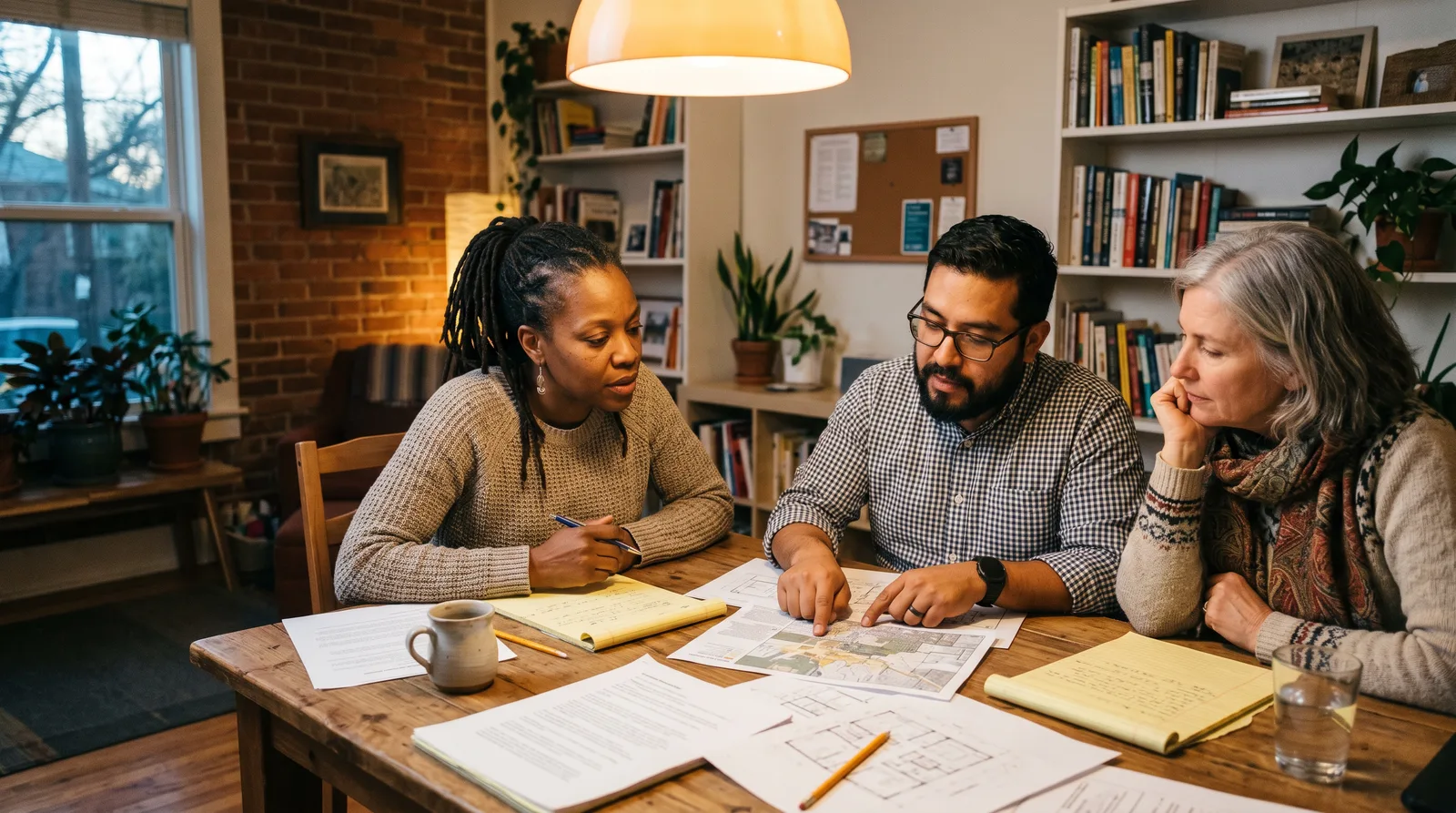
What you'll learn
What you'll be able to do
- Clearly state your constitutional rights during any police encounter and invoke them calmly and correctly in the moment
- Identify the specific behaviors and patterns that legally constitute police misconduct or excessive force
- Use your phone, body cameras, and public records requests to build an airtight documentation trail
- File formal complaints with civilian review boards, internal affairs, and federal agencies like the DOJ
- Connect with the right civil rights attorneys and legal aid organizations to pursue accountability
- Organize and lead community know-your-rights workshops that multiply your impact across your neighborhood
How it works
A school that adapts to you
This isn't a set of static videos. Every lesson is generated live and tuned to where you actually are.
We learn your level
A quick placement check tailors your starting point so you're never bored or lost.
Lessons adapt as you go
Each lesson is written for your pace and your goal, adjusting as your skills grow.
Your AI coach keeps you moving
Checkpoints, feedback, and gentle nudges turn progress into a real result.
The curriculum
What's inside your school
6 modules · 19 lessons

Know Your Rights on the Street
Establishes the constitutional and legal foundation that every subsequent module builds on. Students learn exactly which rights protect them in police encounters, how those rights operate in the real world, and how to invoke them clearly, calmly, and correctly — without escalating the situation.
- 1.1The Big Four: Your Constitutional Protections in Police EncountersIncluded
- 1.2Terry Stops, Probable Cause, and When Police Can Legally ActIncluded
- 1.3Invoking Your Rights: What to Say, How to Say It, When to Say ItIncluded
- 1.4Rights in Specific Contexts: Protests, Traffic Stops, and Home EntryIncluded
Recognizing Police Misconduct and Excessive Force
Builds on the legal foundation from Module 1 by teaching students to identify — in both legal terms and real-time observation — when police behavior crosses the line into misconduct, excessive force, or systemic abuse. Recognizing violations accurately is the prerequisite for documenting and reporting them effectively.
- 2.1What the Law Actually Calls MisconductIncluded
- 2.2Patterns, Profiling, and Systemic MisconductIncluded
- 2.3On-the-Ground Recognition: Spotting Violations in Real TimeIncluded
Documenting Everything: Phones, Records, and Evidence
Equips students with the practical tools and legal knowledge to create an airtight, multi-layered evidence trail — starting the moment an encounter begins. Covers filming technique and legal protection, comprehensive evidence file construction, and how to use public records law to obtain official records that corroborate or contradict police accounts.
- 3.1Your Phone Is a Witness: Filming Police Legally and EffectivelyIncluded
- 3.2Building a Complete Evidence FileIncluded
- 3.3Public Records Requests: Getting the Files They Don't Want You to SeeIncluded
Filing Complaints and Demanding Accountability
Translates documentation into formal action. Students learn the specific processes, agencies, standards, and strategic considerations for filing complaints at every level — local civilian review boards, internal affairs, state bodies, and federal agencies — and how to create a multi-layered pressure campaign that compounds over time.
- 4.1Internal Affairs and Civilian Review BoardsIncluded
- 4.2Federal Accountability: DOJ, FBI, and Civil Rights ComplaintsIncluded
- 4.3Creating a Paper Trail That Compounds PressureIncluded
Legal Channels: Attorneys, Lawsuits, and Civil Rights Organizations
Guides students through the civil legal system as a tool for individual accountability and systemic change. Students learn how to find and work with civil rights attorneys, understand how § 1983 and other civil rights lawsuits actually function, and connect with the organizations whose infrastructure, resources, and advocacy can multiply the impact of any individual case.
- 5.1Finding and Working With a Civil Rights AttorneyIncluded
- 5.2How § 1983 Lawsuits and Civil Rights Cases WorkIncluded
- 5.3Connecting With Civil Rights Organizations and Legal AidIncluded
Multiplying Your Impact: Leading Know-Your-Rights in Your Community
The capstone module: students synthesize everything they have learned and prepare to multiply it by becoming community educators themselves. Covers workshop design, facilitation skills for high-stakes and emotionally charged content, and the organizing strategies needed to sustain community education beyond a single event.
- 6.1Designing a Know-Your-Rights Workshop for Your NeighborhoodIncluded
- 6.2Facilitation Skills for High-Stakes TopicsIncluded
- 6.3Sustaining Community Organizing Beyond the WorkshopIncluded
Who it's for
Is this you?

First-time activists
They're fired up and showing up to protests — and need to know exactly what rights protect them on the street before they go.

Community organizers
They're already leading their neighborhoods and want the legal fluency to run credible Know-Your-Rights workshops that actually hold up under tough questions.

People who've experienced misconduct
They've lived it firsthand and want a clear map to complaints, attorneys, and federal accountability channels — not vague reassurances.

Concerned parents
They want their kids — especially teenagers — to know exactly how to handle a police encounter safely and legally before it happens.

Civil liberties advocates
They're passionate about systemic change and want the legal depth to understand misconduct patterns, profiling doctrine, and § 1983 litigation.

Journalists & documentarians
They cover policing and need to know their legal right to film, how to file public records requests, and how evidence files are built.
Questions
Frequently asked
Your teacher
A note from your teacher
Demetrius Demetrius
I want to talk to you like I'd talk to a packed community hall on a Tuesday night — directly, honestly, and without wasting your time.
If you're here, something brought you here. Maybe you were stopped and didn't know what you could legally say. Maybe you watched a video that made your stomach drop and felt completely powerless. Maybe you're already organizing and people in your community keep asking you questions you don't yet have the answers to. Whatever it was — that feeling of knowing something is wrong but not knowing how to fight it — I built this school for exactly that moment.
Here's what I've learned: most people don't lose their rights in courtrooms. They lose them in the first thirty seconds of an encounter, because they didn't know what to say. They lose them because the evidence wasn't captured. They lose them because no complaint was filed, or it was filed incorrectly, or they didn't know the federal channels even existed. The law has real tools in it — constitutional protections, civil rights statutes, complaint processes, federal oversight mechanisms — but those tools only work if you know how to pick them up. That's what this curriculum is. A hands-on guide to picking up every single one of those tools.
I've been careful to build this school around what is actually legally true, not what sounds empowering on a poster. That means we talk about the limits of your rights alongside the substance of them, because knowing where the line is helps you hold it. We cover Terry stops and what police can legally do, because understanding that is how you recognize when they've gone beyond it. We cover § 1983 lawsuits not to give you false hope, but so you can have an informed, productive first conversation with a civil rights attorney if it comes to that.
I also know that individual knowledge only goes so far. The communities that have historically been most harmed by police misconduct are the same ones where legal education is hardest to access. So the final module of this school is about multiplying your impact — taking what you've learned and building workshops that spread it across your neighborhood, your congregation, your school, your union. Because the most powerful thing one informed person can do is make ten more people informed.
You don't need a law degree. You need clear information, delivered straight, with no paternalism and no fluff. That's what I've built here. Come learn how to use what the law already gives you — and then go teach someone else.
— Demetrius Demetrius
Start your journey today
Join get instant access — learn at your own pace with an AI coach in your corner.
$4,997/mo
Recurring billing · cancel anytime
Secure checkout · Instant access
- 6 modules, 19 lessons
- AI-adaptive lessons tuned to your level
- Quizzes & checkpoints to lock in progress
- Your own AI learning coach
- Learn on any device, at your pace
- Full access for as long as you're subscribed