Find the freedom Scripture always promised you
Unbound Together is a biblically grounded school for men and women in harmful marriages — and the faith leaders who walk with them — offering rigorous Scripture study, honest theological reckoning, and practical tools to recognize oppression, reclaim dignity, and chart a path toward genuine wholeness.

"The Bible's vision of covenant love is radically incompatible with fear — and I will not rest until every person in this school can see that clearly for themselves."— Sky Hacker
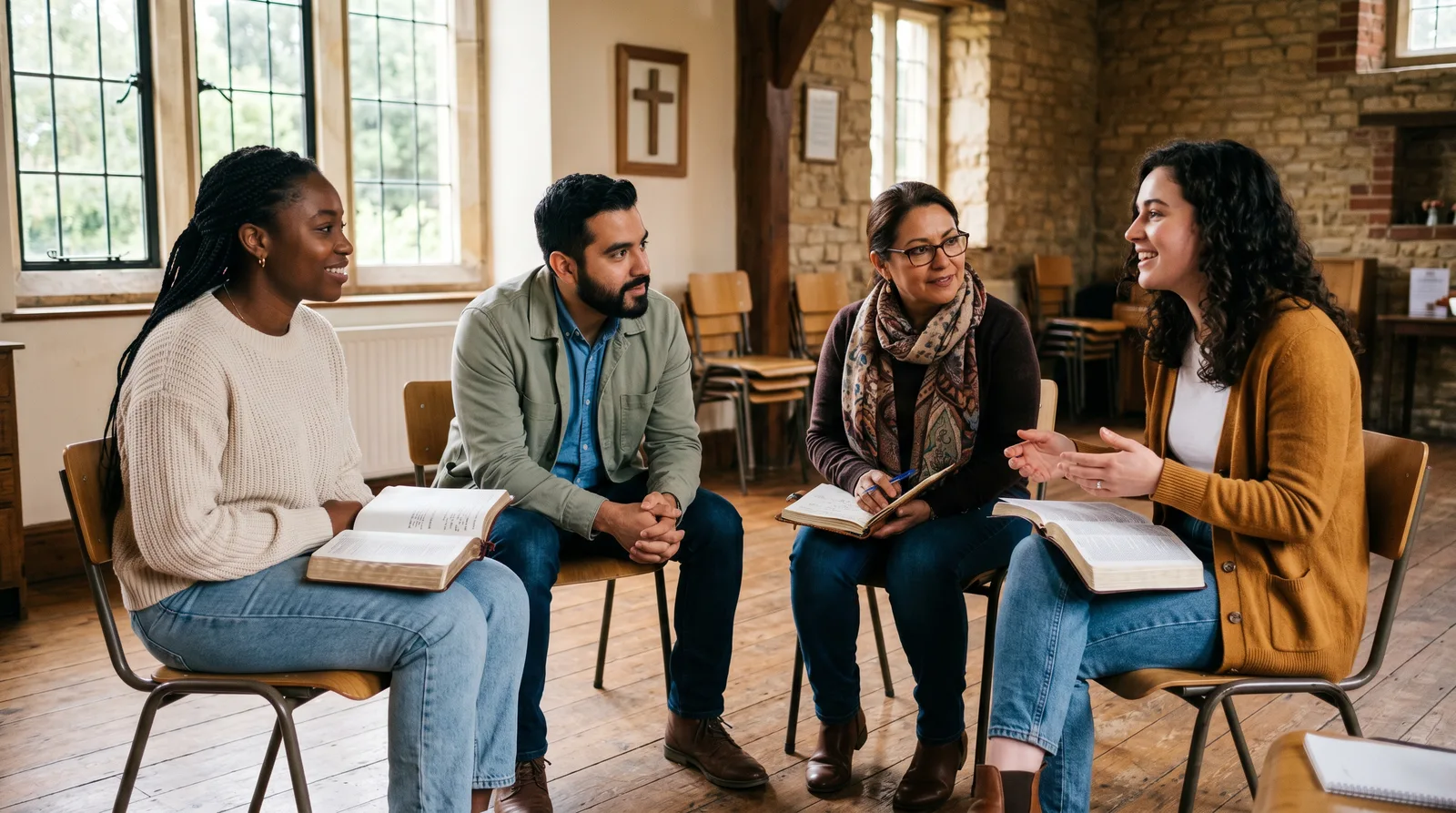
What you'll learn
What you'll be able to do
- Identify the specific patterns — isolation, control, fear, and coercion — that cross the line from marital difficulty into relational bondage
- Conduct a confident, in-context reading of key biblical passages on marriage, submission, and headship that are commonly misused to justify abuse
- Articulate the theological difference between sacrificial covenant love and oppressive power disguised as religious duty
- Apply practical, faith-informed frameworks to assess the safety and health of your own or a parishioner's relationship
- Navigate the complex intersection of church community, spiritual authority, and personal safety when considering separation or boundaries
- Build a personal roadmap toward healing, wholeness, and — where possible — genuine restoration rooted in biblical truth and mutual dignity
How it works
A school that adapts to you
This isn't a set of static videos. Every lesson is generated live and tuned to where you actually are.
We learn your level
A quick placement check tailors your starting point so you're never bored or lost.
Lessons adapt as you go
Each lesson is written for your pace and your goal, adjusting as your skills grow.
Your AI coach keeps you moving
Checkpoints, feedback, and gentle nudges turn progress into a real result.
The curriculum
What's inside your school
6 modules · 25 lessons

Naming What Hurts: Recognizing Relational Bondage
Equips students to identify the specific patterns of isolation, control, fear, and coercion that distinguish genuine oppression from ordinary marital difficulty.
- 1.1When Hard Marriage Becomes Harmful MarriageIncluded
- 1.2The Anatomy of Control: Isolation, Fear, and CoercionIncluded
- 1.3Spiritual Abuse as a Tool of OppressionIncluded
- 1.4Why It's So Hard to See — and So Hard to LeaveIncluded
What the Bible Actually Says: Reclaiming Scripture
Trains students to read commonly misused passages on submission, headship, and marriage in their proper literary, historical, and theological context.
- 2.1How Good Texts Get Weaponized: A Framework for Honest ReadingIncluded
- 2.2Submission and Headship: What Ephesians 5 Does — and Doesn't — SayIncluded
- 2.31 Peter, 1 Corinthians, and the 'Difficult Passages' on WivesIncluded
- 2.4God, Power, and the Vulnerable: A Biblical PatternIncluded
- 2.5Divorce, Separation, and Scripture: What the Text PermitsIncluded
Covenant Love vs. Counterfeit Love: A Theological Reckoning
Articulates the theological distinction between sacrificial covenant love and oppressive power falsely dressed in the language of Christian duty.
- 3.1What Covenant Love Was Always Meant to Look LikeIncluded
- 3.2Power, Dominion, and the Fall: Where Oppression Comes FromIncluded
- 3.3Sacrifice vs. Subjugation: Telling the DifferenceIncluded
- 3.4Image-Bearing and Dignity: Every Person's Theological FoundationIncluded
Assessing Safety: Practical Tools for Individuals and Leaders
Provides faith-informed, practical frameworks that individuals and ministry leaders can use to honestly evaluate relationship safety and health.
- 4.1The Safety Assessment: A Framework for Honest EvaluationIncluded
- 4.2Listening Well: How Pastors and Counselors Can Hear Victims FaithfullyIncluded
- 4.3Red Flags, Escalation Patterns, and When Danger Is ImminentIncluded
- 4.4Creating a Safety Plan Rooted in Faith and PracticalityIncluded
Navigating Church, Community, and Spiritual Authority
Helps students navigate the complex intersection of church accountability, congregational loyalty, and personal safety when setting boundaries or considering separation.
- 5.1When the Church Becomes Part of the ProblemIncluded
- 5.2Spiritual Authority and Its Limits: What Leaders Can and Cannot DemandIncluded
- 5.3Setting Boundaries Without Losing Your Faith CommunityIncluded
- 5.4How Faith Communities Can Become Safe PlacesIncluded
The Road to Wholeness: Healing, Identity, and What Comes Next
Builds a personal roadmap toward healing, restored identity, and — where genuinely possible — reconciliation rooted in biblical truth and mutual dignity.
- 6.1Grieving What Was Lost: Permission to LamentIncluded
- 6.2Reclaiming Your Identity as Beloved and FreeIncluded
- 6.3Is Restoration Possible? Conditions, Cautions, and Honest HopeIncluded
- 6.4Building Your Personal Roadmap Toward WholenessIncluded
Who it's for
Is this you?

Women in harmful marriages
She needs Scripture read faithfully with her — not weaponized against her — and a clear framework for naming what she's experiencing and discerning her next step.

Men experiencing marital control
He's been told his experience doesn't fit the narrative, but coercive control has no gender requirement, and he deserves the same biblical clarity and practical tools.

Pastors & church leaders
He wants to shepherd well but has been trained to prioritize reconciliation over safety — this school gives him the theology and the tools to do both faithfully.

Christian counselors & therapists
She holds clinical insight and biblical conviction together and needs a rigorous framework that honors both when walking clients through harmful relationships.

Survivors rebuilding faith
He left a harmful marriage but lost his theological footing in the process — he's here to reclaim a vision of God, covenant, and his own dignity that oppression tried to take.

Women's & small group ministers
She suspects someone in her group is in danger and wants the language, the discernment, and the courage to respond with both pastoral care and honest clarity.
Questions
Frequently asked
Your teacher
A note from your teacher

Sky Hacker
If you've found your way here, I want you to know something before anything else: I believe you. I believe that what you're carrying is real, that it is heavy, and that you have probably been working harder than anyone around you knows — harder to hold your marriage together, harder to make sense of what the Bible says about your situation, harder to reconcile the faith you love with the pain you're living.
And I want to say something else plainly: the confusion you feel is not a sign of weak faith. It is, in large part, a sign that you've been given an incomplete picture — of Scripture, of covenant, of what God's design for marriage actually looks like. The passages that have been used to demand your silence or your compliance were never meant to do that work. I know that's a significant claim. This school is where we examine it carefully, together, with the text open in front of us.
I built Unbound Together because I kept encountering the same collision: people whose experience of harm was unmistakable, sitting across from a theology that told them their experience didn't count. Pastors who genuinely wanted to help but didn't have the framework to see what they were looking at. Counselors trying to hold both clinical reality and biblical fidelity without a map. The school exists to provide that map — not to make your decisions for you, but to make sure you're not making them in the dark.
What you'll find here is not a safe, hedged, say-nothing treatment of hard topics. We go directly into Ephesians 5, into the submission passages, into what Scripture says about divorce. We look at the theology of the Fall and dominion, at the difference between sacrifice and subjugation, at what the image of God means for your dignity in a way that cannot be overridden by anyone's interpretation of headship. We do this with care and scholarly seriousness — because you deserve nothing less than a full engagement with the text.
And then we come back to the ground level: practical safety assessment, guidance for faith leaders, honest frameworks for navigating church authority, and — when the time is right — a structured path toward healing and wholeness. Not a promise that everything will be restored. An honest reckoning with what restoration requires, and genuine hope for what lies on the other side of clarity.
You were made for freedom. That is not a therapeutic platitude — it is a theological conviction rooted in the same Scripture that has sometimes been used against you. Come in. Let's read it together.
— Sky Hacker
Start your journey today
Join get instant access — learn at your own pace with an AI coach in your corner.
$39/mo
Recurring billing · cancel anytime
Secure checkout · Instant access
- 6 modules, 25 lessons
- AI-adaptive lessons tuned to your level
- Quizzes & checkpoints to lock in progress
- Your own AI learning coach
- Learn on any device, at your pace
- Full access for as long as you're subscribed