Build a water supply out of thin air
A complete engineering course — physics, sanitary design, and hands-on construction — for homeowners and builders who want real, drinkable water independence, not a $39 PDF and a dream.
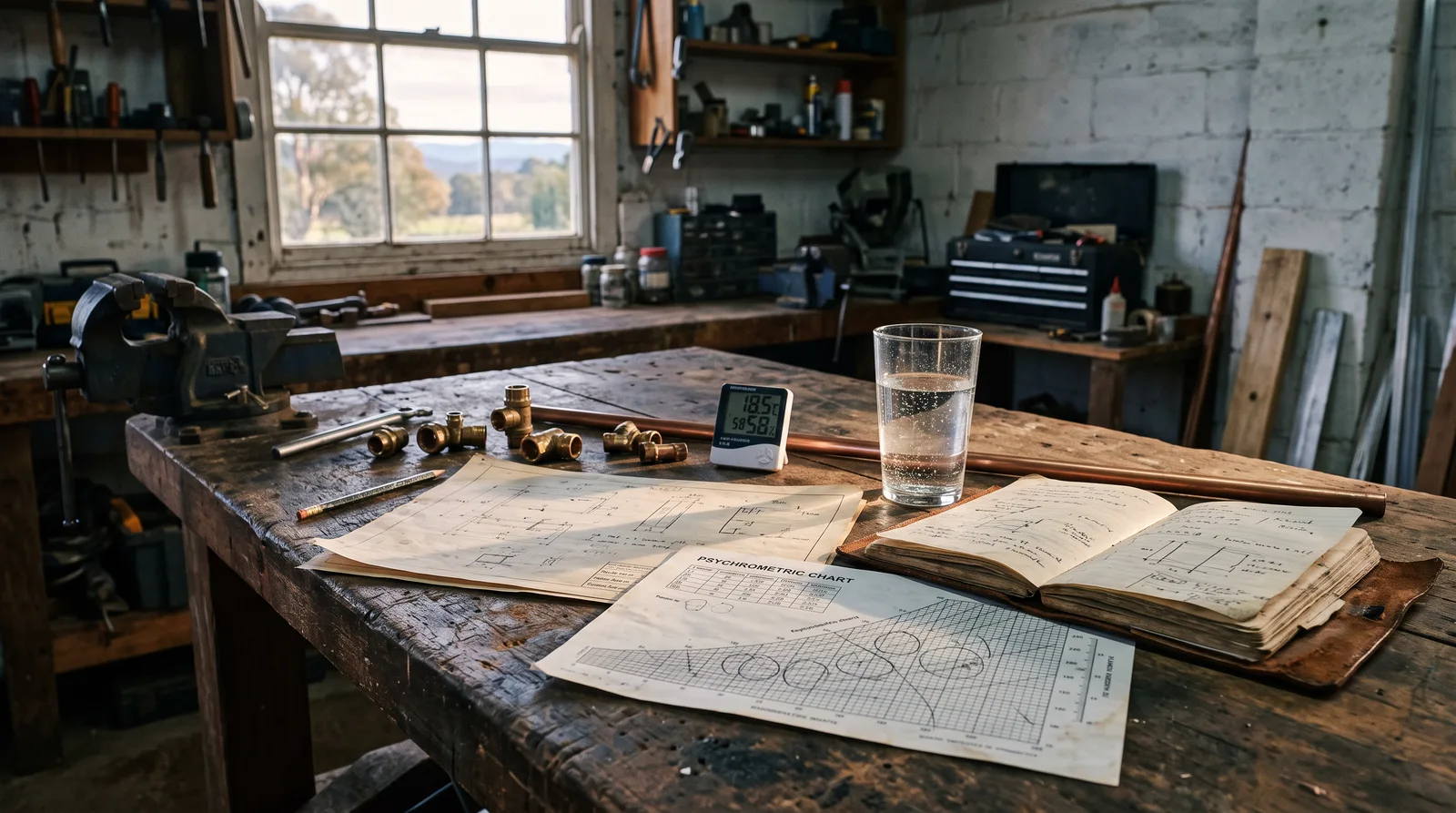
"I'd rather you leave section one with honest data and no build than finish a machine you can't trust to drink from."
— inspiredbrush2@yahoo.com
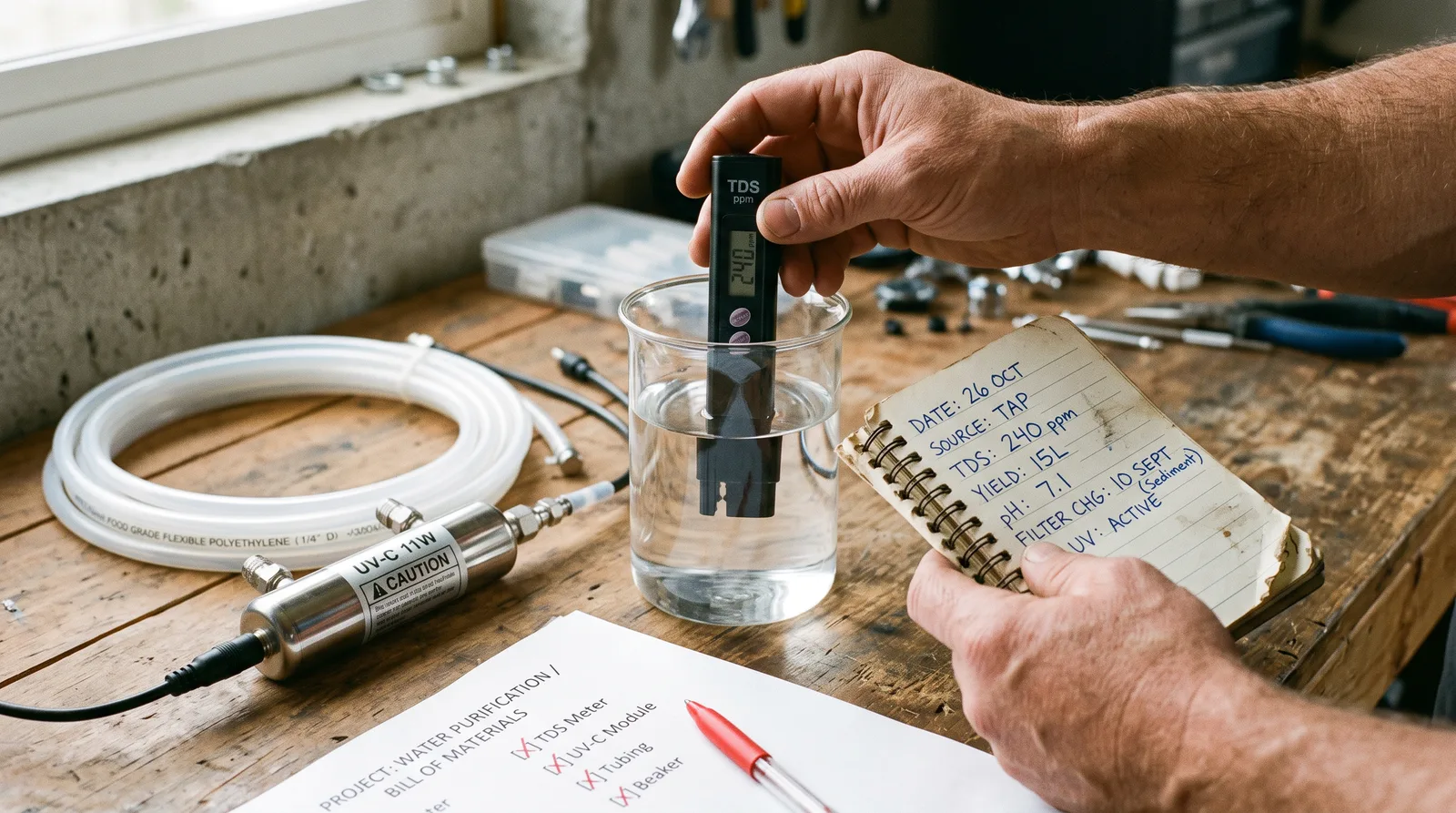
What you'll learn
What you'll be able to do
- Accurately assess whether atmospheric water generation is viable for your specific climate using a site feasibility worksheet
- Build a sanitary AWG unit from a verified bill of materials and conceptual blueprints, staying within a realistic budget
- Apply a complete water-treatment spec — condensate collection, filtration, UV sterilization — so every drop is genuinely potable
- Maintain a technical logbook that tracks yield, energy draw, filter hours, and water-quality test results
- Diagnose and correct the 12 most common AWG failure modes before they produce unsafe water
- Rank and execute a household drinking-water priority stack so your family is protected whether the AWG is running or not
How it works
A school that adapts to you
This isn't a set of static videos. Every lesson is generated live and tuned to where you actually are.
We learn your level
A quick placement check tailors your starting point so you're never bored or lost.
Lessons adapt as you go
Each lesson is written for your pace and your goal, adjusting as your skills grow.
Your AI coach keeps you moving
Checkpoints, feedback, and gentle nudges turn progress into a real result.
The curriculum
What's inside your school
9 modules · 41 lessons

Reality Check: Physics vs. Marketing
Separates verified atmospheric water generation science from exaggerated claims so students invest in facts, not hype.
- 1.1What AWG Actually Is — and Isn'tIncluded
- 1.2Claim Autopsy: Reading a $39 Blueprint FunnelIncluded
- 1.3The Honest Numbers: Energy, Yield, and CostIncluded
- 1.4Your Reality BriefIncluded
Household Water Priority Stack
Establishes a survival-first water hierarchy so the family is protected whether the AWG is running or not.
- 2.1How Much Water Your Household Actually NeedsIncluded
- 2.2Building Your Priority StackIncluded
- 2.3Emergency Backup: Storage, Rotation, and RedundancyIncluded
- 2.4Your Household Priority Stack WorksheetIncluded
AWG Physics and Engineering Fundamentals
Teaches the thermodynamic and mechanical principles behind every AWG design so students can evaluate any build path.
- 3.1How Condensation Produces Water: The Physics SheetIncluded
- 3.2Airflow, Coil Design, and Collection EfficiencyIncluded
- 3.3Energy Load: Compressors, Fans, and PumpsIncluded
- 3.4Contamination Entry Points in a Condensate SystemIncluded
Site Feasibility: Will AWG Work Where You Live?
Guides students through a climate, site, and energy assessment to produce a go/no-go feasibility worksheet before buying a single part.
- 4.1Reading Humidity and Dew Point Data for Your LocationIncluded
- 4.2Seasonal Yield ModelingIncluded
- 4.3Power Source Assessment: Grid, Solar, and HybridIncluded
- 4.4Siting the Unit: Indoor, Outdoor, and Shed InstallationsIncluded
- 4.5Your Site Feasibility WorksheetIncluded
Choosing Your Build Path: Three Architectures
Presents three verified AWG build architectures — dehumidifier-core, dedicated refrigeration, and Peltier/thermoelectric — with honest trade-offs.
- 5.1Architecture A: Dehumidifier-Core ConversionIncluded
- 5.2Architecture B: Dedicated Refrigeration AWGIncluded
- 5.3Architecture C: Peltier Thermoelectric UnitIncluded
- 5.4Comparing Cost, Yield, Complexity, and Climate FitIncluded
- 5.5Selecting and Sourcing Verified ComponentsIncluded
Build and Plumb Your AWG Unit
Takes students through assembly, plumbing, and sanitary installation of their chosen architecture using conceptual blueprints and a verified bill of materials.
- 6.1Reading the Conceptual BlueprintsIncluded
- 6.2Bill of Materials: Budgeting and SourcingIncluded
- 6.3Mechanical Assembly: Frame, Coil, and FanIncluded
- 6.4Sanitary Plumbing: Food-Grade Lines, Tank, and DrainageIncluded
- 6.5Electrical Wiring, Controls, and Safety CutoffsIncluded
Making the Water Safe to Drink
Applies a complete water-treatment specification — prefiltration, post-filtration, mineralization, and UV sterilization — so every drop meets potability standards.
- 7.1Why AWG Condensate Is Not Automatically SafeIncluded
- 7.2Pre-Filter Stage: Sediment and Activated CarbonIncluded
- 7.3UV Sterilization: Sizing, Dose, and Lamp MaintenanceIncluded
- 7.4Remineralization and pH CorrectionIncluded
- 7.5Water Quality Testing: What to Test, How OftenIncluded
Technical Sheets, Logbooks, and Daily Operations
Establishes the operational and record-keeping discipline that separates a safe long-term system from a neglected hazard.
- 8.1Setting Up Your Technical Sheet PackageIncluded
- 8.2Your Daily and Weekly LogbookIncluded
- 8.3Filter and UV Lamp Replacement SchedulesIncluded
- 8.4Interpreting Your Logs: Spotting Decline Before FailureIncluded
Failure Modes, Safety, and the Law
Covers the 12 most common AWG failure modes, relevant US code and NSF standards, and a fail-closed shutdown protocol.
- 9.1The 12 Most Common AWG Failure ModesIncluded
- 9.2Biological Hazards: Biofilm, Legionella, and MoldIncluded
- 9.3Fail-Closed Protocol: When to Stop the MachineIncluded
- 9.4US Code, NSF Standards, and PermitsIncluded
- 9.5Long-Term System Review and Upgrade PathIncluded
Who it's for
Is this you?

Off-grid homesteaders
They're already managing solar and rainwater — an AWG fills the gap when the sky doesn't cooperate, and they have the wiring chops to build it right.

Serious preppers
They've covered food and shelter; a documented, sanitary water supply from ambient air is the durable backup their priority stack is missing.

Hands-on DIY homeowners
They've run romex and sweated copper pipe — this course gives them a real engineering blueprint instead of a vague YouTube rabbit hole.

Engineers and technical tinkerers
They want the actual psychrometric data, NSF references, and failure-mode analysis — not a glossed-over overview that insults their background.

Rural property owners
Well water costs, drought risk, or failing infrastructure make a supplemental atmospheric source a practical investment worth sizing honestly.

Sustainability-focused builders
They're designing net-zero or resilient builds and need a water-independence layer grounded in real energy math, not greenwashed marketing.
Questions
Frequently asked
Your teacher
A note from your teacher
inspiredbrush2@yahoo.com
If you've spent any time searching for real information about atmospheric water generators, you already know the frustration. You click through to a "complete guide," and twenty minutes later you're staring at a $39 checkout page that promises to reveal the secret the water companies don't want you to know. There is no secret. There's thermodynamics, there's sanitary engineering, and there's a fair amount of careful work. That's the whole story — and it's actually a good one, if someone will just tell it straight.
I built this school because that straight telling didn't exist. Not for people who want to actually do this. The physics of condensation is well understood. The water-treatment requirements for potable condensate are documented in NSF standards. The failure modes are knowable and preventable. None of it is proprietary. What was missing was a single, honest curriculum that connects the feasibility math to the build sequence to the safety protocol — without the hype, without the buried upsell, and without glossing over the parts that are inconvenient.
Here's the part I'll say plainly, because most courses won't: atmospheric water generation is not viable everywhere, and it is not cheap to run. The first thing this course does is hand you a site feasibility worksheet and walk you through the real yield and energy numbers for your climate. If AWG doesn't pencil out for your location, you will know before you spend a dime on parts. I'd rather you leave the first section with useful data and no build than finish a $600 unit that produces two liters a day in a high-desert summer. The household water priority stack you build in section two is valuable whether you ever run a compressor or not.
If the numbers do work for you, then everything else in the curriculum is designed to get you to a machine that produces genuinely potable water — not technically-water-adjacent liquid. That means the full treatment train: sediment filtration, activated carbon, correctly sized UV sterilization, remineralization, and a testing schedule you actually follow. It means a technical logbook that catches filter degradation and biological risk before they become a health problem. It means understanding the 12 most common failure modes — including Legionella, which is not a thing to learn about after the fact.
I want you to build something you can trust. That means I have to tell you what won't work before I tell you what will. Every lesson in this school earns the next one. Come in skeptical. Bring your questions. The physics will hold up.
— inspiredbrush2@yahoo.com
Start your journey today
Get instant access — learn at your own pace with an AI coach in your corner.
$17/mo
Recurring billing · cancel anytime
Secure checkout · Instant access
- 9 modules, 41 lessons
- AI-adaptive lessons tuned to your level
- Quizzes & checkpoints to lock in progress
- Your own AI learning coach
- Learn on any device, at your pace
- Full access for as long as you're subscribed