Know how to show up when it matters most
Weathering the Storm gives parents, caregivers, and educators a warm, science-grounded framework — rooted in neuroscience and polyvagal theory — to recognize the signs, hold the connection, and build the kind of environments where struggling teens feel safe enough to stay.
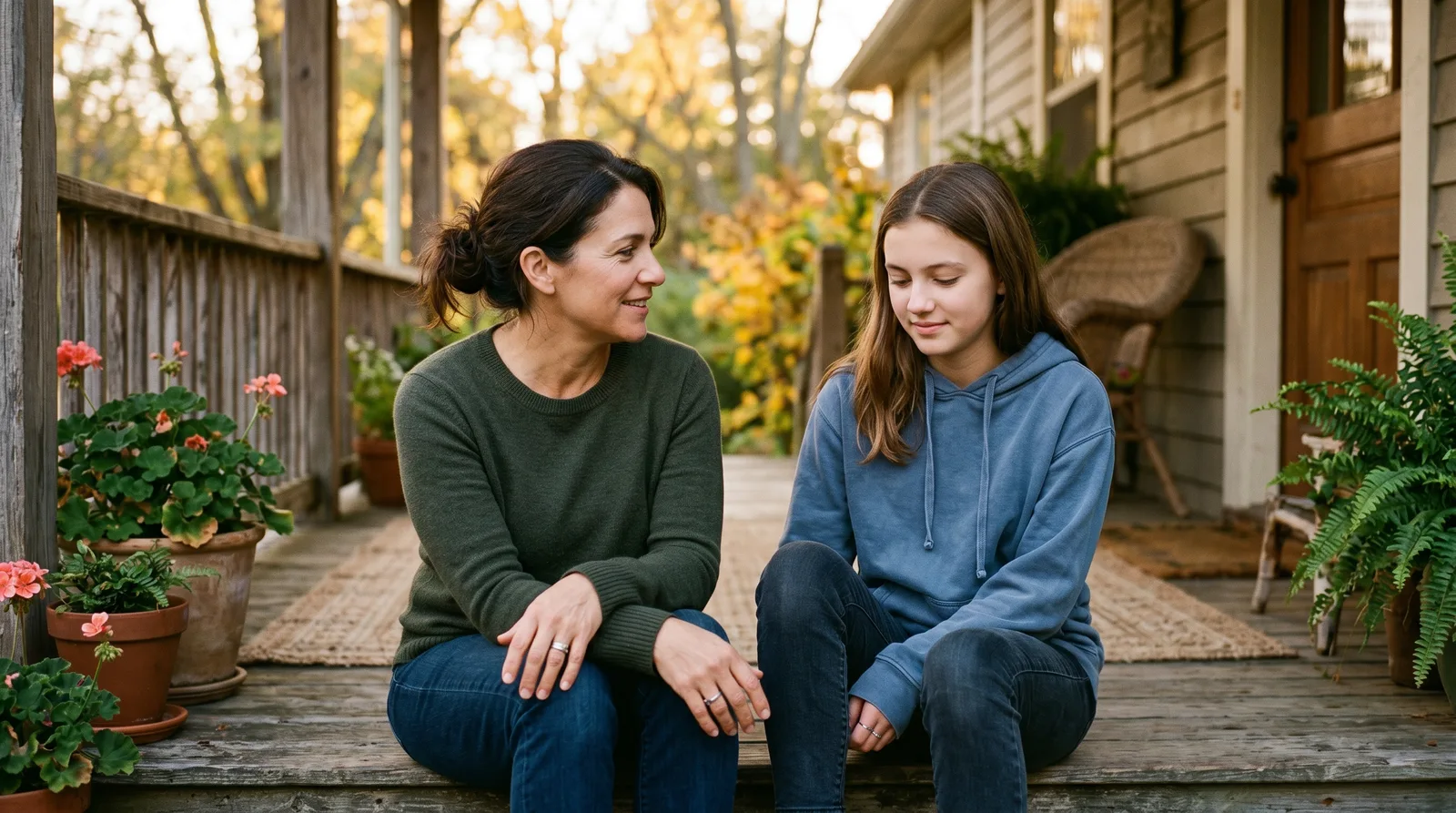
Connection is not a soft skill — it is the science, and it is the work, and it is absolutely something you can learn to do better.— Jill Lien Big Horn Wellness

What you'll learn
What you'll be able to do
- Explain the neuroscience of the adolescent brain so that confusing or distressing teen behavior becomes readable and less frightening
- Assess the real impact of social media on a young person's mental health and use practical strategies to help a teen navigate digital life more safely
- Open and sustain conversations about suicidal thoughts using communication techniques that build trust rather than shut dialogue down
- Design stable, predictable home and school environments that function as genuine protective factors for vulnerable young people
- Apply polyvagal-informed co-regulation techniques to calm a teen's — and your own — dysregulated nervous system in moments of acute distress
- Identify the threshold that signals professional help is needed, locate the right resources, and guide a reluctant teen toward that support with confidence
How it works
A school that adapts to you
This isn't a set of static videos. Every lesson is generated live and tuned to where you actually are.
We learn your level
A quick placement check tailors your starting point so you're never bored or lost.
Lessons adapt as you go
Each lesson is written for your pace and your goal, adjusting as your skills grow.
Your AI coach keeps you moving
Checkpoints, feedback, and gentle nudges turn progress into a real result.
The curriculum
What's inside your school
8 modules · 16 lessons

Understanding the Landscape
Before adults can help, they need to understand what they are actually dealing with. This foundational module dismantles myths, reduces fear, and replaces confusion with informed clarity — establishing the neurological and psychological framework that every subsequent module builds on. Learners finish with a compassionate, non-judgmental lens through which all teen behavior becomes more readable.
- 1.1The Complexity of Adolescent Suicidal IdeationIncluded
- 1.2The Developing Brain — Neuroscience as a RoadmapIncluded
The Modern Pressures
The adolescent brain does not develop in a vacuum — it develops inside an algorithm. This module examines the specific ways social media and digital culture interact with an already-vulnerable adolescent nervous system, then moves immediately into actionable strategies so learners leave equipped, not just alarmed. It sits here — after the brain module — because understanding the mechanism makes the strategies far more persuasive.
- 2.1How Social Media Rewires the Adolescent MindIncluded
- 2.2Practical Strategies for Safer Digital LivesIncluded
Connection as Protection
Research is unambiguous: felt connection is one of the strongest protective factors against adolescent suicidal ideation. This module teaches adults how to build and maintain that connection through the quality of their words and the stability of their environments — both of which are within an adult's direct control. Communication comes first because it is the prerequisite skill for everything in Modules 4 and 5.
- 3.1Communication as a Lifeline — The Power of WordsIncluded
- 3.2Structure and Stability as a Protective FactorIncluded
Calming the Storm
When a teen is in acute distress, an adult's nervous system is the first intervention. Grounded in polyvagal theory, this module teaches learners to recognize nervous-system states in themselves and their teen, and to use evidence-based co-regulation techniques to bring both bodies and minds back to a place of safety. This module sits after Communication because regulation is far easier when a communicative relationship already exists.
- 4.1Understanding the Dysregulated Nervous SystemIncluded
- 4.2Co-Regulation Techniques for Acute DistressIncluded
Knowing When and How to Get Help
Equipping adults to act decisively is the course's most critical practical outcome. This module gives learners a clear, non-alarmist framework for distinguishing normal adolescent distress from escalating risk, names the threshold that requires professional action, and provides a step-by-step pathway for accessing and navigating that help — including how to bring a reluctant teen along. Crisis resources are prominently signposted throughout and in a permanently visible panel on every page of this module.
- 5.1Recognizing the Threshold — Warning Signs and Risk FactorsIncluded
- 5.2Finding Help and Guiding a Reluctant TeenIncluded
Building Resilience
Protective factors are not just the absence of risk — they are positive, cultivated strengths. This module shifts focus to the long game: how adults can actively foster a teen's sense of identity, purpose, and inner resource so that the teen becomes progressively less dependent on external scaffolding to stay safe. Placed after the crisis-response module because learners now have the full context to understand why resilience building matters as a sustained practice, not just a nice-to-have.
- 6.1Fostering Positive Identity and EmpowermentIncluded
- 6.2The Long Game — Protective Factors That LastIncluded
Educators on the Frontline
Teachers and school staff occupy a unique position: they see teens every day, often notice changes before parents do, and carry both enormous potential influence and genuine professional vulnerability. This module translates the core curriculum into the specific context of the classroom and school, and — critically — addresses educator wellbeing, because a burned-out teacher cannot be a steady presence for a struggling student. Placed after the main framework modules so educators can adapt what they already know, rather than learning it here for the first time.
- 7.1Classroom-Ready Skills — Adapting Core Strategies for School SettingsIncluded
- 7.2Whole-School Culture and Educator WellbeingIncluded
Creating Protective Environments
This capstone module expands the lens from the individual relationship to the broader ecosystem — home, school, and community — and asks: what does a genuinely protective environment look like at every level? It synthesizes the physical, relational, cultural, and systemic dimensions of safety into a coherent whole, and closes the course with a shared commitment to building and sustaining the safety nets that surround vulnerable teens. Placed last because learners now have the full toolkit to see how each element they have learned contributes to this larger architecture.
- 8.1Cultivating Trust and Psychological SafetyIncluded
- 8.2Building and Sustaining the Safety NetIncluded
Who it's for
Is this you?

Worried parents
You've noticed something shifting in your teenager and want a clear, calm roadmap for how to stay connected and recognize when to act.

School counselors
You're supporting vulnerable students daily and want a prevention-focused, polyvagal-informed framework that translates directly into school practice.

Classroom teachers
You're often the first adult a struggling teen encounters and need classroom-ready communication and co-regulation skills to support them well.

Foster & kinship carers
You're caring for young people with complex histories and want to build the stable, psychologically safe environments that help them feel genuinely held.

Youth workers
You meet teenagers in community settings and want a grounded, practical framework for recognizing risk and keeping protective relationships strong.
Mental health allies
You work alongside clinical teams and want a proactive, neuroscience-grounded toolkit that deepens your prevention-focused practice.
Questions
Frequently asked
Your teacher
A note from your teacher
Jill Lien Big Horn Wellness
If you're here, chances are you're carrying something heavy. Maybe it's a quiet, gnawing worry about a teenager in your life — a shift in their mood, a withdrawal you can't quite name, something that woke you up at 3 a.m. and sent you searching. Or maybe something has already happened, and you're trying to figure out what comes next. Either way, I want you to know: the fact that you're here, looking for knowledge and tools rather than looking away, already matters.
I built Weathering the Storm because the information that genuinely helps — the neuroscience, the communication frameworks, the polyvagal-informed co-regulation techniques — was mostly sitting behind professional training programs that parents and caregivers and classroom teachers couldn't easily access. And yet these are exactly the people who are in the room with teenagers every single day. You don't need to become a therapist. But you do deserve to understand what's happening in a struggling young person's brain, to have language for the conversations that feel impossible, and to know what a genuinely protective environment actually looks like in practice.
What you'll find in this course isn't alarm or overwhelm — there's quite enough of that already. What I've tried to create is the feeling of sitting down with a knowledgeable, steady friend who can help you make sense of what you're seeing, give you something concrete to do with it, and remind you that connection — real, imperfect, consistent human connection — is one of the most powerful protective factors we know of. The science backs that up. So does lived experience.
Every module moves from understanding toward action. We start with the adolescent brain and the modern pressures teenagers face — social media, identity, belonging — and we build from there: how to communicate, how to co-regulate, how to create structure and stability, how to recognize when professional support is needed and how to guide a young person toward it without losing the relationship. We close with the long game: resilience, positive identity, and the protective factors that sustain a young person not just through one crisis but through the whole of their adolescence.
This course will not make you a clinician, and it doesn't try to. What it will do is make you more confident, more present, and more effective in the role you already hold in a young person's life. If you're a parent, a caregiver, a teacher, a school counselor, or a youth worker — that role is not a small thing. It may be the most important thing. Come in. Let's figure this out together.
— Jill Lien Big Horn Wellness
Start your journey today
Join get instant access — learn at your own pace with an AI coach in your corner.
$14.99/mo
Recurring billing · cancel anytime
Secure checkout · Instant access
- 8 modules, 16 lessons
- AI-adaptive lessons tuned to your level
- Quizzes & checkpoints to lock in progress
- Your own AI learning coach
- Learn on any device, at your pace
- Full access for as long as you're subscribed