Write the natural world into vivid, lasting poems
Learn to write vivid nature poetry by studying the masters — Dickinson, Frost, Oliver, and Wordsworth — then finding your own voice in the natural world. A hands-on workshop where close reading always leads to fresh writing.
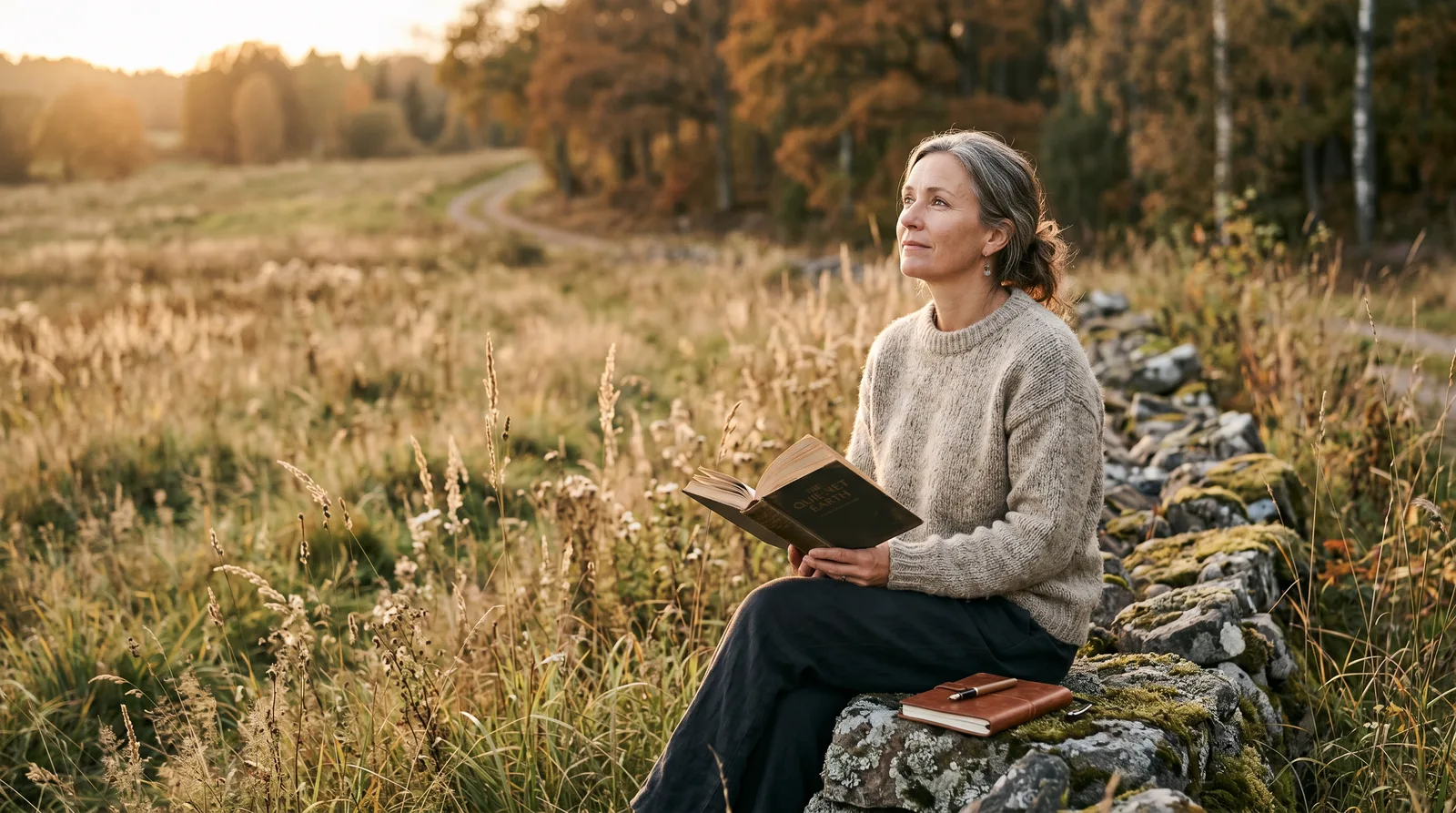
"Close reading is just careful looking — and careful looking is where every good poem begins."
— Carla Paton
What you'll learn
What you'll be able to do
- Identify and name the key craft moves — slant rhyme, enjambment, volta, personification — used by Dickinson, Frost, Oliver, and Wordsworth in their nature poems.
- Analyse a public-domain nature poem independently, annotating its imagery, rhythm, and emotional arc with confidence.
- Write an original poem in the style of Emily Dickinson, using dashes, compressed syntax, and hymn-meter to evoke a single natural moment.
- Compose a Frost-influenced dramatic or narrative nature poem that builds to an understated but resonant turn.
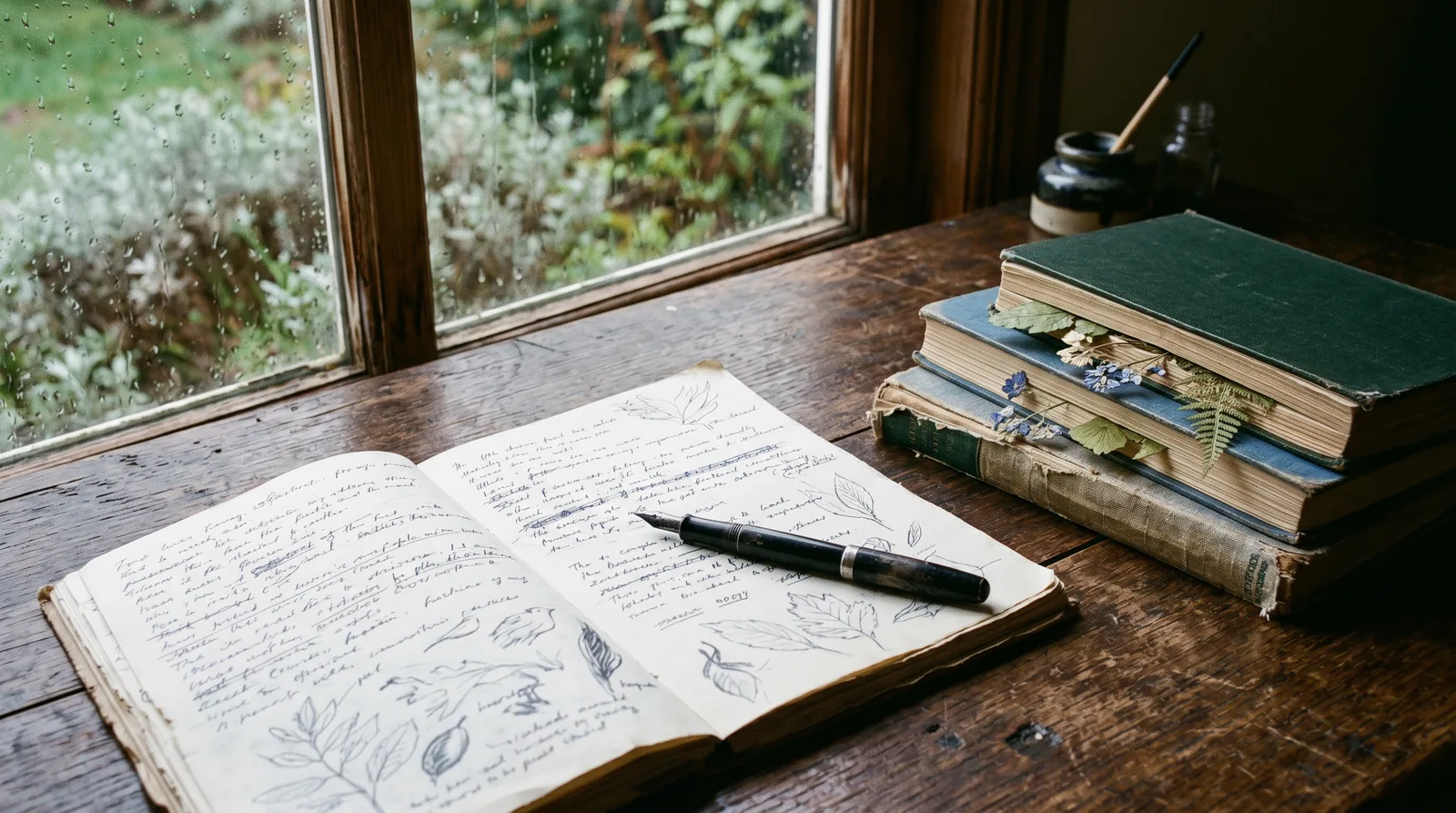
- Develop a sustained personal observational practice — notebook in hand outdoors — modelled on Mary Oliver's attention-as-devotion method.
- Produce a portfolio of at least six polished, original nature poems that demonstrate range across form, voice, and the natural subjects that matter most to you.
How it works
A school that adapts to you
This isn't a set of static videos. Every lesson is generated live and tuned to where you actually are.
We learn your level
A quick placement check tailors your starting point so you're never bored or lost.
Lessons adapt as you go
Each lesson is written for your pace and your goal, adjusting as your skills grow.
Your AI coach keeps you moving
Checkpoints, feedback, and gentle nudges turn progress into a real result.
The curriculum
What's inside your school
6 modules · 16 lessons

Reading Like a Poet: Craft Foundations
Establishes the essential prerequisite literacy before any poet-specific study begins. Students build a shared vocabulary for craft, practise annotation as an active reading method, and make early decisions about the natural subjects they care about — grounding all future writing in genuine personal investment.
- 1.1The Poet's ToolkitIncluded
- 1.2Annotation as ConversationIncluded
- 1.3Rhythm and Sound: Metre, Stress, and the Speaking VoiceIncluded
- 1.4Finding Your Field: Choosing Your Natural SubjectsIncluded
Emily Dickinson: Compression, Dashes, and the Slant View
Deep-dives into Dickinson's craft, giving students the technical knowledge and creative practice needed to write an original poem in her style. The module moves from form analysis to imitation to independent composition, ensuring students can both identify her techniques and deploy them with intention.
- 2.1The Dash and the Hymn: Dickinson's FormIncluded
- 2.2Compressed Syntax and the Single Natural MomentIncluded
Robert Frost: Voice, Narrative, and the Resonant Turn
Explores how Frost builds poems that sound like overheard speech while carrying the weight of narrative and philosophical consequence. Students learn to hear 'the sound of sense,' construct a dramatic situation, and engineer an understated but resonant turn — then produce an original Frost-influenced poem.
- 3.1The Sound of Sense: Frost's Conversational VoiceIncluded
- 3.2The Turn: Building to Understated ResonanceIncluded
Mary Oliver: Attention, Devotion, and the Observational Practice
Centres on Oliver's method of sustained, reverent outdoor attention as the foundation of poetic practice. Students move beyond the desk and into the field, developing the notebook habit and long-line observational voice that characterise her work — and that build the daily practice underpinning the portfolio outcome.
- 4.1Attention as a Spiritual Act: Oliver's MethodIncluded
- 4.2The Long Line and the Breathing PoemIncluded
- 4.3Sustained Practice: The Notebook as Living DocumentIncluded
William Wordsworth: Landscape, Memory, and the Thinking Poem
Examines Wordsworth's project of using landscape as a trigger for philosophical reflection, introducing the Romantic sublime and the concept of 'spots of time.' This module also fills a gap by addressing how memory and retrospection create a different kind of nature poem — not immediate observation but recollected emotion — expanding students' available modes of writing.
- 5.1Spots of Time: Memory and LandscapeIncluded
- 5.2The Thinking Poem: Reflection, Sublime, and ResolutionIncluded
Finding Your Own Voice: Portfolio and Beyond
Synthesises everything students have learned by moving from imitation into independent voice. Students revise existing drafts, write new poems from their own subjects and instincts, assemble a portfolio of at least six polished poems, and present their work publicly — completing all six course outcomes.
- 6.1Revision as DiscoveryIncluded
- 6.2New Poems, Your Subjects, Your VoiceIncluded
- 6.3Portfolio Assembly and the Final ReadingIncluded
Who it's for
Is this you?

The longtime journaler
You've filled notebook after notebook with observations about the natural world and are ready to shape those raw notes into something that holds together as a poem.

The returning literature lover
You studied poetry at school or university, let it lapse for decades, and want to come back — not as a student, but as a writer finally making something of your own.

The outdoor wanderer
Hiking, gardening, birdwatching — the natural world is already your daily companion, and you want language precise and alive enough to do it justice.

The Mary Oliver devotee
You've read Oliver's poems so many times the spines have cracked, and you're ready to learn the specific habits of attention and observation she practised and taught.

The curious beginner
You've never tried to write a poem but feel quietly drawn to the idea, and you want a warm, structured place to start without feeling out of your depth.

The seasoned amateur poet
You write poems already but want the craft vocabulary — volta, enjambment, slant rhyme — to revise more confidently and push your work to the next level.
Questions
Frequently asked
Your teacher
A note from your teacher

Carla Paton
Maybe you've been keeping a journal for years, filling pages with what the light looked like on the water, or how the first frost changed the smell of the air — and somewhere in the back of your mind you've thought: there's a poem in this, if only I knew how to find it.
Or maybe you've loved poetry from a distance — Dickinson on a fridge magnet, Oliver read aloud at a funeral, Frost half-remembered from school — but never quite believed you had permission to step inside and try it yourself.
I built Wild Lines Poetry for exactly that person. Not because writing about nature is easy, but because it is learnable — and because the poets who did it best left us such generous, precise maps of how they worked. When you read a Dickinson poem slowly enough to notice what each dash is doing, something opens up. When you trace the exact moment Frost's poem turns — the hinge between the narrative and the resonance — you start to see your own ordinary walks differently. That's the whole promise of this course: close reading changes how you see, and changed seeing fills your notebook with poems.
We'll move unhurriedly through four poets and six modules. You'll annotate real poems like a working writer — not to impress an examiner, but to steal wisely. You'll write in Dickinson's compressed, hymn-meter style. You'll build a Frost-style dramatic poem to a quiet, inevitable turn. You'll take Oliver's method outside into whatever patch of the natural world you live near — a city park, a garden, a shoreline, a fire escape with a potted basil plant — and practise the kind of sustained, devoted attention that is the foundation of every good nature poem ever written. And you'll let Wordsworth teach you how a landscape can hold a memory, and how a poem can think its way through to something true.
The hardest part, in my experience, isn't the craft — it's believing your own perception is worth a poem. I'd like to help you believe that. By the time you assemble your final portfolio, you'll have six or more polished original poems, a revision practice you trust, and a notebook that never runs dry.
Come in. Bring your notebook. The world outside is already full of material.
— Carla Paton
Start your journey today
Get instant access — learn at your own pace with an AI coach in your corner.
$19/mo
Recurring billing · cancel anytime
Secure checkout · Instant access
- 6 modules, 16 lessons
- AI-adaptive lessons tuned to your level
- Quizzes & checkpoints to lock in progress
- Your own AI learning coach
- Learn on any device, at your pace
- Full access for as long as you're subscribed