Think like a zoologist, see like a field scientist
Wild Animal Science takes you from curious animal lover to rigorous naturalist — building a systematic, research-grade understanding of animal biology, behavior, evolution, and ecology through the same frameworks real zoologists use.
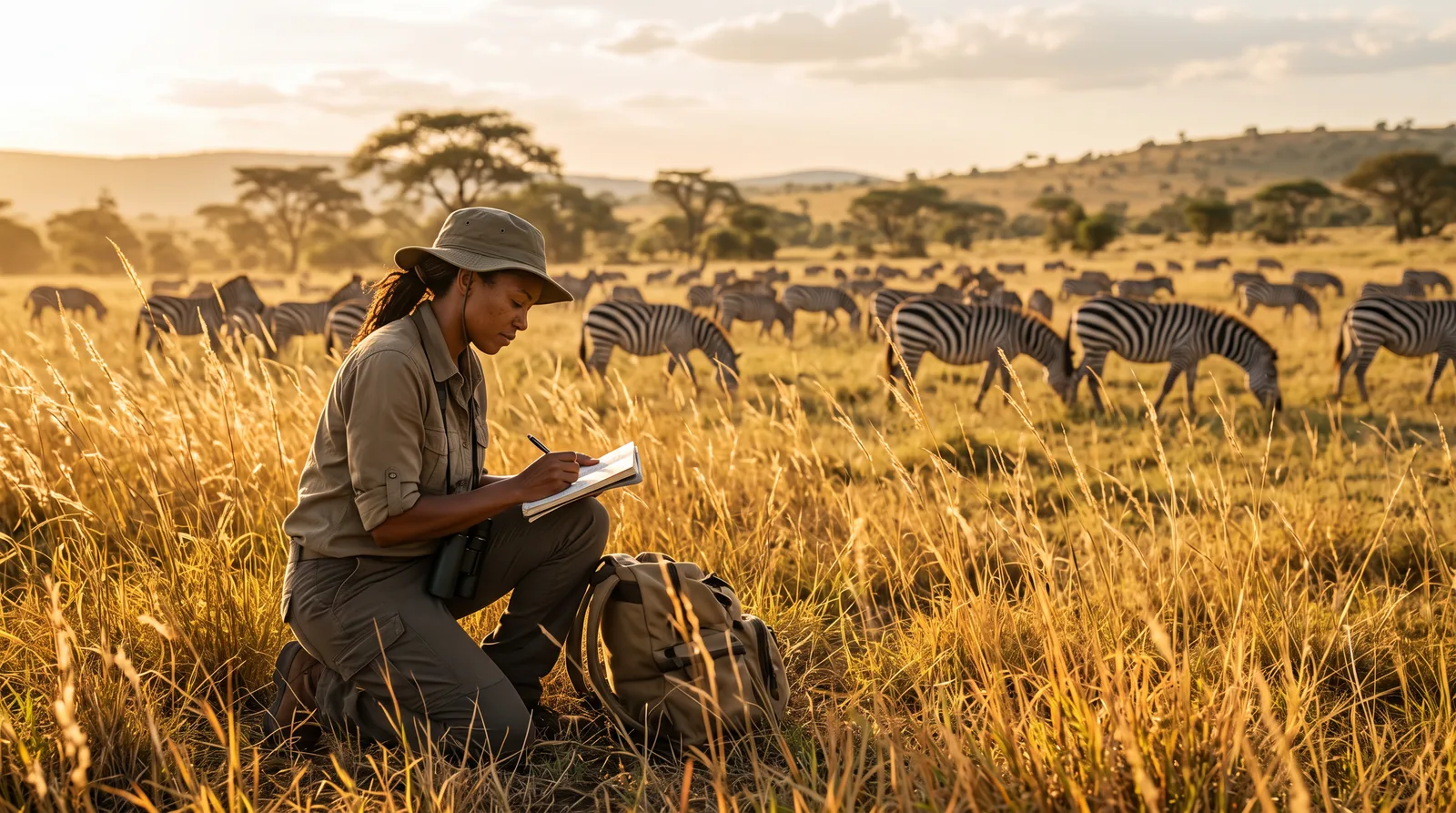
"Curiosity got you here — I'll give you the scientific framework to turn that curiosity into understanding that lasts a lifetime."
— Tracy Burke
What you'll learn
What you'll be able to do
- Classify animals across all major phyla using correct taxonomic nomenclature and morphological criteria
- Explain the evolutionary relationships between animal groups using phylogenetic trees and fossil evidence
- Analyze animal behavior through the lens of ethology — from instinct and learning to social structures and communication
- Describe key physiological systems (circulatory, nervous, reproductive) across vertebrate and invertebrate groups
- Apply ecological principles to understand how animals interact with their habitats, prey, predators, and competitors
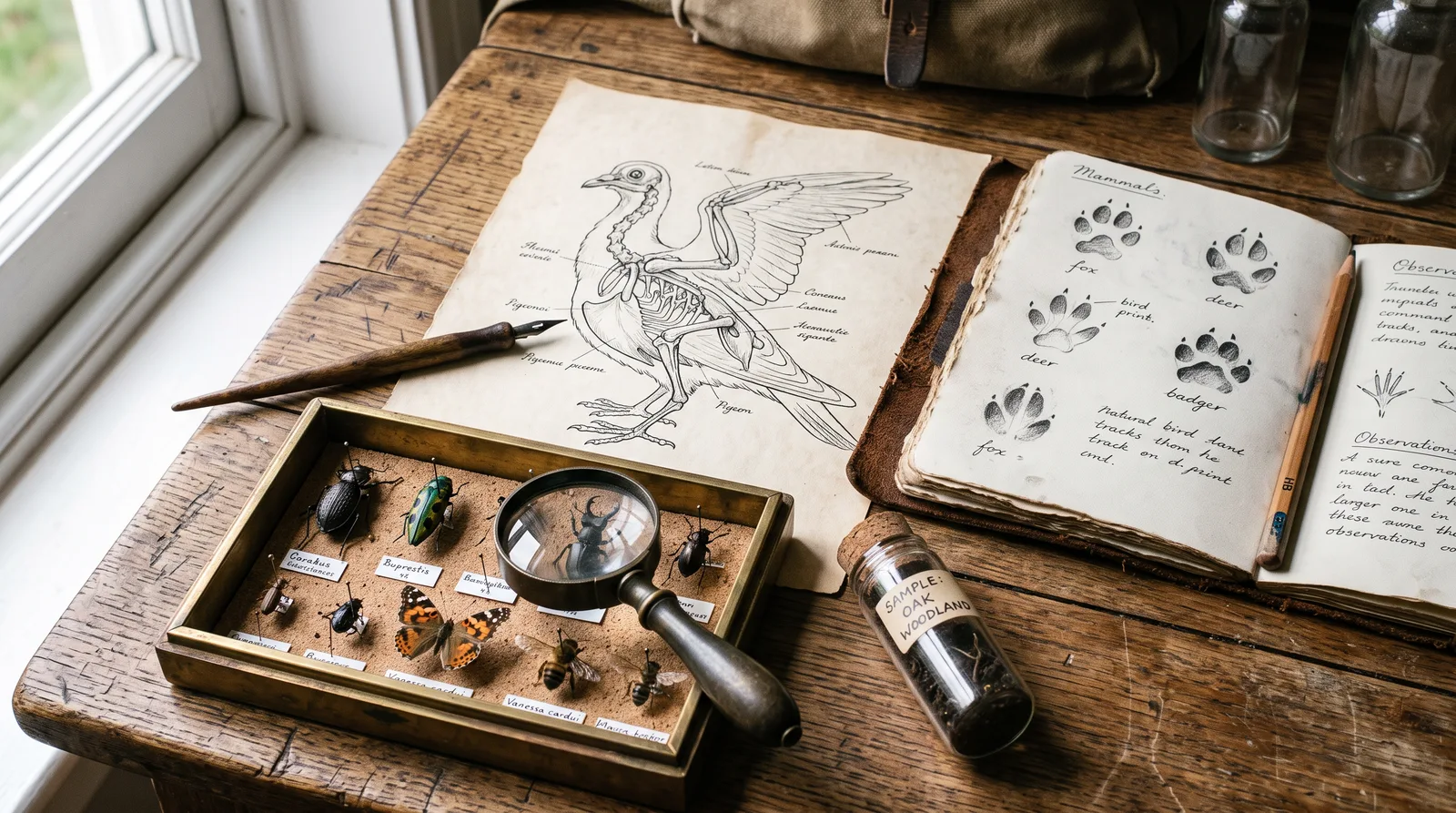
- Design and interpret basic field observation protocols for wildlife surveys and behavioral studies
How it works
A school that adapts to you
This isn't a set of static videos. Every lesson is generated live and tuned to where you actually are.
We learn your level
A quick placement check tailors your starting point so you're never bored or lost.
Lessons adapt as you go
Each lesson is written for your pace and your goal, adjusting as your skills grow.
Your AI coach keeps you moving
Checkpoints, feedback, and gentle nudges turn progress into a real result.
The curriculum
What's inside your school
6 modules · 27 lessons

The Architecture of Animal Life
Establishes the cellular, tissue, and body-plan foundations that underpin all animal diversity.
- 1.1What Makes an Animal an AnimalIncluded
- 1.2Cells, Tissues, and Body PlansIncluded
- 1.3Key Physiological Systems at a GlanceIncluded
- 1.4Reading the Animal Body: Morphological CriteriaIncluded
Classifying the Animal Kingdom
Builds systematic taxonomic literacy from nomenclature rules through every major phylum.
- 2.1Taxonomic Nomenclature and the Linnaean HierarchyIncluded
- 2.2Invertebrate Phyla: Porifera to ArthropodaIncluded
- 2.3The Chordate Blueprint and Vertebrate ClassesIncluded
- 2.4Applying Classification: Keying Out an Unknown AnimalIncluded
Evolution and Phylogenetics
Explains how evolutionary processes and fossil evidence reveal the shared ancestry of animal groups.
- 3.1Natural Selection, Adaptation, and SpeciationIncluded
- 3.2Reading Phylogenetic TreesIncluded
- 3.3Fossil Evidence and the Animal TimelineIncluded
- 3.4Convergent Evolution and HomologyIncluded
- 3.5Molecular Phylogenetics: When Genes Rewrite the TreeIncluded
Animal Physiology Across Groups
Compares how circulatory, nervous, and reproductive systems are realized across vertebrate and invertebrate body plans.
- 4.1Circulatory Systems: Open, Closed, and Everything BetweenIncluded
- 4.2Nervous Systems and Sensory AdaptationsIncluded
- 4.3Reproductive Strategies: From Broadcast Spawning to Live BirthIncluded
- 4.4Thermoregulation: Ectothermy, Endothermy, and the Costs of EachIncluded
Animal Behavior and Ethology
Analyzes the mechanisms and adaptive significance of behavior from instinct to complex social systems.
- 5.1Foundations of Ethology: Tinbergen's Four QuestionsIncluded
- 5.2Instinct, Learning, and CognitionIncluded
- 5.3Communication: Signals, Channels, and DeceptionIncluded
- 5.4Social Structures, Cooperation, and ConflictIncluded
- 5.5Mating Systems and Sexual SelectionIncluded
Ecology, Habitat, and Field Research Methods
Connects animals to their ecosystems and gives students practical tools for real-world wildlife observation and survey design.
- 6.1Ecological Niches, Guilds, and Habitat StructureIncluded
- 6.2Predator–Prey Dynamics and CompetitionIncluded
- 6.3Animal Migrations, Home Ranges, and DispersalIncluded
- 6.4Designing a Wildlife Survey ProtocolIncluded
- 6.5Recording and Interpreting Behavioral Observation DataIncluded
Who it's for
Is this you?

Aspiring field biologist
Building the taxonomic, ecological, and field-methods foundation needed before stepping into research or graduate study.

Biology undergrad
Supplementing formal coursework with richly contextualized zoology that connects anatomy, evolution, and behavior into one coherent picture.
Wildlife documentary enthusiast
Ready to move beyond passive watching and understand the science — evolution, ethology, ecology — behind every behavior on screen.

Nature-based educator
Seeking rigorous zoological grounding to teach students, lead nature programs, or interpret wildlife with real scientific authority.

Community science contributor
Wanting the systematic skills — survey design, classification, behavioral observation — to contribute meaningfully to citizen science projects.

Lifelong learner & naturalist
Returning to a lifelong passion for animals with a desire for the depth, structure, and vocabulary that formal schooling never provided.
Questions
Frequently asked
Your teacher
A note from your teacher
Tracy Burke
If you're here, I suspect you already feel it — that pull toward the animal world that never quite went away. Maybe you've read every field guide on your shelf, spent hours watching wildlife footage, or found yourself down a rabbit hole about cephalopod cognition at midnight. That curiosity is the most important thing you're bringing to this school. My job is to give it a rigorous structure to grow into.
Here's what I've found: most people who love animals have never been handed the actual scientific vocabulary and conceptual frameworks that transform observation into understanding. They can tell you a cheetah is fast. They can't yet explain how its open circulatory system, specialized muscle fiber composition, and predator–prey co-evolutionary arms race produced that speed — or how we know what we know from both living anatomy and fossil evidence. That gap, between enthusiasm and systematic knowledge, is exactly what Wild Animal Science is designed to close.
This school is built the way a good university zoology sequence is built — from the ground up, with each layer of knowledge supporting the next. We start with the animal body at the cellular and tissue level, because you can't make sense of classification or physiology without it. We move through taxonomy and the full sweep of phyla with real tools — you'll learn to key out an unknown species, not just memorize a list. We go deep into evolution and phylogenetics, including how molecular data has genuinely rewritten parts of the tree of life. We compare physiological systems across wildly different animals and ask why natural selection produced so many solutions to the same problems. We study behavior through the lens of ethology, from Tinbergen's foundational framework to the latest thinking on animal cognition and deception. And we end in the field, designing surveys and interpreting behavioral data the way working ecologists do.
I won't pretend this is a passive experience. The material is rich, the terminology is precise, and I'll ask you to think — not just absorb. But I promise you this: every piece of scientific machinery we build together will immediately illuminate something real. You'll finish a module on convergent evolution and never look at a dolphin and a shark the same way again. You'll learn Tinbergen's Four Questions and suddenly have a framework for every animal behavior you'll ever observe for the rest of your life.
You don't need a lab coat or a degree to begin. You need the curiosity you already have, and the willingness to do real intellectual work. If that describes you, I'd be genuinely honored to be your guide through the animal kingdom — from the molecular to the ecological, from the ancient fossil record to a field notebook you fill in yourself.
— Tracy Burke
Start your journey today
Get instant access — learn at your own pace with an AI coach in your corner.
$44.99/mo
Recurring billing · cancel anytime
Enrolling a child? Sign up as a parent — you'll add your student right here after.
Secure checkout · Instant access
- 6 modules, 27 lessons
- AI-adaptive lessons tuned to your level
- Quizzes & checkpoints to lock in progress
- Your own AI learning coach
- Learn on any device, at your pace
- Full access for as long as you're subscribed