Launch your own business — for real
A hands-on, project-based curriculum that takes any student from zero to a complete, pitch-ready small business plan in 12 weeks. Every lesson connects real-world entrepreneurship skills to students' own ideas and ambitions.

"I built this program so that by Week 10, every student has done the real work — and has the plan, the pitch, and the confidence to prove it."— Wanda Ezell
What you'll learn
What you'll be able to do
- Identify a credible business opportunity by analyzing real market needs, trends, and their own skills and passions
- Conduct original market research — including customer surveys, competitor analysis, and SWOT breakdowns — and translate findings into actionable strategy
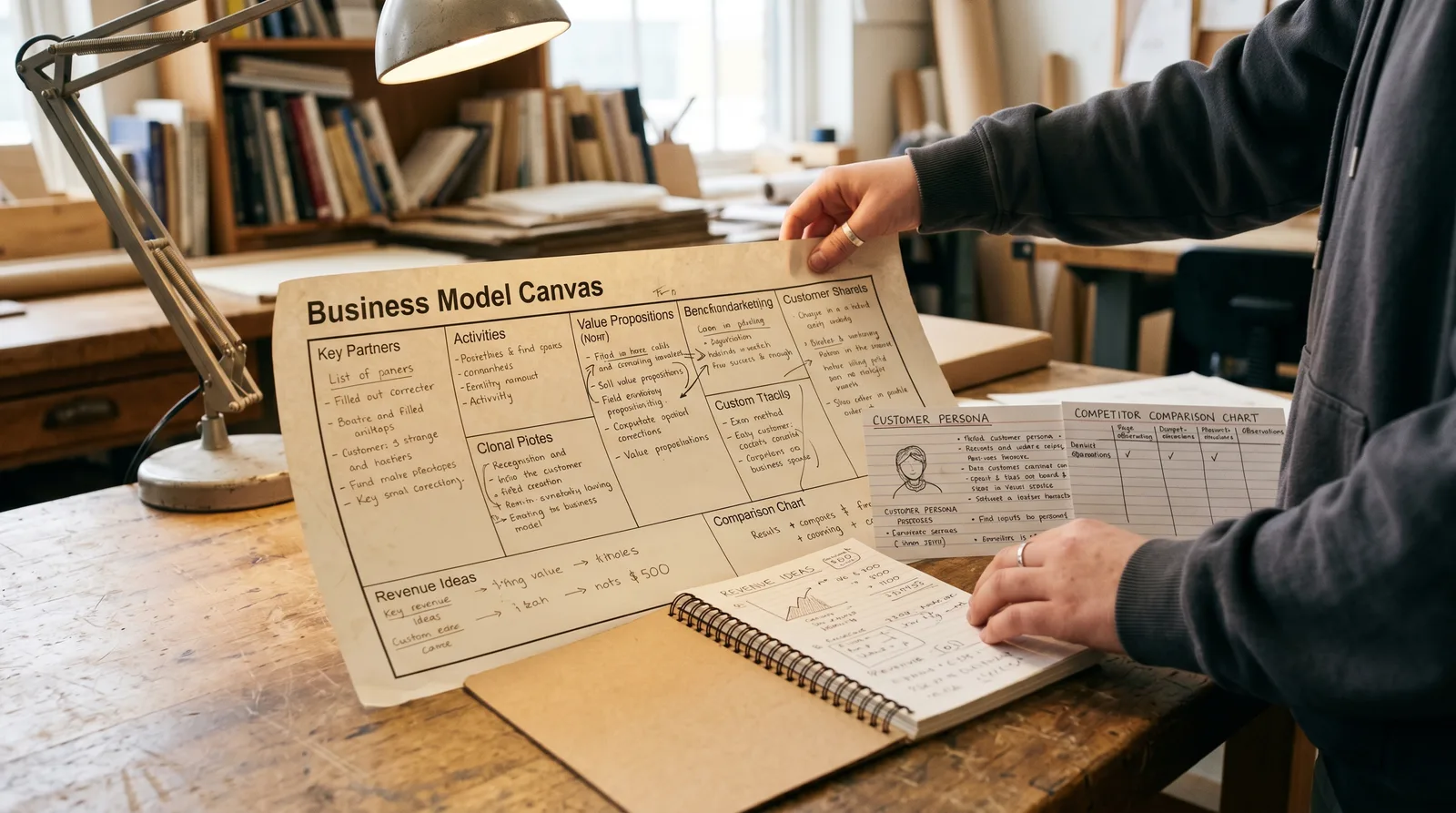
- Build a complete Business Model Canvas that maps out revenue streams, customer segments, and value propositions for their own business idea
- Understand key legal structures (sole proprietorship, partnership, LLC) and the ethical responsibilities every business owner carries
- Develop a full small business plan covering marketing, operations, and financial projections
- Deliver a confident investor-style pitch of their business plan to a live panel of peers, teachers, or community members
How it works
From Idea to Pitch-Ready Business in 12 Simple Steps
This isn't a set of static videos. Every lesson is generated live and tuned to where you actually are.
We learn your level
A quick placement check tailors your starting point so you're never bored or lost.
Lessons adapt as you go
Each lesson is written for your pace and your goal, adjusting as your skills grow.
Your AI coach keeps you moving
Checkpoints, feedback, and gentle nudges turn progress into a real result.
The curriculum
What's inside your school
10 modules · 16 lessons

Introduction to Entrepreneurship
Students build the foundational mindset and vocabulary they need before tackling every later unit. They explore what entrepreneurship really means, examine what separates thriving entrepreneurs from those who fail, and honestly assess whether — and how — their own personality and skills align with business ownership. This module also surveys the major types of business ownership so students can begin picturing where they might fit. Completing this first gives every subsequent unit a shared language and personal stake.
- 1.1What Is Entrepreneurship?Included
- 1.2What is a Small Business?Included
Finding the Right Business Idea
Before students can research a market or write a plan, they need a credible idea rooted in genuine opportunity rather than wishful thinking. This module teaches the crucial difference between a vague idea and a validated opportunity, introduces trend-spotting and emerging-market analysis, and pushes students to intersect their passions and skills with real profitability potential. The output — a shortlisted Business Idea Portfolio — feeds directly into the Market Research and Competitive Analysis modules.
- 2.1Identifying OpportunitiesIncluded
Market Research
A business idea is only as good as the real-world demand behind it. This module gives students the research tools — segmentation, persona creation, surveys, and interviews — to validate (or pivot away from) their shortlisted ideas before investing further. Critically, it also introduces basic competitor awareness so students arrive at the dedicated Competitive Analysis module already primed with context. Validated customer insight is the prerequisite for every downstream deliverable: the Business Model Canvas, the marketing strategy, the financial projections, and the business plan.
- 3.1Understanding Your CustomersIncluded
Competitive Analysis
Knowing the customer is not enough — students must also understand the competitive landscape their business will enter. This module formalises the competitor awareness introduced in Market Research, teaching students to map direct and indirect rivals, conduct a thorough SWOT analysis, pinpoint competitive advantages, and articulate a unique selling proposition (USP). The Competitive Analysis Report produced here becomes a key section of the final business plan.
- 4.1Understanding the CompetitionIncluded
Business Planning
With a validated idea, customer insight, and competitive intelligence in hand, students are now ready to model how their business will actually work and make money. This module introduces the Business Model Canvas as a visual, iterative planning tool before any financial spreadsheets or formal plan sections are written. Students select a revenue model, map their value proposition and customer segments, and identify key resources and partners. The completed Canvas is both a standalone deliverable and the structural backbone of the full business plan assembled in Module 9.
- 5.1Building a Business ModelIncluded
Legal and Ethical Foundations
Before students begin drafting marketing strategies or financial projections, they need to understand the legal container their business will operate inside and the ethical responsibilities that come with ownership. This module covers business structures (sole proprietorship, partnership, LLC, corporation), registration and licensing requirements, basic intellectual property awareness, and business ethics — including fair dealing, social responsibility, and avoiding common pitfalls. Understanding structure now also informs the financial projections in Module 8, since taxation and liability vary by entity type.
- 6.1Choosing a Business StructureIncluded
- 6.2Ethics in BusinessIncluded
Marketing Strategy
With a validated business model and legal foundation in place, students now plan how to attract and retain customers. This module opens with brand identity — the visual and verbal personality of the business — and then connects brand to the 4 Ps of marketing and the full spectrum of modern marketing channels, including digital and social media. Students leave with a concrete, actionable marketing strategy that slots directly into their business plan. Sequencing marketing before financials ensures that revenue projections in Module 8 are grounded in realistic customer acquisition assumptions.
- 7.1Building Your Brand IdentityIncluded
- 7.2Marketing Channels and the 4 PsIncluded
Financial Management
This module gives students the numerical literacy they need to make their business plan credible and their pitch compelling. Starting with startup costs and budgeting grounds students in real cash requirements before moving to revenue modelling, profit calculation, and break-even analysis. Both lessons deliberately connect back to the revenue streams chosen in the Business Model Canvas and the pricing decisions made in the Marketing Strategy module. The financial statements produced here feed directly into the business plan assembly in Module 9.
- 8.1Startup Costs and BudgetingIncluded
- 8.2Revenue, Profit, and Break-Even AnalysisIncluded
Operations and Business Plan Assembly
Students now bring every prior deliverable together into a single, polished business plan. The module opens with operations planning — the day-to-day systems, suppliers, staffing, and workflows the business needs to actually run — which is the one major business plan section not yet addressed. Students then assemble all components (Business Model Canvas, market research, competitive analysis, marketing plan, financial summary, legal structure, and operations plan) into a coherent, professionally formatted document. This module directly delivers the core target outcome of producing a complete small business plan.
- 9.1Operations PlanningIncluded
- 9.2Assembling the Complete Business PlanIncluded
Pitching and Presenting Your Business
The course culminates in two lessons that transform the written business plan into a live, investor-style pitch. The first lesson focuses on the craft of pitching — structure, storytelling, visual design, and handling tough questions. The second is the live Pitch Day itself, followed by structured reflection that closes the loop on every essential question from Week 1. This module delivers the final target outcome and gives students a performance artefact they can include in a portfolio or college application.
- 10.1Crafting Your Investor PitchIncluded
- 10.2Live Pitch Day and Entrepreneurial ReflectionIncluded
Who it's for
Is this you?

The Aspiring Founder
You've had a business idea for months — this program gives you the structured roadmap to turn it into a real, pitch-ready plan.

The CTE Student
You're in a business or entrepreneurship pathway and want a curriculum that goes beyond textbooks and builds skills you can actually use.

The Homeschool Teen
You need a rigorous, project-based business course that delivers a serious capstone and maps to real academic credit.

The Future Business Major
You're eyeing a business degree and want hands-on experience with market research, financial modeling, and strategy before you get to college.

The Side-Hustle Starter
You're already selling something — or want to — and need the real frameworks (branding, pricing, operations) to scale it properly.

The Undecided Explorer
You're not sure what you want to do yet, and this program helps you discover your strengths while building a career-ready skill set in business.
Questions
Frequently asked
Your teacher
A note from your teacher

Wanda Ezell
Hey — if you're reading this, you're probably a student (or the parent of one) who suspects there's more to learn about business than a textbook full of definitions. You're right. Most business courses teach you about entrepreneurship. This one makes you do it.
I designed Young Entrepreneur Lab because I kept seeing the same thing: smart, creative students with genuinely great ideas who had no idea where to start — or worse, who'd been handed theory with no connection to their actual lives. Business planning felt like something adults did in boardrooms, not something a teenager could tackle. I wanted to change that completely.
Here's what we do differently: every single lesson is anchored to your business idea. When we cover market research, you're writing real customer surveys for your real concept. When we break down the Business Model Canvas, you're filling one out for the business you want to build. When we get to financial projections, you're running the numbers on your own startup costs and break-even point. Nothing is hypothetical — the work you do here is the actual foundation of a real business plan.
By the time we reach Live Pitch Day in Week 10, you won't just have a polished slide deck — you'll have earned your confidence. You'll have done the research. You'll know your customer. You'll understand your competition, your costs, your marketing channels, and the legal structure that makes sense for what you're building. And you'll stand up and present it like you mean it — because you will.
Whether you're a future founder, a student who wants to stand out in college applications, or someone who just wants to understand how business actually works — this program meets you where you are and takes you somewhere real. I can't wait to see what you build.
— Wanda Ezell
Start your journey today
Join get instant access — learn at your own pace with an AI coach in your corner.
$29/mo
Recurring billing · cancel anytime
Secure checkout · Instant access
- 10 modules, 16 lessons
- AI-adaptive lessons tuned to your level
- Quizzes & checkpoints to lock in progress
- Your own AI learning coach
- Learn on any device, at your pace
- Full access for as long as you're subscribed