Fight for your rights — without a lawyer
Ten practical modules that walk you from "something wrong happened to me" to a documented, filed, and argued case — using the same frameworks legal professionals use, in plain language you can act on today.

"The system counts on you not knowing what to do next — this school makes sure that advantage disappears."— Demetrius Demetrius
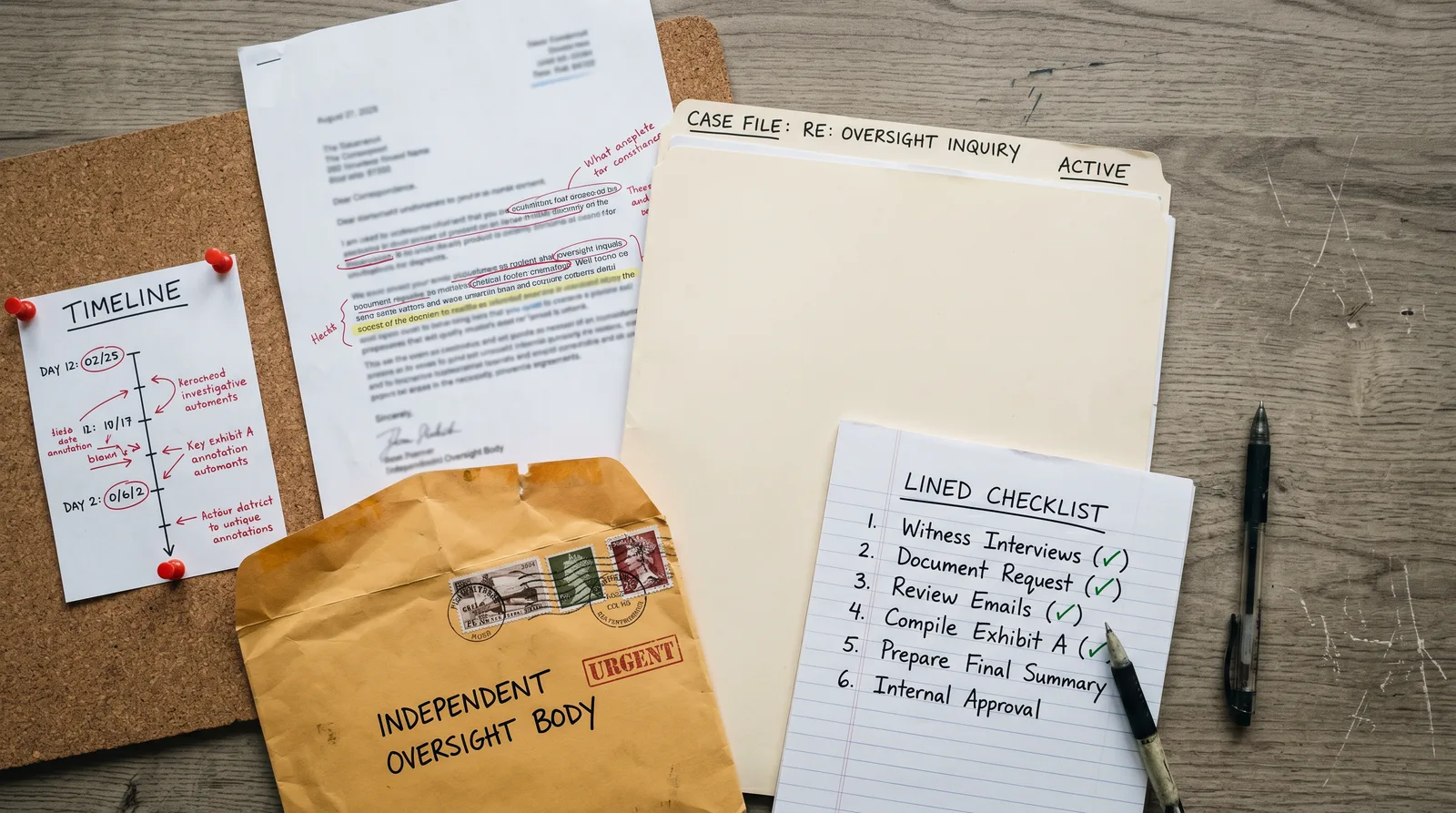
What you'll learn
What you'll be able to do
- Identify exactly which human rights apply to your situation and which legal frameworks protect them
- Spot the concrete signs that a human rights violation has occurred and document them correctly from day one
- Gather, organize, and preserve evidence — witness statements, records, correspondence — that meets legal standards
- Draft formal complaints, demand letters, and submissions to the correct courts, tribunals, or oversight bodies without a lawyer
- Navigate the specific agencies, ombudsmen, and international bodies where your case should be filed and in what order
- Present and argue your own case with confidence, anticipating the opposing side's tactics and knowing how to respond
How it works
A school that adapts to you
This isn't a set of static videos. Every lesson is generated live and tuned to where you actually are.
We learn your level
A quick placement check tailors your starting point so you're never bored or lost.
Lessons adapt as you go
Each lesson is written for your pace and your goal, adjusting as your skills grow.
Your AI coach keeps you moving
Checkpoints, feedback, and gentle nudges turn progress into a real result.
The curriculum
What's inside your school
11 modules · 37 lessons

What Are Human Rights and Why They Matter to You
Establishes the essential foundation every learner needs before anything else: what human rights actually are, where they come from, how they are categorized, and — critically — how ordinary people have used them to achieve real outcomes. This module answers 'what are human rights used for?' directly and personally, ensuring learners enter Module 2 with a clear mental map of the rights landscape.
- 1.1The Human Rights Landscape — From the UN to Your Front DoorIncluded
- 1.2Civil, Political, Economic, Social, and Cultural Rights — What Each Category CoversIncluded
- 1.3How Rights Are Used in Practice — Real Cases, Real OutcomesIncluded
Identifying Your Rights and the Frameworks That Protect Them
A prerequisite gap in the original draft: before spotting a violation, learners must be able to pinpoint exactly which rights apply to their specific situation and which legal frameworks — domestic, regional, or international — are activated. This module bridges the general knowledge of Module 1 with the violation-spotting work of Module 3, directly delivering Target Outcome 1.
- 2.1Mapping Your Situation to Specific Rights ArticlesIncluded
- 2.2Understanding Obligations — What States and Actors Must Do (and Not Do)Included
- 2.3Choosing Your Legal Framework — Which Law Protects You Most Strongly?Included
Spotting a Violation — Recognizing When the Line Has Been Crossed
Now armed with a clear understanding of which rights apply and what obligations exist, learners develop the analytical skill to determine whether conduct actually crosses the legal threshold into a violation. This module sharpens the distinction between 'this is unfair' and 'this is legally actionable,' delivering Target Outcome 2.
- 3.1The Legal Threshold — What Rises to the Level of a ViolationIncluded
- 3.2Common Violation Patterns — Discrimination, Abuse of Power, and Institutional MisconductIncluded
- 3.3State Actors vs. Private Actors — Who Can You Actually Hold Accountable?Included
Documenting Everything — Building Your Evidence Foundation from Day One
Transforms learners from passive victims of a violation into active, strategic evidence-builders. Every lesson in this module is oriented around the standard a court, tribunal, or oversight body will actually apply — not just 'saving things' but preserving them in the form and manner that will survive a challenge. Delivers Target Outcome 3.
- 4.1The Evidence Mindset — What Counts, What Doesn't, and Why It Must Start NowIncluded
- 4.2Capturing and Preserving Evidence — Photos, Records, Correspondence, and Digital TrailsIncluded
- 4.3Witness Statements — Finding, Briefing, and Recording Witnesses CorrectlyIncluded
- 4.4Organizing Your Case File — The Master Folder SystemIncluded
Know Your Battlefield — Agencies, Tribunals, Courts, and International Bodies
Gives learners a detailed, practical map of every forum where a human rights case can be filed — from local agencies to UN treaty bodies — with clear guidance on jurisdiction, admissibility requirements, typical timelines, and strategic sequencing. Delivers Target Outcome 5 and ensures learners never file in the wrong place at the wrong time.
- 5.1The Domestic Ladder — Local Agencies, Ombudsmen, and Equality BodiesIncluded
- 5.2Regional Human Rights Systems — Europe, Americas, Africa, and BeyondIncluded
- 5.3The United Nations System — Treaty Bodies, Special Procedures, and the UPRIncluded
- 5.4Strategic Sequencing — Filing in the Right Order at the Right TimeIncluded
Drafting Your Case — Complaints, Demand Letters, and Legal Submissions
The writing workshop module: learners draft every key document a self-represented rights claimant needs, from the first demand letter through formal complaint submissions and rebuttals. Every lesson prioritizes precision, structure, and the specific expectations of the body receiving the document. Delivers Target Outcome 4.
- 6.1The Demand Letter — Your First and Often Most Powerful ToolIncluded
- 6.2Formal Complaint Drafting — Structure, Language, and Legal PrecisionIncluded
- 6.3Responding to Defenses and Drafting RebuttalsIncluded
Self-Representation in Hearings — Presenting and Winning Your Own Case
Takes learners from paper submissions into the live hearing environment. Covers every phase of a hearing — from understanding the procedural rules of the room through opening, evidence presentation, witness handling, cross-examination, and closing — and then addresses what happens after a decision. Delivers Target Outcome 6.
- 7.1Hearing Formats and Procedural Rules — Knowing the Room You're Walking IntoIncluded
- 7.2Opening Statements and Presenting Your EvidenceIncluded
- 7.3Examining Witnesses, Handling Cross-Examination, and Closing ArgumentsIncluded
- 7.4After the Decision — Enforcing Remedies, Appealing, and EscalatingIncluded
Special Situations — Immigrants, Tenants, Workers, and Activists
Applies the full framework built in previous modules to the four most common self-represented rights contexts, with situation-specific guidance on the rights engaged, the violation patterns most likely encountered, the forums best suited to each, and the evidence types most critical in each context.
- 8.1Immigration and Asylum — Rights That Travel With You Regardless of StatusIncluded
- 8.2Housing Rights — Tenants Fighting Unlawful Eviction, Unsafe Conditions, and DiscriminationIncluded
- 8.3Workers' Rights — Discrimination, Wage Theft, Unsafe Workplaces, and Unfair DismissalIncluded
- 8.4Activists and Civic Freedoms — Protecting Free Speech, Assembly, and Protection from ReprisalsIncluded
Negotiation, Settlement, and Strategic Pressure
Equips learners with the off-hearing tools that often produce faster, more complete remedies than formal proceedings alone: principled negotiation, mediation, and the strategic use of public pressure, advocacy, and coalition building. This module repositions these tactics as integrated parts of a legal strategy, not alternatives to it.
- 9.1Negotiation Fundamentals for Rights ClaimantsIncluded
- 9.2Strategic Public Pressure — Media, Advocacy, and Coalition BuildingIncluded
- 9.3Mediation, Conciliation, and Alternative Dispute ResolutionIncluded
Protecting Yourself While Fighting — Safety, Retaliation, and Wellbeing
Addresses the real personal risks that come with pursuing a human rights case — retaliation, digital surveillance, physical safety, legal harassment, and the psychological toll of a long case — and equips learners with concrete, practical strategies to protect themselves without abandoning their case.
- 10.1Recognizing and Documenting RetaliationIncluded
- 10.2Digital Security and Personal Safety for Rights ClaimantsIncluded
- 10.3Sustaining Yourself Through a Long Case — Mental Health, Community, and Knowing When to PauseIncluded
Putting It All Together — Your Complete Case, Ready to File
The capstone module: learners bring every element built across the course into a single, submission-ready case package, conduct a rigorous pre-filing audit, assemble the final submission, and present their complete case in a full mock proceeding. The module ensures that every target outcome has been met before the course ends.
- 11.1Case Audit — Testing Every Element Before You FileIncluded
- 11.2Final Submission Package — Assembling and Delivering Your CaseIncluded
- 11.3Capstone — Full Presentation of Your CaseIncluded
Who it's for
Is this you?

Tenants facing eviction
Learn exactly which housing rights protect you, how to document unsafe conditions or unlawful notices, and how to fight back without a solicitor.

Workers facing injustice
Whether it's discrimination, wage theft, an unsafe workplace, or unfair dismissal, this school shows you how to build and file your own employment rights case.

Immigrants and asylum seekers
Understand the rights that travel with you regardless of status, which international frameworks protect you, and how to navigate asylum and immigration processes yourself.

Activists and community organizers
Know your rights to free speech, assembly, and protection from reprisals — and how to document and challenge abuse of power before it silences you.

People facing discrimination
Identify the legal threshold for discrimination, gather evidence that meets real standards, and file with the right equality body or tribunal.

Anyone dealing with institutional misconduct
If a government agency, public body, or official has treated you unlawfully, this school maps the accountability ladder and shows you how to climb it.
Questions
Frequently asked
Your teacher
A note from your teacher
Demetrius Demetrius
If you're here, something happened to you — or to someone you care about. Maybe a landlord is threatening an unlawful eviction and you don't know how to push back. Maybe you were passed over, underpaid, or let go in a way that felt wrong and was wrong. Maybe a government agency treated you in a way that no one should be treated, and you've been told, implicitly or explicitly, that there's nothing you can do about it.
I want to say something plainly: that feeling of helplessness is not evidence that you don't have a case. More often, it's evidence that the system has done a good job of making itself look more complicated than it needs to be.
I built this school because I've watched people with real, valid, documented human rights violations walk away from them — not because they lacked courage, but because no one ever showed them the map. The map exists. The legal frameworks, the filing routes, the drafting structures, the procedural rules — they are learnable by anyone willing to work through them methodically. That's what this school is: eleven modules that hand you the map, piece by piece, in language that respects your intelligence and your urgency.
We start with foundations — what human rights actually are, which ones apply to your specific situation, and how to recognize when the line has legally been crossed. Then we build your case from the ground up: evidence that meets legal standards, a case file that's organized and airtight, complaints and demand letters drafted with precision, and a clear strategy for which agency or tribunal to approach first and in what order. We don't skip the hard parts — retaliation, digital security, the psychological weight of a long fight — because pretending those things don't exist doesn't help you.
By the time you reach the capstone, you'll have done the work. You'll have a real submission package, a clear argument, and the knowledge to stand in a hearing room and represent yourself with confidence. I won't promise you a specific outcome — no one can do that honestly. What I can promise is that you will be informed, prepared, and no longer dependent on someone else to fight for you. Come in. Let's build your case.
— Demetrius Demetrius
Start your journey today
Join get instant access — learn at your own pace with an AI coach in your corner.
$4,997/mo
Recurring billing · cancel anytime
Secure checkout · Instant access
- 11 modules, 37 lessons
- AI-adaptive lessons tuned to your level
- Quizzes & checkpoints to lock in progress
- Your own AI learning coach
- Learn on any device, at your pace
- Full access for as long as you're subscribed